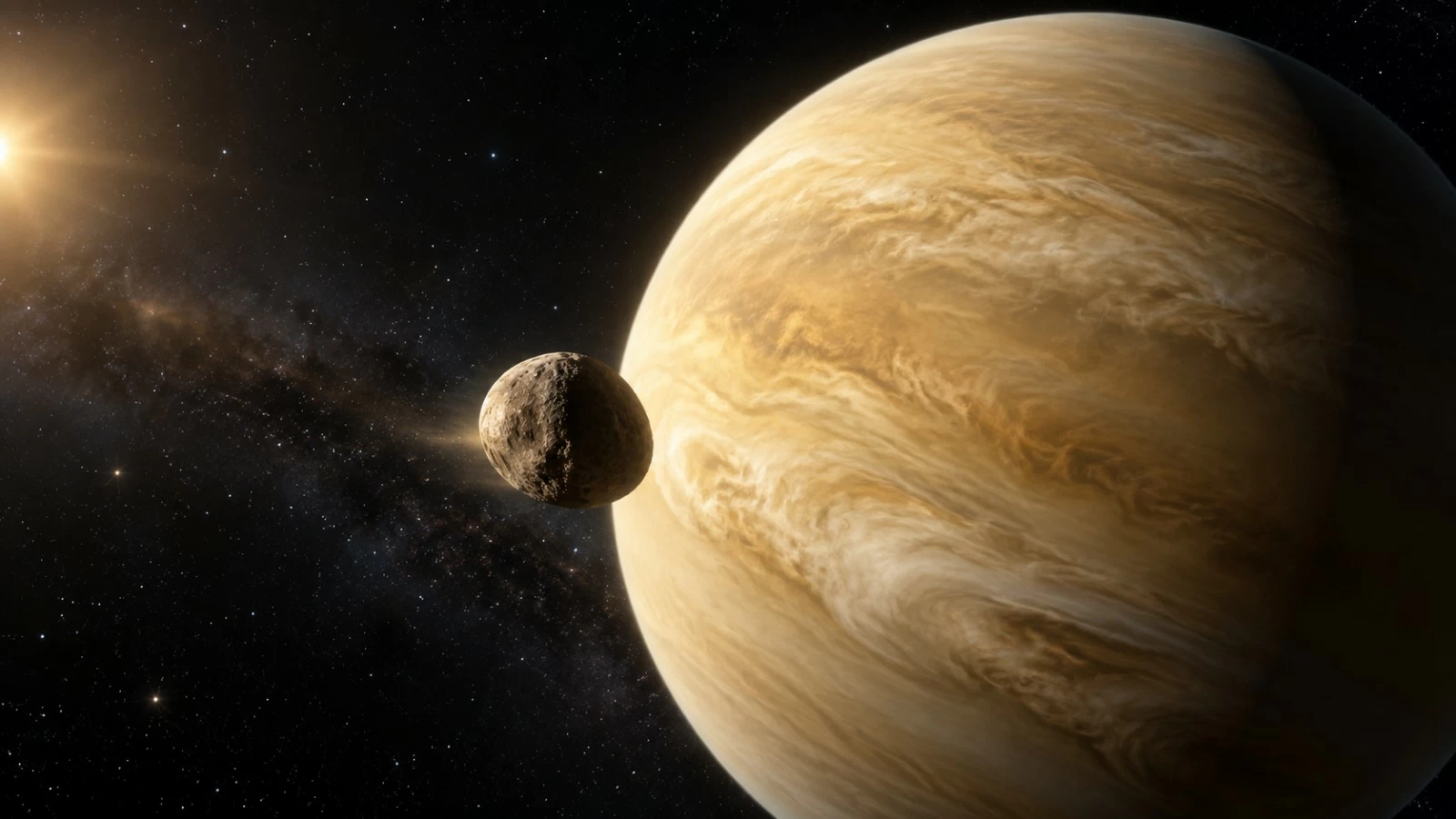
طرحت دراسة فلكية جديدة احتمالاً مثيراً بشأن تاريخ كوكب الزهرة، مشيرة إلى أنه ربما امتلك قمراً في الماضي، قبل أن يقترب منه تدريجياً وينتهي به المطاف مصطدماً بسطحه.
محاكاة تكشف المصير
وأجرى فريق بحثي بقيادة عالم الفيزياء الفلكية ستيفن كرين، من جامعة كاليفورنيا في ريفرسايد، محاكاة حاسوبية لدراسة مصير أقمار افتراضية حول الزهرة بأحجام مختلفة.
وأظهرت المحاكاة أن الدوران البطيء للغاية للزهرة قد يمنعه من الاحتفاظ بقمر لفترة طويلة، إذ يستغرق الكوكب نحو 243 يوماً أرضياً لإكمال دورة واحدة حول محوره، ما قد يدفع أي قمر يدور حوله إلى فقدان مداره تدريجياً والاقتراب من الكوكب حتى الاصطدام به.
الأرض تسلك مساراً مختلفاً
وتختلف هذه الحالة عن الأرض، إذ يسهم دورانها الأسرع في انتقال الطاقة إلى القمر، ما يؤدي إلى ابتعاده عنها بنحو 4 سنتيمترات سنوياً.
لغز غياب القمر
ويقدم السيناريو الجديد تفسيراً محتملاً لغياب قمر طبيعي عن الزهرة حالياً، إلى جانب فرضيات سابقة رجحت أن الكوكب لم يمتلك قمراً من الأساس، أو أنه فقده نتيجة اصطدام ضخم في مرحلة مبكرة من تاريخه.
ويُعد الزهرة قريباً من الأرض في الحجم والبنية، إلا أنه يختلف عنها بصورة كبيرة في ظروفه ودورانه، وهو ما يجعل دراسة تاريخه مهمة لفهم كيفية تطور الكواكب الصخرية.
فرضية وليست حقيقة مثبتة
ولا تعني نتائج الدراسة إثبات أن الزهرة امتلك قمراً بالفعل، لكنها تشير إلى أنه في حال وجود قمر حوله في الماضي، فإن الدوران شديد البطء للكوكب كان سيجعل بقاءه على المدى الطويل أمراً صعباً.
A new astronomical study has raised an intriguing possibility regarding the history of Venus, suggesting that it may have had a moon in the past, before gradually getting closer to it and ultimately colliding with its surface.
Simulation Reveals the Fate
A research team led by astrophysicist Stephen Crane from the University of California, Riverside, conducted a computer simulation to study the fate of hypothetical moons around Venus of various sizes.
The simulation showed that Venus's extremely slow rotation might prevent it from retaining a moon for long periods, as the planet takes about 243 Earth days to complete one rotation on its axis, which could cause any moon orbiting it to gradually lose its orbit and get closer to the planet until it collides with it.
Earth Follows a Different Path
This situation differs from that of Earth, where its faster rotation contributes to the transfer of energy to the moon, causing it to drift away from Earth by about 4 centimeters annually.
The Mystery of the Missing Moon
The new scenario provides a possible explanation for the current absence of a natural moon around Venus, alongside previous hypotheses that suggested the planet never had a moon to begin with, or that it lost one due to a massive collision in its early history.
Venus is similar to Earth in size and structure, yet it differs significantly in its conditions and rotation, making the study of its history important for understanding how rocky planets evolve.
A Hypothesis, Not a Proven Fact
The results of the study do not prove that Venus actually had a moon, but they suggest that if a moon did exist around it in the past, the planet's extremely slow rotation would have made its long-term survival difficult.