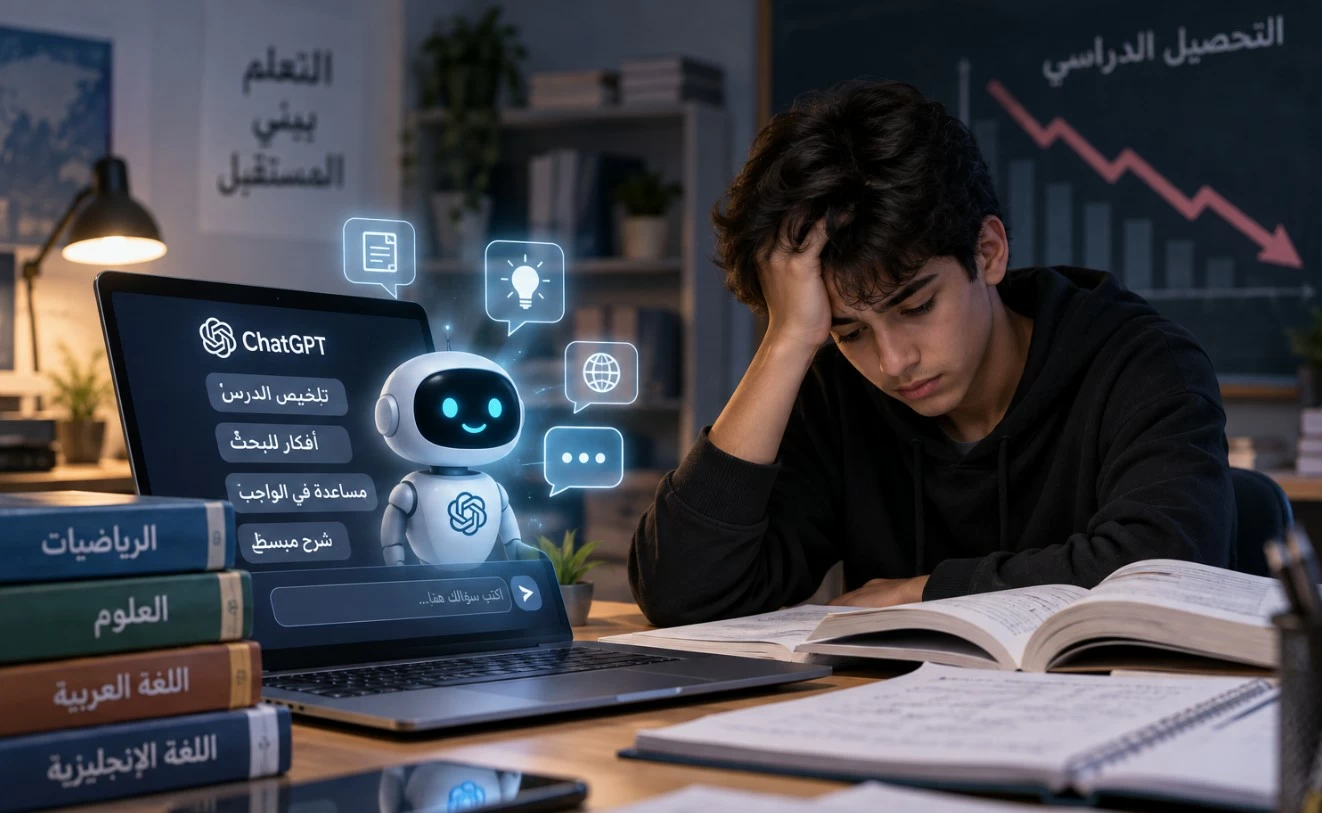
كشفت نتائج دراسة دولية واسعة النطاق عن ارتباط الاستخدام المكثف لأدوات الذكاء الاصطناعي في أداء المهام المدرسية بانخفاض التحصيل الدراسي لدى الطلاب، في وقت أصبحت فيه تطبيقات الذكاء الاصطناعي جزءاً متزايداً من العملية التعليمية حول العالم.
وأظهرت نتائج برنامج التقييم الدولي للطلاب PISA 2025، الصادر عن منظمة التعاون الاقتصادي والتنمية (OECD)، أن الطلاب الذين لا يستخدمون روبوتات المحادثة المعتمدة على الذكاء الاصطناعي في مهام مدرسية محددة يسجلون، في معظم الدول والاقتصادات المشاركة، نتائج أعلى من أقرانهم الذين يستخدمونها.
وشملت الدراسة أكثر من 760 ألف طالب وطالبة في سن 15 عاماً من 91 دولة واقتصاداً، يمثلون نحو 33 مليون طالب حول العالم، وقيّمت أداءهم في العلوم والرياضيات والقراءة.
46% يستخدمون الذكاء الاصطناعي أسبوعياً
وبحسب النتائج، يستخدم 46% من الطلاب في دول منظمة التعاون الاقتصادي والتنمية روبوتات المحادثة بالذكاء الاصطناعي مرة واحدة أسبوعياً على الأقل للمساعدة في التعلم، فيما أفاد نحو طالب من كل خمسة باستخدام هذه الأدوات بصورة شبه يومية في الأعمال المدرسية.
وشملت الاستخدامات التي رصدتها الدراسة تلخيص النصوص المطلوبة للقراءة، وإجراء أبحاث أولية حول موضوعات جديدة، وإعداد مسودات للواجبات الكتابية، إضافة إلى استخدامها بصورة عامة للمساعدة على التعلم.
الاستخدام المعتدل يختلف عن الإفراط
لكن الدراسة حذرت من تفسير النتائج على أنها دليل على أن الذكاء الاصطناعي يؤدي بالضرورة إلى تراجع المستوى الدراسي، إذ وصفت العلاقة بين استخدام هذه الأدوات والأداء الأكاديمي بأنها معقدة.
وأظهرت النتائج أن الطلاب الذين يستخدمون الذكاء الاصطناعي أسبوعياً بصورة عامة «للمساعدة على التعلم» حققوا أداءً في العلوم قريباً من الطلاب الذين لا يستخدمونه، بعد أخذ الخلفية الاجتماعية والاقتصادية في الاعتبار. كما سجل الطلاب الذين تعلموا في مدارسهم كيفية تقييم جودة المعلومات التي ينتجها الذكاء الاصطناعي نتائج أفضل قليلاً عند استخدامه بصورة متكررة للتعلم.
«أداة للتفكير لا بديلاً عنه»
وقال مدير التعليم والمهارات في منظمة التعاون الاقتصادي والتنمية والمشرف على برنامج PISA أندرياس شلايخر إن الطلاب الأعلى أداءً يميلون إلى استخدام أقل للذكاء الاصطناعي، محذراً من الاعتماد على الإجابات الجاهزة بدلاً من ممارسة التفكير والتحليل بأنفسهم.
وأشار التقرير إلى أن التقنية يمكن أن تدعم التعلم عندما تستخدم بصورة هادفة ومعتدلة، في حين قد يؤدي الاستخدام المفرط أو غير الموجّه إلى تشتيت الانتباه وتقليل التفاعل العميق مع المواد التعليمية.
أدنى مستويات تاريخية
وتأتي النتائج في وقت سجل فيه متوسط أداء دول منظمة التعاون الاقتصادي والتنمية أدنى مستوياته منذ بدء اختبارات PISA في العلوم والقراءة والرياضيات، مع تراجع ملحوظ في مهارات القراءة المرتبطة بالتفكير النقدي وتقييم المعلومات والربط بين المصادر المختلفة.
The results of a large-scale international study revealed a link between the intensive use of artificial intelligence tools in performing school tasks and a decline in academic achievement among students, at a time when AI applications have become an increasingly integral part of the educational process worldwide.
The results of the 2025 Programme for International Student Assessment (PISA), issued by the Organisation for Economic Co-operation and Development (OECD), showed that students who do not use AI-powered chatbots for specific school tasks score, in most participating countries and economies, higher than their peers who do use them.
The study included more than 760,000 students aged 15 from 91 countries and economies, representing about 33 million students worldwide, and assessed their performance in science, mathematics, and reading.
46% Use AI Weekly
According to the results, 46% of students in OECD countries use AI chatbots at least once a week to assist in learning, while about one in five students reported using these tools almost daily for schoolwork.
The uses monitored by the study included summarizing required reading texts, conducting preliminary research on new topics, preparing drafts for written assignments, in addition to using them generally to assist in learning.
Moderate Use Differs from Overuse
However, the study warned against interpreting the results as evidence that AI necessarily leads to a decline in academic performance, describing the relationship between the use of these tools and academic performance as complex.
The results showed that students who use AI weekly generally "to assist in learning" performed in science similarly to students who do not use it, after taking social and economic background into account. Additionally, students who learned in their schools how to evaluate the quality of information produced by AI achieved slightly better results when using it frequently for learning.
"A Tool for Thinking, Not a Replacement"
Andreas Schleicher, Director of Education and Skills at the OECD and supervisor of the PISA program, stated that higher-performing students tend to use AI less, warning against relying on ready-made answers instead of engaging in thinking and analysis themselves.
The report noted that technology can support learning when used purposefully and moderately, while excessive or unstructured use may lead to distraction and reduce deep interaction with educational materials.
Historic Low Levels
The results come at a time when the average performance of OECD countries has reached its lowest levels since the start of PISA assessments in science, reading, and mathematics, with a noticeable decline in reading skills related to critical thinking, information evaluation, and connecting different sources.