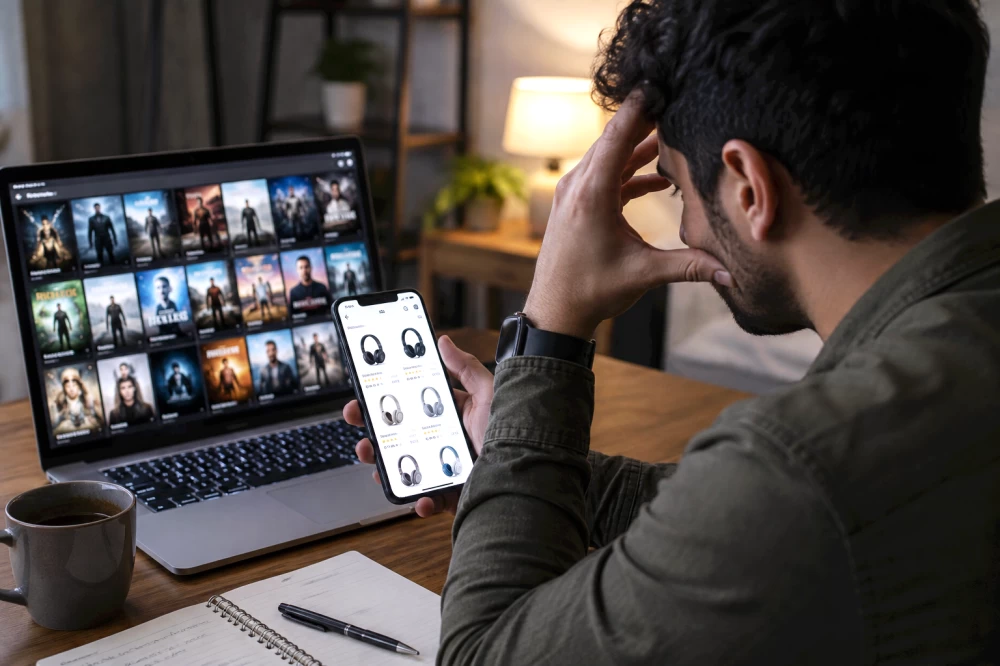
يدخل شخص إلى منصة للمشاهدة بحثاً عن فيلم يقضي معه ساعتين، وبعد نصف ساعة من التنقل بين عشرات العناوين يغلق الشاشة دون أن يشاهد شيئاً. وفي متجر إلكتروني، تبدأ رحلة شراء هاتف بمقارنة جهازين، ثم تنتهي بعشرات الصفحات والتقييمات والمراجعات، وربما بتأجيل الشراء كاملاً. مشهدان يلخصان مفارقة فرضتها وفرة الخيارات في الحياة الحديثة: كل شيء متاح تقريباً، لكن الاختيار أصبح أكثر تعقيداً.
وتضاعفت البدائل التي يواجهها المستهلك، مع انتقال جانب كبير من حياته إلى التطبيقات والمنصات الرقمية. الطعام والسفر والملابس والأجهزة والترفيه وحتى الخدمات اليومية، جميعها تعرض عشرات الخيارات في مساحة واحدة، مصحوبة بالأسعار والصور والخصومات والنجوم وتعليقات المستخدمين.
هذه الوفرة تمنح المستهلك قوة أكبر في المقارنة، لكنها تضعه، في الوقت نفسه، أمام سؤال متكرر: هل هذا هو الخيار الأفضل فعلاً، أم يوجد ما هو أفضل إذا واصلت البحث؟
هنا تظهر «مفارقة الاختيار»، وهي فكرة ترتبط بالحالات التي تتحول فيها زيادة البدائل من مساحة للحرية إلى مصدر للحيرة. فكل خيار جديد يعني مقارنة إضافية، وكل مقارنة تفتح احتمالاً جديداً، حتى يصبح اتخاذ قرار بسيط عملية تستنزف وقتاً يفوق أحياناً قيمة القرار نفسه.
وتزداد الحيرة، عندما تكون الفروق محدودة. عشرات المطاعم تقدم الوجبة ذاتها، وأجهزة متقاربة في المواصفات، وفنادق متشابهة في الأسعار، فيما تضيف تقييمات المستخدمين طبقة أخرى من التردد؛ فمنتج يحصل على آلاف الآراء المتناقضة قد يجعل المستهلك أقل حسماً بدلاً من مساعدته.
ولا تتوقف المشكلة عند لحظة الاختيار. فوفرة البدائل قد تلاحق الشخص بعد القرار أيضاً، عندما يبدأ بمقارنة ما حصل عليه بما تركه خلفه، متسائلاً عما إذا كان هناك خيار أفضل.
وسط هذا الزحام، يصبح تحديد الاحتياج قبل البحث وسيلة أكثر فاعلية من استعراض كل ما هو متاح. فالقدرة على الاختيار لم تعد في معرفة جميع البدائل، بل في معرفة اللحظة التي نتوقف فيها عن البحث ونقرر.
A person enters a streaming platform looking for a movie to spend two hours with, and after half an hour of browsing through dozens of titles, they close the screen without watching anything. In an online store, the journey to purchase a phone begins with comparing two devices, then ends with dozens of pages, ratings, and reviews, possibly leading to a complete postponement of the purchase. These two scenes summarize a paradox imposed by the abundance of choices in modern life: almost everything is available, but the selection has become more complicated.
The alternatives faced by consumers have multiplied, as a large part of their lives has shifted to digital applications and platforms. Food, travel, clothing, devices, entertainment, and even daily services all offer dozens of options in one space, accompanied by prices, images, discounts, star ratings, and user comments.
This abundance gives consumers greater power in comparison, but at the same time, it presents them with a recurring question: Is this really the best option, or is there something better if I continue searching?
Here, the "paradox of choice" emerges, a concept related to situations where an increase in alternatives shifts from a space of freedom to a source of confusion. Every new option means an additional comparison, and each comparison opens up a new possibility, until making a simple decision becomes a process that consumes time often exceeding the value of the decision itself.
Confusion increases when the differences are limited. Dozens of restaurants offer the same meal, devices have similar specifications, and hotels are comparable in price, while user ratings add another layer of hesitation; a product that receives thousands of conflicting opinions may make the consumer less decisive instead of helping them.
The problem does not stop at the moment of choice. The abundance of alternatives may follow a person even after the decision, as they begin to compare what they have obtained with what they left behind, wondering if there was a better option.
Amid this chaos, defining the need before searching becomes a more effective means than browsing everything available. The ability to choose is no longer about knowing all the alternatives, but about knowing the moment to stop searching and make a decision.