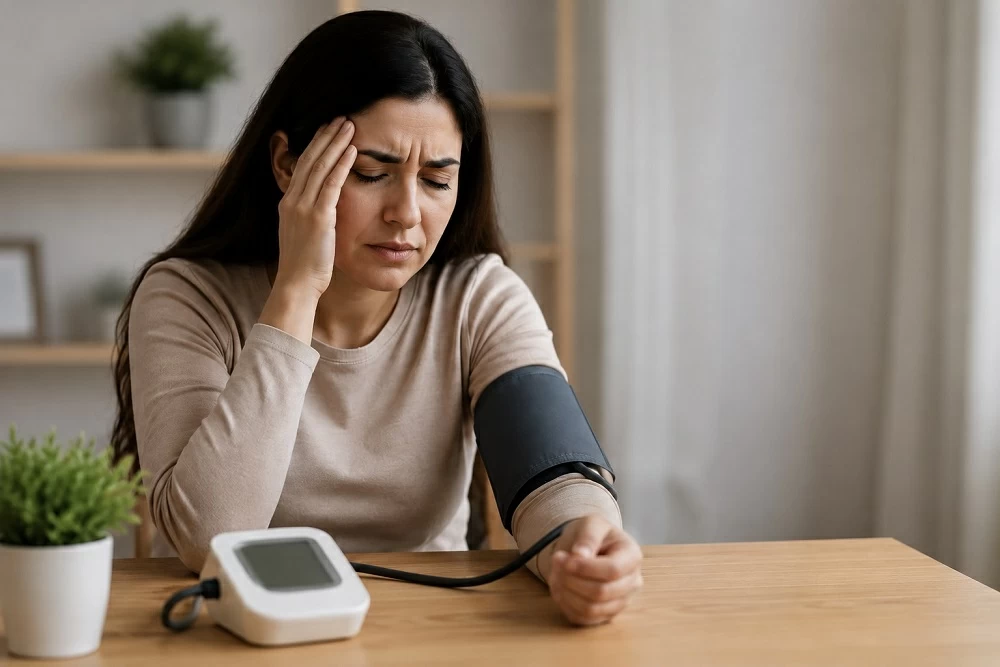
يعاني نحو نصف البالغين في الولايات المتحدة من ارتفاع ضغط الدم، وبينما قد تكون النساء أقل عرضة للإصابة مقارنة بالرجال، فإن المرض قد يتطور لديهن بصمت لسنوات دون ظهور أعراض واضحة.
ويُعرف ارتفاع ضغط الدم بأنه الحالة التي تتجاوز فيها القراءات 120/80 ملم زئبق، فيما تمثل القراءات الأعلى بداية لمراحل متفاوتة من ارتفاع الضغط، بحسب تقرير نشره موقع «Verywell Health».
وتلعب التغيرات الهرمونية المرتبطة بالحمل وسن اليأس دورًا في زيادة احتمالات الإصابة بارتفاع ضغط الدم أو تفاقم الحالة لدى النساء.
أعراض قد تُفسر خطأ
غالبًا لا يسبب ارتفاع ضغط الدم أعراضًا واضحة، وهو ما أكسبه وصف «القاتل الصامت»، إلا أن بعض العلامات المحتملة قد تظهر لدى النساء ويجري تفسيرها أحيانًا على أنها نتيجة للإجهاد أو التغيرات الهرمونية.
وتشمل هذه الأعراض الصداع المستمر، والدوخة، وتشوش الرؤية، والشعور بالتعب وفقدان الطاقة، إلى جانب خفقان القلب أو تسارع ضرباته، كما قد تظهر آلام أو ضغط في الصدر، أو تورم في اليدين والكاحلين.
وقد تواجه بعض النساء أعراضًا أكثر حدة، مثل التعرق المفرط أو الشعور بانقباض في الصدر، وهي علامات قد تتشابه مع أعراض سن اليأس أو القلق.
الحمل يزيد الحساسية للمضاعفات
وتُعد فترة الحمل من المراحل التي تتطلب متابعة دقيقة لضغط الدم، إذ قد تظهر حالات مثل ارتفاع ضغط الدم الحملي أو «تسمم الحمل»، التي قد تؤثر في صحة الأم والجنين.
ويحدث تسمم الحمل عادة خلال النصف الثاني من الحمل، وقد يترافق مع ارتفاع ضغط الدم وظهور البروتين في البول، بما قد يشير إلى إجهاد الأعضاء الداخلية.
وتشدد التوصيات الطبية على أهمية متابعة ضغط الدم أثناء الحمل لتقليل احتمالات حدوث مضاعفات مثل الولادة المبكرة أو تضرر الأعضاء.
مخاطر على القلب والكلى والبصر
وقد يؤدي إهمال علاج ارتفاع ضغط الدم إلى مضاعفات خطيرة تشمل أمراض القلب، والجلطات الدماغية، وفشل القلب، وتضرر الكلى، وفقدان البصر، إضافة إلى تلف الأوعية الدموية وإجهاد القلب على المدى الطويل.
وترتفع احتمالات حدوث المضاعفات مع التقدم في العمر، أو وجود عوامل أخرى مثل السكري وأمراض الكلى والتاريخ العائلي للإصابة بارتفاع ضغط الدم.
العلاج يبدأ بتغيير نمط الحياة
ويعتمد التعامل مع ارتفاع ضغط الدم على تعديل نمط الحياة، من خلال اتباع نظام غذائي صحي، وتقليل استهلاك الملح، وممارسة النشاط البدني بانتظام، وخفض الوزن، والابتعاد عن التدخين.
وفي الحالات الأكثر تقدمًا، قد يصف الأطباء أدوية للتحكم في ضغط الدم، من بينها مدرات البول وبعض الأدوية التي تساعد على حماية القلب والأوعية الدموية.
كما يُنصح بمراقبة ضغط الدم بانتظام في المنزل، خصوصًا لدى النساء الأكثر عرضة للإصابة.
وينصح الخبراء بمراجعة الطبيب عند تكرار القراءات المرتفعة، أو ظهور أعراض غير معتادة مثل ألم الصدر أو الصداع الشديد أو اضطراب الرؤية، فيما تُعد قراءة 180/120 ملم زئبق أو أكثر حالة تستدعي التدخل الطبي العاجل.
Nearly half of adults in the United States suffer from high blood pressure, and while women may be less likely to be affected compared to men, the condition can develop silently in them for years without obvious symptoms.
High blood pressure is defined as the condition where readings exceed 120/80 mmHg, with higher readings indicating the beginning of varying stages of hypertension, according to a report published by "Verywell Health".
Hormonal changes associated with pregnancy and menopause play a role in increasing the likelihood of developing high blood pressure or exacerbating the condition in women.
Symptoms That May Be Misinterpreted
High blood pressure often does not cause obvious symptoms, which has earned it the description of "the silent killer," but some potential signs may appear in women and are sometimes interpreted as a result of stress or hormonal changes.
These symptoms include persistent headaches, dizziness, blurred vision, feelings of fatigue and loss of energy, as well as heart palpitations or rapid heartbeats. Chest pain or pressure, and swelling in the hands and ankles may also occur.
Some women may experience more severe symptoms, such as excessive sweating or a feeling of tightness in the chest, which can resemble symptoms of menopause or anxiety.
Pregnancy Increases Sensitivity to Complications
Pregnancy is a stage that requires careful monitoring of blood pressure, as conditions such as gestational hypertension or "preeclampsia" may arise, affecting the health of both mother and fetus.
Preeclampsia typically occurs during the second half of pregnancy and may be accompanied by high blood pressure and the presence of protein in the urine, indicating stress on internal organs.
Medical recommendations emphasize the importance of monitoring blood pressure during pregnancy to reduce the likelihood of complications such as preterm birth or organ damage.
Risks to the Heart, Kidneys, and Vision
Neglecting the treatment of high blood pressure can lead to serious complications including heart disease, strokes, heart failure, kidney damage, and vision loss, in addition to long-term damage to blood vessels and strain on the heart.
The likelihood of complications increases with age or the presence of other factors such as diabetes, kidney disease, and a family history of high blood pressure.
Treatment Begins with Lifestyle Changes
Managing high blood pressure relies on lifestyle modifications, including following a healthy diet, reducing salt intake, exercising regularly, losing weight, and avoiding smoking.
In more advanced cases, doctors may prescribe medications to control blood pressure, including diuretics and some drugs that help protect the heart and blood vessels.
Regular monitoring of blood pressure at home is also recommended, especially for women who are more susceptible to the condition.
Experts advise consulting a doctor when high readings recur or when unusual symptoms such as chest pain, severe headaches, or vision disturbances appear, with a reading of 180/120 mmHg or higher being a situation that requires urgent medical intervention.