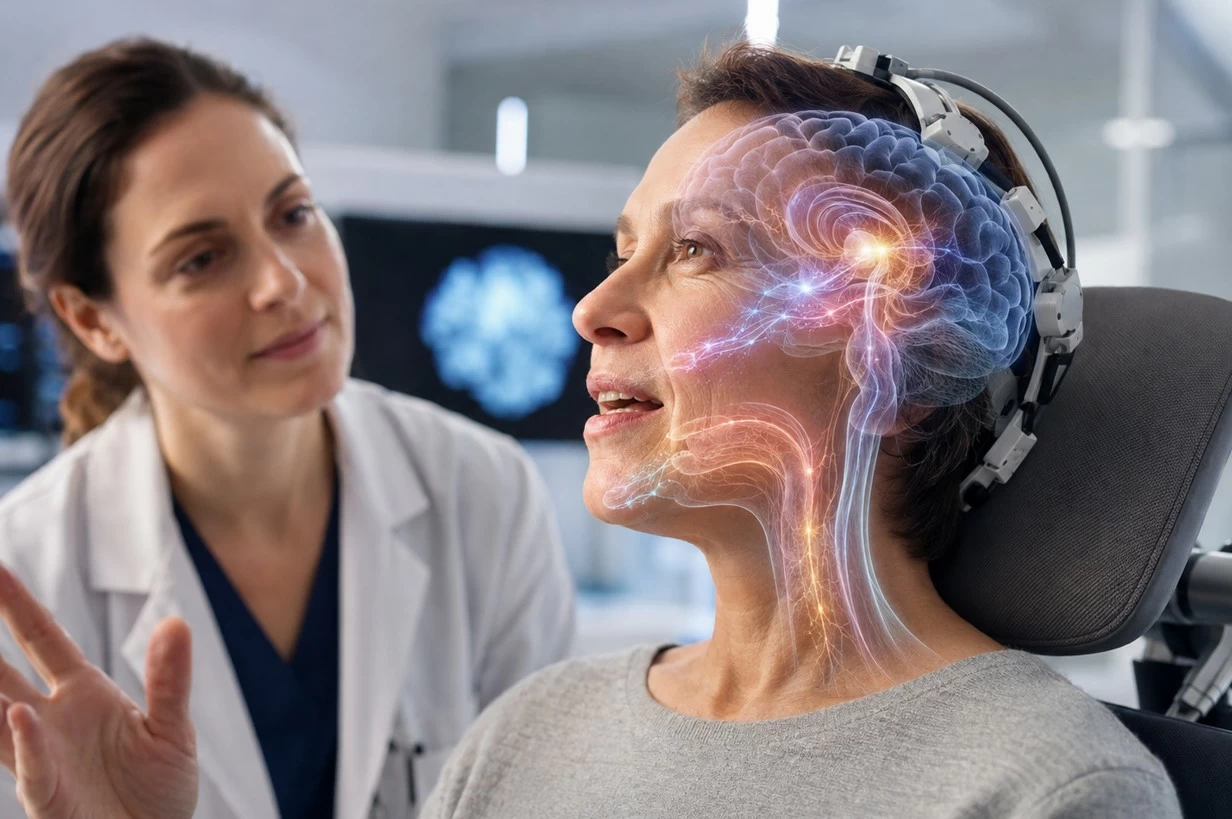
أظهرت دراسة علمية حديثة أن التحفيز الكهربائي منخفض التردد لمنطقة عميقة في الدماغ قد يسهم في تحسين بعض اضطرابات الكلام والبلع الناتجة عن إصابات الدماغ الرضية، في نتائج أولية قد تفتح المجال أمام تطوير أساليب جديدة لإعادة التأهيل العصبي.
استهداف «المهاد الحركي»
وذكرت كلية الطب في جامعة بيتسبرغ الأمريكية، في بيان نشرته في 24 أغسطس الماضي عبر موقعها الإلكتروني، أن الدراسة قادتها الباحثة إلفيرا بيرونديني بالتعاون مع باحثين من الجامعة، ونُشرت في مجلة «Nature Communications»، وركزت على تأثير التحفيز العميق للدماغ في منطقة «المهاد الحركي» المرتبطة بالقشرة الحركية والمسؤولة عن تنسيق عدد من الوظائف الحركية.
واختبر الباحثون التحفيز الكهربائي منخفض التردد، الذي راوحت شدته بين 50 و80 هرتز، لدى ثمانية مشاركين يتمتعون بمسارات عصبية سليمة للكلام والبلع، وأظهرت النتائج ارتفاع نشاط العضلات المسؤولة عن حركات الوجه والحلق دون تراجع في القدرة على الكلام.
تحسن في الكلام والبلع
وفي تجربة لإثبات المفهوم، طبق الفريق التقنية على مشارك يعاني إصابة دماغية رضية مزمنة تسببت في اضطراب شديد في النطق وصعوبة متوسطة في البلع، وأظهرت النتائج تحسناً في حركة عضلات الوجه وكفاءة البلع والتحكم في جوانب مختلفة من الكلام عند استخدام التحفيز منخفض التردد.
وسجلت اختبارات وضوح الكلمات لدى المشارك المصاب تحسناً بنسب 8% و20% و16% خلال ثلاث جلسات عند تشغيل التحفيز مقارنة بإيقافه. وأشار الباحثون إلى أن تغيراً بنسبة 7% يُعد تحسناً ذا أهمية سريرية، فيما يمثل التغير بنسبة 15% تحسناً سريرياً كبيراً.
الترددات المنخفضة أكثر فاعلية
وبيّن الباحثون أن تأثير التحفيز منخفض التردد يختلف عن التحفيز عالي التردد المستخدم عادة في بعض تطبيقات التحفيز العميق للدماغ، إذ أظهرت التجارب قدرة الترددات المنخفضة بصورة أكبر على تعزيز النشاط الحركي المرتبط بعضلات الوجه والحلق، في حين ارتبطت الترددات العالية في دراسات سابقة بتأثيرات سلبية على الكلام.
وأشار الفريق إلى أن التحفيز منخفض التردد قد يسهم في تعزيز المسارات العصبية المتبقية بين الدماغ والعضلات بعد الإصابة، بدلاً من إنشاء مسارات عصبية جديدة، ما قد يساعد على الاستفادة من الوظائف التي لم تتضرر بصورة كاملة.
نتائج أولية تحتاج إلى دراسات أوسع
وأكد الباحثون أن الدراسة لا تمثل تجربة سريرية علاجية، وأن عدد المشاركين المصابين بإصابات الدماغ كان محدوداً، ما يعني عدم إمكانية اعتبار النتائج دليلاً على فعالية العلاج بصورة عامة، مشددين على الحاجة إلى دراسات أكبر لتقييم سلامة التقنية وفاعليتها لدى أنواع مختلفة من إصابات الدماغ.
وتقدم النتائج دليلاً أولياً على إمكانية الاستفادة من التحفيز العميق منخفض التردد للدماغ في دعم استعادة بعض وظائف الكلام والبلع بعد الإصابات العصبية، مع بقاء التقنية في المرحلة البحثية والحاجة إلى مزيد من الدراسات قبل اعتمادها علاجاً على نطاق واسع.
A recent scientific study has shown that low-frequency electrical stimulation of a deep area in the brain may contribute to improving certain speech and swallowing disorders resulting from traumatic brain injuries, in preliminary results that could open the door to developing new methods for neurorehabilitation.
Targeting the "Motor Thalamus"
The University of Pittsburgh School of Medicine in the United States stated in a statement published on its website on August 24 that the study was led by researcher Elvira Berundini in collaboration with researchers from the university, and was published in the journal "Nature Communications." It focused on the effects of deep brain stimulation in the "motor thalamus," which is associated with the motor cortex and is responsible for coordinating several motor functions.
The researchers tested low-frequency electrical stimulation, which ranged in intensity between 50 and 80 Hz, on eight participants with intact neural pathways for speech and swallowing. The results showed an increase in the activity of the muscles responsible for facial and throat movements without a decline in the ability to speak.
Improvement in Speech and Swallowing
In a proof-of-concept trial, the team applied the technique to a participant suffering from chronic traumatic brain injury that caused severe speech impairment and moderate difficulty in swallowing. The results showed improvement in facial muscle movement, swallowing efficiency, and control over various aspects of speech when using low-frequency stimulation.
Word clarity tests for the affected participant recorded improvements of 8%, 20%, and 16% across three sessions when stimulation was activated compared to when it was turned off. The researchers noted that a change of 7% is considered a clinically significant improvement, while a change of 15% represents a major clinical improvement.
Low Frequencies More Effective
The researchers indicated that the effects of low-frequency stimulation differ from the high-frequency stimulation typically used in some deep brain stimulation applications. Experiments showed that low frequencies are more capable of enhancing motor activity associated with the facial and throat muscles, while high frequencies in previous studies have been linked to negative effects on speech.
The team pointed out that low-frequency stimulation may help enhance the remaining neural pathways between the brain and muscles after injury, rather than creating new neural pathways, which could assist in utilizing functions that have not been completely impaired.
Preliminary Results Need Broader Studies
The researchers emphasized that the study does not represent a therapeutic clinical trial, and that the number of participants with brain injuries was limited, meaning the results cannot be considered evidence of the treatment's effectiveness in general. They stressed the need for larger studies to assess the safety and efficacy of the technique in different types of brain injuries.
The results provide preliminary evidence of the potential benefits of low-frequency deep brain stimulation in supporting the recovery of certain speech and swallowing functions after neurological injuries, with the technique remaining in the research phase and requiring further studies before it can be widely adopted as a treatment.