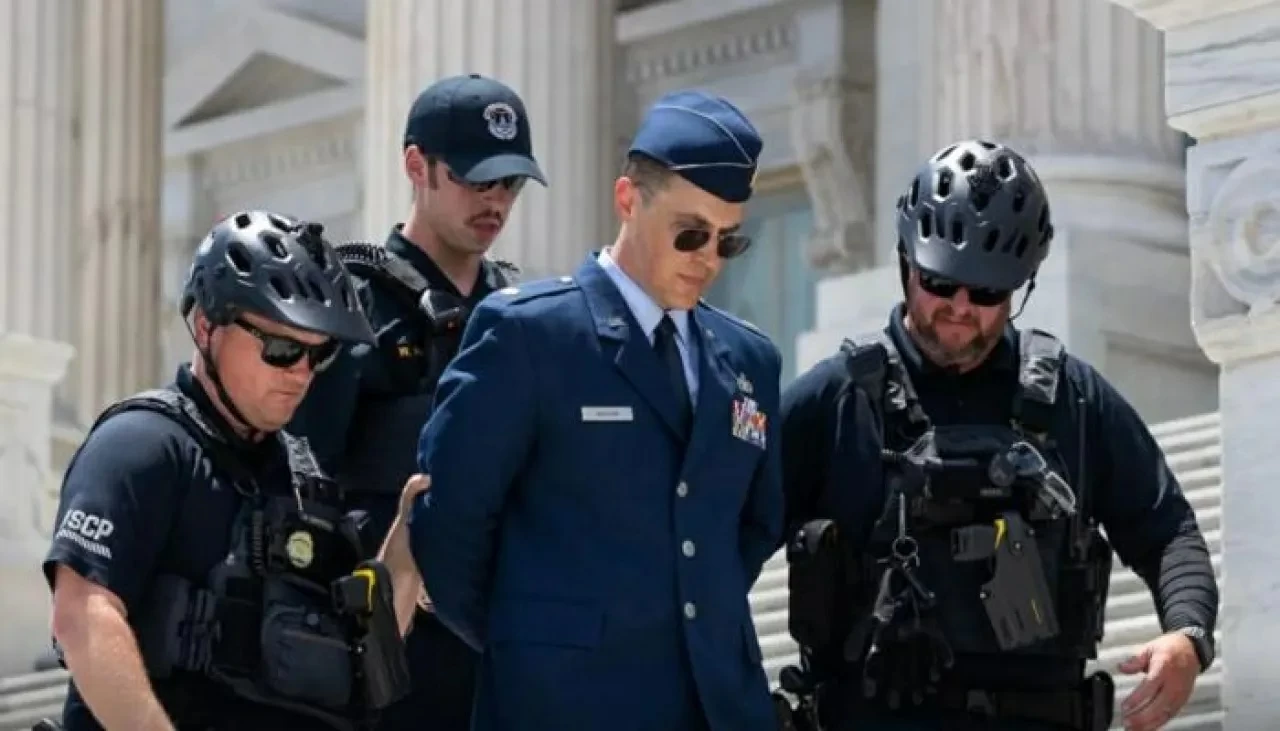
عادت أزمة انضباط الجيش الأمريكي لتطفو على سطح الأحداث السياسية مجدداً، عقب إلقاء القبض على الرائد في القوات الجوية جيسون واتسون واقتياده إلى الحبس الاحتياطي، إثر هجومه الحاد على الرئيس دونالد ترمب ودعوته العلنية لإقالته.
الواقعة التي أثارت زلزالاً داخل الوسط العسكري في واشنطن، جاءت كحلقة جديدة في مسلسل مواجهة الضابط للقوانين الصارمة التي تجرّم الخوض في السياسة بالزي الرسمي أو توجيه إهانات للقيادة العليا.
ولم تكن هذه المرة الأولى التي يُعتقل فيها الرائد واتسون، بل جاء توقيفه الجديد بعد أيام قليلة جداً من إجرائه مقابلة تلفزيونية نارية مع قناة «CNN»، جدد فيها تمسكه بدعوة عزل الرئيس دونالد ترمب ونائبه جي دي فانس.
وعلى الفور، أصدرت القوات الجوية أوامر عاجلة بنقله إلى احتجاز عسكري صارم داخل مركز تابع لمقاطعة في ولاية ماريلاند، في انتظار إعلامه بالاتهامات الرسمية.
وتعود بداية السقوط القانوني الأول للرائد واتسون إلى شهر يوليو الماضي، عندما أثار صدمة واسعة بظهوره بزيه العسكري الرسمي خلال تظاهرة أمام مبنى الكابيتول، مطالباً بإسقاط الإدارة السياسية.
وتقع تصرفات واتسون تحت طائلة مادتين قاستين في القضاء العسكري الأمريكي:
- المادة 88: التي تجرم بشكل قاطع استخدام أي عبارات تنطوي على «ازدراء أو إساءة» بحق الرئيس وكبار المسؤولين.
- المادة 92: المتعلقة بعدم امتثاله للأوامر واللوائح التي تمنع تماماً ممارسة الأنشطة السياسية أثناء ارتداء البدلة العسكرية.
ويتوقع كريس موتيمر محامي الضابط المعتقل، توجيه حزمة اتهامات ثقيلة لموكله قد تنتهي بإنهاء خدمته العسكرية وتجريده من رتبته، إلى جانب عقوبة السجن.
وتطرح قضية واتسون علامات استفهام كبرى حول الخط الفاصل بين حرية التعبير المكفولة وأهمية الالتزام بالقسم والقوانين العسكرية.
The crisis of discipline within the U.S. military has resurfaced in the political arena following the arrest of Air Force Major Jason Watson and his subsequent detention, after his sharp attack on President Donald Trump and his public call for his removal.
The incident, which caused a seismic shock within the military community in Washington, is part of a new chapter in the officer's confrontation with the strict laws that criminalize political engagement while in uniform or insulting senior leadership.
This was not the first time Major Watson had been arrested; his latest detention came just a few days after he conducted a fiery television interview with CNN, where he reiterated his call for the impeachment of President Donald Trump and Vice President J.D. Vance.
Immediately, the Air Force issued urgent orders to transfer him to strict military confinement at a facility in Maryland, pending notification of the official charges against him.
The beginning of Major Watson's legal downfall dates back to last July, when he shocked many by appearing in his official military uniform during a demonstration outside the Capitol, demanding the overthrow of the political administration.
Watson's actions fall under two stringent articles in U.S. military law:
- Article 88: which unequivocally criminalizes the use of any statements that involve "contempt or disrespect" towards the president and senior officials.
- Article 92: concerning his failure to comply with orders and regulations that completely prohibit political activities while wearing the military uniform.
Chris Motimer, the attorney for the detained officer, expects a heavy package of charges to be brought against his client, which could result in the termination of his military service and the stripping of his rank, along with a potential prison sentence.
The Watson case raises significant questions about the fine line between protected freedom of expression and the importance of adhering to military oaths and laws.