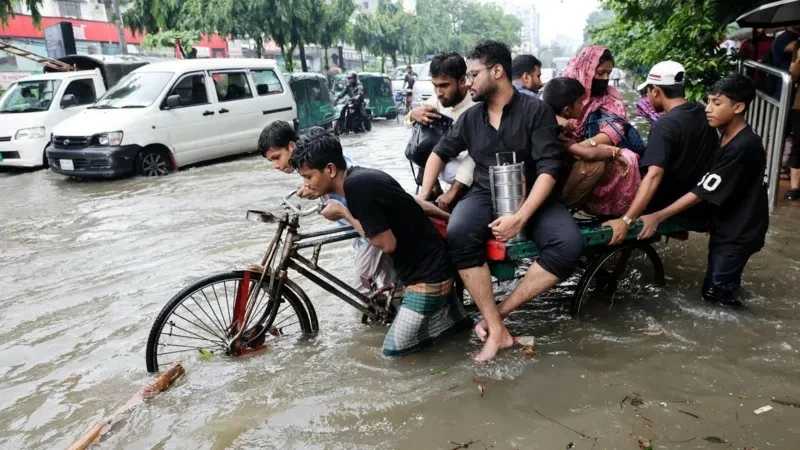
لقي ما لا يقل عن 51 شخصاً مقتلهم، فيما تضرر أكثر من مليون آخرين، جراء الأمطار الموسمية الغزيرة التي اجتاحت أنحاء واسعة من بنغلاديش خلال الأيام الماضية، متسببة في فيضانات مفاجئة وانهيارات أرضية واسعة النطاق.
وأدت الأمطار الغزيرة إلى تشريد آلاف الأسر بعد تدمير أو إلحاق أضرار بمنازلهم، بينما غمرت المياه مناطق واسعة من البلاد، بما في ذلك العاصمة دكا، إذ تعطلت حركة المرور في عدد من الشوارع الرئيسية بسبب ارتفاع منسوب المياه، الذي وصل في بعض المناطق إلى مستوى الركبة، بحسب تقارير محلية.
وتعد منطقة كوكس بازار الأكثر تضرراً، إذ سجلت 28 حالة وفاة من إجمالي الضحايا، وتضم المنطقة أكبر تجمع للاجئي الروهينغا في العالم، حيث يقيم فيها أكثر من مليون لاجئ.
وشهدت المنطقة الأسبوع الماضي حادثة مأساوية أسفرت عن مقتل عدد من الطلاب وأحد المعلمين بعدما اجتاحت مياه الفيضانات مدرستهم.
وبدأت موجة الأمطار قبل أكثر من أسبوع، قبل أن تشتد خلال الأيام الأخيرة، ما دفع السلطات إلى إصدار تحذيرات من الفيضانات والانهيارات الأرضية، وإجلاء السكان من المناطق الأكثر عرضة للخطر، إلى جانب تأجيل الامتحانات الدراسية في عدد من المناطق.
وأكدت السلطات أن آلاف الأشخاص يقيمون حالياً في مراكز إيواء حكومية، فيما تجاوز عدد المتضررين من الأمطار حتى (الأحد) مليون شخص.
وتُعد بنغلاديش من أكثر الدول عرضة للفيضانات بسبب طبيعتها المنخفضة ووجود شبكة واسعة من الأنهار، إذ تشهد سنوياً أمطاراً غزيرة خلال موسم الرياح الموسمية، إلا أن خبراء المناخ يحذرون من أن التغير المناخي أدى إلى زيادة شدة الأمطار وتكرار الظواهر الجوية المتطرفة، ما يفاقم مخاطر الكوارث الطبيعية في البلاد.
وفي السياق ذاته، أوضح سردار أودوي رايهان، المسؤول في مركز التنبؤ بالفيضانات والإنذار المبكر، أن الأوضاع في جنوب شرق البلاد مرشحة للتحسن خلال الأيام القادمة، لكنه حذر في الوقت نفسه من احتمال تعرض المناطق الشمالية والشمالية الشرقية لمزيد من الفيضانات مع استمرار تأثير الرياح الموسمية، الأمر الذي يبقي خطر اتساع رقعة الكارثة قائماً.
At least 51 people have lost their lives, while more than a million others have been affected, due to the heavy monsoon rains that swept across vast areas of Bangladesh in recent days, causing sudden floods and widespread landslides.
The heavy rains have displaced thousands of families after their homes were destroyed or damaged, while large areas of the country, including the capital Dhaka, were flooded, disrupting traffic on several main roads due to rising water levels, which reached knee-deep in some areas, according to local reports.
The Cox's Bazar region has been the hardest hit, recording 28 of the total fatalities, and it is home to the largest concentration of Rohingya refugees in the world, with over a million refugees residing there.
The region witnessed a tragic incident last week that resulted in the deaths of several students and one teacher after floodwaters engulfed their school.
The wave of rain began more than a week ago, intensifying in recent days, prompting authorities to issue flood and landslide warnings and evacuate residents from the most at-risk areas, in addition to postponing school exams in several regions.
Authorities confirmed that thousands of people are currently residing in government shelters, while the number of those affected by the rains has exceeded one million as of (Sunday).
Bangladesh is one of the most flood-prone countries due to its low-lying nature and extensive network of rivers, experiencing heavy rains annually during the monsoon season. However, climate experts warn that climate change has led to increased rainfall intensity and the frequency of extreme weather events, exacerbating the risks of natural disasters in the country.
In this context, Sardar Odoi Raihan, an official at the Flood Forecasting and Early Warning Center, stated that conditions in the southeast of the country are expected to improve in the coming days, but he also warned of the possibility of further flooding in the northern and northeastern regions as the effects of the monsoon continue, keeping the risk of the disaster's expansion present.