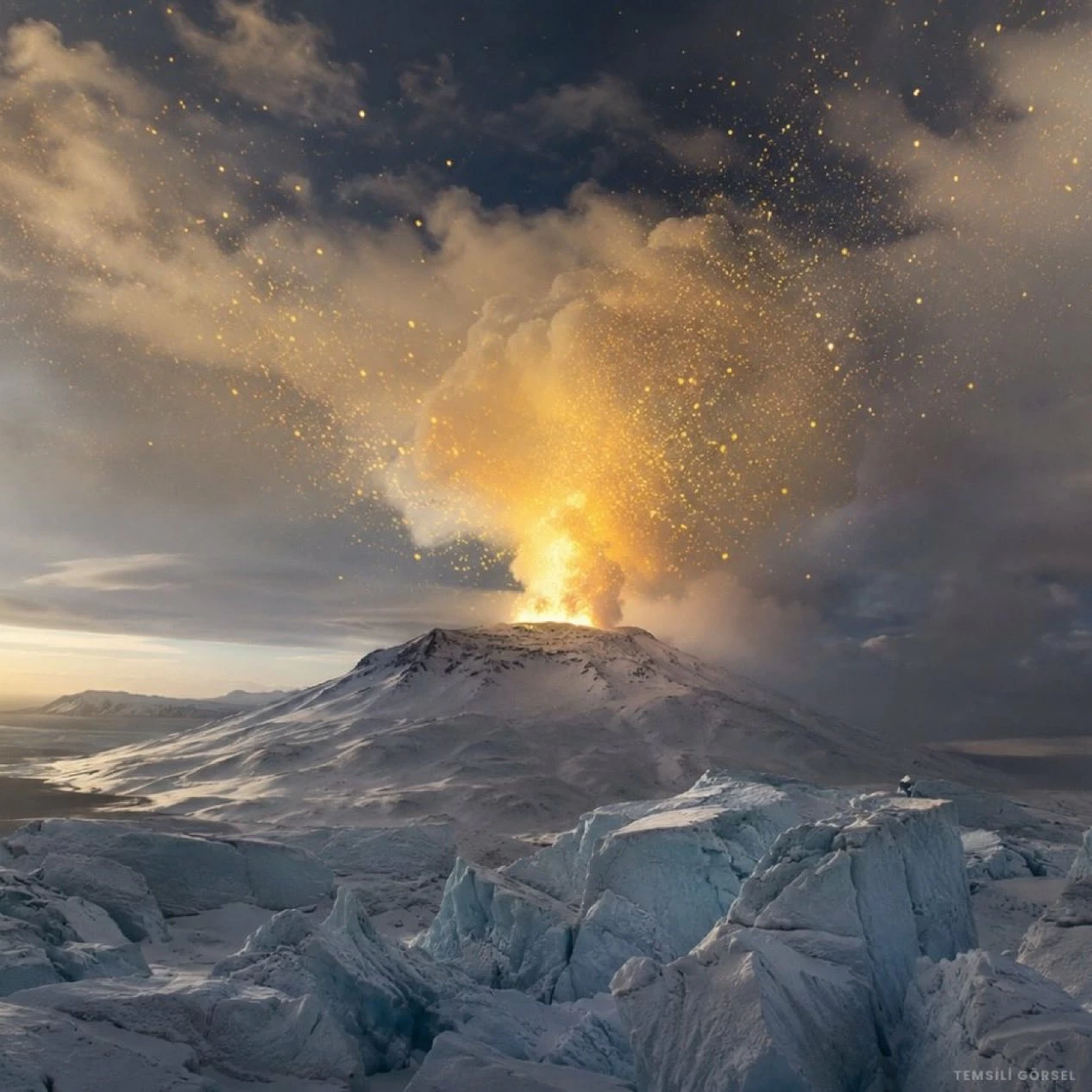
في ظاهرة جيولوجية غريبة، كشف باحثون أن بركان جبل إريبوس في القارة القطبية الجنوبية يطلق يوميًا نحو 80 جرامًا من بلورات الذهب المجهرية التي تنقلها الرياح لمسافات تصل إلى 1000 كيلومتر، ما يثير اهتمام العلماء.
ووفقًا لدراسات جيولوجية، يطلق البركان النشط مع غازاته جسيمات دقيقة من الذهب الخالص، إلى جانب الفضة والنحاس، حيث تختلط هذه المعادن ببخار الماء وثاني أكسيد الكربون وثاني أكسيد الكبريت ومركبات أخرى أثناء النشاط البركاني.
وأوضح الباحثون أن حجم الجسيمات الذهبية لا يتجاوز 20 ميكرومترًا، ما يجعلها غير مرئية للعين المجردة.
وعندما تخرج الغازات الساخنة من فوهة البركان وتصطدم بالهواء البارد في القارة القطبية، تتكثف المعادن وتتحول إلى بلورات صلبة صغيرة، قبل أن تحملها الرياح لمسافات هائلة عبر القارة البيضاء.
وأكدت التحاليل العلمية العثور على آثار لهذه الجسيمات الذهبية في عينات من الغلاف الجوي جُمعت على بعد مئات الكيلومترات.
وبحسب التقديرات، فإن الكمية التي يقذفها البركان تعادل نحو 29 كيلوغرامًا من الذهب سنويًا، تقدر قيمتها بأكثر من مليوني دولار، ورغم ذلك فإن استخراجها يكاد يكون مستحيلًا نظرًا لوجودها في صورة جسيمات مجهرية في الغلاف الجوي.
ويقع جبل إريبوس على ارتفاع 3794 مترًا فوق مستوى سطح البحر في جزيرة روس، ويعد من بين عدد قليل جدًا من البراكين التي تحتفظ ببحيرة دائمة من الحمم البركانية داخل فوهتها، وهي ظاهرة جيولوجية نادرة عالميًا.
كما يتميز البركان بثورانات من النوع السترومبولي، وهي انفجارات متوسطة تقذف شظايا وصخورًا بركانية إلى ارتفاعات كبيرة بصورة متكررة.
ويرى العلماء أن جبل إريبوس يمثل مختبرًا طبيعيًا لدراسة حركة الصهارة من أعماق القشرة الأرضية إلى السطح، إذ يساعد تحليل الغازات المنبعثة منه على فهم التركيب الكيميائي لباطن الأرض وتشكل المعادن وتأثير النشاط البركاني في البيئة القطبية والغلاف الجوي.
كما تتيح هذه الدراسات رؤى جديدة حول انتقال المعادن عبر الغلاف الجوي، وعلاقة النشاط البركاني بالتغيرات البيئية والمناخية في القارة القطبية الجنوبية.
ويُعد جبل إريبوس أقصى بركان نشط في جنوب الكرة الأرضية، ويواصل نشاطه بصورة شبه مستمرة منذ عقود، ويتميز بوجود بحيرة دائمة من الحمم البركانية داخل فوهته، وهي سمة نادرة في براكين العالم.
ولا يقتصر اهتمام العلماء بهذا البركان على ثوراته، بل يمتد إلى تركيب غازاته النادر والغني بالعناصر المعدنية، ما يجعله أحد أهم المواقع الجيولوجية لدراسة تطور القشرة الأرضية، ودورة المعادن، وتأثير النشاط البركاني في الغلاف الجوي، خاصة في البيئات القطبية.
In a strange geological phenomenon, researchers have revealed that Mount Erebus volcano in Antarctica emits about 80 grams of microscopic gold crystals daily, which are carried by the winds for distances of up to 1000 kilometers, piquing the interest of scientists.
According to geological studies, the active volcano releases fine particles of pure gold along with gases, as well as silver and copper. These metals mix with water vapor, carbon dioxide, sulfur dioxide, and other compounds during volcanic activity.
The researchers explained that the size of the gold particles does not exceed 20 micrometers, making them invisible to the naked eye.
When the hot gases exit the volcano's crater and collide with the cold air in Antarctica, the metals condense and transform into small solid crystals before being carried by the winds over vast distances across the white continent.
Scientific analyses have confirmed the presence of traces of these gold particles in atmospheric samples collected hundreds of kilometers away.
According to estimates, the amount ejected by the volcano is equivalent to about 29 kilograms of gold annually, valued at over two million dollars. However, extracting it is nearly impossible due to its presence in the form of microscopic particles in the atmosphere.
Mount Erebus stands at an elevation of 3,794 meters above sea level on Ross Island and is among a very few volcanoes that maintain a permanent lava lake within its crater, a globally rare geological phenomenon.
The volcano is also characterized by Strombolian eruptions, which are moderate explosions that repeatedly eject fragments and volcanic rocks to great heights.
Scientists view Mount Erebus as a natural laboratory for studying the movement of magma from the depths of the Earth's crust to the surface, as analyzing the gases emitted from it helps understand the chemical composition of the Earth's interior, the formation of minerals, and the impact of volcanic activity on the polar environment and the atmosphere.
These studies also provide new insights into the transport of metals through the atmosphere and the relationship between volcanic activity and environmental and climatic changes in Antarctica.
Mount Erebus is the southernmost active volcano on Earth and has been continuously active for decades, characterized by the presence of a permanent lava lake within its crater, a rare feature among the world's volcanoes.
The interest of scientists in this volcano extends beyond its eruptions to the composition of its rare gases rich in mineral elements, making it one of the most important geological sites for studying the evolution of the Earth's crust, the cycle of minerals, and the impact of volcanic activity on the atmosphere, especially in polar environments.