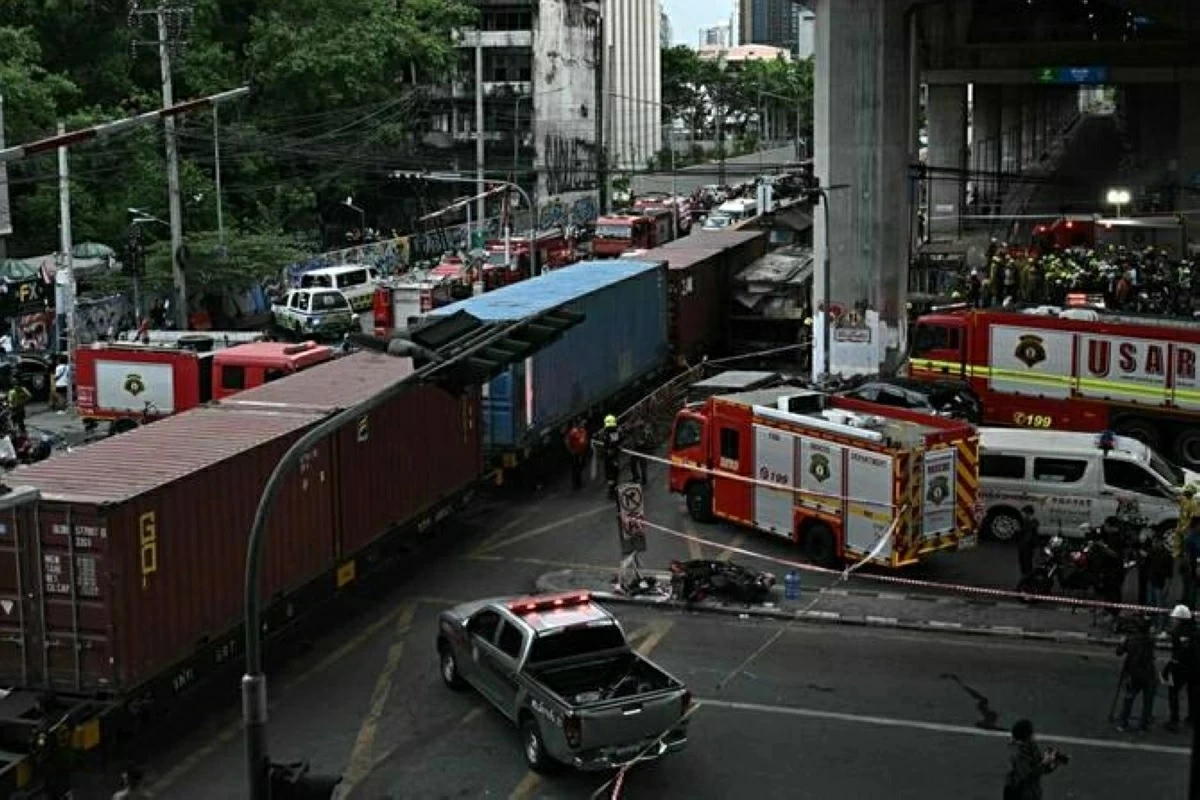
أعلنت السلطات التايلاندية، أمس (الإثنين)، عن إيجابية فحص المخدرات لسائق قطار بضائع اصطدم بحافلة ركاب في العاصمة بانكوك، في حادثة مأساوية أسفرت عن مقتل 8 أشخاص وإصابة العشرات، ووجهت إليه تهمة القيادة المتهورة.
وبحسب صحيفة «سعودي جازيت» كان الحادث قد وقع ليلة السبت الماضي عند تقاطع سكة حديد «أشوك دين داينغ» الحيوي، حيث اجتاح القطار حافلة للنقل العام كانت قد توقفت قسراً فوق القضبان بسبب الاختناق المروري، ما حال دون إغلاق الحواجز الأمنية بشكل صحيح، لتندلع النيران في الحافلة على الفور.
وأفاد رئيس مركز الشرطة المحلي أورومبورن كونديجسومريت، لوكالة (AFP) بصدور اتهامات رسمية يوم الأحد بحق سائق القطار (الذي أصيب في الحادث) وحارس التقاطعات (المخرّز)، تتعلق بالإهمال المفضي إلى الموت والإصابة، وهو ما نفاه كلاهما. وأوضح أورومبورن أن الفحص الأولي لبول السائق أظهر وجود مواد مخدرة غير محددة، مشيراً إلى أن التحقيقات ستشمل فحص السائق البديل والفني الموجود على متن الرحلة.
من جانبه، صرح قائد شرطة بانكوك سيام بونزوم، بأن التقاطع يشهد ازدحاماً يومياً خانقاً دون تسجيل حوادث سابقة، مؤكداً أن مراجعة كاميرات المراقبة كشفت عن ثغرات خطيرة؛ إذ رُصد حارس التقاطع وهو يرفع الراية الحمراء كإشارة تحذيرية، إلا أن القطار تابع سيره دون توقف أو إبطاء للسرعة. وأضاف أن المعتاد في هذا الموقع هو توقف حركة القطارات بناءً على إشارة الحارس حتى إخلاء السيارات المتكدسة فوق المسار، لافتاً إلى أن التحقيقات جارية لتحديد سرعة القطار والمسافة التي احتاجها لاستخدام المكابح.
وفي سياق التحليل الهندسي، قدّر رئيس جمعية المهندسين الإنشائيين في تايلاند الدكتور أمورن بيمارنماس، عبور أكثر من 100 ألف مركبة لهذا التقاطع يومياً، منوهاً بخطورة السلوكيات المرورية هناك، لاسيما تجاوز أصحاب الدراجات النارية للحواجز الأمنية لتفادي الانتظار.
وختم أمورن بالإشارة إلى معضلة تخطيطية؛ إذ بُنيت هذه السكة الحديدية قبل عقود طويلة من تشييد الطرق المحيطة بها، ومع التوسع العمراني للعاصمة، تولد لدى السكان ما يسمى «التطبيع مع المخاطر» (Risk Normalization)؛ وهو تحول الخطر إلى روتين يومي يدفع الناس للاعتقاد بأن الأمور ستسير على ما يرام في كل مرة، إلى أن يستيقظوا على كارثة كالتي حدثت.
The Thai authorities announced yesterday (Monday) that the drug test for the freight train driver involved in a collision with a passenger bus in the capital Bangkok was positive. This tragic incident resulted in the deaths of 8 people and injured dozens, and he has been charged with reckless driving.
According to the Saudi Gazette, the accident occurred last Saturday night at the vital "Asok Din Daeng" railway intersection, where the train collided with a public transport bus that had come to a stop on the tracks due to traffic congestion, preventing the security barriers from closing properly, causing the bus to catch fire immediately.
Local police chief Oromporn Koundigsomrit told AFP that formal charges were filed on Sunday against the train driver (who was injured in the accident) and the crossing guard (the flagman) for negligence leading to death and injury, which both denied. Oromporn explained that the initial urine test of the driver showed the presence of unspecified narcotics, noting that investigations will also include testing the alternative driver and the technician on board the train.
For his part, Bangkok police chief Siam Boonsom stated that the intersection experiences severe daily congestion without any previous recorded accidents, confirming that a review of the surveillance cameras revealed serious gaps; the crossing guard was seen raising the red flag as a warning signal, yet the train continued without stopping or slowing down. He added that the usual practice at this location is for trains to stop based on the guard's signal until the vehicles piled up on the track are cleared, pointing out that investigations are ongoing to determine the train's speed and the distance it needed to use the brakes.
In the context of engineering analysis, Dr. Amorn Piemarnmas, president of the Association of Structural Engineers in Thailand, estimated that over 100,000 vehicles cross this intersection daily, highlighting the dangerous traffic behaviors there, especially motorcyclists bypassing security barriers to avoid waiting.
Amorn concluded by pointing out a planning dilemma; this railway was built long before the surrounding roads were constructed, and with the urban expansion of the capital, residents have developed what is called "Risk Normalization"; a transformation of danger into a daily routine that leads people to believe that everything will go smoothly every time, until they wake up to a disaster like the one that occurred.