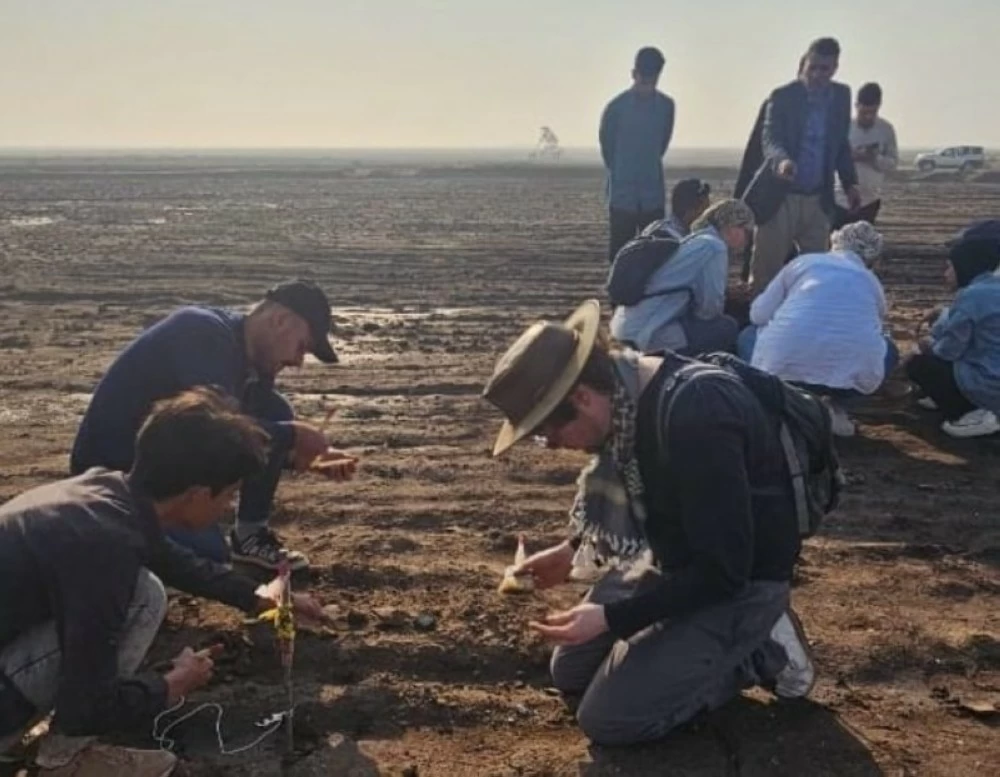
أعلن فريق بحثي عراقي - بريطاني مشترك، مساء أمس (الأحد)، اكتشاف أثري نادر بين محافظتي النجف والديوانية جنوبي العراق، يعود إلى سنة 15 للهجرة.
وقال عميد كلية الآثار في جامعة الكوفة حميد الياسري: «إن الموقع المكتشف يضم حصناً وجدراناً واضحة المعالم، ما يشير إلى أنه موقع عسكري استخدم في معركة القادسية بين مدينتي النجف الأشرف والديوانية» وفقاً لوكالة الأنباء العراقية.
وأضاف الياسري: «أن الفريق الدولي (البريطاني) أسهم في تدريب الكوادر العراقية على طرق الكشف الحديثة، وهو ما يعزز قدرات الباحثين في التنقيب المستقبلي».
كما قالت رئيسة البعثة البريطانية من جامعة دورهام، كريستين هوبر: «إن الفريق البحثي المشترك مع جامعتي القادسية (بمحافظة الديوانية) والكوفة (بمحافظة النجف)، نجح عبر استخدام أساليب متطورة، في الكشف عن موقع يعود لسنة 15 للهجرة (سنة 636 م)».
وأشارت هوبر إلى أن المنطقة التي اكتشف فيها الموقع، تحتفظ بآثار مهمة مرتبطة بتاريخ العراق والفتح الإسلامي.
فيما قال مدير مفتشية آثار النجف الأشرف محمد الميالي: «إن النجف تضم أكثر من 200 موقع أثري، إلا أن ما جرى التنقيب عنه لا يتجاوز (5%) فقط». مؤكداً الحاجة إلى توسعة جهود البحث والتنقيب للكشف عن المزيد من المواقع التاريخية غير المكتشفة.
وفي السياق ذاته أكد الخبير الآثاري إبراهيم الجبوري المختص بالآثار الإسلامية، أهمية هذا الاكتشاف لمعرفة الطرق والأساليب العسكرية التي كان المسلمون يستخدمونها في قتالهم.
وأضاف الجبوري: «أن هذا الاكتشاف المهم سيزودنا بمعلومات عن الأساليب والمعدات العسكرية وطرق الدفاع، وأساليب الهجوم التي كان يستخدمها الجيش الإسلامي، الذي حقق انتصارات على أكبر إمبراطورتين في ذلك التاريخ».
A joint Iraqi-British research team announced last night (Sunday) the discovery of a rare archaeological site between the provinces of Najaf and Diwaniya in southern Iraq, dating back to the year 15 AH.
The Dean of the College of Archaeology at the University of Kufa, Hamid Al-Yasiri, stated: "The discovered site includes a fortress and clearly defined walls, indicating that it is a military site used in the Battle of Qadisiyyah between the cities of Najaf Al-Ashraf and Diwaniya," according to the Iraqi News Agency.
Al-Yasiri added: "The international (British) team contributed to training Iraqi personnel on modern detection methods, which enhances the capabilities of researchers in future excavations."
Kristin Hooper, the head of the British mission from Durham University, also said: "The joint research team with the universities of Qadisiyyah (in Diwaniya province) and Kufa (in Najaf province) successfully used advanced methods to uncover a site dating back to the year 15 AH (636 AD)."
Hooper pointed out that the area where the site was discovered holds important relics related to the history of Iraq and the Islamic conquest.
Meanwhile, the Director of the Najaf Al-Ashraf Antiquities Inspectorate, Mohammed Al-Miyali, stated: "Najaf contains more than 200 archaeological sites, but what has been excavated does not exceed (5%) only." He emphasized the need to expand research and excavation efforts to uncover more undiscovered historical sites.
In this context, archaeological expert Ibrahim Al-Jubouri, specializing in Islamic antiquities, confirmed the importance of this discovery for understanding the military tactics and methods used by Muslims in their battles.
Al-Jubouri added: "This important discovery will provide us with information about the military strategies, equipment, defense methods, and attack techniques used by the Islamic army, which achieved victories over the two greatest empires of that time."