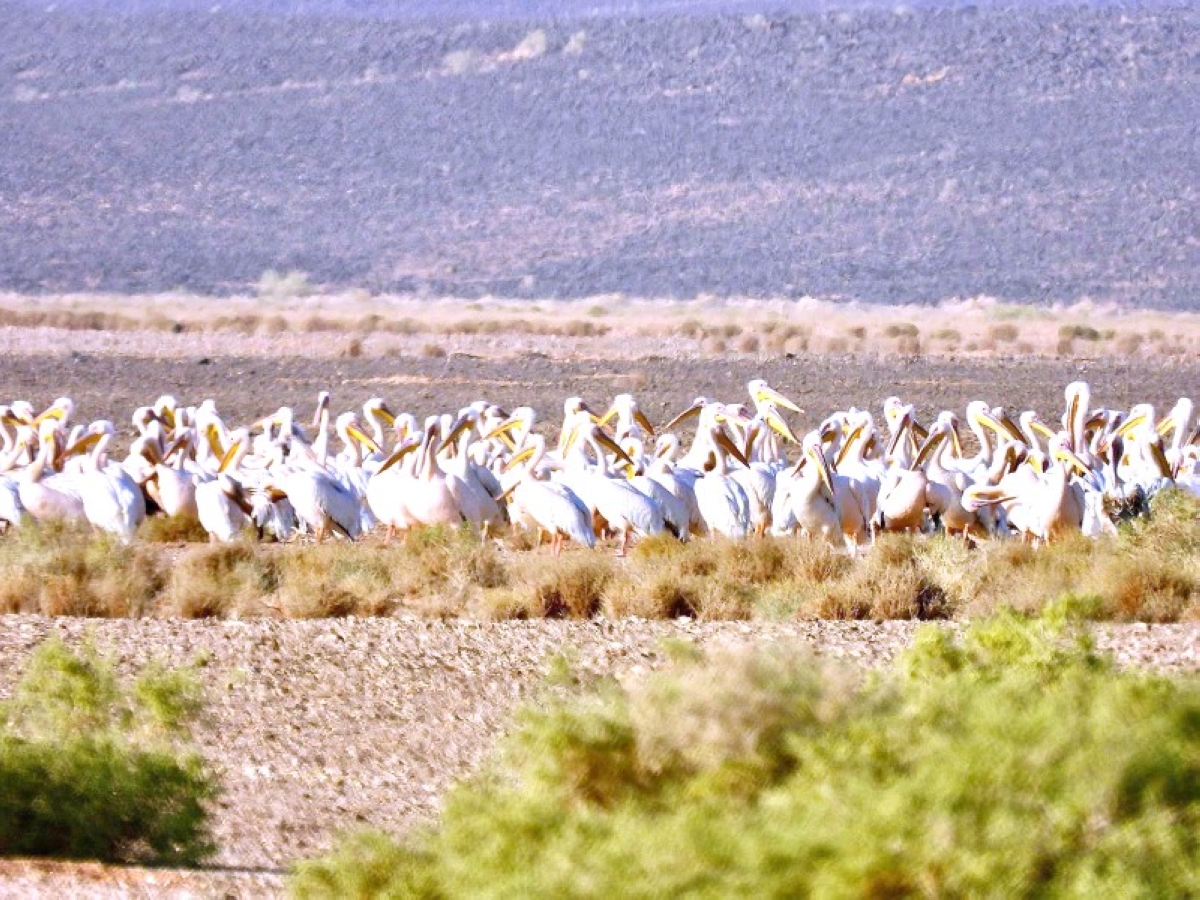
تزامناً مع استمرار هجرة الخريف لعام 2025، تواصل محمية الملك سلمان بن عبدالعزيز الملكية استقبال أعداد كبيرة من الطيور المهاجرة، ورصدت فرقها الميدانية أكثر من 300 فرد من طائر البجع الأبيض (Great White Pelican) في أحد المواقع الخمسة المعلنة مناطق مهمة عالمياً للطيور والتنوع البيولوجي (IBAs & KBA)، وتُعد محطات رئيسية لاستراحة الطيور المهاجرة وتغذيتها قبل مواصلة رحلتها جنوباً.
ويُعد البجع الأبيض من أكبر الطيور القادرة على الطيران في المملكة، إذ يحتل المرتبة الرابعة بين أثقل الطيور في العالم، ويبلغ باع جناحيه ما بين 226 و360 سنتيمتراً، ما يجعله من أبرز مشاهد الهجرة في سماء الصحراء السعودية.
وتقع المحمية على أحد أهم مسارات الهجرة العالمية للطيور، وتعبر فوقها مئات الآلاف من الطيور خلال موسمي الربيع والخريف. وتعد أولى المحطات التي تستقبل الطيور المهاجرة من قارتَي آسيا وأوروبا في الخريف، وآخر المحطات التي تغادر منها الطيور العائدة من أفريقيا في الربيع، ما يجعلها ملاذاً آمناً وموئلاً طبيعياً فريداً لقضاء فصل الشتاء.
وتضم المحمية خمس مناطق مصنفة مناطق مهمة عالمياً للطيور (IBAs) ومناطق رئيسية للتنوع البيولوجي (KBA)، ما يعكس مكانتها البيئية ودورها في حماية الأنواع المهاجرة. وتشكل الطيور المهاجرة نحو 88% من إجمالي الأنواع المسجلة في المحمية، مقابل 12% من الطيور المقيمة، فيما يواصل فريقها تنفيذ برامج رصد بيئي مستمرة لضمان استدامة هذا الإرث الطبيعي الفريد.
In conjunction with the ongoing autumn migration of 2025, the King Salman bin Abdulaziz Royal Reserve continues to receive large numbers of migratory birds. Its field teams have recorded more than 300 individuals of the Great White Pelican at one of the five sites designated as globally important areas for birds and biodiversity (IBAs & KBA). These sites serve as key stopover points for migratory birds to rest and feed before continuing their journey southward.
The Great White Pelican is one of the largest flying birds in the Kingdom, ranking fourth among the heaviest birds in the world, with a wingspan ranging from 226 to 360 centimeters, making it one of the most prominent sights of migration in the skies over the Saudi desert.
The reserve is located on one of the most important global migratory routes for birds, with hundreds of thousands of birds passing over it during the spring and autumn seasons. It is one of the first stops that receive migratory birds from Asia and Europe in the autumn, and one of the last stops from which birds returning from Africa depart in the spring, making it a safe haven and unique natural habitat for wintering.
The reserve includes five areas classified as globally important bird areas (IBAs) and key biodiversity areas (KBA), reflecting its ecological significance and role in protecting migratory species. Migratory birds constitute about 88% of the total species recorded in the reserve, compared to 12% of resident birds, while its team continues to implement ongoing environmental monitoring programs to ensure the sustainability of this unique natural heritage.