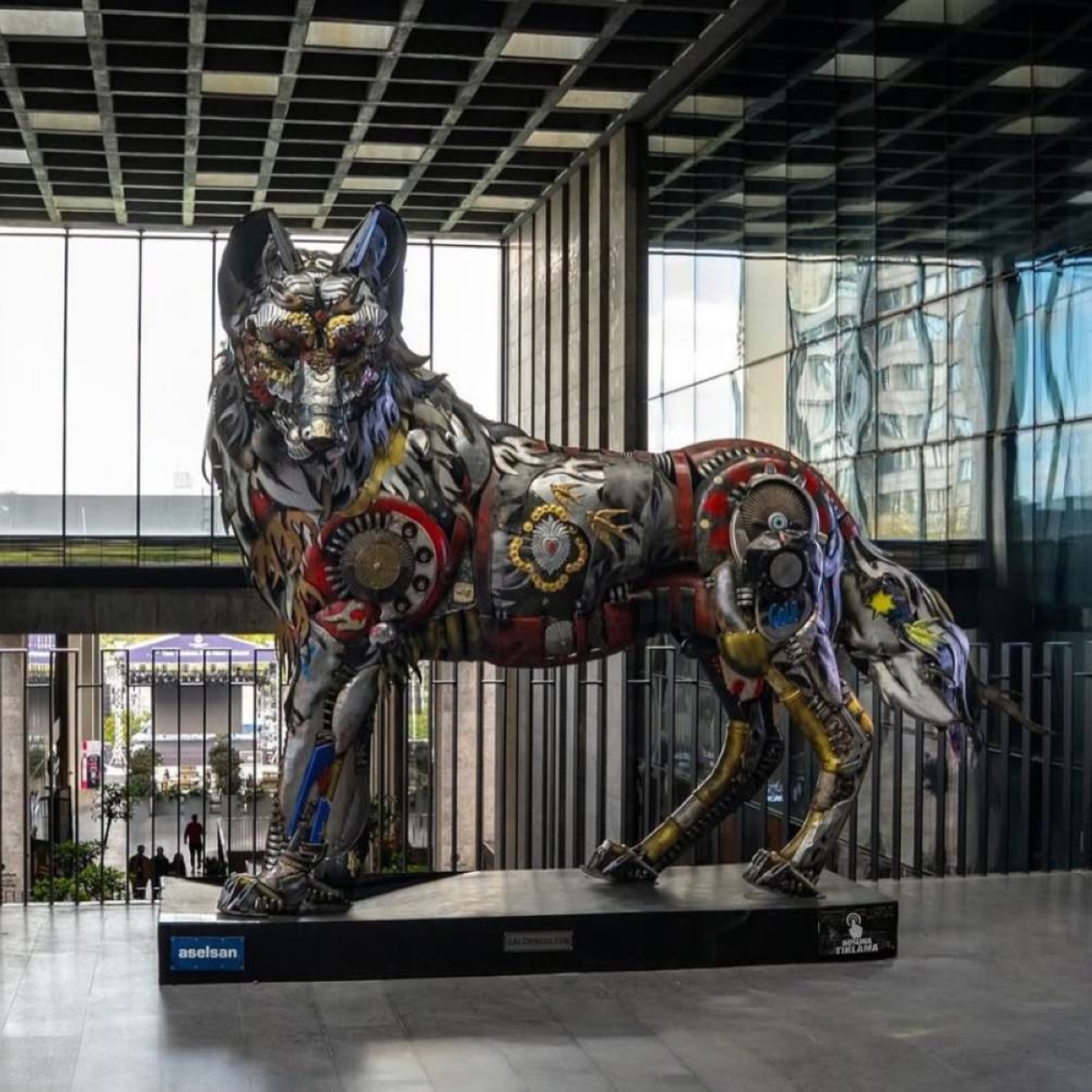
في خطوة فنية تتحدى رموز العنف وتحولها إلى رسائل سلام، كشفت تركيا عن تمثال ضخم للذئب الرمادي – الرمز الوطني التركي – في صالة العروض الرئيسية لمركز أتاتورك الثقافي بإسطنبول، مصنوع بالكامل من المواد المتبقية من إنتاج الأسلحة والذخائر العسكرية.
ويجسد العمل الفني، الذي يبلغ ارتفاعه 3 أمتار ويزن أكثر من 500 كيلوغرام، «الذئب الرمادي» في وضعية وقوف مهيبة، مع تفاصيل دقيقة لعينيه اللامعتين وفرائه الخشن، لكنه مصنوع من أجزاء معدنية مستعملة مثل قذائف مدفعية، وأنابيب أسلحة، وقطع معدنية من مصانع الدفاع التركية.
تركيا تصنع تمثالاً عملاقاً من بقايا أسلحة الحرب.
تحويل الدمار إلى حارس للسلام
ووصف الفنان التركي، أورهان أكار، الذي صمم التمثال، العمل بأنه «تحويل الدمار إلى حارس للسلام»، مشدداً على أن «الذئب، رمز قوتنا التاريخي، يصبح هنا صوتاً ضد الحروب التي أنتجت هذه المواد».
وتم الكشف عن التمثال خلال معرض فني بعنوان «من البارود إلى السلام»، الذي يستمر حتى نهاية الشهر، حيث يجمع بين أعمال فنية تركية وعالمية تستخدم مواد عسكرية مستعملة لنقد النزاعات، ووفقاً لإدارة مركز أتاتورك الثقافي، تم الحصول على المواد من خلال شراكة مع مصانع الدفاع التركية مثل «آسيلسان» و«روكيتسان»، التي تبرعت ببقايا الإنتاج غير المستخدمة بعد فحصها للتأكد من سلامتها.
واستغرقت العملية 6 أشهر، بمساعدة 12 حرفياً، إذ إن كل جزء من التمثال يحمل قصة: الفراء مصنوع من أسلاك تفجيرية، والأنياب من رؤوس قذائف، والقاعدة من ألواح دروع.
ويُعد الذئب الرمادي رمزاً وطنياً عميق الجذور في الثقافة التركية، مستمداً من الأساطير التركية القديمة مثل أسطورة «أسينا» ويمثل هذا الرمز القوة، والاستقلال، والروح التركية، وأصبح رسمياً حيواناً وطنياً لتركيا في عهد مصطفى كمال أتاتورك، مؤسس الجمهورية عام 1923، الذي رآه تجسيداً للصمود التركي.
In an artistic move that challenges symbols of violence and transforms them into messages of peace, Turkey unveiled a massive statue of the gray wolf – the Turkish national symbol – in the main exhibition hall of the Atatürk Cultural Center in Istanbul, made entirely from leftover materials from the production of military weapons and ammunition.
The artwork, which stands 3 meters tall and weighs over 500 kilograms, depicts the "gray wolf" in a majestic standing position, with intricate details of its shining eyes and rough fur, but it is made from used metal parts such as artillery shells, weapon tubes, and metal scraps from Turkish defense factories.
تركيا تصنع تمثالاً عملاقاً من بقايا أسلحة الحرب.
Transforming Destruction into a Guardian of Peace
The Turkish artist, Orhan Akar, who designed the statue, described the work as "transforming destruction into a guardian of peace," emphasizing that "the wolf, a symbol of our historical strength, becomes here a voice against the wars that produced these materials."
The statue was unveiled during an art exhibition titled "From Gunpowder to Peace," which runs until the end of the month, showcasing both Turkish and international artworks that use repurposed military materials to critique conflicts. According to the management of the Atatürk Cultural Center, the materials were obtained through a partnership with Turkish defense factories such as ASELSAN and ROCKETSAN, which donated unused production remnants after ensuring their safety.
The process took 6 months, with the help of 12 craftsmen, as each part of the statue carries a story: the fur is made from explosive wires, the fangs from shell heads, and the base from armor plates.
The gray wolf is a deeply rooted national symbol in Turkish culture, derived from ancient Turkish legends such as the legend of "Asena," representing strength, independence, and the Turkish spirit. It was officially declared a national animal of Turkey during the era of Mustafa Kemal Atatürk, the founder of the republic in 1923, who saw it as an embodiment of Turkish resilience.