في موسم استثنائي يؤكد تصاعد منحنى التميز العلمي السعودي، حققت المنتخبات العلمية الوطنية إنجازاً غير مسبوق باحتلالها المركز الثاني عالمياً بعد الولايات المتحدة الأمريكية، بحصدها 25 جائزة في معرض (آيسف) للعلوم والهندسة؛ منها 14 جائزة كبرى و11 جائزة خاصة، إضافة إلى 91 جائزة دولية في 23 أولمبياداً عالمياً، لتصبح حصيلة الإنجاز 116 جائزة عالمية خلال 2025، فيما ينتظر المنتخبات حصاد ثلاثة أولمبيادات ستُعقد قبل نهاية العام. وشاركت المملكة في 26 أولمبياداً دولياً استضافتها 23 دولة، تنافس فيها آلاف الطلاب من أكثر من 120 دولة، في تخصصات متنوعة تشمل الرياضيات، الفيزياء، الكيمياء، الأحياء، المعلوماتية، الذكاء الاصطناعي، العلوم النووية، الفلك والفيزياء الفلكية.
ويأتي هذا الحضور العلمي المكثف انعكاساً لمنظومة وطنية متكاملة تقودها مؤسسة الملك عبدالعزيز ورجاله للموهبة والإبداع (موهبة) بالشراكة مع وزارة التعليم وبدعم شركاء وطنيين، ضمن برنامج (موهبة) للأولمبيادات الدولية الذي يستمر حتى نوفمبر القادم. ويخضع الطلاب المشاركون لتأهيل علمي يمتد أحياناً عامين ويشمل نحو 120 يوماً من التدريب المكثف بإشراف خبراء محليين ودوليين، إضافة إلى ملتقيات الشتاء والربيع والصيف وملتقى النخبة التي تهدف إلى رفع الكفاءة الأكاديمية وتوسيع آفاق الطلبة المعرفية.
ومنذ انطلاقة موسم 2025 في أبريل الماضي، حصد المنتخب السعودي للرياضيات أربع جوائز في أولمبياد البنات الأوروبي، فيما حقق منتخب الفيزياء خمس جوائز في أولمبياد شمال البلطيق، وتوالت الإنجازات في الكيمياء، الأحياء، والمعلوماتية، إضافة إلى أولمبياد المواصفات والذكاء الاصطناعي الذي شهد أول مشاركة دولية للمملكة وحصد أربع ميداليات برونزية عالمية. وبلغ إجمالي ما حققته المملكة في جميع مشاركاتها في الأولمبيادات العلمية الدولية حتى منتصف سبتمبر 795 جائزة عالمية؛ منها 185 جائزة في معرض (آيسف)؛ لتؤكد المملكة مكانتها كقوة علمية رائدة تصنع جيلاً قادراً على قيادة المستقبل وتحقيق مستهدفات رؤية 2030 في بناء اقتصاد معرفي مستدام.
شاركت في 26 أولمبياداً دولياً بـ 23 دولة.. السعودية الثانية عالمياً بـ 116 جائزة علمية
24 سبتمبر 2025 - 00:36
|
آخر تحديث 24 سبتمبر 2025 - 00:36
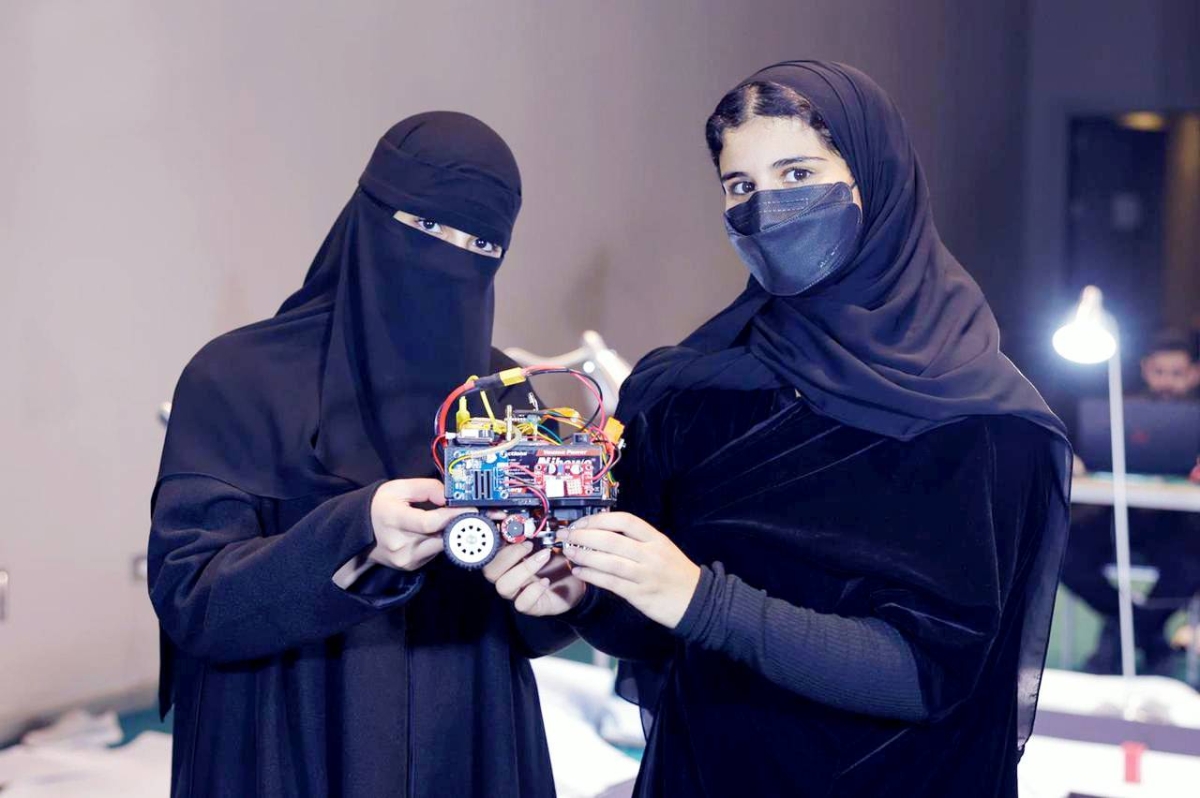
الجوهرة وأسيل حصدتا المركز الأول عربياً والتاسع عالمياً في الأولمبياد العالمي للروبوت. (إرشيفية واس)


تابع قناة عكاظ على الواتساب
«عكاظ» (جدة) OKAZ_online@
In an exceptional season that confirms the rising curve of Saudi scientific excellence, the national scientific teams achieved an unprecedented accomplishment by securing second place globally after the United States, winning 25 awards at the (ISEF) Science and Engineering Fair; including 14 major awards and 11 special awards, in addition to 91 international awards in 23 global Olympiads, bringing the total achievement to 116 global awards during 2025, while the teams are awaiting the results of three Olympiads that will be held before the end of the year. The Kingdom participated in 26 international Olympiads hosted by 23 countries, where thousands of students from over 120 countries competed in various disciplines including mathematics, physics, chemistry, biology, informatics, artificial intelligence, nuclear science, astronomy, and astrophysics.
This intensive scientific presence reflects a comprehensive national system led by the King Abdulaziz and His Companions Foundation for Talent and Creativity (Mawhiba) in partnership with the Ministry of Education and with the support of national partners, as part of the (Mawhiba) program for international Olympiads that continues until next November. The participating students undergo scientific training that sometimes extends for two years and includes about 120 days of intensive training supervised by local and international experts, in addition to winter, spring, and summer forums, as well as the Elite Forum, which aim to enhance academic efficiency and expand students' knowledge horizons.
Since the launch of the 2025 season in April, the Saudi mathematics team has won four awards at the European Girls' Olympiad, while the physics team achieved five awards at the Baltic Sea Olympiad, and achievements continued in chemistry, biology, and informatics, in addition to the specifications and artificial intelligence Olympiad, which witnessed the Kingdom's first international participation and won four global bronze medals. The total number of awards achieved by the Kingdom in all its participations in international scientific Olympiads until mid-September reached 795 global awards; including 185 awards at the (ISEF) Fair; confirming the Kingdom's position as a leading scientific power that is shaping a generation capable of leading the future and achieving the objectives of Vision 2030 in building a sustainable knowledge-based economy.
This intensive scientific presence reflects a comprehensive national system led by the King Abdulaziz and His Companions Foundation for Talent and Creativity (Mawhiba) in partnership with the Ministry of Education and with the support of national partners, as part of the (Mawhiba) program for international Olympiads that continues until next November. The participating students undergo scientific training that sometimes extends for two years and includes about 120 days of intensive training supervised by local and international experts, in addition to winter, spring, and summer forums, as well as the Elite Forum, which aim to enhance academic efficiency and expand students' knowledge horizons.
Since the launch of the 2025 season in April, the Saudi mathematics team has won four awards at the European Girls' Olympiad, while the physics team achieved five awards at the Baltic Sea Olympiad, and achievements continued in chemistry, biology, and informatics, in addition to the specifications and artificial intelligence Olympiad, which witnessed the Kingdom's first international participation and won four global bronze medals. The total number of awards achieved by the Kingdom in all its participations in international scientific Olympiads until mid-September reached 795 global awards; including 185 awards at the (ISEF) Fair; confirming the Kingdom's position as a leading scientific power that is shaping a generation capable of leading the future and achieving the objectives of Vision 2030 in building a sustainable knowledge-based economy.