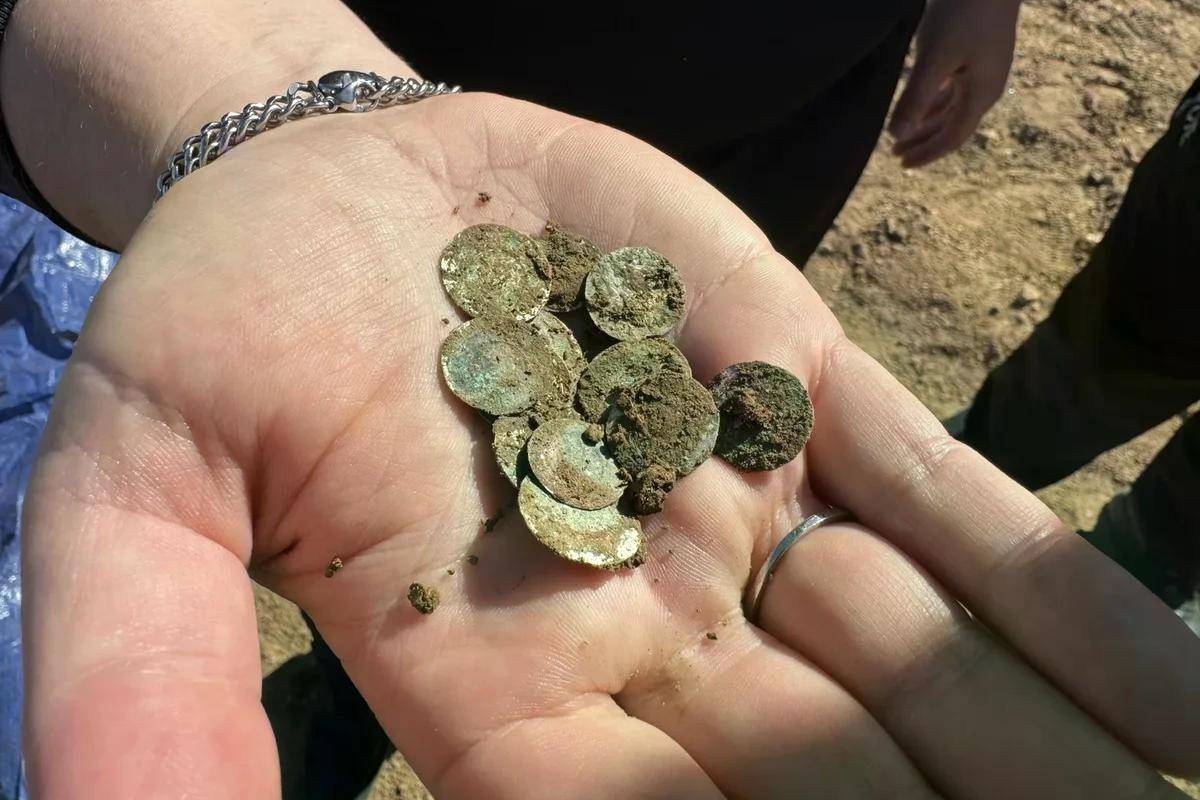
في واقعة غريبة، عثرت امرأة تشيكية كانت تتجول في نزهة عادية في حقل بمنطقة كوتنوهورسكا في جمهورية التشيك، بالصدفة، على كنز تاريخي نادر يعود إلى أكثر من 900 عام، واكتشفت بقايا وعاء خزفي مدمر تحتوي على أكثر من 2150 عملة فضية تعرف باسم «ديناري».
وترجع العملات التاريخية التي عثرت عليها المرأة التشيكية والتي تم صكها بين عامي 1085 و1107 خلال عهد ملوك وأمراء سلالة بريميسليد الحاكمة في بوهيميا، وهم الملك فراتيسلاف الثاني والأميران بريتيسلاف الثاني وبوريفوي الثاني.
وبعد اكتشافها لبضع عملات فضية مبعثرة على الأرض، أبلغت المرأة السلطات المحلية، مما دفع فريقاً من علماء الآثار من معهد الآثار التابع لأكاديمية العلوم التشيكية في براغ ومتحف الفضة التشيكي في كوتنا هورا للتوجه إلى الموقع.
وباستخدام أجهزة الكشف عن المعادن، كشف الفريق عن الكنز المدفون الذي كان مخبأ في وعاء خزفي دمرته الأنشطة الزراعية على مر القرون، لتتبقى فقط قاعدته سليمة، ووفقاً لعالم الآثار فيليب فيليمسكي، يُعتقد أن هذا الكنز دُفن خلال الربع الأول من القرن الثاني عشر، وهي فترة شهدت اضطرابات سياسية داخلية بسبب الصراعات بين أفراد سلالة بريميسليد حول عرش براغ.
ويُعد هذا الاكتشاف أحد أكبر الاكتشافات الأثرية في التشيك خلال العقد الأخيرة، إذ كانت قيمة العملات في ذلك الوقت تعادل «جائزة يانصيب»، وهي مبلغ هائل لا يمكن تصوره بالنسبة لشخص عادي في تلك الحقبة.
وتخضع العملات، المصنوعة من سبيكة فضية وتحتوي على النحاس والرصاص ومعادن أخرى، الآن، لتحليل دقيق باستخدام التصوير بالأشعة السينية والتحليل الطيفي لتحديد مصدر الفضة وتاريخها، ومن المقرر عرض هذه المجموعة في معرض عام في متحف الفضة التشيكي خلال العام الحالي ليتمكن الجمهور من التعرف على تاريخ القرن الثاني عشر في التشيك.
ويعود تاريخ العملات الفضية المعروفة باسم «ديناري» إلى نظام العملات الأوروبية في العصور الوسطى، إذ كانت تُستخدم كعملة رئيسية في القارة بعد التحول من العملات الذهبية إلى الفضية في القرن السابع.
وتُظهر هذه العملات، التي صُكت في براغ على الأرجح باستخدام فضة مستوردة إلى بوهيميا، تعقيد النظام النقدي في تلك الفترة، وكانت منطقة كوتنا هورا، التي تبعد نحو 50 ميلاً شرق براغ، مركزاً للتعدين والتجارة، مما يجعلها موقعاً محتملاً لدفن مثل هذا الكنز خلال فترة الاضطرابات.
وتشير التقديرات إلى أن الكنز ربما كان غنيمة حرب أو رواتب للجنود، دُفن خلال نزاعات سلالة بريميسليد التي شهدت صراعات داخلية على السلطة، ومع ذلك، لم يتمكن صاحبه من استعادته، ربما بسبب الحروب أو الاضطرابات التي عصفت بالمنطقة.
In a strange incident, a Czech woman who was taking a regular stroll in a field in the Kutnohorská region of the Czech Republic accidentally discovered a rare historical treasure dating back over 900 years, uncovering the remains of a destroyed ceramic vessel containing more than 2,150 silver coins known as "denarii."
The historical coins found by the Czech woman were minted between 1085 and 1107 during the reign of the kings and princes of the Přemyslid dynasty in Bohemia, namely King Vratislav II and Princes Bretislav II and Borivoj II.
After discovering a few scattered silver coins on the ground, the woman reported it to the local authorities, prompting a team of archaeologists from the Institute of Archaeology of the Czech Academy of Sciences in Prague and the Czech Silver Museum in Kutná Hora to head to the site.
Using metal detectors, the team uncovered the buried treasure that had been hidden in a ceramic vessel destroyed by agricultural activities over the centuries, with only its base remaining intact. According to archaeologist Filip Viliamski, this treasure is believed to have been buried during the first quarter of the 12th century, a period marked by internal political turmoil due to conflicts among members of the Přemyslid dynasty over the throne of Prague.
This discovery is considered one of the largest archaeological finds in the Czech Republic in recent decades, as the value of the coins at that time was equivalent to a "lottery prize," an enormous sum unimaginable for an ordinary person in that era.
The coins, made from a silver alloy containing copper, lead, and other metals, are now undergoing careful analysis using X-ray imaging and spectroscopic analysis to determine the source and history of the silver. This collection is scheduled to be displayed in a public exhibition at the Czech Silver Museum later this year, allowing the public to learn about the history of the 12th century in the Czech Republic.
The silver coins known as "denarii" trace back to the European currency system of the Middle Ages, as they were used as the main currency on the continent after the shift from gold to silver coins in the 7th century.
These coins, which were likely minted in Prague using silver imported to Bohemia, reflect the complexity of the monetary system of that period. The Kutná Hora region, located about 50 miles east of Prague, was a center for mining and trade, making it a likely site for burying such a treasure during times of turmoil.
Estimates suggest that the treasure may have been war loot or soldiers' wages, buried during the conflicts of the Přemyslid dynasty that saw internal power struggles. However, its owner was unable to recover it, possibly due to the wars or upheavals that ravaged the area.