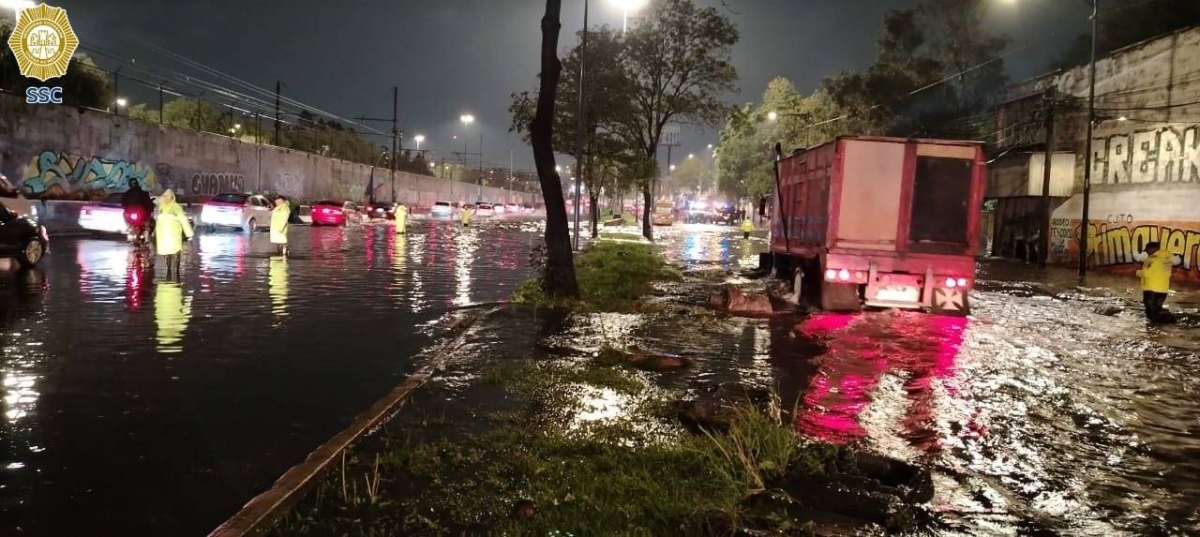
اجتاحت عاصفة ممطرة شديدة مدينة مكسيكو سيتي المكسيكية، مخلفة سيولا جارفة أدت إلى فوضى عارمة في البنية التحتية للمدينة، وتسببت الأمطار الغزيرة في إغلاق مطار مكسيكو سيتي الدولي مؤقتا، مع إلغاء وتحويل العديد من الرحلات الجوية، وتعطيل خدمات مترو الأنفاق والنقل العام، ما ترك الآلاف من المواطنين عالقين وسط الفيضانات.
ووفقا لتقارير إعلامية، شهدت مناطق مركزية مثل المركز التاريخي، كونديسا، روما، وسانتا ماريا لا ريبيرا فيضانات واسعة، حيث غمرت المياه شوارع رئيسية مثل شارع ريفورما وزوكالو، الميدان الرئيسي للمدينة.
وأدت الأمطار إلى إصدار تنبيهات طارئة بمستويات مختلفة، وأعلنت أمانة إدارة المخاطر الشاملة والحماية المدنية في مكسيكو سيتي تنبيها بنفسجيا وأحمر في بلدية كواهتيموك، وتنبيهات برتقالية وصفراء في مناطق أخرى مثل ألفارو أوبريغون، بينيتو خواريز، وغوستافو أ. ماديرو.
وأثرت العاصفة على وسائل النقل العام، وتسبب ماس كهربائي في تعليق خدمات الخط 2 في مترو الأنفاق عند محطات فيادوكتو، تشاباكانو، وسان أنطونيو أباد، مع إجلاء الركاب، كما تم إجلاء ركاب خط كابيلبوس 3 بسبب العواصف الرعدية، وتوقفت خدمات الخط A في مترو الأنفاق بالكامل اعتبارا من الساعة 10 مساء لأعمال صيانة طارئة.
وأشارت هيئة المياه الوطنية إلى أن الأمطار قد تصل إلى 75 ملم، مع توقعات باستمرارها حتى ساعات متأخرة من الليل، ما يزيد من مخاطر الانزلاقات الأرضية والفيضانات الإضافية، وأدت الفيضانات إلى توقف حركة المرور في العديد من الطرق الرئيسية، مثل كالزادا دي طلالبان، حيث تقطعت السبل بالمركبات.
وأفادت السلطات بأن فرق الطوارئ تعمل على إزالة المياه والأشجار المتساقطة، فيما حذرت المواطنين من التيارات المائية والمخاطر مثل فتحات الصرف المكشوفة والأسلاك الكهربائية المتساقطة.
وتُعد مكسيكو سيتي، عاصمة المكسيك، عرضة للفيضانات خلال موسم الأمطار (مايو إلى أكتوبر) بسبب موقعها الجغرافي في وادٍ مرتفع محاط بالجبال، ما يحد من تصريف المياه، وتعاني المدينة، التي يقطنها أكثر من 21 مليون نسمة، من بنية تحتية قديمة للصرف الصحي، ما يزيد من تأثير الأمطار الغزيرة.
وتشهد مكسيكو سيتي فيضانات متكررة خلال موسم الأمطار، كما حدث في يوليو 2024، عندما تسببت أمطار غزيرة في فيضانات بـ13 من بلديات المدينة الـ16، ما أدى إلى تأخير رحلات المطار وإغلاق خطوط مترو، ومع ذلك، كانت العاصفة الحالية استثنائية بسبب شدتها وتأثيرها الواسع، إذ أصدرت السلطات تنبيهات متعددة المستويات، بما في ذلك التنبيه البنفسجي الذي يشير إلى ظروف طقس قصوى تتطلب استجابة فورية.
A severe rainstorm swept through Mexico City, leaving behind devastating floods that caused widespread chaos in the city's infrastructure. The heavy rains temporarily closed Mexico City International Airport, resulting in the cancellation and rerouting of numerous flights, and disrupted subway and public transport services, leaving thousands of citizens stranded amidst the floods.
According to media reports, central areas such as the historic center, Condesa, Roma, and Santa María la Ribera experienced extensive flooding, with water inundating major streets like Reforma Avenue and Zócalo, the city's main square.
The rains prompted emergency alerts at various levels, with the Secretariat of Comprehensive Risk Management and Civil Protection in Mexico City issuing purple and red alerts in the Cuauhtémoc municipality, and orange and yellow alerts in other areas such as Álvaro Obregón, Benito Juárez, and Gustavo A. Madero.
The storm affected public transportation, with a power outage suspending services on Line 2 of the subway at the Viaducto, Chapultepec, and San Antonio Abad stations, leading to the evacuation of passengers. Passengers on the Cablebus Line 3 were also evacuated due to thunderstorms, and services on Line A of the subway were completely halted starting at 10 PM for emergency maintenance work.
The National Water Commission indicated that rainfall could reach up to 75 mm, with expectations for it to continue until late at night, increasing the risks of landslides and additional flooding. The floods caused traffic disruptions on many major roads, such as Calzada de Tlalpan, where vehicles were stranded.
Authorities reported that emergency teams were working to remove water and fallen trees, while warning citizens about swift currents and hazards such as open drainage holes and downed electrical wires.
Mexico City, the capital of Mexico, is prone to flooding during the rainy season (May to October) due to its geographical location in a high valley surrounded by mountains, which limits water drainage. The city, home to over 21 million residents, suffers from outdated sewage infrastructure, exacerbating the impact of heavy rains.
Mexico City experiences recurring floods during the rainy season, as occurred in July 2024, when heavy rains caused flooding in 13 of the city's 16 municipalities, leading to flight delays and subway line closures. However, the current storm was exceptional due to its intensity and widespread impact, prompting authorities to issue multiple-level alerts, including the purple alert indicating extreme weather conditions requiring immediate response.