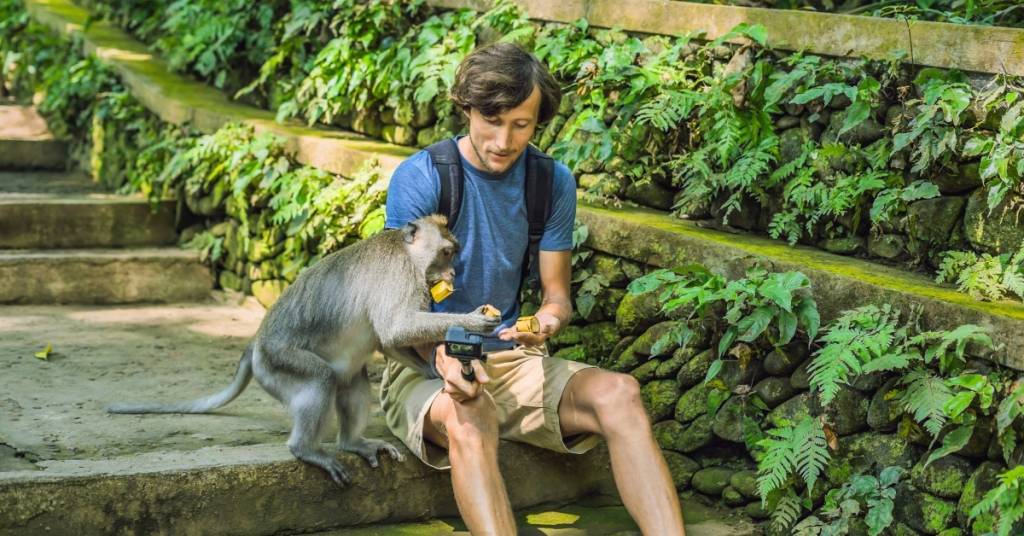
في حادثة غير تقليدية، أظهرت قرود مكاك طويلة الذيل في معبد أولواتو في بالي مهارات لسرقة الهواتف الذكية والابتزاز، مما جعلهم يشتهرون باعتبارهم «عصابة قرود» تدير شبكة سرقة متطورة. وأصبح المعبد الواقع على جرف صخري جنوب جزيرة بالي موقعًا لعملية احتيال غريبة وغير متوقعة يديرها نحو 600 قرد، تتراوح سرقاتهم بين الهواتف الذكية والمحافظ والنظارات الشمسية.
وعلى الرغم من أن الكثير من السياح قد يعتقدون أن هذه السرقة مجرد سلوك عشوائي للقردة التي تنجذب للأشياء اللامعة، إلا أن الحقيقة أكثر تعقيدًا. فقد أظهرت دراسة من جامعة ليثبريدج أن هذه القرود تدير «اقتصادًا قائمًا على المقايضة»، حيث يسرقون ممتلكات الزوار ثم يطالبون بفدية مقابل إعادتها. وفي بعض الأحيان، يقوم مرشدو المعبد بإعطاء القرود قطع بسكويت أوريو لاستعادة المسروقات.
وتمكنت الصحفية هانا مياو في وول ستريت جورنال من توثيق بعض الحوادث، بما في ذلك حادثة لا تنسى لسائح يدعى جوناثان هامي، الذي تفاجأ عندما قام أحد القرود بسرقة نظارته الشمسية بينما كان يستمتع بالمحيط. ولم يجد هامي طريقة لاسترجاعها سوى تقديم بسكويت أوريو للقرد الذي أعاد له النظارة، رغم أنها كانت مشوهة.
وعلق كيتوت أريانا، مدرب القرود المخضرم، أن هذه «العمليات الابتزازية» ليست حديثة العهد، بل تعود إلى فترات ما قبل السياحة، حيث كانت القرود تستهدف المجوهرات الاحتفالية. واليوم، تستهدف الهواتف الذكية، حيث يمكن أن يسرق كل قرد ما يصل إلى 10 هواتف يوميًا. ولاسترجاع هذه الهواتف، يتعين على المدربين – الذين يعرفهم السكان المحليون باسم باوانغ – تقديم مواد غذائية كالبيض النيء أو الفواكه المدارية.
بالرغم من محاولات إدارة المعبد لتغيير سلوك القرود عبر تنظيم مواعيد للطعام أو حتى منع السياح من إطعامها، فإن «اقتصاد القرود» لا يزال مزدهرًا. وتستخدم هذه القرود مهارات الحرب النفسية مع الزوار، مستغلة قيمة الأشياء اللامعة مثل الهواتف الذكية لجذب انتباههم، مما يجعل من الصعب إيقاف هذه الأنشطة.
ويعترف الباحثون من جامعة ليثبريدج أن هذه القرود تبدي «عمليات صنع قرار اقتصادي غير مسبوقة». ولعل هذا يُثير التساؤل حول ما إذا كانت هذه القرود تشهد تطورًا في سلوكها قد يؤدي إلى مخططات مالية أكثر تعقيدًا في المستقبل.
لذلك، إن كنت تخطط لزيارة معبد أولواتو في بالي، احرص على أن تكون جاهزًا للتعامل مع «عصابة القرود» الذكية، وربما من الأفضل أن تصطحب معك بعض بسكويت أوريو لحل أي مشكلات مفاجئة.
In an unconventional incident, long-tailed macaques at the Uluwatu Temple in Bali have demonstrated skills in stealing smartphones and extorting, making them famous as a "monkey gang" running an advanced theft network. The temple, located on a rocky cliff south of Bali, has become the site of a bizarre and unexpected scam run by around 600 monkeys, whose thefts range from smartphones to wallets and sunglasses.
Although many tourists may think that this theft is merely random behavior of monkeys attracted to shiny objects, the reality is more complex. A study from the University of Lethbridge has shown that these monkeys operate a "barter-based economy," where they steal visitors' belongings and then demand a ransom for their return. Sometimes, temple guides give the monkeys Oreo cookies to retrieve the stolen items.
Journalist Hannah Miao at The Wall Street Journal managed to document some incidents, including an unforgettable case of a tourist named Jonathan Hammy, who was surprised when one of the monkeys stole his sunglasses while he was enjoying the ocean. Hammy found no way to retrieve them except by offering an Oreo cookie to the monkey that returned the glasses, even though they were damaged.
Ketut Ariana, a veteran monkey trainer, commented that these "extortion operations" are not new; they date back to pre-tourism times when monkeys targeted ceremonial jewelry. Today, they target smartphones, with each monkey capable of stealing up to 10 phones a day. To retrieve these phones, trainers—known locally as Pawangs—must offer food items such as raw eggs or tropical fruits.
Despite the temple management's attempts to change the monkeys' behavior by scheduling feeding times or even preventing tourists from feeding them, the "monkey economy" continues to thrive. These monkeys employ psychological warfare skills with visitors, exploiting the value of shiny objects like smartphones to capture their attention, making it difficult to stop these activities.
Researchers from the University of Lethbridge acknowledge that these monkeys exhibit "unprecedented economic decision-making processes." This raises the question of whether these monkeys are witnessing an evolution in their behavior that could lead to more complex financial schemes in the future.
So, if you plan to visit the Uluwatu Temple in Bali, be sure to be prepared to deal with the clever "monkey gang," and it might be best to bring along some Oreo cookies to resolve any unexpected issues.