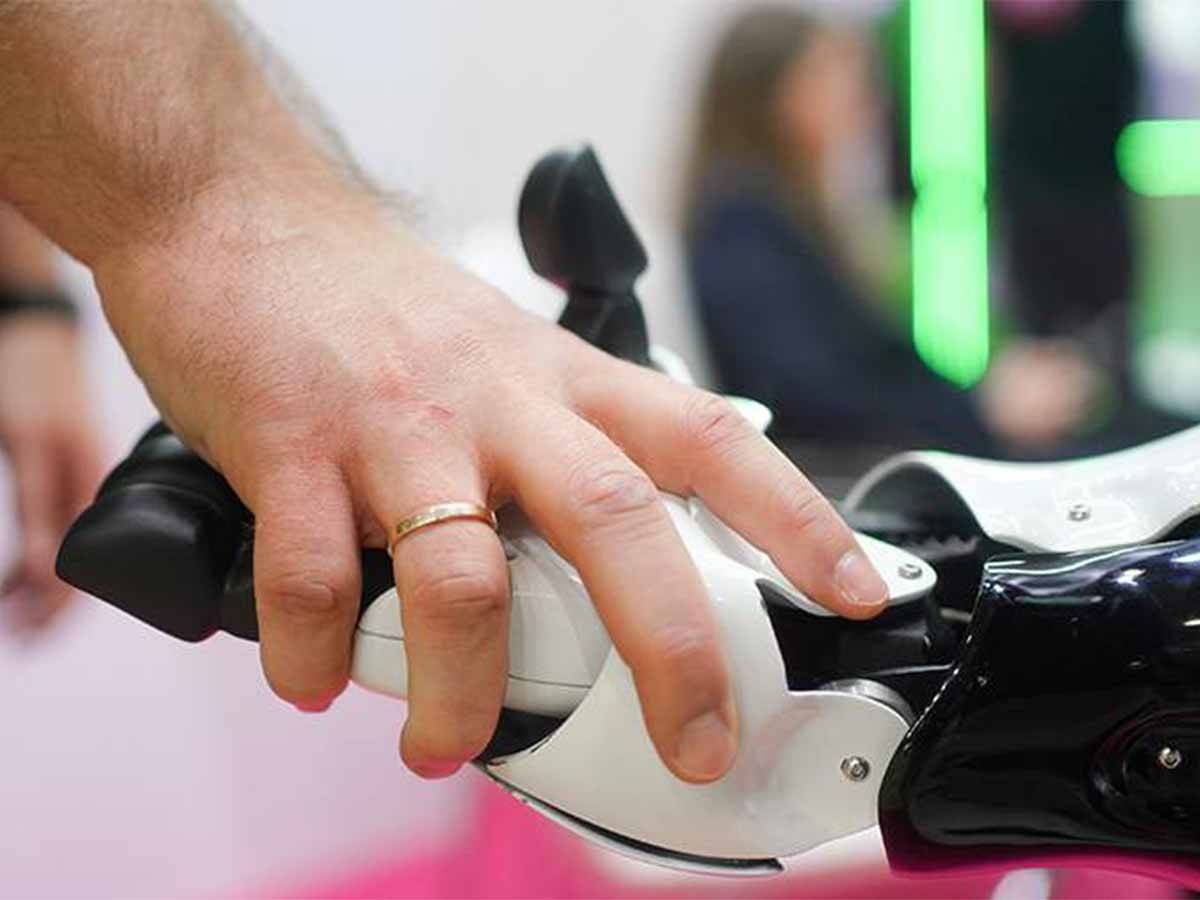
ابتكر علماء في الجامعة الفيدرالية الجنوبية الروسية مجمعاً روبوتياً يعتمد على تقنيات عصبية مجسمة، قادراً على محاكاة أعضاء الحواس البشرية، ويمكن توظيفه في عمليات الإنقاذ.
وتعتمد هذه التقنية على ذراع روبوتية تعمل بوضعية الظل، إذ يرتدي المستخدم قفازاً مزوداً بحساسات، وعند تحريك أصابعه، تبدأ الذراع الروبوتية في «التعلم» ومحاكاة تلك الحركات بشكل متزامن.
وأكد رئيس قسم هندسة الإلكترونيات الراديوية والإلكترونيات النانوية بالجامعة فلاديمير سميرنوف، أن هذه الروبوتات يمكن استخدامها في عمليات الإنقاذ، كما يمكن توظيف ابتكارات أخرى من الجامعة في مجال الأطراف الاصطناعية، موضحاً أن الهياكل العصبية المجسمة تعد دوائر إلكترونية دقيقة تنفذ فعلياً وظائف الشبكات العصبية، التي يمكن أن تحل محل الإنسان.
ولفت إلى أن الذاكرة اللمسية والمستقبلة للألم تتيح عند لمس الشخص لسطح ما، تحديد خصائصه مثل الصلابة ودرجة الحرارة والملمس، وأن الإنسان قد لا يفكر في مثل هذه الأمور يومياً، غير أنها تمثل وظائف تعلم آلي تنفذها الشبكات العصبية، عبر نواقل عصبية موجودة في طبقات الجلد تحت السطح.
يُشار إلى أن مختبر «نيورومان» بالجامعة الروسية يعمل على تطوير حلول محلية لأتمتة واستشعار مساعد روبوتي كامل، قادر على العمل بشكل ذاتي بعد مرحلة تدريب دون تدخل بشري، في الوقت الذي تتيح هذه التقنيات لروسيا دخول المنافسة في مجال الروبوتات الذكية بالأسواق العالمية.
Scientists at the Southern Federal University of Russia have developed a robotic complex based on neuro-mimetic technologies, capable of simulating human sensory organs, and can be employed in rescue operations.
This technology relies on a robotic arm that operates in shadow mode, where the user wears a glove equipped with sensors, and when they move their fingers, the robotic arm begins to "learn" and simultaneously mimic those movements.
Vladimir Smirnov, head of the Department of Radio Electronics and Nanoelectronics at the university, confirmed that these robots can be used in rescue operations, and other innovations from the university can be utilized in the field of prosthetics, explaining that neuro-mimetic structures are essentially microelectronic circuits that effectively perform the functions of neural networks, which can replace humans.
He pointed out that tactile memory and pain receptors allow a person to determine the properties of a surface, such as hardness, temperature, and texture, when touching it. While a person may not think about such matters daily, they represent machine learning functions performed by neural networks through nerve endings present in the skin layers beneath the surface.
It is noted that the "Neuroman" laboratory at the Russian university is working on developing local solutions for automating and sensing a complete robotic assistant capable of operating autonomously after a training phase without human intervention, while these technologies enable Russia to enter the competition in the field of smart robotics in global markets.