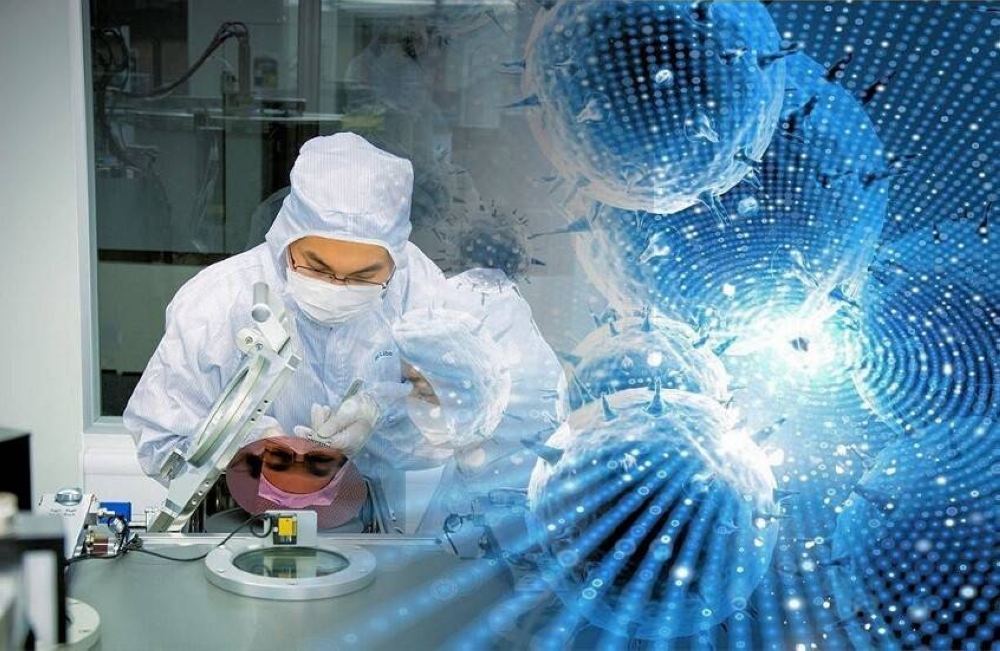
طور فريق بحثي من مركز «يوليش» للأبحاث ومعهد «لايبنتس» للإلكترونيات الدقيقة في ألمانيا، سبيكة فريدة تجمع بين عناصر المجموعة الرابعة في الجدول الدوري، وهي الكربون (C)، والسيليكون (Si)، والجرمانيوم (Ge)، والقصدير (Sn)، وتساعد المادة الجديدة التي أُطلق عليها اسم «CSiGeSn حجر الزاوية» في تطوير أجهزة الكمبيوتر الكمومية، وأنظمة الليزر، والرقاقات التي تحول الحرارة إلى طاقة كهربائية.
ووفقاً للباحثين، تتميز السبيكة الجديدة بتوافقها مع تقنيات تصنيع الرقائق الإلكترونية الحالية، كما تتيح التحكم الدقيق في الخصائص الإلكترونية والبصرية، ما يمهد الطريق لتصميم ليزرات تعمل في درجة حرارة الغرفة، وهو ما يبسّط عملية الإنتاج ويقلل من تكلفتها.
وقال الدكتور دان بوكا أحد مؤلفي الدراسة: «حققنا أخيراً الهدف طويل الأمد، وهو الحصول على أنصاف نواقل من عناصر المجموعة الرابعة في الجدول الدوري».
وأضاف: «سبق أن دمجنا الجرمانيوم والسيليكون والقصدير في أجهزة الإلكترونيات الضوئية مثل الثنائيات الباعثة للضوء (LEDs) وكواشف الضوء، لكن إضافة الكربون كانت تعتبر شبه مستحيلة بسبب صغر حجمه الذري وسلوكه غير التقليدي، وكانت هذه الإضافة محفوفة بمخاطر عالية نظراً لبنية روابط الكربون المتميزة، إلا أن نجاحها هو ما منح السبيكة القدرة على التحكم الدقيق في خاصية أساسية تعرف بـ«عتبة الطاقة»، التي تحدد كيفية توصيل المادة للتيار الكهربائي أو انبعاث الضوء منها».
وأشار الباحثون إلى أن المادة الجديدة «CSiGeSn» قادرة على استبدال السيليكون في الدوائر الإلكترونية الكمومية، ودمج الليزر والمكونات الضوئية مباشرة على الرقاقة الإلكترونية، وتحويل الحرارة إلى كهرباء في الأجهزة الصغيرة مثل الساعات الذكية والمستشعرات، وإتاحة التصنيع على نطاق واسع باستخدام معدات الإنتاج الحالية.
يذكر أن أنصاف النواقل تشكل الأساس الذي تقوم عليه الإلكترونيات الحديثة بالكامل، ولا يزال السيليكون هو العنصر الرئيسي في صناعة الرقاقات، إلا أن إمكاناته التقنية وصلت إلى حدودها القصوى، إذ يعاني من قصور في التعامل مع الفوتونيات (تقنيات الضوء) والأنظمة الكمومية.
A research team from the Jülich Research Center and the Leibniz Institute for Microelectronics in Germany has developed a unique alloy that combines elements from group four of the periodic table: carbon (C), silicon (Si), germanium (Ge), and tin (Sn). The new material, named "CSiGeSn cornerstone," aids in the development of quantum computers, laser systems, and chips that convert heat into electrical energy.
According to the researchers, the new alloy is compatible with current electronic chip manufacturing techniques and allows for precise control over electronic and optical properties, paving the way for the design of lasers that operate at room temperature, which simplifies the production process and reduces costs.
Dr. Dan Bouka, one of the study's authors, stated: "We have finally achieved the long-term goal of obtaining semiconductors from elements in group four of the periodic table."
He added: "We have previously combined germanium, silicon, and tin in optoelectronic devices such as light-emitting diodes (LEDs) and light sensors, but adding carbon was considered nearly impossible due to its small atomic size and unconventional behavior. This addition was fraught with high risks due to the unique structure of carbon bonds, but its success is what granted the alloy the ability to precisely control a fundamental property known as 'energy threshold,' which determines how the material conducts electricity or emits light."
The researchers pointed out that the new material "CSiGeSn" is capable of replacing silicon in quantum electronic circuits, integrating lasers and optical components directly onto the electronic chip, converting heat into electricity in small devices such as smartwatches and sensors, and enabling large-scale manufacturing using existing production equipment.
It is worth noting that semiconductors form the foundation upon which modern electronics are built, and while silicon remains the primary element in chip manufacturing, its technical potential has reached its limits, as it struggles to handle photonics (light technologies) and quantum systems.