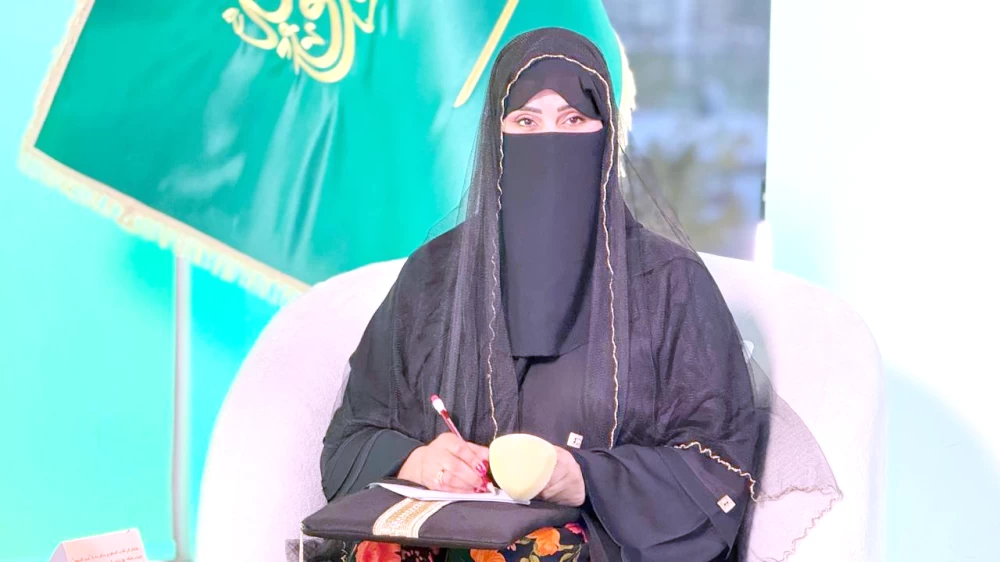
تعزز الناقدة الأكاديمية الدكتورة أمل التميمي حضورها الثقافي، والأدبي، مستوحية روح العطاء من تحويرها بيت شاعر عربي ليصبح (يجود بالوعي إنْ ضنّ البخيلُ به، والجودُ بالوعي أقصى غاية الجود) وهنا مسامرة رمضانية تكشف جوانب من شخصيتها متعددة العطاء، والوفاء.
رائحة عمامة أبي
• هل فعلاً لكلٍّ من اسمه نصيب؟
•• لاسمي قصة كأنه فصل من رواية، أؤمن أن الاسم يهمس لصاحبه طوال العمر بقصة الولادة. اسمي (أمل) لم يكن مجرد اختيار عابر، بل حكاية بدأت من عمّتي مريم التي أصرت أن أُسمّى به، عقب تكرار القرعة بين هند ونجلاء وأمل، لتنجح عمتي في كل التكرارات أمل. قصة التسمية صارت تتكرر في مجالس العائلة، وكلما رُويت شعرت أنني أُولد من جديد في الذاكرة.
• أين وُلدتِ؟
•• وُلدتُ في بيت جدّي المطلّ على المناخة في المدينة المنورة، في الدور الثالث، وكانت أمي الصغيرة لا تعرف أن مغصها ذاك الصباح كان طرق الحياة نفسها. قبل أن تصل الداية خالة أبي (نورة العامرية)، فتحتُ عينيّ على الدنيا كأنني أختار لحظتي بجرأة، ولفّوني بعمامة أبي، فكان أول ما عرفتُه من العالم رائحته الدافئة.
• ما الذي يسكنك من ذكريات الطفولة؟
•• كنت أسمع أبي يغنّي لي من أغاني أم كلثوم: (أنا عندي أمل)، فيبتسم ويكررها وكأنها تخصّني وحدي. من اسمي تعلّمت أن العائلة هي الوسم الأول الذي يمنحك حب نفسك، وأن طريقة نداء اسمك تبني فيك ثقة لا تُرى لكنها تسندك العمر كله، وطفولتي في المدينة المنورة كانت مغموسة بأصوات المآذن والمدافع، وبرائحة التمر والدقة المدينية، صوت المؤذن من الحرم يختلط بأصوات المساجد من حولنا.. مسجد الغمامة وأبوبكر الصديق. طفولتي الرمضانية في المدينة المنورة كانت بيتاً نجدياً يعيش بروح الحجاز.
شريط سينمائي دافئ
• هل يشدك الحنين للمكان؟
•• نعم أشعر بالحنين إلى المدينة، إلى بيت جدي بالمناخة هناك قلب المدينة النابضة بكل تفاصيلها.. من الباعة الذين يجهزون الطعام أمامك القلي، والجيران يتبادلون الطعام، وأحن إلى صوت المدافع ببيتنا في باب الكومة وأمامنا جبل سلع شامخ يحكي تفاصيل تاريخية، وأحن إلى بيتنا بالعنبرية حيث بيت خالتي آمنة أمامنا وعندها (بركة) نلعب بها وهي طقس من أجمل طقوس المدينة السباحة بالبرك، ويشدّني الحنين إلى بيت أمي غيثة الطوري، جدة والدتي، كانت «التلبيبة» عقب صلاة العشاء موعداً لا يُفوّت. نجتمع فيه مع عائلة أمي، نعيد ترتيب ما بقي من سفرة الإفطار، يجتمع أخوالي وخالاتي، وأقاربهم مصطفى الطوري وعلي الطوري وبناته، عائلة كبيرة ممتدة يزورون خالتهم التي هي جدتي غيثة، نسمر ونصبّ القهوة بهدوء، وتمتد الأحاديث كأن الليل يحنو علينا ليطيل بقاءنا معاً. لم تكن التلبيبة طعاماً بقدر ما كانت دفئاً عائلياً خالصاً، علّمني أن رمضان يُعاش بالقلوب قبل الموائد.
يشدّني الحنين إلى (حيّ البركة) في المدينة المنورة، وبئر عثمان حيث كانت تعيش جدتي مرشودة، والدة عمي إبراهيم. ويأخذني الحنين أيضاً إلى دمشق... إلى البيت الذي كان يجمعنا بأهل والدي في الإجازات، حيث قضيت معظم طفولتي هناك. تمرّ الذكريات مثل شريط سينمائي دافئ؛ شرفات قديمة، ضحكات ممتدة، وأمسيات رمضانية بطعم مختلف، لكن بالحنين ذاته. دمشق في قلبي لها فصلٌ آخر من الطمأنينة، وذكرى لا تزال تضيء كلما عاد الشهر.
القراءة نور لا عادة
• ماذا يعني أن يعود عليك رمضان وأنت تقرئين وتكتبين؟
•• رمضان يعيدني أولاً إلى القرآن قبل أي قراءة أخرى. في هذا الشهر تتقدّم التلاوة على الكتابة، وتصفو الكلمة لأنها تستمد معناها من النصّ المقدّس. أتذكّر عمّتي عيشة -رحمها الله- كانت تحوّل جلساتنا إلى فوازير دينية تقرّبنا من السنن ومعاني الآيات، فتعلمنا أن المعرفة عبادة، وأن القراءة في رمضان نورٌ قبل أن تكون عادة.
• من تفقدين في هذا الشهر؟
•• أفقد وجوهاً رحلت، وأصواتاً كانت تملأ المائدة. أفقد أبي -رحمه الله- وأفقد كبار العائلة الذين كانوا يختصرون البركة بابتسامة وزياراتهم لنا بعد صلاة التراويح مباشرة. في رمضان أصبح الغياب أكثر حضوراً. وحالياً أفتقد صوت الصلاة في السماء، فأحب صوت المآذن تعلو بالقرآن.
• ما العادة التي تحرصين عليها مطلع رمضان؟
•• نفطر في سفرة عائلية مهما كان عندنا من التزام وأعمال، وأبدأ رمضان بكتابة جدول ممنهج وفق أعمدة، وأحاول أن أرتّب روحي. أعدّ جدولاً أحصي فيه المحاسن والتقصير، أراجع نفسي بهدوء، وأشاركه مع الخواص من أهلي لنحاسب أنفسنا بمحبةٍ وصدق. وفي العشر الأواخر أحرص على عادةٍ قديمة أحبها؛ أن أطبخ السحور في بيت أمي لأهلي، كأنني أجمعهم حول دفءٍ أعرفه منذ الطفولة، وأردّ شيئاً من جميل الأيام لأمي حفظها الله.
• أي ساعة تشعرين فيها بسعادة أكبر؟
•• لحظة الأذان. تلك الثواني التي يتوقف فيها كل شيء. أحب صوت الصلاة، دعوة صادقة، وقطرة ماء أرشه على الزرع، وامتنان عميق بأننا ما زلنا هنا، وأحب الصباح كثيراً.
• لماذا نخصّ رمضان بالأطباق الفرايحية؟
•• لأننا نحب أن نُدلّل أنفسنا مع من نحب مثل الاحتفاء. الأطباق الفرايحية جزء من الطقس، من الفرح الجمعي الذي يسبق اللقمة الأولى.
• متى بدأت الصوم، وكيف كان أول يوم؟
•• بدأت مبكراً بدافع الحماس.. لا أعرف على وجه الدقة متى بدأت الصوم، لكنني أتذكر المشهد أكثر من التاريخ. كنا في بيتنا القديم عند باب الكومة في المدينة المنورة، أمام مدرسة الناصرية مباشرة، وأمامنا مدفع رمضان على أعلى جبل سلع. كنت أحب مشهد تحضير العسكر للمدفع، أحرص على مراقبتهم طوال وقت التحضير، وحين يُطلق، يهتزّ الحي كله، أرى الشرار وأسمع الصوت حتى إن طوب جدار السطوح في بيتنا كان يسقط من قوة الارتداد. كان ذلك الصوت إعلاناً للفرح قبل أن يكون إعلاناً للإفطار، مشهد طفولي لا يُنسى، تختلط فيه الدهشة بالصوم، والخوف الصغير بالبهجة الكبيرة.
أجمل صحبة فطور البيت
• ما موقف والدتك من صومك المبكر؟
•• كانت أمي حانية. تراقب وجهي، وتسألني كل ساعة إن كنت قادرة على الإكمال. كانت تأذن لي بالفطر إن تعبت، لكنني غالباً كنت أصرّ. كانت تبتسم وتقول: «عادي الله يسامح الأطفال يفطرون العصر ويكملون الصوم» وحالياً لأولادنا تقول: «اخشوشنوا خليهم يصومون، الصوم تربية قبل أن يكون جوعاً».
• ما برنامجك الرمضاني؟
•• الفجر قراءة هادئة، ثم عمل أكاديمي وكتابة. المساء للعائلة، وبعد التراويح ساعة تأمل أو كتابة خاطرة. والسحور لحظة صفاء لا أحب أن أضيعها.
• ما الأطباق التي تحرصين عليها؟
•• التمر أولاً مع القهوة ثم الشوربة والبف والجريش أو المرقوق، وغالباً ننوع حتى نفرح العائلة بحسب الأذواق. السعادة تستشعر بها في تذوق الأطباق وأصوات المتذوق تعرف إن الأكل أوصل مشاعر الفرح والمحبة، وغالباً هذه الأصوات تكون لأطباق أمي.
• لمن توجّهين دعوة إفطار؟
•• لكل أحبابي وأصدقائي وجيراني في المنطقة الشرقية، قضينا سنوات حلوة نفطر معاً لم نشعر بغربة الأهل فكنا معاً أجمل صحبة، فطرنا في بيوت بعضنا كأنها بيوتنا. أجمل أيام رمضان بالصحبة الجميلة والرفقة من كل مناطق السعودية تجمعنا سفرة رمضان العامرة بالمحبة من أجمل الذكريات، الله يذكركم بالخير.
• هل تتابعين برامج إذاعية وتلفزيونية؟
•• لا أشاهد أي شيء في رمضان، وبعد رمضان يبدأ موسم مشاهدتي العميق والدقيق، أحب البرامج الحوارية ومتابعة جداً للمسلسلات ولكن في غير رمضان، المتابعة صفر في رمضان.
هلالية متعصبة
• لماذا يتناقص الأصدقاء بتقدم العمر؟
•• لأننا نكبر، أنا وفية للصداقة فلم ينقص أحد إلا بالموت رحمهم الله، فبعد من رحلوا عنا نبحث عن المعنى لا العدد. الصداقة في النضج تشبه الصوم؛ صفاء وانتقاء. صداقة الروضة والمدرسة والجامعة ما زالت لها معنى الخلود في حياتي.
• كيف علاقتك بالشعر؟
•• الشعر صديقي غير الوفي، نقترب ونبتعد، يعطيني مشاعر وأعطيه جفاًء، أخشاه وأخاف شيطانه أن يتلبسني، بيننا صراع حب وعداء الأحباب.
• أمنيتك؟
•• على المستوى العام: أن يحفظ الله وطننا ويزيده أمناً ونوراً. وعلى المستوى الخاص: أن أبقى جديرة باسمي... أملاً يتجدد.
• ميولك الرياضية؟ وما فريقك المفضل؟
•• أميل إلى المشي، رياضة التأمل. وأحب الرقص في الفرح والحزن، أشجع المنتخب وحالياً متعصبة للهلال وبيتي أزرق ومقتنياتي زرقاء ونسمى عائلة التوت الأزرق تعصباً لجامعة الملك سعود.
The academic critic Dr. Amal Al-Tamimi enhances her cultural and literary presence, drawing inspiration from her transformation of a line from an Arab poet to become (He gives with awareness if the miser holds back, and giving with awareness is the ultimate goal of generosity). Here is a Ramadan conversation that reveals aspects of her multifaceted personality, generosity, and loyalty.
The Scent of My Father's Turban
• Is it true that everyone has a share in their name?
•• My name has a story as if it were a chapter from a novel. I believe that a name whispers to its owner throughout life with the story of their birth. My name (Amal) was not just a fleeting choice, but a tale that began with my aunt Mariam, who insisted that I be named after it, after the lottery was repeated between Hind, Najla, and Amal, with my aunt succeeding in every repetition with Amal. The story of my naming has become a recurring tale in family gatherings, and every time it is told, I feel as if I am being born anew in memory.
• Where were you born?
•• I was born in my grandfather's house overlooking the Manakha in Medina, on the third floor. My young mother did not know that her cramps that morning were the knocks of life itself. Before the midwife, my father's aunt (Noura Al-Amriya) arrived, I opened my eyes to the world as if I were boldly choosing my moment, and they wrapped me in my father's turban, so the first thing I knew of the world was its warm scent.
• What childhood memories reside within you?
•• I used to hear my father singing to me from Umm Kulthum's songs: (I have hope), smiling and repeating it as if it belonged only to me. From my name, I learned that family is the first mark that grants you self-love, and that the way your name is called builds a confidence that is unseen but supports you throughout your life. My childhood in Medina was steeped in the sounds of minarets and cannons, and the scent of dates and city spices. The muezzin's voice from the Haram mingled with the sounds of the mosques around us... Al-Ghamama Mosque and Abu Bakr Al-Siddiq. My Ramadan childhood in Medina was a Najdi house living with the spirit of Hijaz.
A Warm Cinematic Reel
• Do you feel nostalgia for the place?
•• Yes, I feel nostalgic for Medina, for my grandfather's house in Manakha, the heart of the city pulsating with all its details... from the vendors preparing food in front of you, the neighbors exchanging food, and I long for the sound of cannons at our house in Bab Al-Kuma, with the towering Mount Sal' in front of us telling historical details. I miss our house in Al-Anbariya where my aunt Amina's house is in front of us, and she has a (pool) where we play, a ritual of the most beautiful rituals of the city, swimming in pools. I also feel nostalgic for my mother Ghaitha Al-Touri's house, my maternal grandmother, where the "Talbiba" after the Isha prayer was an unmissable appointment. We gather there with my mother's family, rearranging what remains from the Iftar table, my uncles and aunts come together, and their relatives Mustafa Al-Touri and Ali Al-Touri and their daughters, a large extended family visiting their aunt who is my grandmother Ghaitha. We chat and pour coffee quietly, and the conversations stretch as if the night is fondly extending our time together. The Talbiba was not just food but a pure family warmth, teaching me that Ramadan is lived in the hearts before it is on the tables.
I feel nostalgic for (Al-Baraka neighborhood) in Medina, and the well of Othman where my grandmother Marshooda lived, my uncle Ibrahim's mother. I also feel nostalgia for Damascus... for the house that brought us together with my father's family during vacations, where I spent most of my childhood. Memories pass like a warm cinematic reel; old balconies, extended laughter, and Ramadan evenings with a different flavor, but with the same nostalgia. Damascus in my heart has another chapter of tranquility, and a memory that still lights up whenever the month returns.
Reading is Light, Not a Habit
• What does it mean for Ramadan to return while you are reading and writing?
•• Ramadan first brings me back to the Quran before any other reading. In this month, recitation takes precedence over writing, and the word becomes pure as it derives its meaning from the sacred text. I remember my aunt Aisha - may God have mercy on her - who would turn our gatherings into religious riddles that brought us closer to the Sunnah and the meanings of the verses, teaching us that knowledge is worship, and that reading in Ramadan is light before it is a habit.
• Who do you miss in this month?
•• I miss faces that have departed, and voices that used to fill the table. I miss my father - may God have mercy on him - and I miss the elders of the family who encapsulated blessings with a smile and their visits to us right after the Taraweeh prayer. In Ramadan, absence becomes more present. Currently, I miss the sound of prayer in the sky; I love the sound of the minarets rising with the Quran.
• What habit do you insist on at the beginning of Ramadan?
•• We break our fast with a family meal regardless of our commitments and work, and I start Ramadan by writing a structured schedule according to columns, and I try to organize my soul. I prepare a table where I count my virtues and shortcomings, reviewing myself quietly, and I share it with my close family members to hold ourselves accountable with love and sincerity. In the last ten days, I insist on an old habit I love; cooking Suhoor at my mother's house for my family, as if I gather them around a warmth I have known since childhood, and I repay a bit of the beautiful days to my mother, may God protect her.
• At what hour do you feel the greatest happiness?
•• The moment of the call to prayer. Those seconds when everything stops. I love the sound of prayer, a sincere invitation, and a drop of water I sprinkle on the plants, and a deep gratitude that we are still here, and I love the morning very much.
• Why do we reserve special dishes for Ramadan?
•• Because we love to pamper ourselves with those we love like a celebration. The special dishes are part of the ritual, of the collective joy that precedes the first bite.
• When did you start fasting, and how was your first day?
•• I started early out of enthusiasm... I don't know exactly when I began fasting, but I remember the scene more than the date. We were in our old house at Bab Al-Kuma in Medina, directly in front of Al-Nasiriya School, and in front of us was the Ramadan cannon on the top of Mount Sal'. I loved the scene of the soldiers preparing the cannon, and I made sure to watch them throughout the preparation time, and when it was fired, the whole neighborhood would shake; I would see the sparks and hear the sound, even the bricks of the roof walls in our house would fall from the force of the recoil. That sound was an announcement of joy before it was an announcement of Iftar, an unforgettable childhood scene, where astonishment mixed with fasting, and small fear with great joy.
The Most Beautiful Company of Home Iftar
• What was your mother's attitude towards your early fasting?
•• My mother was gentle. She would watch my face and ask me every hour if I could continue. She would allow me to break my fast if I got tired, but I often insisted. She would smile and say: "It's okay, God forgives children who break their fast in the afternoon and continue fasting." Currently, she tells our children: "Be tough, let them fast; fasting is upbringing before it is hunger."
• What is your Ramadan schedule?
•• Fajr is for quiet reading, then academic work and writing. The evening is for family, and after Taraweeh, I dedicate an hour for contemplation or writing a reflection. Suhoor is a moment of clarity that I do not like to waste.
• What dishes do you insist on?
•• Dates first with coffee, then soup, and then puff pastry and jareesh or marqooq, and we often vary to please the family according to tastes. Happiness is felt in tasting the dishes, and the sounds of the tasters indicate whether the food conveyed feelings of joy and love, and often these sounds belong to my mother's dishes.
• To whom do you invite for Iftar?
•• To all my loved ones, friends, and neighbors in the Eastern Province. We spent sweet years breaking our fast together, not feeling the estrangement of family as we were together in the most beautiful company, breaking our fast in each other's homes as if they were our own. The most beautiful days of Ramadan are with beautiful companionship and friends from all over Saudi Arabia gathering around a Ramadan table full of love, one of the most beautiful memories, may God remember you with goodness.
• Do you follow radio and television programs?
•• I do not watch anything during Ramadan, and after Ramadan begins my deep and precise viewing season. I love talk shows and am very keen on following series, but not during Ramadan; my viewing is zero in Ramadan.
A Hardcore Hilali
• Why do friends decrease as we age?
•• Because we grow older. I am loyal to friendship; no one has decreased except through death, may God have mercy on them. After those who have departed, we seek meaning, not numbers. Mature friendship is like fasting; it is purity and selectivity. The friendships from kindergarten, school, and university still hold the meaning of eternity in my life.
• What is your relationship with poetry?
•• Poetry is my unfaithful friend; we get close and then distant. It gives me feelings, and I give it coldness. I fear it and fear its devil that may possess me; between us is a struggle of love and enmity of beloveds.
• What is your wish?
•• On a general level: May God protect our homeland and increase its security and light. On a personal level: May I remain worthy of my name... a hope that renews.
• What are your sports inclinations? And what is your favorite team?
•• I lean towards walking, a sport of contemplation. I love dancing in joy and sadness, I support the national team, and currently, I am a hardcore fan of Al-Hilal; my house is blue, my possessions are blue, and we are called the Blue Mulberry family in loyalty to King Saud University.