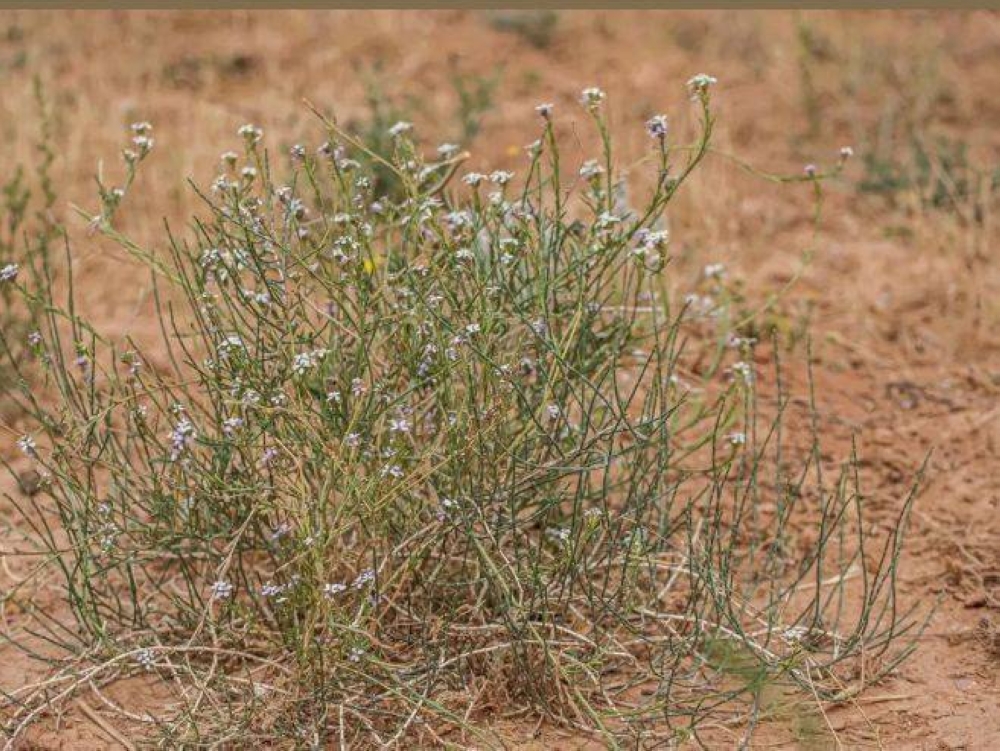
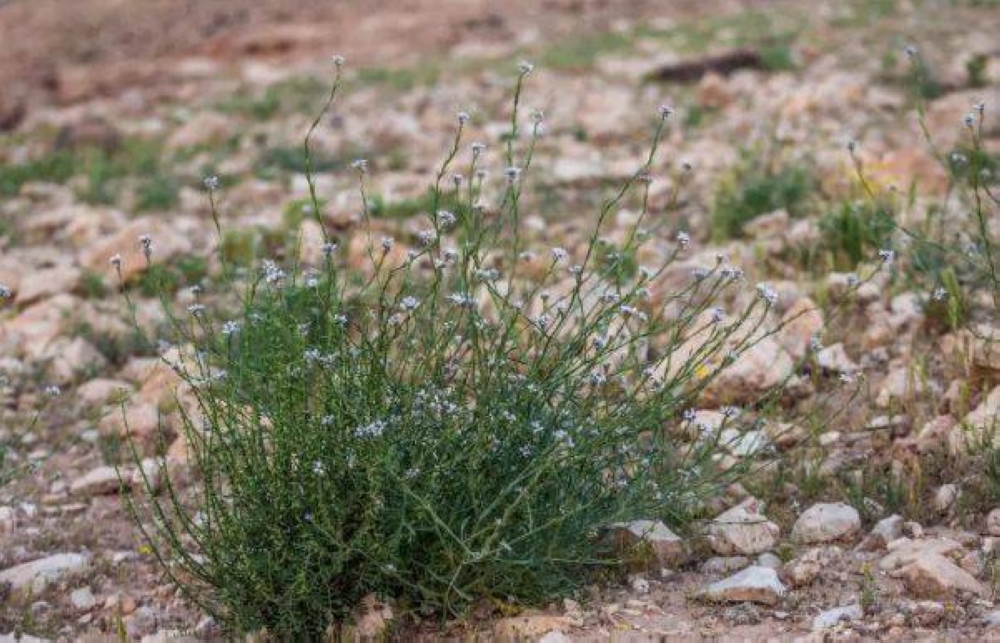
يُعتبر نبات السليح الإسباني (Erucaria hispanica) من ثروات البيئة البرية في الحدود الشمالية، إذ يزدهر وسط الصحارى رغم شح المياه وقسوة المناخ مضيفاً للصحراء ألواناً من الحياة والتنوّع. يتفرد هذا النبات بقدرته العالية على تحمّل الجفاف والعيش في المناطق القاحلة دون حاجة إلى مياه وفيرة، ما يجعله خياراً طبيعياًَ للنمو في البيئات الصحراوية.
وينتمي السليح الإسباني إلى الفصيلة الصليبية (Brassicaceae)، التي تشمل نباتات غذائية شهيرة مثل الملفوف والفجل والخردل، لكنه يختلف عنها بكونه ينمو برياً، لا في الحقول، خصوصاً في الجزيرة العربية، وشمال أفريقيا، وجنوب أوروبا.
ويندرج السليح الإسباني ضمن النباتات الحولية، إذ يظهر عادة في الربيع عقب سقوط الأمطار، ويتميّز بساقه الأخضر النحيل وأزهاره الصغيرة ذات الأربع بتلات، التي تراوح ألوانها بين الأبيض والأرجواني الفاتح.
ورغم شكله البسيط، يضطلع السليح الإسباني بدور بيئي مهم، إذ يُعد مصدراً طبيعياً للرعي تستفيد منه الإبل والمواشي في المناطق الصحراوية، ليجسد مثالاً حيّاً على قدرة الكائنات على التكيّف والبقاء في أقسى الظروف.
The Spanish salsify (Erucaria hispanica) is considered one of the treasures of the wild environment in the northern borders, as it thrives in the deserts despite the scarcity of water and harsh climate, adding colors of life and diversity to the desert. This plant is distinguished by its high ability to withstand drought and live in arid areas without the need for abundant water, making it a natural choice for growth in desert environments.
The Spanish salsify belongs to the cruciferous family (Brassicaceae), which includes well-known food plants such as cabbage, radish, and mustard, but it differs from them by growing wild, not in fields, especially in the Arabian Peninsula, North Africa, and Southern Europe.
The Spanish salsify is classified as an annual plant, as it usually appears in spring after rainfall, characterized by its slender green stem and small flowers with four petals, which range in color from white to light purple.
Despite its simple appearance, the Spanish salsify plays an important ecological role, as it is a natural source of grazing for camels and livestock in desert areas, embodying a living example of the ability of organisms to adapt and survive in the harshest conditions.