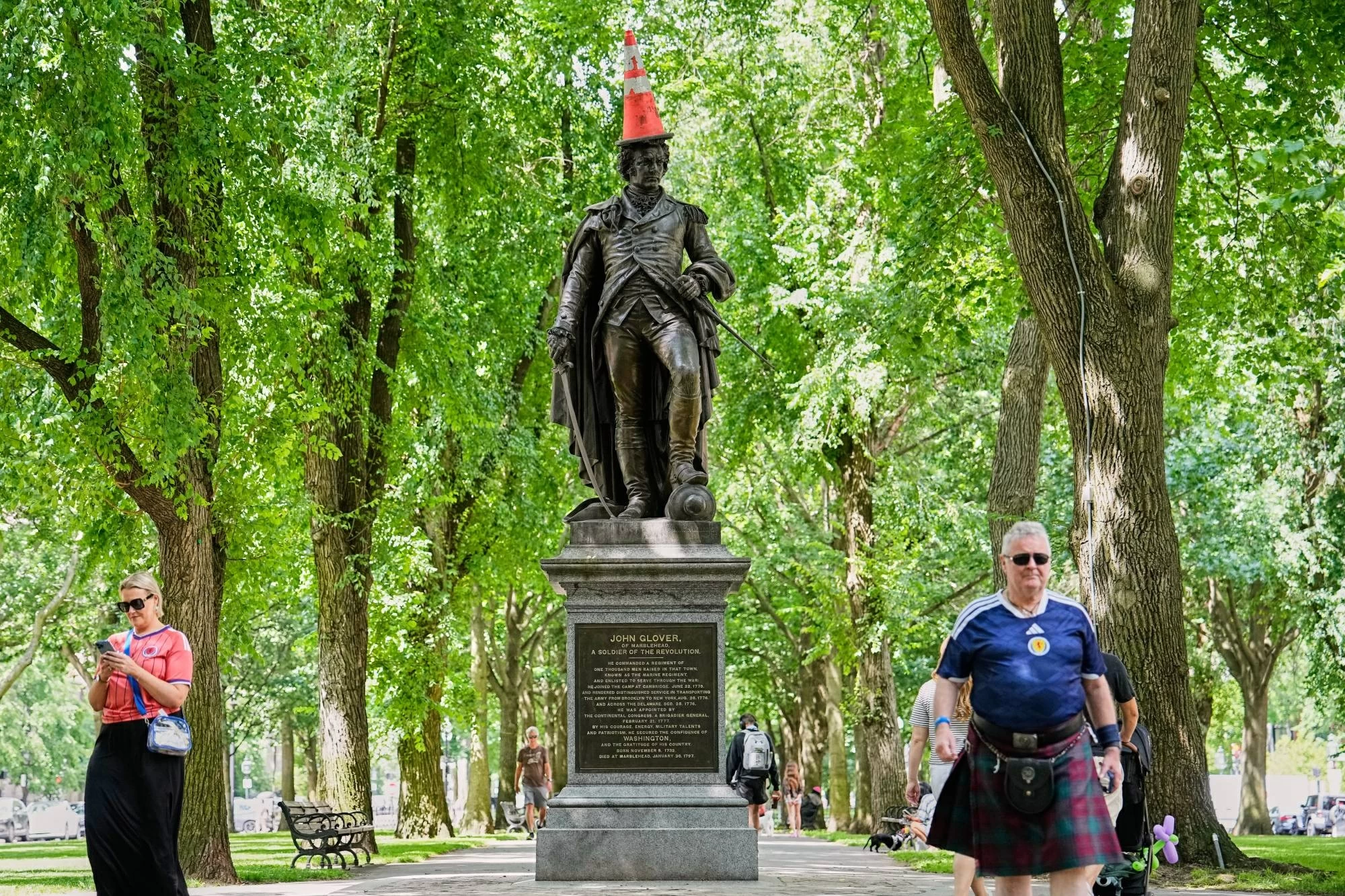
أثارت قُمعات المرور البرتقالية التي ظهرت فوق التماثيل في عدد من المدن الأمريكية خلال كأس العالم 2026 موجة واسعة من التفاعل، بعدما تحولت إلى علامة بصرية مرتبطة بمشجعي اسكتلندا المعروفين باسم (جيش الترتان).
وظهرت القمعات الموضوعة على رؤوس التماثيل كمشهدٍ يجمع بين الطرافة والدهشة، في سلوك ساخر اعتاد عليه المشجعون منذ سنوات طويلة في غلاسكو قبل أن يتحول إلى تقليد غير رسمي يرافقهم في تنقلاتهم حول العالم.
وفي بوسطن، برزت الظاهرة بشكل لافت خلال الأيام الماضية، حيث انتشرت صور لتماثيل تاريخية بارزة مثل (بول ريفير) و(سامويل آدامز) وقد وُضعت فوقها القمعات البرتقالية، ما حوّل المشهد إلى (ترند) على منصات التواصل الاجتماعي. وتعامل كثيرون مع اللقطات بوصفها جزءًا من أجواء المرح التي يجلبها المشجعون، خصوصًا مع عدم تسجيل أي أضرار أو تجاوزات.
لكن المشهد لم يتكرر بالطريقة نفسها في ميامي، حيث تدخلت الشرطة سريعًا لإيقاف محاولة مشابهة، في خطوة عكست اختلافًا واضحًا في طريقة تعامل المدن الأمريكية مع السلوك ذاته. واعتبر معلقون أن تدخل الشرطة كان مبالغًا فيه، مطالبين بـ«قدر أكبر من روح الدعابة» في التعامل مع تصرفات المشجعين التي لا تتجاوز حدود المزاح.
وبين ضحكات عابرة في بوسطن وتدخل مباشر في ميامي، تكشف الظاهرة جانبًا من التنوع الثقافي في استقبال سلوك الجماهير المتنقلة خلال المونديال، وتعيد طرح السؤال حول حدود المزاح في الفضاء العام، وكيف يمكن لمدينة أن تتسامح مع ما تعتبره أخرى سلوكًا غير مقبول.
The orange traffic cones that appeared atop statues in several American cities during the 2026 World Cup sparked a wide wave of interaction, as they became a visual symbol associated with Scottish fans known as the (Tartan Army).
The cones placed on the heads of the statues created a scene that combined humor and surprise, in a sarcastic behavior that fans have been accustomed to for many years in Glasgow before it turned into an unofficial tradition accompanying them in their travels around the world.
In Boston, the phenomenon stood out significantly in recent days, as images of prominent historical statues like (Paul Revere) and (Samuel Adams) adorned with orange cones spread, turning the scene into a (trend) on social media platforms. Many treated the snapshots as part of the fun atmosphere brought by the fans, especially since no damage or violations were reported.
However, the scene did not repeat in the same way in Miami, where the police quickly intervened to stop a similar attempt, reflecting a clear difference in how American cities handle the same behavior. Commentators deemed the police intervention excessive, calling for “a greater sense of humor” in dealing with fan behaviors that do not cross the line of jest.
Amid fleeting laughter in Boston and direct intervention in Miami, the phenomenon reveals an aspect of cultural diversity in how cities receive the behavior of traveling crowds during the World Cup, and raises the question of the limits of humor in public spaces, and how one city can tolerate what another considers unacceptable behavior.