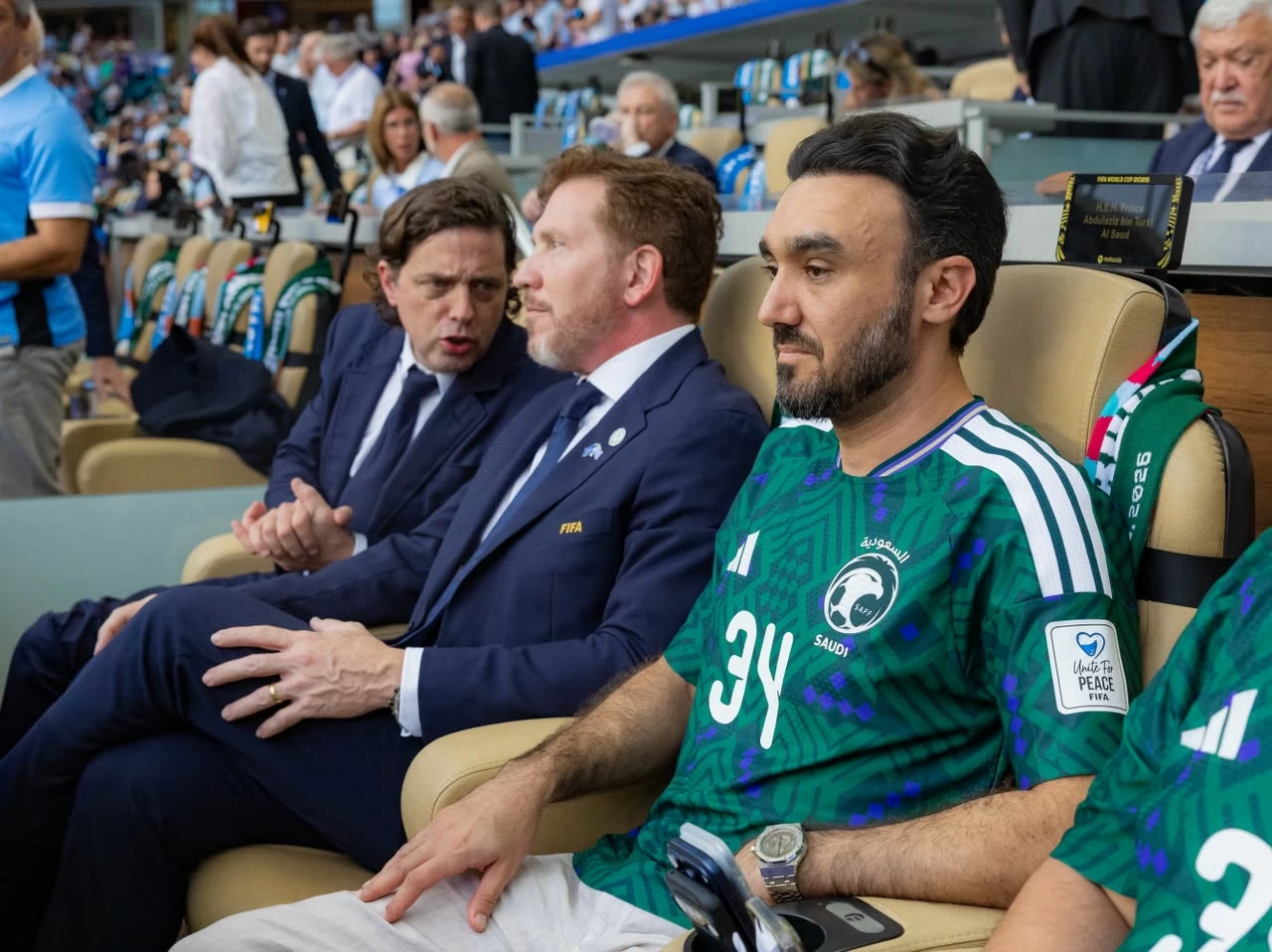
في كأس العالم، لا تلتقط الكاميرا اللاعبين وحدهم، أحياناً تلتقط معنى الدولة حين تمشي مع منتخبها، لا خلفه، هكذا ظهر الأمير عبدالعزيز بن تركي الفيصل، وزيراً خلع صرامة البروتوكول قليلاً، وارتدى قميص الأخضر كثيراً، كأن الشعار في تلك اللحظة أعلى من المنصب، وأقرب إلى القلب من المقعد الرسمي.
في الصور المتداولة من مدرجات المونديال وتدريبات المنتخب، لم يكن حضوره تفصيلاً عابراً. بدا كأنه يقول إن المنتخب لا يحتاج إلى دعم من بعيد، بل إلى كتف قريب، وعين تتابع، وقلب يعرف أن الدقائق الثقيلة في كأس العالم لا تُدار من المكاتب، بل من قرب اللاعبين، من حديث ما قبل التدريب، ومن مصافحة ما بعد الجهد، ومن إيمان يسبق صافرة البداية.
الأمير عبدالعزيز يعرف الرياضة من داخلها، يعرف توتر السباق، ورهبة اللحظة، ومعنى أن تكون الثانية فاصلة بين مجد عابر ومجد يبقى، لذلك كان حضوره مع الأخضر مختلفاً، حضور رياضي خَبِرَ المنافسة قبل أن يديرها، وجرب الضغط قبل أن يتحدث عنه، وفهم أن اللاعب في المحافل الكبرى لا يحتاج إلى خطاب طويل، بل إلى من يذكره بأن الوطن معه.
تداول صناع المحتوى في أمريكا وبريطانيا وإسبانيا وفرنسا صوره ومقاطعه، لأن المشهد بدا غير مألوف.. وزير يقف داخل الحكاية، لا على هامشها، وزير يبتسم مع الجماهير، يحضر التدريب، يجلس قريباً من اللاعبين، ويترك للكاميرا أن تقول ما لا تقوله البيانات الرسمية: السعودية لا تشارك في كأس العالم بفريق فقط، بل بمشروع، وبحضور، وبذاكرة جديدة تريد أن تُكتب بثقة.
في مونديال 2026، خطف وزير الرياضة الضوء لأنه اختار اللون الصحيح.. أخضر الملعب، وأخضر المدرج، وأخضر الحلم السعودي. وحين يرتدي المسؤول قميص المنتخب، فإن الرسالة تصل بلا شرح: المنتخب أولاً، والسعودية فوق كل منصة.
In the World Cup, the camera does not only capture the players; sometimes it captures the essence of the nation as it walks with its team, not behind it. This is how Prince Abdulaziz bin Turki Al-Faisal appeared, a minister who slightly shed the strictness of protocol and wore the green jersey a lot, as if the emblem at that moment was higher than the position and closer to the heart than the official seat.
In the circulated images from the stands of the World Cup and the team's training sessions, his presence was not a fleeting detail. It seemed as if he was saying that the team does not need support from afar, but rather a close shoulder, a watchful eye, and a heart that knows that the heavy moments in the World Cup are not managed from offices, but from near the players, from the talk before training, from the handshake after effort, and from a belief that precedes the starting whistle.
Prince Abdulaziz knows sports from the inside; he understands the tension of the race, the awe of the moment, and the meaning of a second being the difference between fleeting glory and lasting glory. Therefore, his presence with the green team was different—a sports figure who experienced competition before managing it, who felt the pressure before talking about it, and who understood that a player in major events does not need a long speech, but someone to remind him that the nation is with him.
Content creators in America, Britain, Spain, and France circulated his images and clips because the scene seemed unusual... a minister standing within the story, not on its margins, a minister smiling with the fans, attending training, sitting close to the players, and allowing the camera to say what official statements do not: Saudi Arabia is not participating in the World Cup with just a team, but with a project, with presence, and with a new memory that wants to be confidently written.
In the 2026 World Cup, the Minister of Sports stole the spotlight because he chose the right color... the green of the field, the green of the stands, and the green of the Saudi dream. And when an official wears the national team's jersey, the message reaches without explanation: the team comes first, and Saudi Arabia is above every platform.