


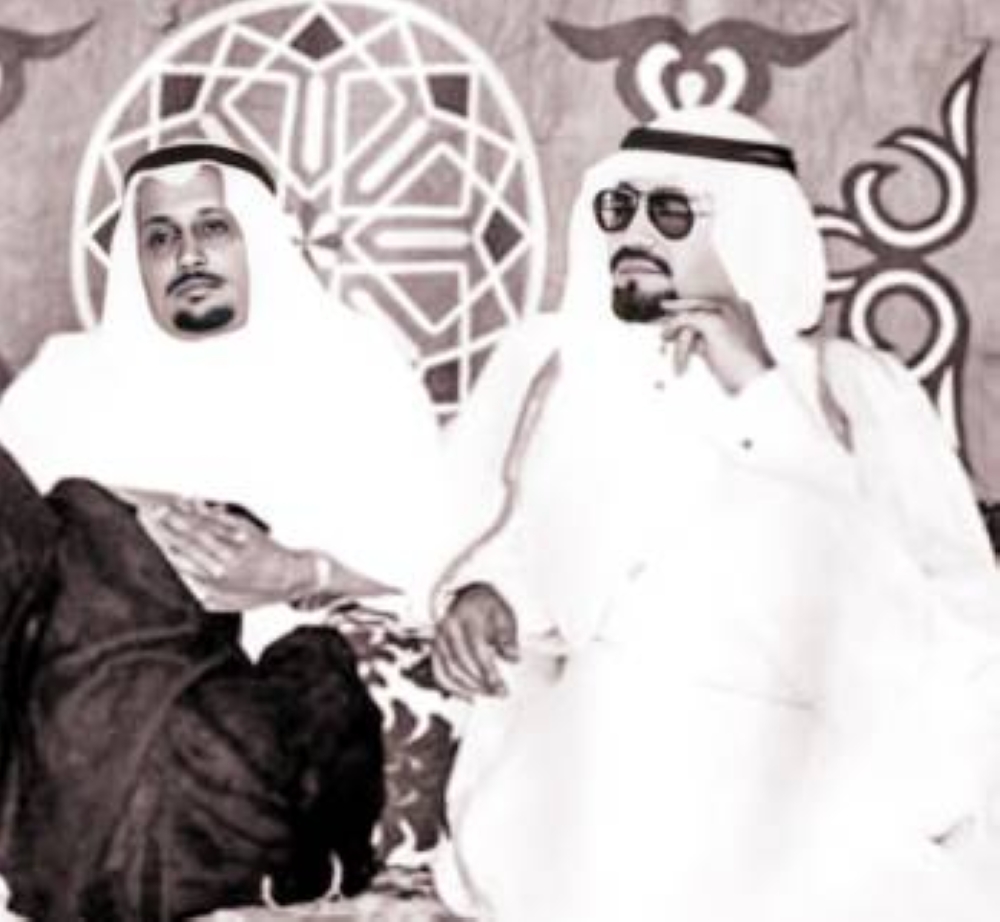
عرفت الأوساط السياسية في العالم العربي العديد من الشخصيات التي تبوأت مناصب دبلوماسية ووزارية قادمة من حقول الأدب والشعر والعمل الأكاديمي، لكن الدكتور عبدالعزيز بن محيي الدين خوجة تفوق على غيره؛ لأنه جمع السياسة والدبلوماسية مع الكيمياء والشعر والثقافة في معادلة غريبة لم يتقنها قبله سوى الدكتور غازي بن عبدالرحمن القصيبي، الذي يبدو الأقرب إليه لجهة المهام التي كلف بها وسعى جاهداً من خلالها لخدمة وطنه ومليكه وشعبه.
في إجابته عن سؤال حول كيفية توفيقه بين الشعر والكيمياء والسياسة، قال بلهجته الحجازية الأنيقة: «هي رحلة حياة وتراكم، ربما تراكم معرفة وتراكم ثقافة من هنا وهناك، الشعر ربما ولد معي ثم صُقل بالمعرفة وبالقراءة.. الكيمياء دخلتها كطالب في كلية العلوم كنوع من طلب المعرفة، والمعرفة لها أبواب لا أستطيع أن أقرأها بنفسي».
ولد خوجة بمكة المكرمة سنة 1942 ونشأ بها، وتعلم في مدارسها على أيدي علمائها، وكبر في جنبات حرمها، متشبعاً بعراقة تاريخها ورهبة أجوائها الروحانية وأصالة تقاليدها، ما جعله تقيا ورعا قنوعا. غير أن ميلاده لأب مثقف مدمن على القراءة، وجد (عثمان قزاز) يمتلك مكتبة نفيسة، ونشأته قريبا من زوج أخت أديب (عبدالعزيز الرفاعي) وشقيقه زياد صاحب العلاقات الوطيدة مع الشعراء والمثقفين، وخاله بكر وعميه محمد وكمال أصحاب العلاقات الثقافية المتشعبة، كلها عوامل جعلت عقله الغض مرهقاً بالأسئلة حول سبل النجاح والإنجاز والكفاح وارتقاء المعالي، ومعرفة كنه الأشياء من حوله، فظل يبحث عن الإجابة في مكتبة أسرته العامرة وسير أقاربه ومعالم وتاريخ العاصمة المقدسة العبق. وإذا كانت كتب التراث والتاريخ والسير هي التي انشغل بها في بداياته، فإنه اتجه مع نموه وتوسع مداركه إلى كتب العلوم الحديثة والفلسفة والأدب والشعر وكل ما كان يأتي من القاهرة وبيروت والشام من مطبوعات.. يتلقفها ويتبادلها مع زملائه ويتحاور معهم حول مضامينها. ورويدا رويدا اكتشف صاحبنا شاعريته «كنت مع زملائي في نفس السن نرى وردة مثلا.. هم يمرون بها مرور الكرام دون إحساس، وأنا أنبهر وأحس بها وأفرح وأرى فيها ما لا يراه الآخر».
أصدر خوجة في فبراير 2020 مذكراته في كتاب حمل عنوان «التجربة، تفاعلات الثقافة والسياسة والإعلام». وتضمن الكتاب سيرته الشخصية وملامح الأمكنة والشخوص التي أثرت في تكوينه، والتحولات الاجتماعية التي عاصرها في مجتمعه وخارجه، وتجربته في التعليم والإدارة والدبلوماسية والسياسة والأدب والثقافة، ومما ورد في الكتاب أنه كان في الخامسة من عمره حينما وقف «سيد البن» (أحد دراويش مكة) أمام دكان والده في حي القشاشية وقال له: «ابنك هذا سيقابل الملوك والرؤساء»، فما كان من والده إلا أن اشتعل فرحاً وتفاؤلاً وهرع إلى البيت ليبشر زوجته وأباه وبقية الأسرة. يقول خوجة معلقاً أنه مذاك راح والده يشجعه على الدراسة والاجتهاد والعمل، منتظراً تحقق تلك النبوءة. ومما ورد في الكتاب أيضاً أن حوادث الموت كان لها ظهور موجع في حياة صاحبنا. فقد توفيت أخته فتحية في شبابها الباكر واتهم شيخ الجن بموتها انتقاما لابنه الذي مات بسبب لهو الفتاة البريء، وتوفي أخوه الأصغر حسن في سن الرابعة واتهمت امرأة زائرة بالتسبب في وفاته؛ لأنها استغربت من نموه دون أن تذكر الله، ثم توفي شقيقه عدنان ووالدته فوالده. ولا يخفي خوجة شيطنته في مدرسته بتقليد الأصوات إلى أن ضبطه ذات يوم مدير المدرسة المربي محمد فدا، فلم يعاقبه وإنما أعجب بمهارته وفصاحته ووجهه إلى فريق التمثيل بالمدرسة؛ كي تستثمر مواهبه تلك. كما تطرق إلى العقاب البدني الذي كان يمارسه المعلمون بحق طلابهم لأتفه الأسباب، ومنه أن مراقب مدرسته ضربه ذات مرة فقط لأنه كان يقود دراجة في الشارع، وهو ما جعل شقيقه عدنان يكره المدارس.
وفي الكتاب أيضاً صورة بانورامية جميلة للمجتمع المكي في عقدي الأربعينات والخمسينات وكيف أنه تميز بالتكافل الاجتماعي والشهامة العربية الأصيلة ومساعدة القوي للضعيف والغني للفقير، وصولًا إلى تناوله للحياة الثقافية والفنية في مكة، وكيف أن المكيين استوعبوا فنون العالم الإسلامي وأجادوا تطويرها، فشهدت مدينتهم المقدسة صدور أولى صحف البلاد وانطلاق أول إذاعة سعودية.
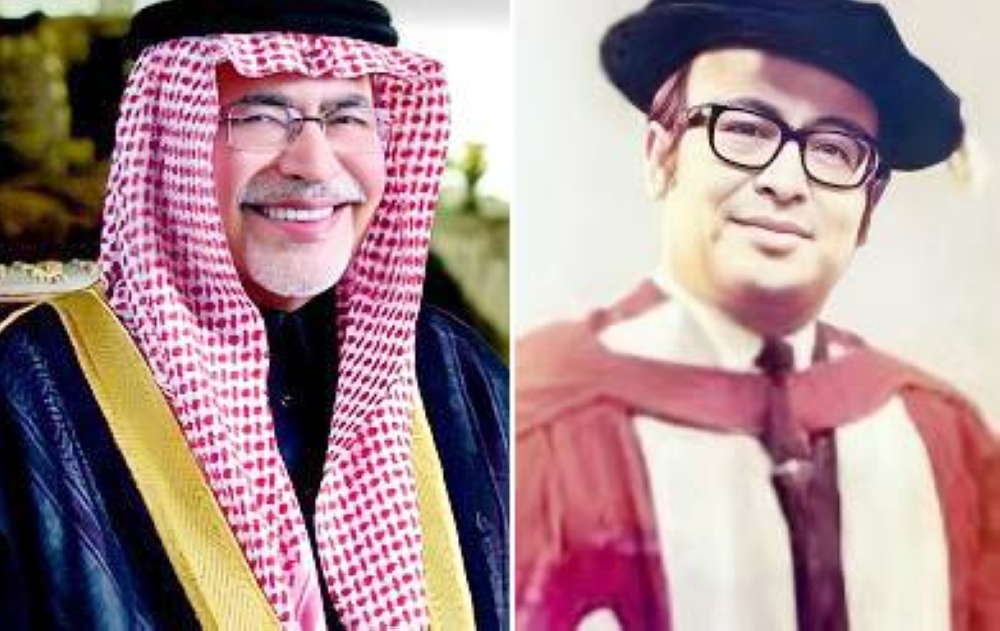
بعد تخرجه من المرحلة الثانوية بمكة سافر إلى مصر على نفقة أسرته للتحصيل الجامعي، فمرّ هناك بتجربة فشل، ربما كانت الوحيدة في حياته، حيث أنهى سنته الجامعية الأولى في كلية العلوم بجامعة القاهرة بالرسوب في جميع المواد. غير أن هذه الواقعة كانت سبباً في عودته إلى وطنه للالتحاق بجامعة الرياض الوليدة، وهو مصمم على الاجتهاد والتفوق والابداع لمسح صورته المخيبة للآمال عند والده وأهله. وهكذا وجد الرجل في بيئة الرياض، حيث ليست له فيها علاقات كما في مكة وليست بها ملهيات كما في القاهرة، فرصة لتحقيق مراده، فذاق حلاوة النجاح في الستينات بتخرجه حاملاً شهادة البكالوريوس في الكيمياء والجيولوجيا، ليتوجه بعدها إلى بريطانيا سعيا وراء نيل درجة الدكتوراه في الكيمياء التي حصل عليها من جامعة برمنغهام سنة 1970.
وحول حياته في بريطانيا، قال إنها أتاحت له الاطلاع على حضارة جديدة، وفتحت له آفاقاً جميلة عن وحدة الكون وجمال الكون وارتباط الكون، مضيفاً أنه تأقلم سريعاً مع الثقافة البريطانية المختلفة تماماً عن ثقافته؛ لأن «ميزة الإنسان في مكة أنه يتأقلم.. لماذا؟ لأننا نلتقي بثقافات مختلفة وبحضارات مختلفة ووجوه مختلفة، وهذه تجعلنا نعرف ثقافة الآخرين وحضارة الآخرين دون خوف». والجدير بالذكر، أن خوجة تزوج في ليلة سفره إلى بريطانيا من قريبته السيدة فايزة بنت صالح بكر، التي رافقته إلى هناك وسهرت على راحته خلال مرحلتي الماجستير والدكتوراه، ثم رافقته إلى محطات عمله الدبلوماسي حيث درست في جامعات تلك الدول وتعلمت اللغات الإنجليزية والتركية والروسية. ومما يجدر بنا ذكره هنا، هو أن أطروحته لنيل الدكتوراه كانت عن العقم عند النساء، وبعد أن وضعها عند المشرف البريطاني تفاجأ أن الأخير سرقها ونشرها باسمه، وطلب منه أن ينسى عمله البحثي مع وعد بتعويضه أكاديمياً. يقول خوجة إنه أذعن وفكر في مشروع بديل للدكتوراه يتعلق بالأنزيمات وتفاعلاتها، فتوصل إلى إمكانية استخدام الأنزيم مراراً وتكراراً مما يعني وفراً كبيراً في العمليات، وقد تمّ تسجيل اكتشافه باسمه وحصل من الجامعة على منحة بمبلغ 160 جنيهاً، علاوة على مكافأة مالية من الشركة التي اعتمدته.
بعد عودته إلى بلاده مكللاً بأعلى الدرجات العلمية بدأ حياته المهنية أستاذاً للكيمياء بكلية التربية بمكة المكرمة، قبل أن يحصل على ترقية ويعين عميداً لها، كما أنه درّس المادة لطلبة كلية العلوم بجامعة الملك عبدالعزيز في جدة.
ومن الجامعة انتقل فجأة إلى وزارة الإعلام ليعمل وكيلاً لها زمن صديقه الدكتور محمد عبده يماني الذي شغل منصب وزير الإعلام بين عامي 1975 و1983. وقد روى خوجة في كتابه المتاعب التي تعرض لها إبان شغله هذا المنصب الحكومي بسبب الصراعات الفكرية الدائرة في المجتمع السعودي آنذاك، وتطرق أيضاً إلى المكالمات الليلية التي كان يتلقاها من الأمير (الملك) فهد بن عبدالعزيز لسؤاله عن خبر أو اعتراضه على خطأ، وتلك التي كان يتلقاها أيضاً في الصباح الباكر من الأمير (الملك) سلمان لمناقشته في خبر أو مقال منشور في الصحافة المحلية. علما بأنه شغل وقتها بصفته الرسمية تلك، مهام مدير عام جهاز تلفزيون الخليج، كما ترأس عدة مجالس منها المجلس التنفيذي لمنظمة إذاعات الدول الإسلامية والمجلس التنفيذي لوكالة الأنباء الإسلامية، وعدد من المؤتمرات الإعلامية، وواجه تحدياً إعلامياً غير مسبوق حول تغطية وزارته لأحداث احتلال الحرم المكي من قبل جهيمان العتيبي وزمرته.
ومثلما كان نقله من أسوار الجامعة إلى وزارة الاعلام مفاجئاً، فقد تمّ نقله من الأخيرة فجأة إلى عالم الدبلوماسية بصدور قرار حول تعيينه سفيراً لبلاده لدى تركيا. وفي الأخيرة التي عمل بها من 1986 إلى 1992 اكتشف الرجل إمكاناته ومواهبه الدبلوماسية والسياسية المتأتية من اطلاعه الواسع ومخزونه الثقافي والتاريخي فاحتل موقع الصدارة بين زملائه من أعضاء السلك الدبلوماسي الأجنبي المعتمدين في أنقرة، وعمل على توثيق العلاقات السعودية التركية في وقت كانت فيه الحرب العراقية الإيرانية مشتعلة، بل ساعدته مكانته على إصلاح ذات البين في التسعينات بين الرئيس التركي تورغوت أوزال وغريمه نجم الدين أربكان.
ومن تركيا انتقل إلى موسكو زمن حرب تحرير الكويت ليكون أول سفير سعودي هناك قبيل انهيار الاتحاد السوفيتي بقليل، حيث شغل المنصب من 1992 إلى 1996. ومن الطرائف التي حدثت له في موسكو أنه حمل رسالة تكليفه إلى الزعماء السوفييت، وبسبب تفكك الاتحاد السوفيتي وقيام جمهورية روسيا الاتحادية اضطر للعودة إلى الرياض لحمل رسالة بديلة من الخارجية السعودية باسم الرئيس الروسي يلتسين، فإذا بوزير الخارجية آنذاك الأمير سعود الفيصل يمازحه قائلاً: «فككت الاتحاد السوفيتي ورجعت».
محطته الدبلوماسية التالية من بعد أنقرة وموسكو كانت في الرباط التي عمل بها ما بين عامي 1996 و2004، حيث ارتبط فيها بعلاقة فكر وثقافة مع ملكها آنذاك الحسن الثاني المغرم بمجالسة العلماء في قصره ومناقشتهم في الفقه والأدب واللغة والموسيقى. وفي عام 2004 صدر قرار بنقله من المغرب، التي طاب له المقام بها إلى لبنان، بلد المتاعب والتصفيات والأزمات السياسية، التي أمضى به خمس سنوات عاصر خلالها اغتيال رفيق الحريري، وإنشاء المحكمة الدولية لملاحقة قتلته، واختيار رئيس جديد، وتحرير البلاد من الهيمنة السورية، وإحكام حزب الله الإرهابي قبضته على الحياة السياسية، والكثير من الصراعات الداخلية والأزمات الاقتصادية والحروب الخفية، بل تعرض فيه أيضاً لثلاث محاولات اغتيال فاشلة.
في عام 2009 صدر مرسوم ملكي بتعيينه وزيراً للثقافة والإعلام خلفاً لوزير الإعلام إياد بن أمين مدني، فودع السلك الدبلوماسي، واصفاً قرار توزيره بقوله: «كان يوماً لا ينسى، ففيه تغير مسار حياتي جذرياً، إذ تقرر أن أكون وزيراً لملك في قامة عبدالله بن عبدالعزيز، وكان ذلك بالنسبة إليّ تحدياً كبيراً». وهكذا ظل ماسكاً بهذه الحقيبة الهامة، مواجهاً للتحديات والتطورات اليومية، مغرداً عبر الفيسبوك كأول وزير إعلام يفعل ذلك من أجل أهداف منها تجديد الخطاب الديني ودعم المبتعثين وتوضيح الموقف السياسي وإزالة غموض أي قرار أو حدث، علماً أنه أفصح في حوار مع صحيفة «عكاظ» (15/4/2022)، أنه لم يكن موافقاً على جمع الإعلام والثقافة في وزارة واحدة؛ لأن لكل منهما دورا مستقلا، وأنه اقترح على الملك عبدالله فصلهما ثم جاء الملك سلمان فأقره.
أثر لا ينسى
وفي سنة 2014 تمّ إعفاؤه بناء على طلبه، ليعود إلى السلك الأكاديمي بدرجة أستاذ بناء على أمر الملك عبدالله، وذلك قبل اختياره مجدداً سفيراً للمملكة لدى المغرب بدرجة وزير ابتداء من يناير 2016 وحتى نوفمبر 2019.
اللافت، أن في كل محطاته الدبلوماسية وغيرها، ترك خوجة أثراً لا ينسى. فقد أسس الصالونات والمجالس الأدبية داخل سفارته، وبنى مدارس تعليم اللغة العربية للمسلمين كما فعل في موسكو مثلاً، التي بنى بها صرحاً تعليمياً ضخماً في زمن قياسي، وتمكن فيها من تحويل قصر حكومي فخم إلى مبنى للسفارة السعودية، ما جعل خادم الحرمين الشريفين الراحل الملك عبدالله بن عبدالعزيز يثني عليه. هذا ناهيك عن مساعدته للشيخ إبراهيم العنقري (أحد وزراء الإعلام والشؤون البلدية السابقين في السعودية)، في اختيار موقع اسطبل قديم من زمن ستالين لإقامة مسجد عليه على نفقة العنقري.
وفي مقال له منشور على موقع «العربية نت» عام 2014، وصف الإعلامي الصديق مطر الأحمدي خوجة بـ «أكثر وزير إعلام سعودي أحدث تغييرات كبيرة غيرت المشهد الإعلامي الرسمي»، مضيفاً: «في عهد وزارته تمت تهيئة قطاعي التلفزيون والإذاعة في هيئة مستقلة داخل الوزارة. وأضيفت قنوات تلفزيونية جديدة متخصصة، وتوج ذلك بقناتي القرآن الكريم والسنة النبوية، التي وصفهما خوجة بأنهما بمهنيتهما تجسدان تلفزيون الواقع وتلهبان مشاعر المسلمين انطلاقاً من أقدس بقعتين على وجه الأرض، وانبثق عن الوزارة أيضاً هيئتا الإعلام المرئي والمسموع ووكالة الأنباء السعودية، متمتعتين بصفة استقلالية». واستطرد الأحمدي قائلاً: «نجح خوجة بامتياز في كل مسؤولية أسندت إليه، وحقق فيها تطوراً ملموساً في فترة قياسية. فهو كوزير للثقافة والإعلام، سجل انفتاحاً إعلامياً لم يسبقه إليه أحد. تعامل مع المؤسسات الإعلامية شريكاً لا رقيباً. وكان يتدخل في الوقت المناسب صديقاً ناصحاً، مقدماً الابتسامة الودودة على سيف الرقيب. وشهد الإعلاميون والإعلام في سنوات توزيره ربيعاً طلقاً بكل ما تعنيه الكلمة». كما أنه قام خلال توليه الوزارة بفسح الكثير من الكتب المحظورة، ومنها مؤلفات صديقه الدكتور غازي القصيبي.
تجربة شعرية إنسانية عميقة
ولخوجة العديد من الإصدارات والدواوين الشعرية التي ضمنها منهجه في الكلمة وإبداعه في النص الشعري، ومنها دواوين: «حنانيك» و«عذاب البوح» و«بذرة المعني» و«حلم الفراشة» و«الصهيل الحزين». كما أن شعره أخضع للعديد من الدراسات النقدية من قبل الباحثين والمتخصصين باعتباره وليد تجربة إنسانية عميقة.
أفردت مجلة العربي الكويتية في عددها رقم 583 لسنة 2007 صفحاتها لبحث عن شعره بقلم رفيق معلوف، تحت عنوان «عبدالعزيز خوجة: عمود الشعر يرفع خيمة الدبلوماسية» ورد فيه: «سئل مترنيخ سفير الإمبراطورية النمساوية في باريس خلال عهد نابليون رأيه في شخصية الدبلوماسي المثالي فقال (يجب أنْ يكون فاتكاً في بردة ناسك عند مغالبة العدو، وساحراً ينطق بلسان شاعر عند مقاربة الصديق)! وأكثر ما ينطبق هذا الوصف على السفير العربي السعودي عبدالعزيز محيي الدين خوجة، الذي تمكن من أنْ يلج الأعماق المرهفة الحساسة في لبنان، بسحره التوفيقي بين الأخوة المتصارعين في حلبات السياسة، وشعره التثقيفي المؤتزر بالحب والسماح والماتع بالسوية المطاوعة للسجية». وفي مكان آخر، كتب الكاتب: «يمتاز خوجة عن غيره من شعراء الحجاز بكونه برع في الصناعتين، صناعة الشعر العمودي الموقع على سندان الخليل وبحوره التراثية الأصيلة، وصناعة الشعر المنثور الذي يحفظ أنغام السمفونيا المرتبطة بسياق التفعيلات وثنائية القوافي أو ثلاثية رويها دونما التزام بأوزان الفراهيدي التقليدية، وهي طريقة أمين الريحاني وجبران خليل جبران ونسيب عريضة من المهجريين اللبنانيين، التي اقتبسوها من أسلوب الرومانسيين والرمزيين الفرنجة. هذا فضلاً عن الحساسية المفرطة والشفافية الجريئة اللتين تكشفان طوية الشاعر ومدار سجيته. فهو مستبان الوضوح، لا تختبئ أطياف نفسه خلف حجاب سريرته، فيعبر التعبير الطفولي الطافح بالصدق تعبيراً مباشراً، سواء في العموميات الوطنية والقومية والإيمانية والإنسانية، أو في الخصوصيات الذاتية المتعلقة بالحب والشهوة وتقديس الجمال وتكريم الصداقة، أو بالحزن والكآبة والتفاؤل والفرح والبكاء».
عبدالعزيز خوجة.. أول سفير سعودي في موسكو
14 يوليو 2025 - 03:27
|
آخر تحديث 14 يوليو 2025 - 03:27


تابع قناة عكاظ على الواتساب
بقلم: د. عبدالله المدني abu_taymour@
The political circles in the Arab world have known many figures who have held diplomatic and ministerial positions coming from the fields of literature, poetry, and academia. However, Dr. Abdulaziz bin Muhiuddin Khoja surpassed others; he combined politics and diplomacy with chemistry, poetry, and culture in a strange equation that only Dr. Ghazi bin Abdulrahman Al-Qusaibi had mastered before him, who seems to be the closest to him in terms of the tasks he was assigned and his tireless efforts to serve his country, king, and people.
In response to a question about how he balanced poetry, chemistry, and politics, he said in his elegant Hijazi dialect: "It is a journey of life and accumulation, perhaps an accumulation of knowledge and culture from here and there. Poetry perhaps was born with me and then was refined through knowledge and reading... I entered chemistry as a student in the Faculty of Science as a kind of quest for knowledge, and knowledge has doors that I cannot read by myself."
Khoja was born in Mecca in 1942 and grew up there, learning in its schools under the guidance of its scholars. He grew up in the sanctity of its holy site, imbued with the richness of its history, the awe of its spiritual atmosphere, and the authenticity of its traditions, which made him pious, righteous, and content. However, his birth to an educated father who was addicted to reading, his grandfather (Uthman Qazzaz) who owned a precious library, and his upbringing close to his sister's husband, the writer (Abdulaziz Al-Rifai), and his brother Ziad, who had strong connections with poets and intellectuals, along with his uncle Bakr and his uncles Muhammad and Kamal, who had diverse cultural connections, all contributed to making his young mind burdened with questions about the paths to success, achievement, struggle, and the ascent to high ranks, as well as understanding the essence of the things around him. He continued to seek answers in his family's rich library, the biographies of his relatives, and the landmarks and history of the sacred capital. While he was initially preoccupied with books of heritage, history, and biographies, he later turned, as he grew and expanded his horizons, to modern science, philosophy, literature, poetry, and everything that came from Cairo, Beirut, and the Levant in publications... He would eagerly collect and exchange them with his peers and engage in discussions about their contents. Gradually, he discovered his poetic talent: "I was with my peers of the same age, and we would see a flower, for example... they would pass by it without feeling, while I would be amazed, feel it, rejoice, and see in it what others do not."
Khoja published his memoirs in February 2020 in a book titled "The Experience: Interactions of Culture, Politics, and Media." The book included his personal biography, the features of the places and personalities that influenced his formation, the social transformations he witnessed in his society and beyond, and his experiences in education, administration, diplomacy, politics, literature, and culture. It is noted in the book that he was five years old when "Sayyid Al-Bun" (one of the dervishes of Mecca) stood in front of his father's shop in the Al-Qashashiya neighborhood and told him: "This son of yours will meet kings and presidents," which made his father burst with joy and optimism and rush home to tell his wife, father, and the rest of the family. Khoja comments that since then, his father encouraged him to study, strive, and work, waiting for that prophecy to come true. The book also mentions that incidents of death had a painful presence in his life. His sister Fathiya passed away in her early youth, and a Sheikh of the jinn was accused of her death in revenge for his son who died due to the innocent play of the girl. His younger brother Hassan died at the age of four, and a visiting woman was accused of causing his death because she was surprised by his growth without mentioning God. Then his brother Adnan and his mother passed away, followed by his father. Khoja does not hide his mischievousness in school, mimicking voices until one day he was caught by the school principal, educator Muhammad Fada, who did not punish him but admired his skill and eloquence and directed him to the school's drama team to invest in his talents. He also touched on the physical punishment that teachers practiced against their students for trivial reasons, including an incident where a supervisor at his school hit him once just for riding a bicycle in the street, which made his brother Adnan hate schools.
The book also presents a beautiful panoramic picture of Meccan society in the 1940s and 1950s, highlighting its social solidarity, authentic Arab nobility, and the assistance of the strong to the weak and the rich to the poor, culminating in its discussion of the cultural and artistic life in Mecca, and how the Meccans absorbed the arts of the Islamic world and excelled in developing them. Their holy city witnessed the launch of the first newspapers in the country and the first Saudi radio station.
After graduating from high school in Mecca, he traveled to Egypt at his family's expense for university education, where he experienced a failure, perhaps the only one in his life, as he completed his first university year at the Faculty of Science at Cairo University failing all subjects. However, this incident led him to return to his homeland to join the newly established University of Riyadh, determined to strive for excellence and creativity to erase the disappointing image he had left with his father and family. Thus, he found in the environment of Riyadh, where he had no connections as he did in Mecca and no distractions as in Cairo, an opportunity to achieve his goals. He tasted the sweetness of success in the 1960s, graduating with a Bachelor’s degree in Chemistry and Geology, then heading to Britain in pursuit of a PhD in Chemistry, which he obtained from the University of Birmingham in 1970.
Regarding his life in Britain, he said it allowed him to explore a new civilization and opened beautiful horizons about the unity of the universe, its beauty, and its connections, adding that he quickly adapted to the completely different British culture because "the advantage of a person in Mecca is that he adapts... Why? Because we meet different cultures, different civilizations, and different faces, and this allows us to know the culture of others and the civilization of others without fear." It is worth noting that Khoja married on the night of his travel to Britain to his relative, Mrs. Faiza bint Saleh Bakr, who accompanied him there and took care of him during his master's and doctoral stages. She then accompanied him to his diplomatic work stations, where she studied at the universities of those countries and learned English, Turkish, and Russian. It is also noteworthy that his doctoral thesis was about infertility in women, and after he submitted it to his British supervisor, he was surprised that the latter stole it and published it under his name, asking him to forget his research work with a promise of academic compensation. Khoja says he complied and thought of an alternative project for his PhD related to enzymes and their reactions, leading to the discovery of the possibility of using the enzyme repeatedly, which means significant savings in operations. His discovery was registered in his name, and he received a grant of 160 pounds from the university, in addition to a financial reward from the company that adopted him.
After returning to his country adorned with the highest academic degrees, he began his professional life as a professor of chemistry at the College of Education in Mecca, before being promoted and appointed as its dean. He also taught the subject to students at the Faculty of Science at King Abdulaziz University in Jeddah.
From the university, he suddenly moved to the Ministry of Information to work as its deputy during the time of his friend Dr. Muhammad Abdu Yamani, who served as Minister of Information from 1975 to 1983. Khoja narrated in his book the troubles he faced during his tenure in this government position due to the intellectual conflicts occurring in Saudi society at the time. He also discussed the late-night calls he received from Prince (King) Fahd bin Abdulaziz asking him about news or objecting to an error, as well as those he received early in the morning from Prince (King) Salman to discuss news or articles published in the local press. It is known that during that time, in his official capacity, he undertook the duties of Director General of the Gulf Television, chaired several councils, including the Executive Council of the Organization of Islamic Broadcasting and the Executive Council of the Islamic News Agency, and faced an unprecedented media challenge regarding his ministry's coverage of the events of the occupation of the Grand Mosque by Juhayman Al-Otaybi and his group.
Just as his transfer from the university walls to the Ministry of Information was surprising, he was suddenly transferred from the latter to the world of diplomacy with the issuance of a decision appointing him as his country's ambassador to Turkey. In the latter, where he worked from 1986 to 1992, he discovered his diplomatic and political capabilities stemming from his wide knowledge and cultural and historical background, thus occupying a leading position among his colleagues from the foreign diplomatic corps accredited in Ankara. He worked on strengthening Saudi-Turkish relations at a time when the Iran-Iraq war was raging, and his position helped him mediate between Turkish President Turgut Özal and his rival Necmettin Erbakan in the 1990s.
From Turkey, he moved to Moscow during the Kuwait Liberation War to become the first Saudi ambassador there just before the collapse of the Soviet Union, where he held the position from 1992 to 1996. Among the amusing incidents that happened to him in Moscow was that he carried a letter of his assignment to the Soviet leaders, and due to the disintegration of the Soviet Union and the establishment of the Russian Federation, he was forced to return to Riyadh to carry an alternative message from the Saudi Foreign Ministry in the name of Russian President Yeltsin, to which the then Foreign Minister Prince Saud Al-Faisal joked, saying: "You dismantled the Soviet Union and returned."
His next diplomatic station after Ankara and Moscow was in Rabat, where he worked between 1996 and 2004, where he established a relationship of thought and culture with its king at the time, Hassan II, who was fond of sitting with scholars in his palace and discussing jurisprudence, literature, language, and music. In 2004, a decision was issued to transfer him from Morocco, where he enjoyed his stay, to Lebanon, a country of troubles, purges, and political crises, where he spent five years witnessing the assassination of Rafik Hariri, the establishment of the international court to pursue his killers, the selection of a new president, the liberation of the country from Syrian hegemony, and the tightening grip of the terrorist Hezbollah on political life, along with many internal conflicts, economic crises, and hidden wars. He also faced three failed assassination attempts during this time.
In 2009, a royal decree was issued appointing him Minister of Culture and Information, succeeding Minister of Information Iyad bin Amin Madani. He bid farewell to the diplomatic corps, describing his ministerial appointment as: "It was an unforgettable day, as it radically changed the course of my life, as it was decided that I would be a minister for a king of the stature of Abdullah bin Abdulaziz, which was a great challenge for me." Thus, he held this important portfolio, facing daily challenges and developments, tweeting on Facebook as the first Minister of Information to do so for purposes including renewing the religious discourse, supporting scholarship students, clarifying the political stance, and removing the ambiguity of any decision or event. He revealed in an interview with the newspaper "Okaz" (15/4/2022) that he was not in favor of merging media and culture into one ministry because each has an independent role, and he suggested to King Abdullah to separate them, and then King Salman approved it.
An Unforgettable Impact
In 2014, he was relieved of his duties at his request to return to the academic field as a professor based on King Abdullah's order, before being chosen again as the Kingdom's ambassador to Morocco with the rank of minister starting from January 2016 until November 2019.
Notably, in all his diplomatic stations and beyond, Khoja left an unforgettable impact. He established literary salons and councils within his embassy, built schools for teaching the Arabic language to Muslims, as he did in Moscow, where he built a massive educational edifice in record time, and he managed to convert a luxurious government palace into the Saudi embassy building, which made the late King Abdullah bin Abdulaziz praise him. Not to mention his assistance to Sheikh Ibrahim Al-Anqari (one of the former ministers of information and municipal affairs in Saudi Arabia) in choosing an old stable from Stalin's time to establish a mosque on it at Al-Anqari's expense.
In an article published on the "Al-Arabiya Net" website in 2014, the media friend Matar Al-Ahmadi described Khoja as "the most Saudi Minister of Information who made significant changes that altered the official media scene," adding: "During his ministry, the television and radio sectors were prepared as an independent body within the ministry. New specialized television channels were added, culminating in the Quran and Sunnah channels, which Khoja described as embodying reality television and igniting the feelings of Muslims from the two holiest places on earth. The ministry also produced the two bodies of visual and audio media and the Saudi News Agency, enjoying a status of independence." Al-Ahmadi continued: "Khoja excelled in every responsibility assigned to him, achieving tangible progress in a record time. As Minister of Culture and Information, he recorded a media openness that no one had achieved before. He dealt with media institutions as a partner, not a censor. He intervened at the right time as a friendly advisor, offering a warm smile over the sword of the censor. Journalists and the media witnessed during his ministerial years a spring of freedom in every sense of the word." He also facilitated the release of many banned books during his tenure, including works by his friend Dr. Ghazi Al-Qusaibi.
A Deep Human Poetic Experience
Khoja has many publications and poetry collections that reflect his approach to words and creativity in poetic texts, including the collections: "Hananiak," "The Torment of Expression," "The Seed of Meaning," "The Dream of the Butterfly," and "The Sad Neigh." His poetry has undergone numerous critical studies by researchers and specialists, considering it the product of a profound human experience.
The Kuwaiti magazine Al-Arabi dedicated pages in its issue number 583 for the year 2007 to a study of his poetry by Rafiq Maalouf, titled "Abdulaziz Khoja: The Column of Poetry Raises the Tent of Diplomacy," which stated: "Metternich, the ambassador of the Austrian Empire in Paris during Napoleon's time, was asked for his opinion on the ideal diplomat's character and said (He must be a killer in the robe of a hermit when confronting the enemy, and a charmer who speaks with the tongue of a poet when approaching a friend)! This description applies most to the Saudi ambassador Abdulaziz Muhiuddin Khoja, who managed to penetrate the sensitive depths in Lebanon, with his charm reconciling the warring brothers in the arenas of politics, and his educational poetry adorned with love and forgiveness and rich in the flexible nature of his character." In another place, the writer wrote: "Khoja distinguishes himself from other poets of Hijaz by excelling in both crafts, the craft of classical poetry inscribed on the anvil of Al-Khalil and its authentic traditional meters, and the craft of prose poetry that preserves the symphonic rhythms associated with the context of meters and the duality of rhymes or their triplicity without adhering to the traditional weights of Al-Farahidi, which is the method of Amin Al-Rihani, Khalil Gibran, and Nasib Arida from the Lebanese émigrés, who borrowed it from the style of the French romantics and symbolists. This, in addition to the excessive sensitivity and bold transparency that reveal the poet's inner self and the nature of his character. He is clearly transparent; the shades of his soul do not hide behind the veil of his secret, expressing a childlike expression overflowing with sincerity, whether in national, patriotic, faith, and humanitarian generalities, or in personal specifics related to love, desire, the sanctification of beauty, and the honoring of friendship, or in sadness, melancholy, optimism, joy, and tears."
In response to a question about how he balanced poetry, chemistry, and politics, he said in his elegant Hijazi dialect: "It is a journey of life and accumulation, perhaps an accumulation of knowledge and culture from here and there. Poetry perhaps was born with me and then was refined through knowledge and reading... I entered chemistry as a student in the Faculty of Science as a kind of quest for knowledge, and knowledge has doors that I cannot read by myself."
Khoja was born in Mecca in 1942 and grew up there, learning in its schools under the guidance of its scholars. He grew up in the sanctity of its holy site, imbued with the richness of its history, the awe of its spiritual atmosphere, and the authenticity of its traditions, which made him pious, righteous, and content. However, his birth to an educated father who was addicted to reading, his grandfather (Uthman Qazzaz) who owned a precious library, and his upbringing close to his sister's husband, the writer (Abdulaziz Al-Rifai), and his brother Ziad, who had strong connections with poets and intellectuals, along with his uncle Bakr and his uncles Muhammad and Kamal, who had diverse cultural connections, all contributed to making his young mind burdened with questions about the paths to success, achievement, struggle, and the ascent to high ranks, as well as understanding the essence of the things around him. He continued to seek answers in his family's rich library, the biographies of his relatives, and the landmarks and history of the sacred capital. While he was initially preoccupied with books of heritage, history, and biographies, he later turned, as he grew and expanded his horizons, to modern science, philosophy, literature, poetry, and everything that came from Cairo, Beirut, and the Levant in publications... He would eagerly collect and exchange them with his peers and engage in discussions about their contents. Gradually, he discovered his poetic talent: "I was with my peers of the same age, and we would see a flower, for example... they would pass by it without feeling, while I would be amazed, feel it, rejoice, and see in it what others do not."
Khoja published his memoirs in February 2020 in a book titled "The Experience: Interactions of Culture, Politics, and Media." The book included his personal biography, the features of the places and personalities that influenced his formation, the social transformations he witnessed in his society and beyond, and his experiences in education, administration, diplomacy, politics, literature, and culture. It is noted in the book that he was five years old when "Sayyid Al-Bun" (one of the dervishes of Mecca) stood in front of his father's shop in the Al-Qashashiya neighborhood and told him: "This son of yours will meet kings and presidents," which made his father burst with joy and optimism and rush home to tell his wife, father, and the rest of the family. Khoja comments that since then, his father encouraged him to study, strive, and work, waiting for that prophecy to come true. The book also mentions that incidents of death had a painful presence in his life. His sister Fathiya passed away in her early youth, and a Sheikh of the jinn was accused of her death in revenge for his son who died due to the innocent play of the girl. His younger brother Hassan died at the age of four, and a visiting woman was accused of causing his death because she was surprised by his growth without mentioning God. Then his brother Adnan and his mother passed away, followed by his father. Khoja does not hide his mischievousness in school, mimicking voices until one day he was caught by the school principal, educator Muhammad Fada, who did not punish him but admired his skill and eloquence and directed him to the school's drama team to invest in his talents. He also touched on the physical punishment that teachers practiced against their students for trivial reasons, including an incident where a supervisor at his school hit him once just for riding a bicycle in the street, which made his brother Adnan hate schools.
The book also presents a beautiful panoramic picture of Meccan society in the 1940s and 1950s, highlighting its social solidarity, authentic Arab nobility, and the assistance of the strong to the weak and the rich to the poor, culminating in its discussion of the cultural and artistic life in Mecca, and how the Meccans absorbed the arts of the Islamic world and excelled in developing them. Their holy city witnessed the launch of the first newspapers in the country and the first Saudi radio station.
After graduating from high school in Mecca, he traveled to Egypt at his family's expense for university education, where he experienced a failure, perhaps the only one in his life, as he completed his first university year at the Faculty of Science at Cairo University failing all subjects. However, this incident led him to return to his homeland to join the newly established University of Riyadh, determined to strive for excellence and creativity to erase the disappointing image he had left with his father and family. Thus, he found in the environment of Riyadh, where he had no connections as he did in Mecca and no distractions as in Cairo, an opportunity to achieve his goals. He tasted the sweetness of success in the 1960s, graduating with a Bachelor’s degree in Chemistry and Geology, then heading to Britain in pursuit of a PhD in Chemistry, which he obtained from the University of Birmingham in 1970.
Regarding his life in Britain, he said it allowed him to explore a new civilization and opened beautiful horizons about the unity of the universe, its beauty, and its connections, adding that he quickly adapted to the completely different British culture because "the advantage of a person in Mecca is that he adapts... Why? Because we meet different cultures, different civilizations, and different faces, and this allows us to know the culture of others and the civilization of others without fear." It is worth noting that Khoja married on the night of his travel to Britain to his relative, Mrs. Faiza bint Saleh Bakr, who accompanied him there and took care of him during his master's and doctoral stages. She then accompanied him to his diplomatic work stations, where she studied at the universities of those countries and learned English, Turkish, and Russian. It is also noteworthy that his doctoral thesis was about infertility in women, and after he submitted it to his British supervisor, he was surprised that the latter stole it and published it under his name, asking him to forget his research work with a promise of academic compensation. Khoja says he complied and thought of an alternative project for his PhD related to enzymes and their reactions, leading to the discovery of the possibility of using the enzyme repeatedly, which means significant savings in operations. His discovery was registered in his name, and he received a grant of 160 pounds from the university, in addition to a financial reward from the company that adopted him.
After returning to his country adorned with the highest academic degrees, he began his professional life as a professor of chemistry at the College of Education in Mecca, before being promoted and appointed as its dean. He also taught the subject to students at the Faculty of Science at King Abdulaziz University in Jeddah.
From the university, he suddenly moved to the Ministry of Information to work as its deputy during the time of his friend Dr. Muhammad Abdu Yamani, who served as Minister of Information from 1975 to 1983. Khoja narrated in his book the troubles he faced during his tenure in this government position due to the intellectual conflicts occurring in Saudi society at the time. He also discussed the late-night calls he received from Prince (King) Fahd bin Abdulaziz asking him about news or objecting to an error, as well as those he received early in the morning from Prince (King) Salman to discuss news or articles published in the local press. It is known that during that time, in his official capacity, he undertook the duties of Director General of the Gulf Television, chaired several councils, including the Executive Council of the Organization of Islamic Broadcasting and the Executive Council of the Islamic News Agency, and faced an unprecedented media challenge regarding his ministry's coverage of the events of the occupation of the Grand Mosque by Juhayman Al-Otaybi and his group.
Just as his transfer from the university walls to the Ministry of Information was surprising, he was suddenly transferred from the latter to the world of diplomacy with the issuance of a decision appointing him as his country's ambassador to Turkey. In the latter, where he worked from 1986 to 1992, he discovered his diplomatic and political capabilities stemming from his wide knowledge and cultural and historical background, thus occupying a leading position among his colleagues from the foreign diplomatic corps accredited in Ankara. He worked on strengthening Saudi-Turkish relations at a time when the Iran-Iraq war was raging, and his position helped him mediate between Turkish President Turgut Özal and his rival Necmettin Erbakan in the 1990s.
From Turkey, he moved to Moscow during the Kuwait Liberation War to become the first Saudi ambassador there just before the collapse of the Soviet Union, where he held the position from 1992 to 1996. Among the amusing incidents that happened to him in Moscow was that he carried a letter of his assignment to the Soviet leaders, and due to the disintegration of the Soviet Union and the establishment of the Russian Federation, he was forced to return to Riyadh to carry an alternative message from the Saudi Foreign Ministry in the name of Russian President Yeltsin, to which the then Foreign Minister Prince Saud Al-Faisal joked, saying: "You dismantled the Soviet Union and returned."
His next diplomatic station after Ankara and Moscow was in Rabat, where he worked between 1996 and 2004, where he established a relationship of thought and culture with its king at the time, Hassan II, who was fond of sitting with scholars in his palace and discussing jurisprudence, literature, language, and music. In 2004, a decision was issued to transfer him from Morocco, where he enjoyed his stay, to Lebanon, a country of troubles, purges, and political crises, where he spent five years witnessing the assassination of Rafik Hariri, the establishment of the international court to pursue his killers, the selection of a new president, the liberation of the country from Syrian hegemony, and the tightening grip of the terrorist Hezbollah on political life, along with many internal conflicts, economic crises, and hidden wars. He also faced three failed assassination attempts during this time.
In 2009, a royal decree was issued appointing him Minister of Culture and Information, succeeding Minister of Information Iyad bin Amin Madani. He bid farewell to the diplomatic corps, describing his ministerial appointment as: "It was an unforgettable day, as it radically changed the course of my life, as it was decided that I would be a minister for a king of the stature of Abdullah bin Abdulaziz, which was a great challenge for me." Thus, he held this important portfolio, facing daily challenges and developments, tweeting on Facebook as the first Minister of Information to do so for purposes including renewing the religious discourse, supporting scholarship students, clarifying the political stance, and removing the ambiguity of any decision or event. He revealed in an interview with the newspaper "Okaz" (15/4/2022) that he was not in favor of merging media and culture into one ministry because each has an independent role, and he suggested to King Abdullah to separate them, and then King Salman approved it.
An Unforgettable Impact
In 2014, he was relieved of his duties at his request to return to the academic field as a professor based on King Abdullah's order, before being chosen again as the Kingdom's ambassador to Morocco with the rank of minister starting from January 2016 until November 2019.
Notably, in all his diplomatic stations and beyond, Khoja left an unforgettable impact. He established literary salons and councils within his embassy, built schools for teaching the Arabic language to Muslims, as he did in Moscow, where he built a massive educational edifice in record time, and he managed to convert a luxurious government palace into the Saudi embassy building, which made the late King Abdullah bin Abdulaziz praise him. Not to mention his assistance to Sheikh Ibrahim Al-Anqari (one of the former ministers of information and municipal affairs in Saudi Arabia) in choosing an old stable from Stalin's time to establish a mosque on it at Al-Anqari's expense.
In an article published on the "Al-Arabiya Net" website in 2014, the media friend Matar Al-Ahmadi described Khoja as "the most Saudi Minister of Information who made significant changes that altered the official media scene," adding: "During his ministry, the television and radio sectors were prepared as an independent body within the ministry. New specialized television channels were added, culminating in the Quran and Sunnah channels, which Khoja described as embodying reality television and igniting the feelings of Muslims from the two holiest places on earth. The ministry also produced the two bodies of visual and audio media and the Saudi News Agency, enjoying a status of independence." Al-Ahmadi continued: "Khoja excelled in every responsibility assigned to him, achieving tangible progress in a record time. As Minister of Culture and Information, he recorded a media openness that no one had achieved before. He dealt with media institutions as a partner, not a censor. He intervened at the right time as a friendly advisor, offering a warm smile over the sword of the censor. Journalists and the media witnessed during his ministerial years a spring of freedom in every sense of the word." He also facilitated the release of many banned books during his tenure, including works by his friend Dr. Ghazi Al-Qusaibi.
A Deep Human Poetic Experience
Khoja has many publications and poetry collections that reflect his approach to words and creativity in poetic texts, including the collections: "Hananiak," "The Torment of Expression," "The Seed of Meaning," "The Dream of the Butterfly," and "The Sad Neigh." His poetry has undergone numerous critical studies by researchers and specialists, considering it the product of a profound human experience.
The Kuwaiti magazine Al-Arabi dedicated pages in its issue number 583 for the year 2007 to a study of his poetry by Rafiq Maalouf, titled "Abdulaziz Khoja: The Column of Poetry Raises the Tent of Diplomacy," which stated: "Metternich, the ambassador of the Austrian Empire in Paris during Napoleon's time, was asked for his opinion on the ideal diplomat's character and said (He must be a killer in the robe of a hermit when confronting the enemy, and a charmer who speaks with the tongue of a poet when approaching a friend)! This description applies most to the Saudi ambassador Abdulaziz Muhiuddin Khoja, who managed to penetrate the sensitive depths in Lebanon, with his charm reconciling the warring brothers in the arenas of politics, and his educational poetry adorned with love and forgiveness and rich in the flexible nature of his character." In another place, the writer wrote: "Khoja distinguishes himself from other poets of Hijaz by excelling in both crafts, the craft of classical poetry inscribed on the anvil of Al-Khalil and its authentic traditional meters, and the craft of prose poetry that preserves the symphonic rhythms associated with the context of meters and the duality of rhymes or their triplicity without adhering to the traditional weights of Al-Farahidi, which is the method of Amin Al-Rihani, Khalil Gibran, and Nasib Arida from the Lebanese émigrés, who borrowed it from the style of the French romantics and symbolists. This, in addition to the excessive sensitivity and bold transparency that reveal the poet's inner self and the nature of his character. He is clearly transparent; the shades of his soul do not hide behind the veil of his secret, expressing a childlike expression overflowing with sincerity, whether in national, patriotic, faith, and humanitarian generalities, or in personal specifics related to love, desire, the sanctification of beauty, and the honoring of friendship, or in sadness, melancholy, optimism, joy, and tears."


