


«لا حج بلا تصريح».. لم تكن عبارة توجيهية أو نظاماً يطبق فقط خلال موسم الحج، بل كانت نجاحاً وقاعدة أساسية تهدف إلى تنظيم الحج، وتأمين سلامة الحجاج، وضمان تيسير أداء المناسك، وتعني أنه لا يجوز لأي شخص أداء فريضة الحج دون الحصول على تصريح رسمي.
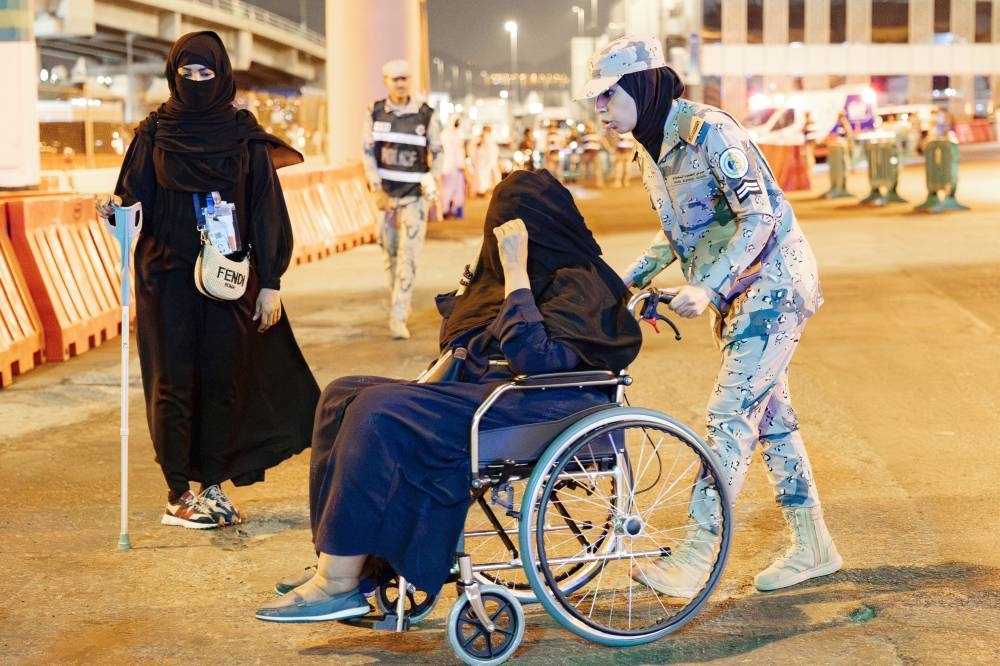
الرحلة انطلقت بتأكيد «لا حج بلا تصريح» وانتهت بعبارات الشكر والامتنان من حجاج بيت الله الحرام ممن منَّ الله عليهم بالحج للسعودية وكافة الجهات العاملة في تنظيم الحج. وأكد الحجاج أن موسم هذا العام كان مثالاً في التنظيم، في الخدمات المقدمة وسرعة وسهولة التنقل بين المشاعر المقدسة.
وأبرزت وسائل إعلام لدول شقيقة ما وجده ضيوف الرحمن من اهتمام كبير ونجاح، فقالت: «إن المملكة أبدعت في إدارة الحشود، وإن استخراج التصاريح والبطاقات، وعلى رأسها «بطاقة نسك»، تم قبل وقت كافٍ، ما سهّل على الحجاج الدخول والتنقل بين المشاعر دون عوائق»، لافتة إلى أن التنقل من منى إلى عرفات ثم مزدلفة ومن ثم رمي الجمرات جرى بانسيابية غير مسبوقة، مؤكدة أن هذه الجهود تعكس حرص المملكة على تقديم أفضل الخدمات لضيوف الرحمن، مشيدة بالتسهيلات المقدمة لهم.
دقة في التنفيذ
النجاح الباهر الذي تحقق في تنظيم حج هذا العام ما كان ليتحقق لولا فضل الله وكرمه أولاً، ومن ثم بفضل حكمة قيادة المملكة العربية السعودية وإيمانها العميق بدورها الديني ومكانتها القيادية، وحرصها على أداء الأمانة التي استُودِعت بها في خدمة الحرمين الشريفين، فكانت على قدر المسؤولية وأكثر، بكل تفانٍ وإخلاص.
لقد أدى حجاج بيت الله الحرام هذا العام مناسكهم في أجواء إيمانية، وسط ظروف استثنائية من الرعاية الأمنية والصحية والغذائية والدينية والإدارة الفريدة لحشود من البشر قدر عددهم بنحو مليوني حاج جاؤوا من كل فجٍّ عميق ليشهدوا منافع لهم، يتحركون جميعهم في زمن واحد وفي مساحة محددة بكل طمأنينة وسكينة.
شهد موسم حج هذا العام تنظيماً أجمع الكل على أنه ناجح بكل المقاييس، ومن أسس نجاحه التنفيذ الصارم والدقيق لقرار «لا حج بلا تصريح»، ومفعول هذا الإجراء ودقة تنفيذه أثبتا أن الرقابة المحكمة والتفتيش الدقيق في مداخل مكة المكرمة كان ركيزة أساسية نحو الانضباط والالتزام بالإجراءات التي آلت إلى النجاح المشهود.
سياجٌ واقٍ وخدمةٌ آمنة
حملة «لا حج بلا تصريح» هي جزء من منظومة شرعية وتنظيمية متكاملة، وهي سياج وقائي يحمي الحاج قبل أن يحج، ويوفر له خدمة آمنة، وسكناً معلوماً، وتنقّلاً مضموناً، ونظاماً صحياً متكاملاً وآمناً يحميه، وبيئة تعينه على أداء الشعيرة في أجواء كريمة تليق بالركن الخامس من أركان الإسلام..
ولم يكن هذا النجاح صدفة، بل ثمرة تناغم بين الأمن والتقنية والتخطيط؛ إذ سخّرت الجهات المختصة الذكاء الاصطناعي، والطائرات المسيّرة، وكاميرات الرصد، لتوقُّع الحشود وتفكيكها قبل أن تتراكم. وساهمت الرسائل الإعلامية التحذيرية، والتواجد الميداني المكثف، في توعية الناس ومنع التسلل من جذوره، حتى «النية الطيبة» التي طالما اتكأ عليها المتجاوزون اصطدمت هذه المرة بجدار النظام، ووعي المجتمع، الذي بدأ يُفرّق بين الرغبة في الطاعة، والإضرار بها.
ونجحت الجهود المبذولة في تطبيق «لا حج بلا تصريح» في الحد من الازدحام، وتجنب المخالفات، وتوفير بيئة آمنة للحجاج، وضمنت هذه القاعدة تنظيم حركة الحجاج، وتوفير الخدمات اللازمة لهم، وتسهيل أداء مناسكهم. مراعاة مصلحة المكان والزمان
المتحدث باسم وزارة الداخلية العقيد طلال شلهوب أكد نجاح الخطط الأمنية في حج هذا العام، التي تم العمل عليها من وقت مبكر، وفق توجيهات القيادة، وبمتابعة وإشراف وزير الداخلية رئيس لجنة الحج العليا، لافتاً في مداخلة له مع قناة العربية إلى أن نجاح الخطط الأمنية دليل على تكامل الجهود بين الجهات الأمنية والعسكرية والأجهزة الحكومية المعنية بالحج كافة في خدمة ضيوف الرحمن وسلامتهم ليؤدوا مناسكهم بسكينة وطمأنينة.
أما رئيس الشؤون الدينية للمسجد الحرام والمسجد النبوي الشيخ الدكتور عبدالرحمن السديس فأكد أن حملة «لا حج بلا تصريح» جاءت وفق مقتضى النصوص الشرعية والمقاصد المرعية، وروعيت فيها مصلحة المكان والزمان، وتحقيق قاعدة التيسير، ورفع الحرج عن المسلمين، ومراعاة شرط الاستطاعة للحجاج، كما جاءت محققة لقواعد الشريعة، وتحقيق المصالح ودرء المفاسد، وتطبيقاً لقاعدة «لا ضرر ولا ضرار»، وقاعدة «الضرر يُزال»، ومراعاة ظروف التزاحم والتدافع، إلى إدارة التفويج وتنظيم الحشود.
مسؤولية لا تحتمل المجاملة
شددت هيئة كبار العلماء على أن الالتزام باستخراج تصريح الحج والتزام قاصدي المشاعر المقدسة يتفق والمصلحة المطلوبة شرعاً، إذ جاءت الشريعة بتحسين المصالح وتكثيرها ودرء المفاسد وتقليلها، وأنه لا يجوز الذهاب إلى الحج دون أخذ تصريح، ويأثم فاعله، ومن لم يتمكن من استخراج التصريح فإنه في حكم عدم المستطيع.
وأضافت الهيئة أن الالتزام باستخراج تصريح الحج والتزام قاصدي المشاعر المقدسة بذلك يتفق والمصلحة المطلوبة شرعاً، ذلك أن الجهات الحكومية المعنية بتنظيم الحج ترسم خطة موسم الحج بجوانبها المتعددة، الأمنية، والصحية، والإيواء والإعاشة، والخدمات الأخرى، وفق الأعداد المصرح لها، وكلما كان عدد الحجاج متوافقاً مع المصرح لهم كان ذلك محققاً لجودة الخدمات التي تقدم للحجاج، ويدفع مفاسد عظيمة من الافتراش في الطرقات الذي يعيق تنقلاتهم وتفويجهم وتقليل مخاطر الازدحام والتدافع المؤدية إلى التهلكة.
نجاح هذا الموسم، بما اتسم به من دقة وسكينة وأمن، كان أبلغ ردّ على دعاة الفوضى؛ فليس ما تحقق مجرد إنجاز تنظيمي، بل رسالة واضحة بأن الحج لا يُدار بالعشوائية، ولا يُؤدى بتجاوز النظام، وأن خدمة ضيوف الرحمن مسؤولية لا تحتمل المجاملة، ولا تسمح بتكرار الأخطاء، فالحج عبادة، والنظام حرمته من حرمة المشاعر.
رحلة بدأت بـ«لا حج بلا تصريح» وانتهت بـ«شكراً»
13 يونيو 2025 - 04:20
|
آخر تحديث 13 يونيو 2025 - 04:20


تابع قناة عكاظ على الواتساب
"No Hajj Without a Permit" was not just a directive or a system implemented only during the Hajj season; it was a success and a fundamental principle aimed at organizing Hajj, ensuring the safety of pilgrims, and facilitating the performance of rituals. It means that no one is allowed to perform the obligatory Hajj without obtaining an official permit.
The journey began with the affirmation of "No Hajj Without a Permit" and ended with expressions of gratitude and appreciation from the pilgrims of the Sacred House of Allah, who were blessed by Allah with the opportunity to perform Hajj, to Saudi Arabia and all the entities involved in organizing Hajj. The pilgrims confirmed that this year's season was exemplary in organization, in the services provided, and in the speed and ease of movement between the holy sites.
Media outlets from brotherly countries highlighted the great attention and success that the guests of Rahman experienced, stating: "The Kingdom excelled in crowd management, and the issuance of permits and cards, foremost among them the 'Nusk Card,' was done well in advance, which facilitated the pilgrims' entry and movement between the holy sites without obstacles." They noted that the movement from Mina to Arafat, then to Muzdalifah, and then to the stoning of the Jamarat occurred with unprecedented smoothness, confirming that these efforts reflect the Kingdom's commitment to providing the best services to the guests of Rahman, praising the facilities provided to them.
Precision in Execution
The remarkable success achieved in organizing this year's Hajj would not have been possible without the grace and generosity of Allah first, and then thanks to the wisdom of the leadership of the Kingdom of Saudi Arabia and its deep belief in its religious role and leadership position, and its commitment to fulfilling the trust placed in it in serving the Two Holy Mosques, as it rose to the responsibility and more, with dedication and sincerity.
This year, the pilgrims of the Sacred House of Allah performed their rituals in a spiritual atmosphere, amidst exceptional conditions of security, health, food, and religious care, and the unique management of crowds estimated at around two million pilgrims who came from every deep valley to witness benefits for themselves, all moving at the same time within a defined space with complete tranquility and peace.
This year's Hajj season witnessed an organization that everyone agreed was successful by all measures, and one of the foundations of its success was the strict and precise implementation of the "No Hajj Without a Permit" decision. The effectiveness of this measure and the accuracy of its implementation proved that rigorous oversight and thorough inspections at the entrances of Mecca were a fundamental pillar towards discipline and adherence to the procedures that led to the witnessed success.
A Protective Barrier and Safe Service
The "No Hajj Without a Permit" campaign is part of an integrated legal and organizational system, serving as a protective barrier that safeguards the pilgrim before they perform Hajj, providing them with a safe service, known accommodation, guaranteed transportation, and a comprehensive and secure health system that protects them, as well as an environment that helps them perform the ritual in dignified conditions befitting the fifth pillar of Islam.
This success was not a coincidence, but rather the result of harmony between security, technology, and planning; the relevant authorities utilized artificial intelligence, drones, and surveillance cameras to anticipate and disperse crowds before they accumulated. Media warning messages and intensive field presence contributed to raising public awareness and preventing infiltration from its roots, even the "good intentions" that violators have often relied on collided this time with the wall of the system and the awareness of the community, which began to differentiate between the desire for obedience and harming it.
The efforts made to implement "No Hajj Without a Permit" successfully reduced congestion, avoided violations, and provided a safe environment for the pilgrims. This principle ensured the organization of the movement of pilgrims, the provision of necessary services to them, and facilitated the performance of their rituals. Considering the Interests of Place and Time
Colonel Talal Shalhoub, the spokesperson for the Ministry of Interior, confirmed the success of the security plans for this year's Hajj, which were worked on early, following the directives of the leadership, and under the supervision of the Minister of Interior, the head of the Supreme Hajj Committee. He pointed out in an interview with Al Arabiya that the success of the security plans is evidence of the integration of efforts among security, military, and government agencies concerned with Hajj in serving the guests of Rahman and ensuring their safety so they can perform their rituals with tranquility and peace.
Sheikh Dr. Abdulrahman Al-Sudais, the head of religious affairs for the Grand Mosque and the Prophet's Mosque, confirmed that the "No Hajj Without a Permit" campaign came in accordance with the requirements of legal texts and the intended objectives, taking into account the interests of place and time, achieving the principle of facilitation, alleviating hardship for Muslims, and considering the condition of ability for the pilgrims. It also came in line with the principles of Sharia, achieving interests and preventing harms, applying the principle of "no harm and no harming," and the principle of "harm must be removed," while considering the circumstances of crowding and pushing, leading to the management of flow and organization of crowds.
A Responsibility That Cannot Tolerate Favoritism
The Council of Senior Scholars emphasized that adherence to obtaining a Hajj permit and the commitment of those heading to the holy sites aligns with the interests required by Sharia, as Sharia has come to enhance interests and increase them while preventing harms and reducing them. It is not permissible to go for Hajj without obtaining a permit, and the one who does so is sinful; if someone is unable to obtain the permit, they are considered as one who is not capable.
The council added that adherence to obtaining a Hajj permit and the commitment of those heading to the holy sites aligns with the interests required by Sharia, as the government agencies concerned with organizing Hajj draw up a plan for the Hajj season in its various aspects—security, health, accommodation, sustenance, and other services—according to the number of authorized pilgrims. The more the number of pilgrims matches those authorized, the better the quality of services provided to them, preventing significant harms from overcrowding on the roads that hinder their movement and flow, and reducing the risks of congestion and pushing that could lead to disaster.
The success of this season, characterized by precision, tranquility, and security, was the most eloquent response to the advocates of chaos; what has been achieved is not merely an organizational achievement, but a clear message that Hajj cannot be managed chaotically, nor can it be performed by bypassing the system. Serving the guests of Rahman is a responsibility that cannot tolerate favoritism and does not allow for the repetition of mistakes, as Hajj is an act of worship, and the system has sanctified it from the sanctity of the holy sites.
The journey began with the affirmation of "No Hajj Without a Permit" and ended with expressions of gratitude and appreciation from the pilgrims of the Sacred House of Allah, who were blessed by Allah with the opportunity to perform Hajj, to Saudi Arabia and all the entities involved in organizing Hajj. The pilgrims confirmed that this year's season was exemplary in organization, in the services provided, and in the speed and ease of movement between the holy sites.
Media outlets from brotherly countries highlighted the great attention and success that the guests of Rahman experienced, stating: "The Kingdom excelled in crowd management, and the issuance of permits and cards, foremost among them the 'Nusk Card,' was done well in advance, which facilitated the pilgrims' entry and movement between the holy sites without obstacles." They noted that the movement from Mina to Arafat, then to Muzdalifah, and then to the stoning of the Jamarat occurred with unprecedented smoothness, confirming that these efforts reflect the Kingdom's commitment to providing the best services to the guests of Rahman, praising the facilities provided to them.
Precision in Execution
The remarkable success achieved in organizing this year's Hajj would not have been possible without the grace and generosity of Allah first, and then thanks to the wisdom of the leadership of the Kingdom of Saudi Arabia and its deep belief in its religious role and leadership position, and its commitment to fulfilling the trust placed in it in serving the Two Holy Mosques, as it rose to the responsibility and more, with dedication and sincerity.
This year, the pilgrims of the Sacred House of Allah performed their rituals in a spiritual atmosphere, amidst exceptional conditions of security, health, food, and religious care, and the unique management of crowds estimated at around two million pilgrims who came from every deep valley to witness benefits for themselves, all moving at the same time within a defined space with complete tranquility and peace.
This year's Hajj season witnessed an organization that everyone agreed was successful by all measures, and one of the foundations of its success was the strict and precise implementation of the "No Hajj Without a Permit" decision. The effectiveness of this measure and the accuracy of its implementation proved that rigorous oversight and thorough inspections at the entrances of Mecca were a fundamental pillar towards discipline and adherence to the procedures that led to the witnessed success.
A Protective Barrier and Safe Service
The "No Hajj Without a Permit" campaign is part of an integrated legal and organizational system, serving as a protective barrier that safeguards the pilgrim before they perform Hajj, providing them with a safe service, known accommodation, guaranteed transportation, and a comprehensive and secure health system that protects them, as well as an environment that helps them perform the ritual in dignified conditions befitting the fifth pillar of Islam.
This success was not a coincidence, but rather the result of harmony between security, technology, and planning; the relevant authorities utilized artificial intelligence, drones, and surveillance cameras to anticipate and disperse crowds before they accumulated. Media warning messages and intensive field presence contributed to raising public awareness and preventing infiltration from its roots, even the "good intentions" that violators have often relied on collided this time with the wall of the system and the awareness of the community, which began to differentiate between the desire for obedience and harming it.
The efforts made to implement "No Hajj Without a Permit" successfully reduced congestion, avoided violations, and provided a safe environment for the pilgrims. This principle ensured the organization of the movement of pilgrims, the provision of necessary services to them, and facilitated the performance of their rituals. Considering the Interests of Place and Time
Colonel Talal Shalhoub, the spokesperson for the Ministry of Interior, confirmed the success of the security plans for this year's Hajj, which were worked on early, following the directives of the leadership, and under the supervision of the Minister of Interior, the head of the Supreme Hajj Committee. He pointed out in an interview with Al Arabiya that the success of the security plans is evidence of the integration of efforts among security, military, and government agencies concerned with Hajj in serving the guests of Rahman and ensuring their safety so they can perform their rituals with tranquility and peace.
Sheikh Dr. Abdulrahman Al-Sudais, the head of religious affairs for the Grand Mosque and the Prophet's Mosque, confirmed that the "No Hajj Without a Permit" campaign came in accordance with the requirements of legal texts and the intended objectives, taking into account the interests of place and time, achieving the principle of facilitation, alleviating hardship for Muslims, and considering the condition of ability for the pilgrims. It also came in line with the principles of Sharia, achieving interests and preventing harms, applying the principle of "no harm and no harming," and the principle of "harm must be removed," while considering the circumstances of crowding and pushing, leading to the management of flow and organization of crowds.
A Responsibility That Cannot Tolerate Favoritism
The Council of Senior Scholars emphasized that adherence to obtaining a Hajj permit and the commitment of those heading to the holy sites aligns with the interests required by Sharia, as Sharia has come to enhance interests and increase them while preventing harms and reducing them. It is not permissible to go for Hajj without obtaining a permit, and the one who does so is sinful; if someone is unable to obtain the permit, they are considered as one who is not capable.
The council added that adherence to obtaining a Hajj permit and the commitment of those heading to the holy sites aligns with the interests required by Sharia, as the government agencies concerned with organizing Hajj draw up a plan for the Hajj season in its various aspects—security, health, accommodation, sustenance, and other services—according to the number of authorized pilgrims. The more the number of pilgrims matches those authorized, the better the quality of services provided to them, preventing significant harms from overcrowding on the roads that hinder their movement and flow, and reducing the risks of congestion and pushing that could lead to disaster.
The success of this season, characterized by precision, tranquility, and security, was the most eloquent response to the advocates of chaos; what has been achieved is not merely an organizational achievement, but a clear message that Hajj cannot be managed chaotically, nor can it be performed by bypassing the system. Serving the guests of Rahman is a responsibility that cannot tolerate favoritism and does not allow for the repetition of mistakes, as Hajj is an act of worship, and the system has sanctified it from the sanctity of the holy sites.


