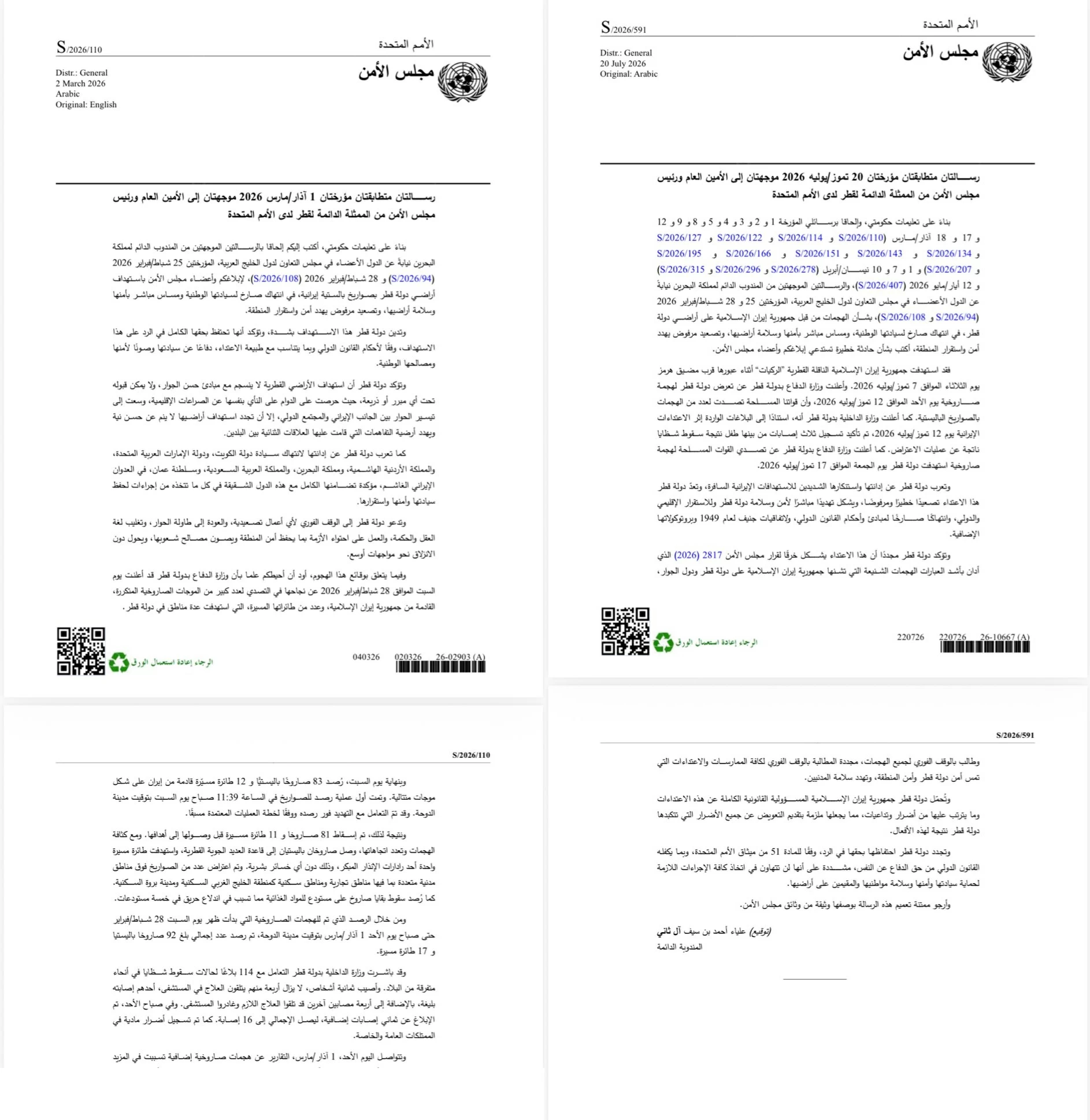
أكدت دولة قطر أن الوثائق الرسمية المودعة لدى الأمم المتحدة توثق تعرض أراضيها لهجمات صاروخية إيرانية، رداً على الاستناد الانتقائي إلى تقييم للمخاطر الأمنية أُعد لأغراض تشغيلية.
وكتب المتحدث باسم وزارة الخارجية القطرية الدكتور ماجد الانصاري على حسابه في «إكس»: إذا كان الجانب الإيراني يريد الاستناد إلى الوثائق الرسمية، فإننا ندعوه للعودة إلى السجل الذي قدمته دولة قطر رسمياً إلى الأمم المتحدة، بدلاً من الاقتباس الانتقائي من تقييم للمخاطر الأمنية أُعد لأغراض تشغيلية.
وقال الانصاري: وثقت رسالتا دولة قطر المتطابقتان المؤرختان في 1 مارس 2026 (S/2026/110) إطلاق صواريخ إيرانية على مناطق مدنية وتجارية وسكنية، وما نتج عنها من أضرار وإصابة 16 شخصاً، كما وثقت رسالة دولة قطر المؤرخة في 20 يوليو اعتداءات إضافية أسفرت عن إصابة ثلاثة أشخاص، بينهم طفل، مضيفاً: أما الوثيقة التي يستشهد بها الجانب الإيراني، فهي تقييم لمخاطر السلامة والأمن أُعد لأغراض مؤتمر المندوبين المفوضين للاتحاد الدولي للاتصالات، وليست سجلاً شاملاً للوقائع أو تقييماً قانونياً لها. بل إنها تقر بوقوع اعتداءات مباشرة داخل دولة قطر، بما فيها اعتداء 18 مارس على منشآت الغاز في رأس لفان، وتشير إلى الإغلاق المؤقت للمجال الجوي وتأثر الحياة المدنية.
ووصف المتحدث باسم الخارجية القطرية اجتزاء إيران من التقرير بمعزل عن سياقه بـ«الأمر المضلل»، مبيناً أن نجاح القوات المسلحة القطرية في اعتراض الصواريخ والطائرات المسيّرة الإيرانية لا ينتقص من خطورة تلك الاعتداءات ولا يعفي مطلقيها من المسؤولية.
وأعربت قطر عن أسفها لوصف اعتداء رأس لفان بأنه «مزعوم»، رغم توثيقه رسمياً في رسالة دولة قطر إلى مجلس الأمن رقم (S/2026/207)، مؤكدة أن المنشآت المستهدفة تمثل من مقدرات الشعب القطري وجزءاً أساسياً من منظومة أمن الطاقة العالمي.
وأكدت الدوحة أن قطر ليست طرفاً في الصراع، وأنه لا يمكن تبرير الاعتداء على أراضيها وبنيتها التحتية المدنية وتعريض سكانها للخطر، أو الأعمال المزعزعة للاستقرار في مضيق هرمز، باعتبارها «ردوداً مشروعة»، مبيناً إن هذه الأفعال تمثل انتهاكاً للقانون الدولي، وإن أي اقتباس أو تأويل انتقائي لن يغير من حقيقتها.
وشدد الانصاري بالقول: «انطلاقاً من موقف قطر الثابت بأن الحوار والوسائل السلمية تظل السبيل الأمثل لمعالجة الخلافات، ستواصل مساعيها الدبلوماسية وجهودها الحثيثة الرامية إلى خفض التصعيد وتعزيز الأمن والاستقرار في المنطقة».
The State of Qatar confirmed that the official documents submitted to the United Nations document the exposure of its territories to Iranian missile attacks, in response to the selective reference to a security risk assessment prepared for operational purposes.
The spokesperson for the Qatari Ministry of Foreign Affairs, Dr. Majid Al-Ansari, wrote on his account on "X": If the Iranian side wants to rely on official documents, we invite them to refer back to the record that the State of Qatar officially submitted to the United Nations, instead of selectively quoting from a security risk assessment prepared for operational purposes.
Al-Ansari stated: The two identical letters from the State of Qatar dated March 1, 2026 (S/2026/110) documented the launch of Iranian missiles on civilian, commercial, and residential areas, resulting in damage and injuring 16 people. The letter from the State of Qatar dated July 20 documented additional attacks that resulted in the injury of three people, including a child. He added: As for the document cited by the Iranian side, it is an assessment of safety and security risks prepared for the purposes of the World Telecommunication Union's Plenipotentiary Conference, and it is not a comprehensive record of facts or a legal assessment of them. Rather, it acknowledges the occurrence of direct attacks within the State of Qatar, including the March 18 attack on gas facilities in Ras Laffan, and refers to the temporary closure of airspace and the impact on civilian life.
The Qatari Foreign Ministry spokesperson described Iran's excerpting from the report out of context as "misleading," indicating that the success of the Qatari armed forces in intercepting Iranian missiles and drones does not diminish the seriousness of those attacks nor absolve their perpetrators of responsibility.
Qatar expressed regret over the description of the Ras Laffan attack as "alleged," despite its official documentation in Qatar's letter to the Security Council number (S/2026/207), emphasizing that the targeted facilities represent part of the capabilities of the Qatari people and are an essential part of the global energy security system.
Doha affirmed that Qatar is not a party to the conflict, and that the attack on its territories and civilian infrastructure, endangering its residents, or destabilizing actions in the Strait of Hormuz cannot be justified as "legitimate responses," indicating that these actions represent a violation of international law, and any selective quotation or interpretation will not change their reality.
Al-Ansari emphasized by saying: "Based on Qatar's firm position that dialogue and peaceful means remain the best way to address disputes, it will continue its diplomatic efforts and tireless endeavors aimed at de-escalation and enhancing security and stability in the region."