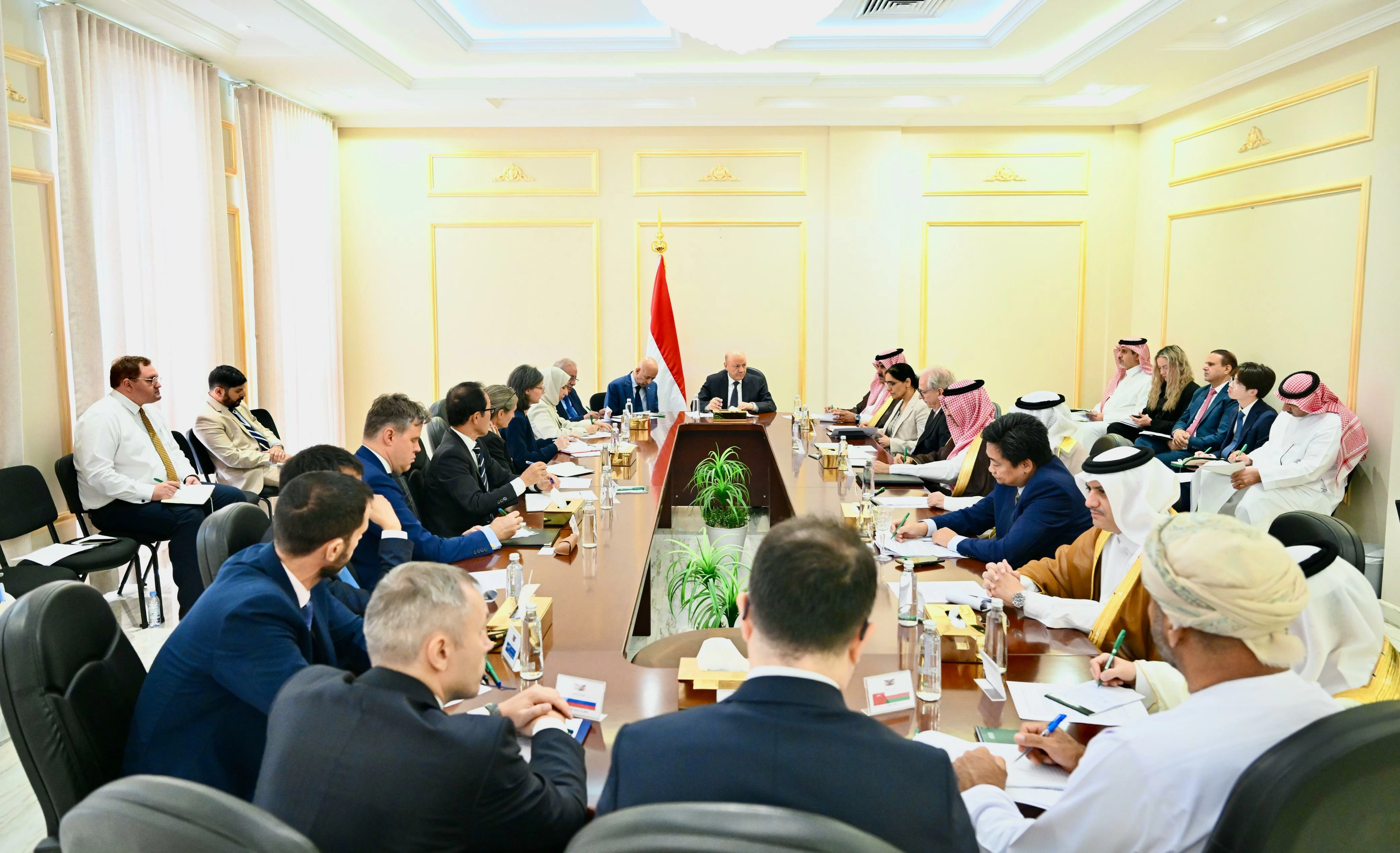
أكد رئيس مجلس القيادة الرئاسي اليمني الدكتور رشاد العليمي أن التصعيد الأخير لمليشيا الحوثي الإرهابية يمثل اختباراً جديداً لجدية المجتمع الدولي في حماية فرص السلام التي استثمرت فيها الحكومة اليمنية والدول الشقيقة والصديقة على مدى سنوات.
وقال رئيس مجلس القيادة الرئاسي في لقاء بسفراء الدول الراعية للعملية السياسية في اليمن، اليوم (الإثنين): «الدولة اليمنية لم تبدأ هذا التصعيد، ولم تبحث عنه، لكنها في الوقت نفسه لن تسمح بأن يصبح التزامها بالسلام تصريحاً مفتوحاً للمليشيا كي تختار متى تهاجم، وأين تهاجم، ثم تطلب من الجميع ضبط النفس عندما يأتي الرد»، مستعرضاً جرائم الحوثي الإرهابية واستهدافه ميناء المخا بالصواريخ الباليستية والطائرات المسيّرة وما أسفر عنه من ضحايا مدنيين بينهم نساء وأطفال.
وأشار العليمي إلى أن الهدف لم يكن موقعاً عسكرياً، وإنما رصيفاً بحرياً ومرافق خدمية، ورافعات مناولة البضائع والسلع الغذائية، وعدداً من السفن التجارية الراسية في الميناء، كما ألحقت أضراراً بالغة بمستشفى، ومصلحة الهجرة والجوازات، ومشاريع مياه، مبيناً أن ما حدث في المخا كان حلقة في سلسلة تصعيد مستمر منذ أسابيع، بدءاً بمحاولة تسيير رحلات جوية للحرس الثوري إلى صنعاء، ومروراً باستهداف السفن التجارية، والأعيان المدنية في السعودية، وصولاً إلى الهجمات الإرهابية في مأرب وحضرموت على مواقع للقوات المسلحة والمنشآت السيادية والأعيان المدنية ومخيمات النازحين.
وجدد رئيس مجلس القيادة الرئاسي تحذيرات الحكومة للمجتمع الدولي مراراً بشأن استحالة بناء سلام مستدام مع جماعة مسلحة تحتفظ بصواريخ باليستية، وتختطف قراري السلم والحرب، وفوق ذلك ترى في قادتها فئة مصطفاة فوق الدولة وسيادة القانون.
وأضاف: «أريد أن أذكّر أصدقاءنا بأن الحكومة اليمنية لم تختبر الخيار العسكري أولاً، بل اختبرت السلام أولاً، وبصبر استثنائي، احترمنا التهدئة، وضبطنا النفس، وسهلنا حركة الطيران والموانئ وتدفق السلع، وتجاوبنا مع جهود الأمم المتحدة والأشقاء والأصدقاء، وتحملنا كلفة سياسية واقتصادية كبيرة؛ لأننا نؤمن بأن حياة اليمنيين أغلى من أي شيء آخر»، مشدداً بالقول: «ما نشهده اليوم هو نتاج سنوات من التساهل الدولي، والحوافز التي اعتقدت هذه الجماعة المارقة أنه يمكنها انتزاع المزيد منها بالصواريخ والمسيرات الانتحارية».
ولفت إلى أن المعادلة الميدانية والسياسية تغيرت، وأن المليشيا يجب أن تدرك أن مرحلة الاعتداء بلا كلفة انتهت.
وأضاف: «القوات المسلحة اليمنية اليوم أكثر جاهزية، وأن التطورات الأخيرة أثبتت أن الاعتداء على مأرب أو حضرموت أو الساحل الغربي لم يمر دون عقاب، ولم يكن اعتداءً على جبهة منفردة، وإنما اعتداء على الدولة بكاملها»، لافتاً إلى أن الدولة لن تسمح للمليشيا بعد اليوم بأن تحتكر قرار بدء المواجهة وتوقيتها ومكانها وحجمها، ثم تحتكر أيضاً قرار اللحظة التي ينبغي أن تتوقف فيها.
ودعا العليمي المجتمع الدولي إلى تحمل مسؤولياته في حماية قواعد النظام الدولي المتمثلة بحماية المدنيين، وحرمة المنشآت والأعيان المدنية والموانئ التجارية، وسيادة الدول، ورفض استخدام الصواريخ والمسيّرات لفرض مكاسب غير مشروعة، محذراً من أن الصمت أو اللغة الملتبسة لا تساعد على التهدئة، بل يمكن أن تُقرأ لدى المليشيا باعتبارها مساحة لمزيد من التصعيد.
وأضاف العليمي: «نحن لا نطلب من أصدقائنا بيانات تضامن مع الحكومة بقدر ما نطلب الدفاع عن قواعد يفترض أنها تخص النظام الدولي كله، فلا تساووا مرة أخرى بين الدولة والمليشيا الإرهابية»، مطالباً المجتمع الدولي بموقف سياسي واضح وسريع يدين استهداف الموانئ والمنشآت المدنية والمدنيين، ويحمّل المليشيا مسؤولية التصعيد.
وشدد العليمي على أهمية دعم حق الحكومة اليمنية في حماية مواطنيها ومؤسساتها ومنشآتها الاقتصادية في إطار القانون الدولي، مخاطباً سفراء الدول الراعية للعملية السياسية.
وقال العليمي: «لقد طلب منا أصدقاؤنا طوال السنوات الماضية أن نعطي السلام فرصة، وفعلنا ذلك بكل مسؤولية، وربما أكثر مما كان متوقعاً. واليوم نطلب من أصدقائنا أن يعطوا الدولة فرصة أيضاً».
من جانبهم، دان سفراء الدول الراعية للعملية السياسية بشدة التصعيد والهجمات الحوثية الأخيرة على القوات الحكومية والأعيان المدنية والمنشآت الاقتصادية، بما في ذلك ميناء المخا، والهجمات التي طالت السعودية الشقيقة، والسفن التجارية.
وأكد السفراء دعم بلدانهم لجهود مواجهة هذه التهديدات، وحماية المدنيين وحرية وأمن الملاحة الدولية، كما جدد السفراء دعم بلدانهم لمجلس القيادة الرئاسي والحكومة.
وأشاد السفراء بما أبدته الدولة من ضبط للنفس ومسؤولية خلال موجة التصعيد الحوثية، والتزامها بالقانون الدولي، وأكّدوا رفض استخدام العنف والصواريخ والطائرات المسيّرة وسيلة لانتزاع مكاسب سياسية واقتصادية غير مشروعة.
ورحب السفراء بموقف مجلس الأمن وإدانته الهجمات والانتهاكات الأخيرة، مؤكدين أهمية استمرار الضغط الدولي لوقف التصعيد، ومنع اتساع دائرة المواجهة، وحماية فرص السلام، ودفع المليشيا الحوثية إلى التخلي عن العنف والعودة الجادة إلى المسار السياسي، بما يضمن أمن واستقرار اليمن والمنطقة والممرات المائية الدولية.
The President of the Yemeni Presidential Leadership Council, Dr. Rashad Alimi, confirmed that the recent escalation by the terrorist Houthi militia represents a new test of the seriousness of the international community in protecting the peace opportunities that the Yemeni government and the brotherly and friendly countries have invested in over the years.
In a meeting with ambassadors of the countries sponsoring the political process in Yemen today (Monday), the President of the Presidential Leadership Council stated: “The Yemeni state did not initiate this escalation, nor did it seek it, but at the same time it will not allow its commitment to peace to become an open statement for the militia to choose when and where to attack, and then ask everyone to exercise restraint when the response comes,” reviewing the terrorist crimes of the Houthis and their targeting of the Al-Mokha port with ballistic missiles and drones, which resulted in civilian casualties, including women and children.
Alimi pointed out that the target was not a military site, but rather a maritime dock and service facilities, cargo handling cranes, and several commercial ships docked at the port. It also caused severe damage to a hospital, the immigration and passports authority, and water projects, indicating that what happened in Al-Mokha was part of a series of escalations that have been ongoing for weeks, starting with attempts to operate flights for the Revolutionary Guard to Sana'a, passing through targeting commercial ships and civilian sites in Saudi Arabia, and culminating in terrorist attacks in Marib and Hadhramaut on armed forces sites, sovereign facilities, civilian sites, and displaced persons camps.
The President of the Presidential Leadership Council reiterated the government's warnings to the international community repeatedly about the impossibility of building sustainable peace with an armed group that retains ballistic missiles, kidnaps the decisions of peace and war, and above all, sees its leaders as a category above the state and the rule of law.
He added: “I want to remind our friends that the Yemeni government did not test the military option first, but rather tested peace first, and with exceptional patience, we respected the truce, exercised restraint, facilitated air traffic and ports, and the flow of goods, responded to the efforts of the United Nations and our brothers and friends, and bore a significant political and economic cost because we believe that the lives of Yemenis are more precious than anything else,” emphasizing: “What we are witnessing today is the result of years of international leniency and the incentives that this rogue group believed it could extract more of through missiles and suicide drones.”
He pointed out that the field and political equation has changed, and that the militia must realize that the phase of aggression without cost has ended.
He added: “The Yemeni armed forces today are more prepared, and recent developments have proven that aggression against Marib or Hadhramaut or the western coast does not go unpunished, and it was not an attack on a single front, but rather an attack on the state as a whole,” noting that the state will not allow the militia from now on to monopolize the decision to initiate confrontation, its timing, location, and scale, and then also monopolize the decision of when it should stop.
Alimi called on the international community to bear its responsibilities in protecting the rules of the international order, which include protecting civilians, the sanctity of civilian facilities and commercial ports, the sovereignty of states, and rejecting the use of missiles and drones to impose unlawful gains, warning that silence or ambiguous language does not help in de-escalation, but can be interpreted by the militia as a space for further escalation.
Alimi added: “We do not ask our friends for statements of solidarity with the government as much as we ask for the defense of rules that are supposed to concern the entire international system, so do not equate once again between the state and the terrorist militia,” calling on the international community for a clear and swift political stance that condemns the targeting of ports, civilian facilities, and civilians, and holds the militia accountable for the escalation.
Alimi emphasized the importance of supporting the Yemeni government's right to protect its citizens, institutions, and economic facilities within the framework of international law, addressing the ambassadors of the countries sponsoring the political process.
Alimi said: “Our friends have asked us over the past years to give peace a chance, and we have done so responsibly, perhaps more than expected. Today, we ask our friends to give the state a chance as well.”
For their part, the ambassadors of the countries sponsoring the political process strongly condemned the recent Houthi escalation and attacks on government forces, civilian sites, and economic facilities, including the Al-Mokha port, and the attacks that targeted our brotherly Saudi Arabia and commercial ships.
The ambassadors affirmed their countries' support for efforts to confront these threats, protect civilians, and ensure the freedom and security of international navigation. They also renewed their countries' support for the Presidential Leadership Council and the government.
The ambassadors praised the state’s display of restraint and responsibility during the Houthi escalation wave, and its commitment to international law, and they affirmed their rejection of the use of violence, missiles, and drones as a means to extract unlawful political and economic gains.
The ambassadors welcomed the Security Council's position and its condemnation of the recent attacks and violations, emphasizing the importance of continued international pressure to stop the escalation, prevent the widening of the confrontation, protect opportunities for peace, and push the Houthi militia to abandon violence and return seriously to the political track, ensuring the security and stability of Yemen, the region, and international waterways.