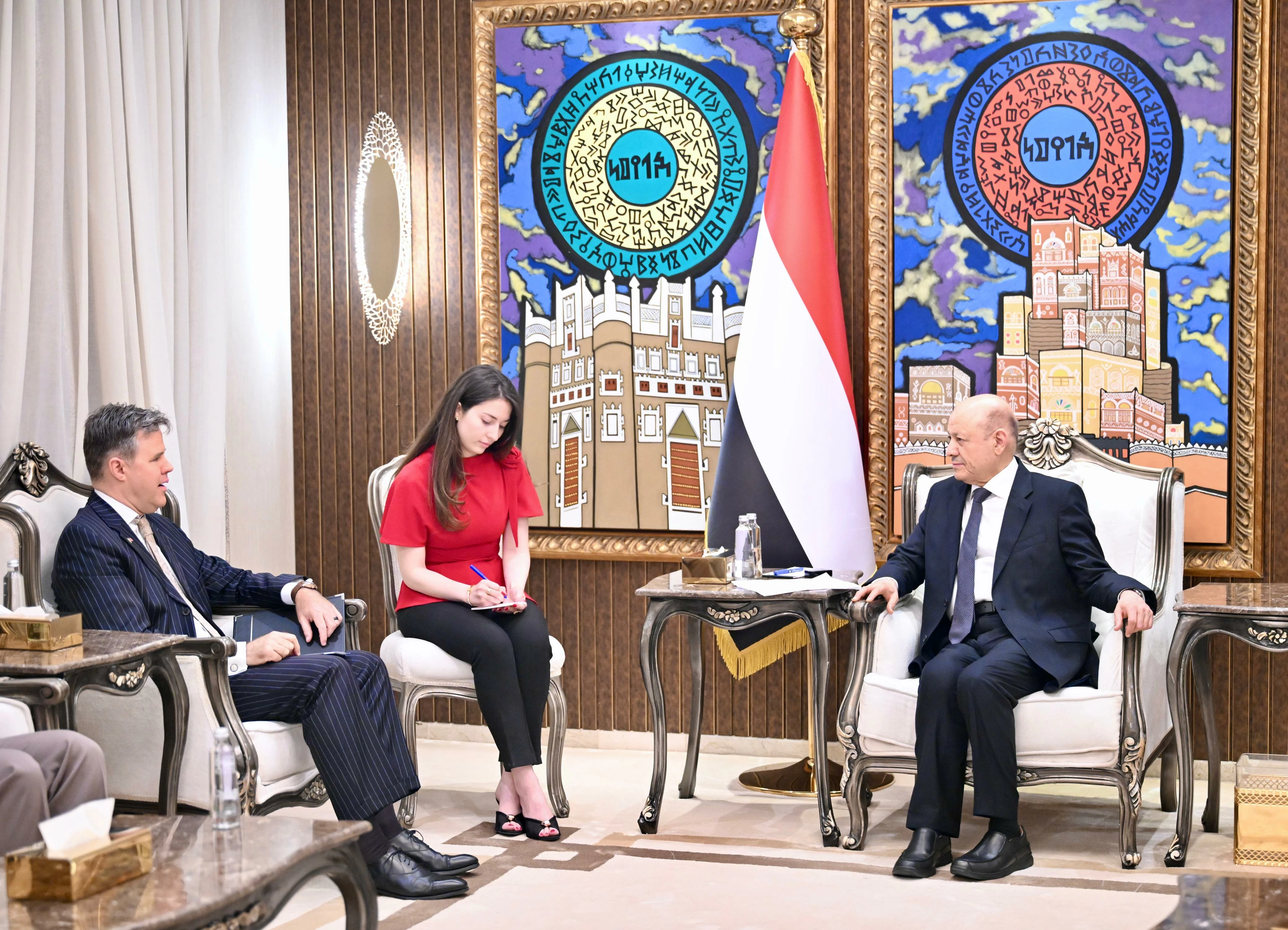
اتهم رئيس مجلس القيادة الرئاسي اليمني الدكتور رشاد العليمي المليشيات الحوثية باستهداف مقدرات الشعب اليمني وشرايين حياته ومنافذه الاقتصادية من خلال حرب ممنهجة، مشيراً إلى استهداف ميناء المخا بعد أيام من الاعتداءات على مواقع القوات المسلحة ومخيمات النازحين والأعيان المدنية، ومحاولات استهداف السفن والمنشآت الوطنية.
خطورة بقاء السلاح خارج سيطرة الدولة
وأكد العليمي خلال لقاء القائم بأعمال السفارة الأمريكية لدى اليمن نيل هوب، (الأحد)، أن استهداف ميناء بحري حيوي على مقربة من باب المندب هو امتداد لنهج التصعيد الإيراني الذي يطال المنشآت الاقتصادية والممرات البحرية ومصالح دول المنطقة، لافتاً إلى أنه يبرهن مجدداً على خطورة بقاء قدرات الصواريخ والطائرات المسيّرة والأسلحة النوعية خارج سلطة الدولة. وأضاف أن المليشيات الحوثية التي تدعي وجود حصار على مناطق سيطرتها هي من تستهدف اليوم الموانئ والمطارات والمنشآت الاقتصادية، وتهدد السفن التجارية وإمدادات الغذاء والوقود، في محاولة لخنق الشعب اليمني وسبل عيشه الكريم، ومضاعفة معاناته الإنسانية.
دعم مؤسسات الدولة اليمنية
وشدد على أن هذا التصعيد يضع المجتمع الدولي، وفي المقدمة الولايات المتحدة، أمام مسؤولية واضحة في حماية حق اليمنيين في الوصول الآمن إلى موانئهم ومطاراتهم ومنشآتهم الحيوية، والانتقال من مجرد احتواء التهديد الحوثي إلى معالجة مصادره وأدواته، ودعم مؤسسات الدولة اليمنية وقدرتها على حماية أراضيها ومياهها ومصالح مواطنيها. وأشار إلى أن ما يجري في المنطقة يؤكد مجدداً أن المشكلة ليست في الأزمات المنفصلة، وإنما في مصدر واحد لعدم الاستقرار يقوم على استخدام الجماعات المسلحة خارج مؤسسات الدولة لتحقيق أهداف عابرة للحدود.
وجدد التأكيد على دعم الحكومة لأي جهد دبلوماسي يخفف التوتر ويمنع الحروب في المنطقة، لكنه حذر من أن أي تفاهمات لا تعالج بصورة واضحة ومستدامة خطر المليشيات الإيرانية، وقدراتها العسكرية، وتمويلها وتهديدها لدول المنطقة، ستؤجل الأزمة ولن تحلها.
لا حوافز عبر الابتزاز
وطالب العليمي بعدم حصول الحوثيين على حوافز عبر الابتزاز بعدما عجزوا عن تحقيق ذلك بالقوة، وأن أي تفاهمات في المنطقة يجب أن تنتهي إلى دول وطنية تحتكر بصورة حصرية أدوات القوة المشروعة، ومؤسسات دستورية تمثل جميع مواطنيها.
ودعا الولايات المتحدة والمجتمع الدولي إلى الانتقال من سياسة إدارة التهديد الحوثي إلى معالجة أسبابه ومصادر قوته، من خلال استمرار الضغط السياسي والاقتصادي والدبلوماسي على المليشيات وداعميها، وتعزيز قدرات الحكومة ومؤسسات الدولة في حماية أراضيها، ومياهها ومصالح مواطنيها، قائلاً إنه كلما كانت الدولة اليمنية أقوى تراجعت قدرة إيران والجماعات المتطرفة على استخدام اليمن منصة لتهديد المنطقة والعالم. وبحث العليمي مع الدبلوماسي الأمريكي العلاقات الثنائية المتميزة بين البلدين الصديقين، وآفاق تعزيزها، وتطويرها على المستويات كافة. وأعرب العليمي عن تقديره العالي للدور الأمريكي في دعم الحكومة اليمنية، وحماية أمن المنطقة وحرية الملاحة الدولية ومكافحة الإرهاب، مؤكداً تطلعه إلى مرحلة أكثر تقدماً من الشراكة بين البلدين الصديقين.
The President of the Yemeni Presidential Leadership Council, Dr. Rashad Al-Alimi, accused the Houthi militias of targeting the resources of the Yemeni people, the arteries of their lives, and their economic outlets through a systematic war. He pointed out the targeting of the Al-Mokha port just days after attacks on the sites of the armed forces, displaced persons camps, and civilian objects, as well as attempts to target ships and national facilities.
The Danger of Weapons Remaining Outside State Control
Al-Alimi confirmed during a meeting with the Acting U.S. Ambassador to Yemen, Neil Hope, on Sunday, that the targeting of a vital maritime port near Bab al-Mandab is an extension of the Iranian escalation that affects economic facilities, maritime routes, and the interests of regional countries. He noted that this once again demonstrates the danger of having missile capabilities, drones, and advanced weapons outside the authority of the state. He added that the Houthi militias, which claim there is a blockade on areas under their control, are the ones targeting ports, airports, and economic facilities today, threatening commercial ships and supplies of food and fuel, in an attempt to suffocate the Yemeni people and their means of dignified living, exacerbating their humanitarian suffering.
Supporting Yemeni State Institutions
He emphasized that this escalation places the international community, particularly the United States, before a clear responsibility to protect the Yemenis' right to safe access to their ports, airports, and vital facilities, moving from merely containing the Houthi threat to addressing its sources and tools, and supporting Yemeni state institutions in their ability to protect their lands, waters, and the interests of their citizens. He pointed out that what is happening in the region reaffirms that the problem is not in separate crises, but in a single source of instability based on the use of armed groups outside state institutions to achieve cross-border objectives.
He reiterated the government's support for any diplomatic efforts that reduce tension and prevent wars in the region, but warned that any agreements that do not clearly and sustainably address the danger of Iranian militias, their military capabilities, funding, and threats to regional countries will only postpone the crisis and not resolve it.
No Incentives Through Extortion
Al-Alimi called for the Houthis not to receive incentives through extortion after failing to achieve that by force, and that any agreements in the region should lead to national states that exclusively monopolize legitimate tools of power and constitutional institutions that represent all their citizens.
He urged the United States and the international community to move from a policy of managing the Houthi threat to addressing its causes and sources of strength, through continued political, economic, and diplomatic pressure on the militias and their supporters, and enhancing the capabilities of the government and state institutions in protecting their lands, waters, and the interests of their citizens. He stated that the stronger the Yemeni state is, the less capable Iran and extremist groups will be to use Yemen as a platform to threaten the region and the world. Al-Alimi discussed with the American diplomat the distinguished bilateral relations between the two friendly countries and the prospects for enhancing and developing them at all levels. He expressed his high appreciation for the American role in supporting the Yemeni government, protecting regional security, ensuring freedom of international navigation, and combating terrorism, affirming his aspiration for a more advanced phase of partnership between the two friendly countries.