شدد علماء ودعاة يمنيون على ضرورة تعزيز الشراكة الإستراتيجية بين السعودية واليمن على المستويات السياسية والأمنية والعسكرية والاقتصادية والدينية، وتوحيد الجهود لمواجهة المشاريع الخارجية الهدامة، مؤكدين أهمية استعادة الدولة اليمنية، وتأمين حدود الجزيرة العربية والممرات المائية الدولية.
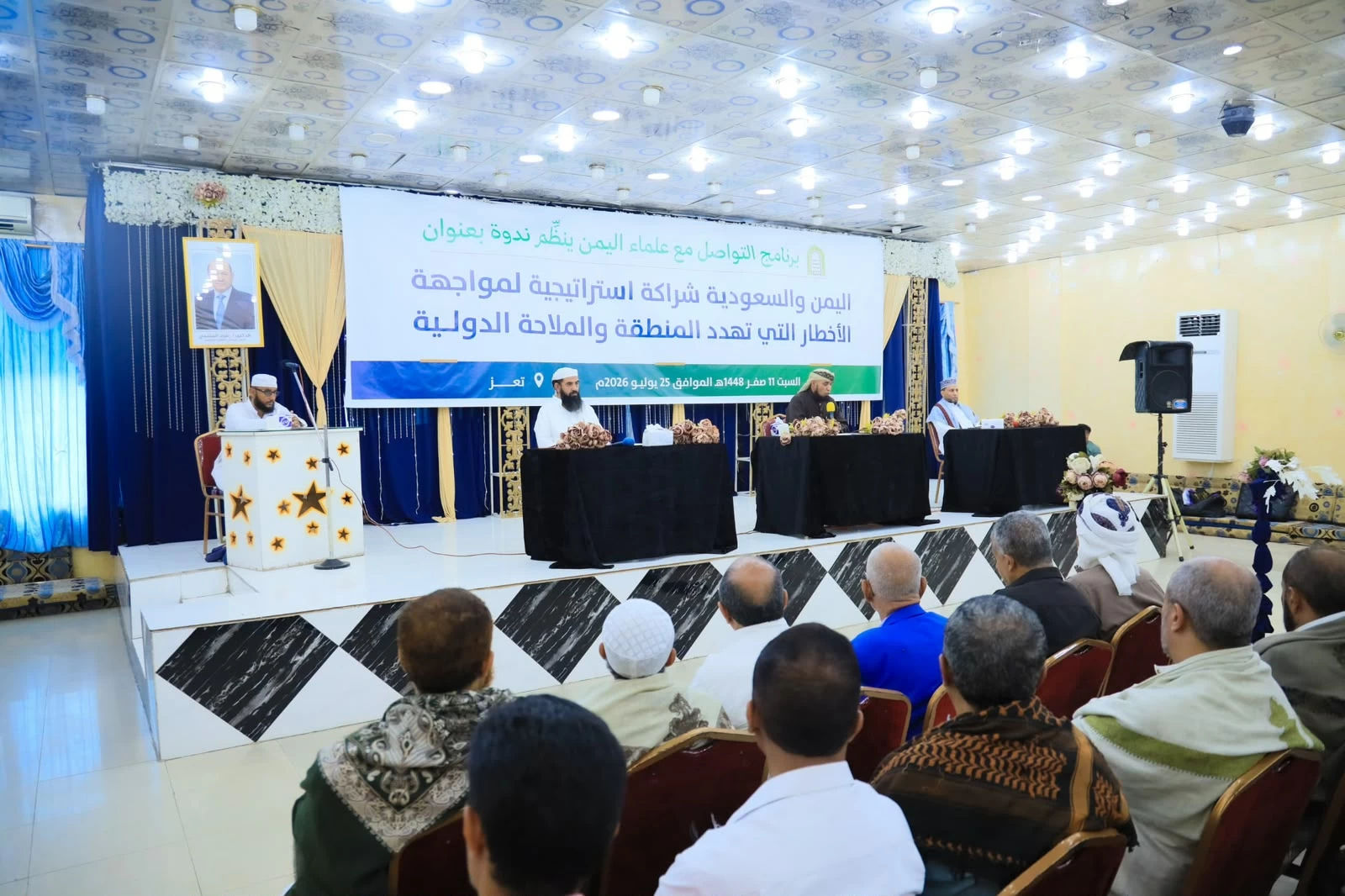
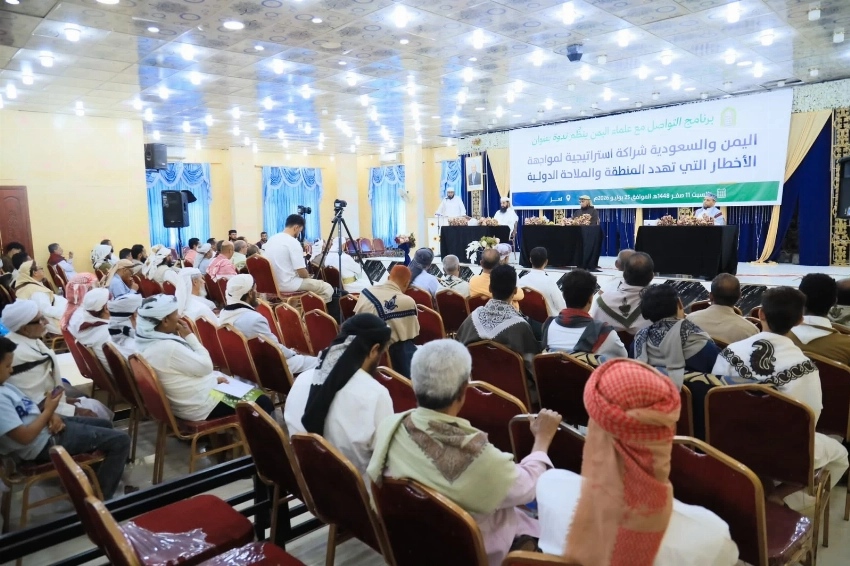
وفي الندوة التي نظمها برنامج التواصل مع علماء اليمن في مدينة تعز بعنوان (اليمن والسعودية.. شراكة إستراتيجية لمواجهة الأخطار التي تهدد المنطقة والملاحة الدولية)، دعا المشاركون فيها إلى تعزيز الوعي بأهمية العلاقات السعودية ـ اليمنية، وترسيخ الاصطفاف الوطني خلف الدولة ومؤسساتها الشرعية، وبيان المخاطر الناجمة عن ارتهان مليشيا الحوثي للمشاريع الخارجية، وما ترتب عليه من تهديد لأمن اليمن والمنطقة والممرات المائية الدولية.
وناقشت الندوة ثلاثة محاور رئيسية، خُصص المحور الأول لبيان أهمية الاصطفاف الوطني في دعم الدولة ومواجهة الانقلاب الحوثي، وتعزيز حب الوطن والانتماء إليه، والحفاظ على وحدته وسيادته وهويته، إلى جانب مسؤولية العلماء والدعاة في توحيد الكلمة، ونشر الوعي، ومواجهة مشاريع التفكيك والانقسام.
وركز المحور على ضرورة استعادة مؤسسات الدولة، وبناء جيش وطني يحمي السيادة والمكتسبات، وإصلاح الاقتصاد ومكافحة الفساد، وتعزيز التعليم والقيم الوطنية، وتوجيه الخطاب الإعلامي والدعوي نحو تقوية وحدة المجتمع والحفاظ على الهوية اليمنية.
وتطرق المحور الثاني إلى جهود السعودية في دعم الدولة اليمنية وتعزيز استقرارها، وجذور العلاقة بين البلدين وأسسها، وفي مقدمتها الهوية الإسلامية الوسطية، والمصالح السياسية والاقتصادية والأمنية المشتركة، ووحدة المصير والعمق الإستراتيجي والبشري.
كما تناول المحور أيضاً أدوار المملكة في دعم اليمن عبر المسارات السياسية والدبلوماسية والعسكرية والأمنية والاقتصادية والتنموية والإنسانية، ابتداءً من دعم الشرعية ومجلس القيادة الرئاسي وجهود السلام، وصولاً إلى دعم البنك المركزي ومشاريع إعادة الإعمار والبرامج الإغاثية والصحية والتعليمية ونزع الألغام.
جانب من الحضور لندوة علماء اليمن في تعز.
وفي المحور الثالث تطرق المشاركون إلى الارتهان الحوثي للمشاريع الخارجية وآثاره على اليمن والمنطقة، مؤكدين أن المشروع الحوثي لم يعد خطراً داخلياً يهدد الدولة اليمنية فحسب، بل تحول إلى أداة إقليمية لتهديد المملكة العربية السعودية والأمن القومي العربي، وتعريض الملاحة الدولية في البحر الأحمر ومضيق باب المندب للخطر.
وسلط الضوء على الآثار العقدية والفكرية والاجتماعية والاقتصادية والسياسية لهذا الارتهان، وما أحدثه من تقويض مؤسسات الدولة، وتمزيق النسيج الاجتماعي، وتجنيد الأطفال، ونهب للمقدرات، وتحويل الأراضي اليمنية إلى منصة لإطلاق الصواريخ والطائرات المسيّرة وتهديد السفن والممرات البحرية.
وتأتي هذه الندوة ضمن سلسلة من الفعاليات الفكرية والتوعوية التي ينفذها برنامج التواصل مع علماء اليمن؛ بهدف توحيد الخطاب الدعوي والوطني، وتعزيز حضور العلماء في مواجهة التطرف والمشاريع الطائفية، وترسيخ الشراكة اليمنية السعودية بوصفها ركيزة أساسية لأمن البلدين واستقرار المنطقة.
Yemeni scholars and preachers emphasized the necessity of strengthening the strategic partnership between Saudi Arabia and Yemen at the political, security, military, economic, and religious levels, and unifying efforts to confront destructive external projects, affirming the importance of restoring the Yemeni state and securing the borders of the Arabian Peninsula and international waterways.
During the seminar organized by the Communication Program with Yemeni Scholars in the city of Taiz, titled (Yemen and Saudi Arabia: A Strategic Partnership to Face the Dangers Threatening the Region and International Navigation), participants called for enhancing awareness of the importance of Saudi-Yemeni relations, solidifying national alignment behind the state and its legitimate institutions, and highlighting the dangers resulting from the Houthi militia's subservience to external projects, which has led to threats to the security of Yemen, the region, and international waterways.
The seminar discussed three main axes, with the first axis dedicated to clarifying the importance of national alignment in supporting the state and confronting the Houthi coup, enhancing love for the homeland and belonging to it, and preserving its unity, sovereignty, and identity, alongside the responsibility of scholars and preachers in unifying the message, spreading awareness, and confronting disintegration and division projects.
The axis focused on the necessity of restoring state institutions, building a national army to protect sovereignty and achievements, reforming the economy and combating corruption, enhancing education and national values, and directing media and advocacy discourse towards strengthening community unity and preserving the Yemeni identity.
The second axis addressed Saudi Arabia's efforts in supporting the Yemeni state and enhancing its stability, the roots of the relationship between the two countries, and its foundations, foremost among them the moderate Islamic identity, shared political, economic, and security interests, and the unity of destiny and strategic and human depth.
The axis also discussed the roles of the Kingdom in supporting Yemen through political, diplomatic, military, security, economic, developmental, and humanitarian pathways, starting from supporting legitimacy and the Presidential Leadership Council and peace efforts, to supporting the Central Bank and reconstruction projects, as well as relief, health, educational programs, and mine clearance.
جانب من الحضور لندوة علماء اليمن في تعز.
In the third axis, participants addressed the Houthi subservience to external projects and its effects on Yemen and the region, affirming that the Houthi project has become not only an internal threat to the Yemeni state but has also turned into a regional tool threatening the Kingdom of Saudi Arabia and Arab national security, jeopardizing international navigation in the Red Sea and the Bab el-Mandeb Strait.
They highlighted the doctrinal, intellectual, social, economic, and political repercussions of this subservience, what it has caused in undermining state institutions, tearing apart the social fabric, recruiting children, looting resources, and transforming Yemeni lands into a platform for launching missiles and drones and threatening ships and maritime passages.
This seminar is part of a series of intellectual and awareness-raising activities carried out by the Communication Program with Yemeni Scholars, aimed at unifying the advocacy and national discourse, enhancing the presence of scholars in confronting extremism and sectarian projects, and solidifying the Yemeni-Saudi partnership as a fundamental pillar for the security of both countries and the stability of the region.