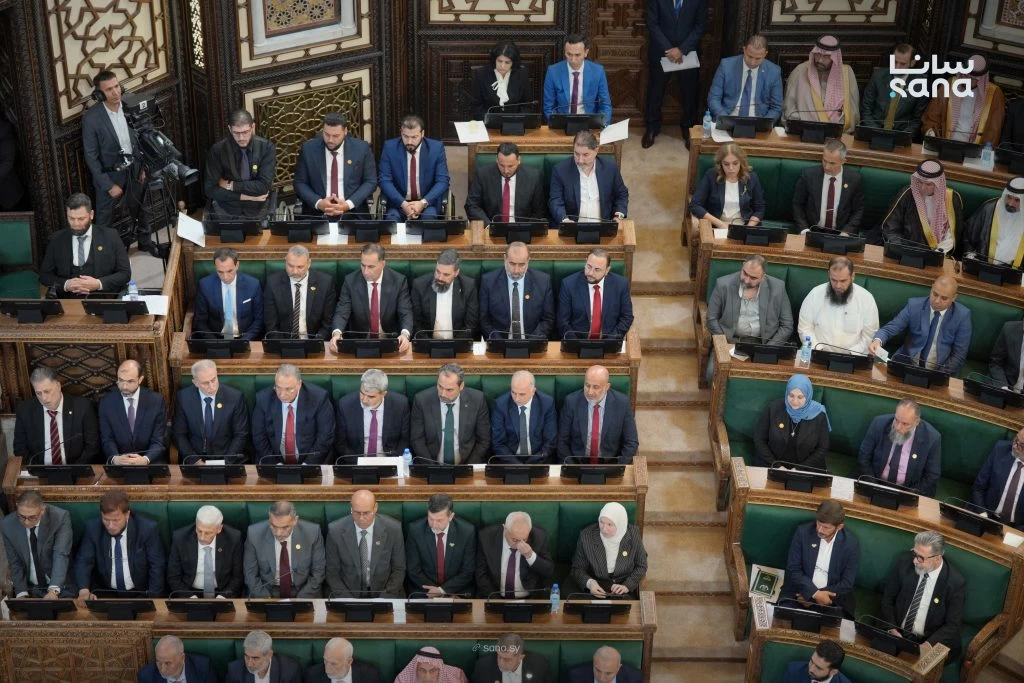
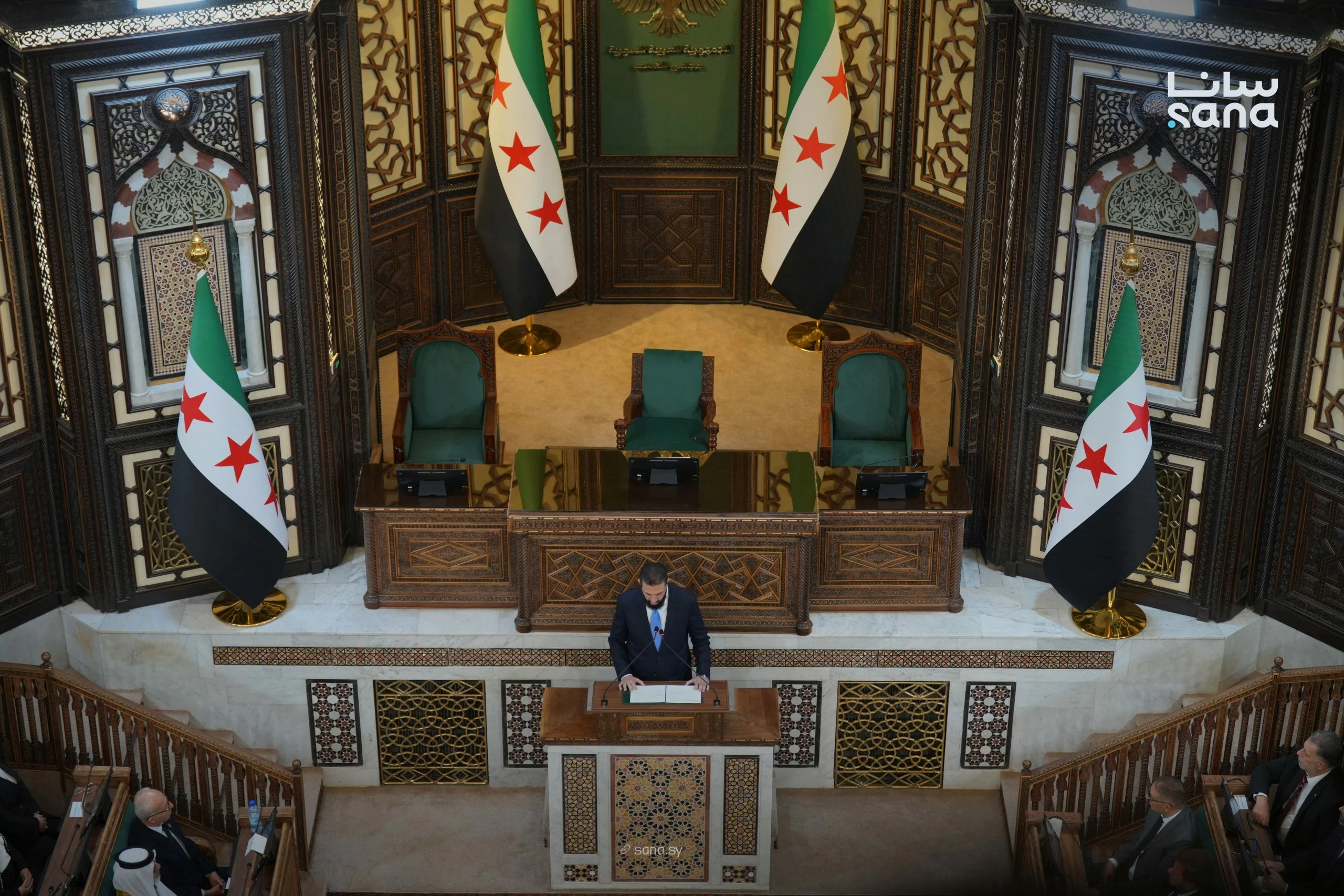
دعا الرئيس السوري أحمد الشرع إلى ترسيخ دولة المؤسسات وسيادة القانون، وقال الشرع في كلمته أمام الجلسة الافتتاحية لمجلس الشعب الجديد اليوم (الأحد) إن البشرية «ما زالت منذ نشأتها تبحث عن الطريق الأمثل لإدارة مصالحها، فالقبول والرضا وسيلة لطرد الخلاف»، مضيفاً أن سورية «تكتب اليوم تاريخاً جديداً يعبر عن حضارتها وقيمها وتراثها». وأكد الشرع أن المرحلة الحالية تفرض على الجميع مسؤولية بناء الوطن والإنسان وتغليب المصلحة العامة.
وأشار إلى أن «الشورى وتبادل الآراء يمثلان الطريق الأمثل للوصول إلى القرار الرشيد، وأن تنوع الآراء يسهم في تحقيق التوافق ويحد من الفرقة والخلاف»، مضيفاً أن الرأي «ليس معصوماً من الخطأ، وأن نجاحه يرتبط بحسن النية والابتعاد عن الهوى وتغليب المصلحة العامة».
واعتبر الشرع أن المرحلة الحالية تمثل انتقالاً من تحرير الوطن واستعادة الحرية إلى ترسيخ مؤسسات الدولة على أسس المسؤولية والكفاءة، بما يضمن صون الكرامة واحترام إرادة المواطنين، مشدداً على أن إعادة بناء الاقتصاد، وتحسين الخدمات، وتهيئة بيئة الاستثمار، وتوفير فرص العمل، وزيادة الإنتاج تمثل مسؤولية وطنية مشتركة بين مختلف مؤسسات الدولة.
وأفاد الرئيس السوري بأن مجلس الشعب يؤدي دوراً محورياً في هذه المرحلة من خلال سن تشريعات تواكب عملية إعادة البناء، وتلبي تطلعات السوريين، داعياً أعضاء المجلس إلى جعل المؤسسة التشريعية «نموذجاً في المسؤولية والكفاءة»، والإسهام في ترسيخ ثقافة الحوار وسيادة القانون واحترام المؤسسات، مؤكداً أنهم شركاء في بناء سورية الجديدة.
من جانبه، وصف رئيس اللجنة العليا لانتخابات مجلس الشعب محمد طه الأحمد انعقاد الجلسة بأنه «لحظة تاريخية فارقة»، قائلاً إنها تمثل «دماء الشهداء»، وتبعث برسالة إلى العالم بأن «سورية نفضت عنها غبار الحرب». وأضاف أن ما تحقق «لا يقاس بالكلمات، بل بحجم التضحيات التي قدمها الشعب السوري».
ويأتي انعقاد أولى جلسات المجلس بعد استكمال تشكيله، إثر إصدار الشرع، في 1 يوليو الجاري، مرسوماً بأسماء أعضائه البالغ عددهم 207 أعضاء من أصل 210، بينهم 137 عضواً جرى اختيارهم عبر انتخابات غير مباشرة، و70 عضواً عيَّنهم الرئيس وفق الصلاحيات المنصوص عليها في الإعلان الدستوري، بينما بقيت المقاعد الثلاثة المخصصة لمحافظة السويداء شاغرة بسبب تعذر إجراء الانتخابات فيها.
ويتمتع المجلس الجديد بصلاحيات تشريعية واسعة، أبرزها تشكيل لجنة تتولى إعداد مسودة الدستور الجديد، في خطوة تعد من أبرز محطات المرحلة الانتقالية في سورية.
The Syrian President Ahmad al-Shara' called for the establishment of a state of institutions and the rule of law. In his speech at the inaugural session of the new People's Assembly today (Sunday), al-Shara' stated that humanity "has been searching since its inception for the optimal way to manage its interests, as acceptance and satisfaction are means to eliminate disputes," adding that Syria "is writing today a new history that reflects its civilization, values, and heritage." Al-Shara' emphasized that the current phase imposes on everyone the responsibility of building the homeland and the individual, prioritizing the public interest.
He pointed out that "consultation and exchanging opinions represent the optimal way to reach sound decisions, and that the diversity of opinions contributes to achieving consensus and limits division and disagreement," adding that an opinion "is not infallible, and its success is linked to good intentions, avoiding bias, and prioritizing the public interest."
Al-Shara' considered that the current phase represents a transition from liberating the homeland and regaining freedom to establishing state institutions on the foundations of responsibility and efficiency, ensuring the preservation of dignity and respecting the will of the citizens. He stressed that rebuilding the economy, improving services, preparing an investment environment, providing job opportunities, and increasing production represent a shared national responsibility among various state institutions.
The Syrian President stated that the People's Assembly plays a pivotal role in this phase by enacting legislation that keeps pace with the rebuilding process and meets the aspirations of the Syrians, calling on the members of the assembly to make the legislative institution "a model of responsibility and efficiency," and to contribute to establishing a culture of dialogue, the rule of law, and respect for institutions, affirming that they are partners in building a new Syria.
For his part, the head of the Higher Committee for the Elections of the People's Assembly, Muhammad Taha al-Ahmad, described the convening of the session as "a historic turning point," stating that it represents "the blood of the martyrs" and sends a message to the world that "Syria has shaken off the dust of war." He added that what has been achieved "is not measured in words, but by the magnitude of the sacrifices made by the Syrian people."
The convening of the first sessions of the assembly comes after the completion of its formation, following al-Shara's issuance, on July 1, of a decree with the names of its members, totaling 207 out of 210, including 137 members chosen through indirect elections and 70 members appointed by the president according to the powers stipulated in the constitutional declaration, while the three seats allocated for the Sweida Governorate remained vacant due to the inability to conduct elections there.
The new assembly enjoys wide legislative powers, the most prominent of which is forming a committee to prepare a draft of the new constitution, in a step considered one of the most significant milestones in the transitional phase in Syria.