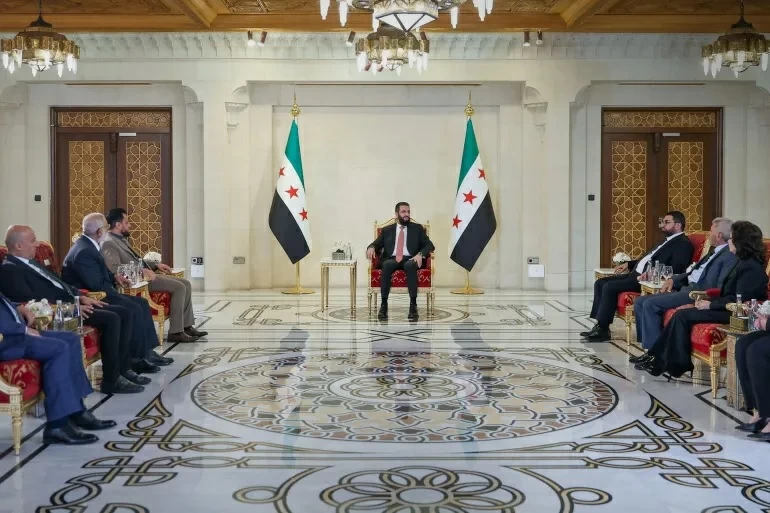
تستعد سورية لاستكمال بناء سلطتها التشريعية مع انعقاد الجلسة الافتتاحية لمجلس الشعب الجديد، اليوم الأحد، في محطة مفصلية تؤرخ لانطلاق أول مجلس بعد إسقاط نظام الأسد، عبر إجراءات قانونية وتنظيمية، تستند إلى الإعلان الدستوري 2025.
نقطة الانطلاق القانونية
وتشكل الإجراءات المنتظرة، خلال أول جلستين للمجلس، أهمية كبيرة لا تقتصر على افتتاح أعمال المجلس، بل تعد نقطة الانطلاق القانونية لممارسة السلطة التشريعية.
ويأتي تشكيل مجلس الشعب السوري بما فيه الثلث المكمل الذي صدرت قائمته في الأول من الشهر الجاري، كآلية دستورية انتقالية نص عليها النظام الانتخابي المؤقت، بهدف ضمان قدرة المجلس على العمل ضمن الظروف الاستثنائية التي تمر بها البلاد في مرحلة ما بعد التحرير، وهي لا تعد نموذجاً تشريعياً دائماً في سورية، وإنما صيغة مرتبطة بالمرحلة الراهنة.
مجلس الشعب السوري.
ما أبرز إجراءات أول جلستين لمجلس الشعب؟
يشرح النظام الانتخابي المؤقت للمجلس المصادق عليه من الرئيس أحمد الشرع تفاصيل إجراءات انعقاد الجلسة الأولى، إذ يتولى رئيس اللجنة العليا للانتخابات دعوة الأعضاء إلى الاجتماع في مقر المجلس خلال المدة القانونية المحددة بعد صدور مرسوم تسمية الأعضاء، لتكون تلك الدعوة آخر المهام الموكلة إلى اللجنة العليا قبل انتقال المسؤولية إلى المؤسسة التشريعية الجديدة.
وتبدأ الجلسة بإدارة أكبر أعضاء المجلس سناً، يعاونه أصغر الأعضاء سناً بصفة أمين للسر، قبل أن يؤدي أعضاء المجلس القسم الدستوري، إيذاناً باكتسابهم الصفة القانونية الكاملة لممارسة مهامهم التشريعية.
وبعد أداء القسم، ينتخب المجلس بالاقتراع السري رئيسه ونائبه وأميني السر، ثم تنتقل إدارة الجلسة إلى رئيس المجلس المنتخب الذي يباشر إدارة أعمال المجلس، ويحدد موعد الجلسة التالية، لتبدأ المؤسسة التشريعية ممارسة اختصاصاتها الدستورية بصورة رسمية.
ووفق أحكام النظام الانتخابي المؤقت، يدعو رئيس مجلس الشعب المنتخب في الجلسة الأولى رئيس الجمهورية إلى حضور الجلسة الثانية، إذ يوجه إليه الدعوة لإلقاء كلمته أمام المجلس، لتستكمل بذلك إجراءات مباشرة المجلس أعماله الدستورية.
ماذا يحدث في حال رفض أداء القسم الدستوري؟
فيما يتعلق بأداء القسم، حدد النظام الانتخابي آلية التعامل مع تعذر أدائه، بحيث يتلوه العضو في جلسة لاحقة يحددها رئيس المجلس، بينما يؤدي الامتناع عن أداء القسم أو رفضه إلى سقوط العضوية وتسمية بديل وفق الأحكام القانونية النافذة.
ويستند عمل المجلس إلى الإعلان الدستوري لعام 2025، الذي نص على توليه السلطة التشريعية خلال المرحلة الانتقالية لمدة 30 شهراً قابلة للتجديد، إلى حين اعتماد دستور دائم وإجراء انتخابات تشريعية جديدة.
ومن المقرر أن يباشر المجلس، بعد استكمال انتخاب هيئة رئاسته، إعداد نظامه الداخلي خلال الشهر الأول من انعقاده، تمهيداً لتنظيم أعماله ولجانه الدائمة وآليات مناقشة مشروعات القوانين وممارسة صلاحياته الرقابية والتشريعية.
مهام المجلس وفق الإعلان الدستوري
تشمل المهام الدستورية للمجلس اقتراح القوانين وإقرارها، وتعديل التشريعات النافذة أو إلغاءها، والمصادقة على المعاهدات الدولية، وإقرار الموازنة العامة للدولة، والعفو العام، وعقد جلسات استماع للوزراء، إضافة إلى ممارسة الصلاحيات المنصوص عليها في الإعلان الدستوري ونظامه الداخلي.
ويستند المجلس في أداء مهامه خلال المرحلة الانتقالية إلى الصلاحيات الممنوحة له بموجب الإعلان الدستوري، بما يشمل مراجعة التشريعات القائمة وإقرار القوانين والأنظمة اللازمة للمرحلة، وتشكيل لجنة لإعداد مسودة دستور جديد، إلى جانب تحديث المنظومة القانونية بما ينسجم مع متطلبات إعادة الإعمار والتنمية.
ومع اكتمال نصاب مجلس الشعب، بعد الإعلان عن الثلث المكمل، تدخل المؤسسة التشريعية مرحلة مباشرة أعمالها الدستورية، لتشكل محطة جديدة في طريق استكمال بناء مؤسسات الدولة خلال المرحلة الانتقالية، وصولاً إلى اعتماد دستور دائم وإجراء انتخابات تشريعية جديدة.
Syria is preparing to complete the construction of its legislative authority with the convening of the inaugural session of the new People's Assembly today, Sunday, at a pivotal moment marking the launch of the first assembly after the fall of the Assad regime, through legal and organizational procedures based on the constitutional declaration of 2025.
The Legal Starting Point
The anticipated procedures during the first two sessions of the assembly hold significant importance that goes beyond the opening of the assembly's work; they represent the legal starting point for exercising legislative authority.
The formation of the Syrian People's Assembly, including the complementary third whose list was issued on the first of this month, comes as a transitional constitutional mechanism stipulated by the temporary electoral system, aimed at ensuring the assembly's ability to operate under the exceptional circumstances the country is experiencing in the post-liberation phase. It does not represent a permanent legislative model in Syria, but rather a framework tied to the current phase.
مجلس الشعب السوري.
What are the main procedures for the first two sessions of the People's Assembly?
The temporary electoral system for the assembly, ratified by President Ahmad al-Shara, outlines the details of the procedures for convening the first session, where the head of the Supreme Election Committee will invite members to meet at the assembly's headquarters within the legally specified timeframe after the issuance of the decree naming the members. This invitation will be the last task assigned to the Supreme Committee before the responsibility is transferred to the new legislative institution.
The session will begin under the management of the oldest member of the assembly, assisted by the youngest member in the role of secretary, before the members take the constitutional oath, signaling their full legal capacity to perform their legislative duties.
After taking the oath, the assembly will elect its president, vice president, and secretaries through a secret ballot. The management of the session will then be transferred to the elected president, who will commence the assembly's work and set the date for the next session, officially beginning the legislative institution's exercise of its constitutional powers.
According to the provisions of the temporary electoral system, the elected president of the People's Assembly will invite the President of the Republic to attend the second session, directing him to deliver a speech before the assembly, thus completing the procedures for the assembly to commence its constitutional work.
What happens if the constitutional oath is refused?
Regarding the oath, the electoral system specifies the mechanism for dealing with the inability to take it, allowing the member to recite it in a subsequent session determined by the president of the assembly. However, refusal to take the oath or abstaining from it will result in the loss of membership and the appointment of a replacement according to the applicable legal provisions.
The work of the assembly is based on the constitutional declaration of 2025, which stipulates that it will assume legislative authority during the transitional phase for a period of 30 months, renewable until a permanent constitution is adopted and new legislative elections are held.
The assembly is scheduled to begin, after completing the election of its presidency, drafting its internal regulations during the first month of its convening, in preparation for organizing its work, its permanent committees, and the mechanisms for discussing draft laws and exercising its oversight and legislative powers.
The Assembly's Tasks According to the Constitutional Declaration
The constitutional tasks of the assembly include proposing and approving laws, amending or repealing existing legislation, ratifying international treaties, approving the state budget, granting amnesty, and holding hearings for ministers, in addition to exercising the powers stipulated in the constitutional declaration and its internal regulations.
The assembly relies on the powers granted to it under the constitutional declaration during the transitional phase, which includes reviewing existing legislation and approving the necessary laws and regulations for the phase, forming a committee to prepare a draft of a new constitution, and updating the legal framework in line with the requirements of reconstruction and development.
With the completion of the quorum of the People's Assembly, following the announcement of the complementary third, the legislative institution enters a phase of directly undertaking its constitutional work, marking a new milestone in the path to completing the construction of state institutions during the transitional phase, leading to the adoption of a permanent constitution and the holding of new legislative elections.