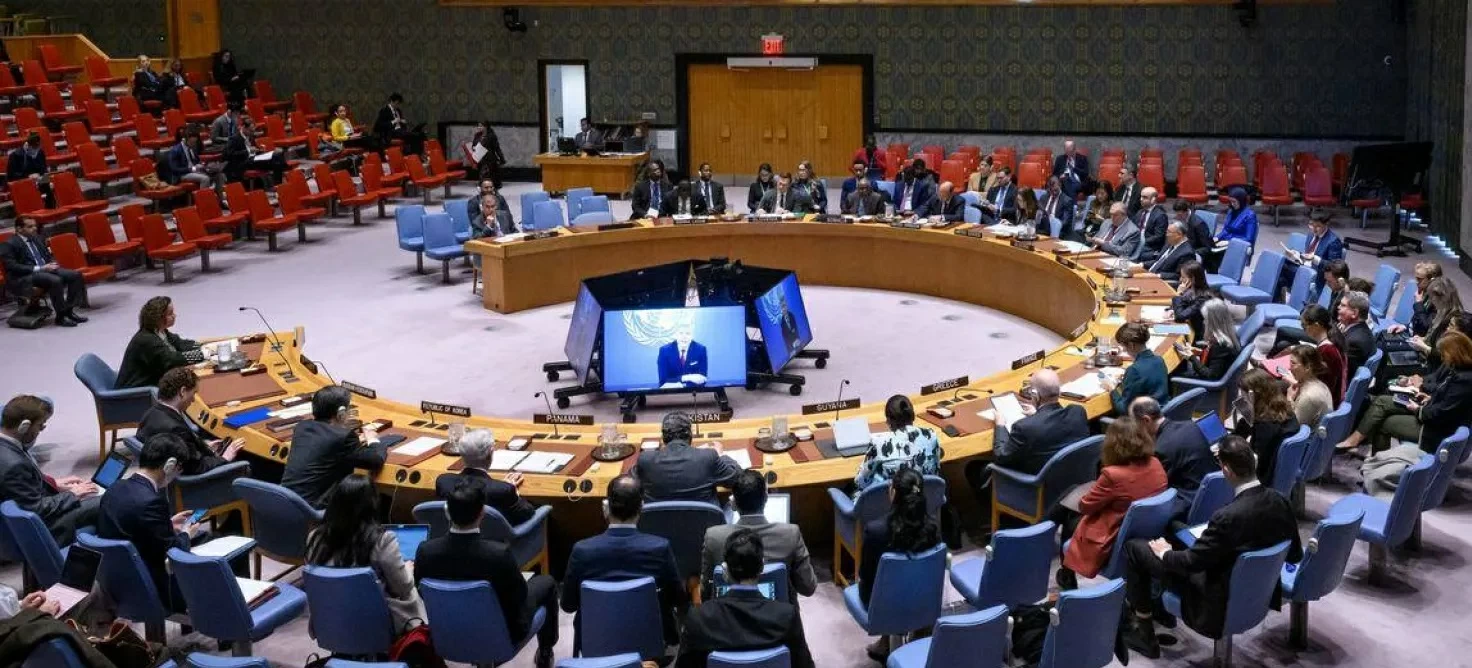
كشفت مصادر مطلعة أن مجلس الأمن الدولي سيعقد بعد غد (الإثنين) اجتماعاً طارئاً لمناقشة انتهاكات الحوثيين لقرارات مجلس الأمن الدولي بدعم من إيران.
وأوضحت المصادر أن الاجتماع الطارئ جاء بطلب من الحكومة اليمنية وبتأييد من عدد من الدول العربية والغربية.
وتوقعت المصادر أن تتم مناقشة انتهاكات إيران للسيادة اليمنية وتهريب الأسلحة والخبراء إلى صنعاء، حيث من المقرر أن يقدم مندوب اليمن لدى الأمم المتحدة تقريراً كاملاً عن تلك الانتهاكات وموقف الحكومة الشرعية، إضافة إلى المبادرات التي قدمتها الحكومة اليمنية طوال الأشهر الماضية لفتح مطار صنعاء لأهداف إنسانية شريطة الحصول على ضمانات بتحييد الناقل الوطني، لكن الحوثيين رفضوها وأصروا على أن يكون الناقل إيرانياً مما يؤكد أن الهدف ليس إنسانياً وإنما عسكري.
وكانت طائرة ماهان الإيرانية هبطت في صنعاء في 3 يوليو الجاري، ما أثار غضب الحكومة الشرعية التي لوحت باستهدافها في حالة انتهاكها للسيادة مرة أخرى، محملة إيران والحوثيين المسؤولية الكاملة.
ونددت الحكومة اليمنية وأعضاؤها بانتهاكات إيران للسيادة، مؤكدين أن السيادة خط أحمر ولن يسمح بانتهاكها، كما قدمت الحكومة مقترحات لعودة الحوثيين من طهران عبر طائرة يستأجرها الناقل الوطني.
وقال وزير الإعلام اليمني معمر الإرياني إن رفض مليشيا الحوثي الإرهابية تشغيل رحلات شركة الخطوط الجوية اليمنية من وإلى مطار صنعاء، وتمسكها بإحلال شركة «ماهان» الإيرانية، يفضح حقيقة موقفها من استئناف الرحلات المدنية، ويؤكد بما لا يدع مجالاً للشك أن هدفها لم يكن يوماً تخفيف معاناة المرضى والمسافرين، وإنما إعادة فتح الجسر الجوي مع إيران لخدمة مشروعها التدميري في اليمن والمنطقة.
وأوضح معمر الإرياني في تصريح صحفي أن الحكومة الشرعية قدمت كل ما يلزم لضمان استمرار الرحلات الجوية من وإلى مطار صنعاء لأغراض إنسانية عبر الناقل الوطني، بما يكفل حق اليمنيين في السفر والعلاج والتنقل، ويحافظ في الوقت ذاته على سلامة الملاحة الجوية والالتزام بالأنظمة الدولية، إلا أن المليشيا رفضت ذلك، وأصرت على أن يكون الطيران الإيراني وحده بوابة صنعاء الجوية، في موقف لا يمكن تفسيره بأي اعتبارات إنسانية، وإنما بأهداف عسكرية خالصة.
وأشار الإرياني إلى أن التجربة السابقة لا تزال شاهدة على حقيقة النيات الحوثية، إذ سارعت المليشيا عقب انقلابها مباشرة إلى إبرام اتفاق مع إيران لتسيير 14 رحلة أسبوعياً بين صنعاء وطهران، رغم عدم وجود أي مبرر مدني أو تجاري أو إنساني لهذا العدد الكبير من الرحلات، في ظل غياب جالية يمنية أو حركة تجارية أو أعداد من المرضى والطلاب تستدعي تشغيل رحلتين يومياً بين البلدين، الأمر الذي أثار منذ ذلك الحين تساؤلات مشروعة حول طبيعة ما كانت تنقله تلك الطائرات.
وأضاف أن الوقائع والتقارير الدولية أكدت لاحقاً أن تلك الرحلات كانت غطاءً لنقل ضباط ومستشاري الحرس الثوري الإيراني، وعناصر من حزب الله اللبناني، وخبراء في المتفجرات والصواريخ والطائرات المسيّرة، إلى جانب معدات عسكرية وتقنيات اتصالات وتجسس أسهمت في تعزيز القدرات العسكرية للمليشيا، وإطالة أمد الحرب، وتوسيع دائرة الدم والدمار في اليمن.
وأفاد الإرياني بأن شركة «ماهان» الإيرانية تخضع لعقوبات أمريكية ودولية بسبب دورها في دعم فيلق القدس ونقل الأسلحة والمقاتلين إلى بؤر الصراع في المنطقة، كما تحدثت شهادات عديدة عن خروج شحنات ومعدات من مطار صنعاء عقب هبوط الطائرات الإيرانية، تحت حماية مشددة من عناصر المليشيا، بما يؤكد أن المطار كان يُستخدم لأغراض عسكرية تتعارض بصورة كاملة مع قواعد الطيران المدني.
وأكد الإرياني أن المليشيا تحاول اليوم إعادة إنتاج السيناريو ذاته، موضحاً أنها لا ترفض تشغيل رحلات الخطوط الجوية اليمنية لعجزها عن ذلك، وإنما لأنها تلتزم بإجراءات التفتيش، وقوائم المسافرين، ومتطلبات السلامة والأمن المعمول بها دولياً، وهي إجراءات تحول دون استغلال الطيران المدني لتهريب المطلوبين والخبراء والأسلحة.
وأشار الوزير إلى أن الأكثر غرابة هو استمرار المليشيا في المتاجرة بمعاناة اليمنيين، عبر الترويج لادعاءات الحصار، في الوقت الذي ترفض فيه كل البدائل التي تتيح للمواطنين السفر والعلاج بصورة آمنة ومنتظمة، بما يؤكد أن الطائرات التي تسعى إلى تشغيلها ليست لنقل المرضى والمسافرين، وإنما لإعادة فتح شريان الدعم الإيراني الذي طالما غذّى الحرب، وأطال أمد الانقلاب، وأغرق اليمن في واحدة من أسوأ الأزمات في تاريخه الحديث.
وجدد الإرياني دعوته للمجتمع الدولي إلى النظر إلى الأفعال لا الشعارات، مؤكداً أن تمسك المليشيا بطيران خاضع لعقوبات دولية بسبب تورطه في نقل السلاح والخبراء، ورفضها تشغيل الناقل الوطني، يفضح حجم ارتهانها الكامل للنظام الإيراني، ويؤكد أن مطار صنعاء بالنسبة لها ليس منفذاً لخدمة اليمنيين، وإنما حلقة في شبكة الإمداد الإيرانية التي تمد مشروعها الانقلابي بالسلاح والخبراء والتقنيات العسكرية، ومنصة متقدمة للحرس الثوري الإيراني لتهديد أمن اليمن والمنطقة والملاحة الدولية.
Informed sources revealed that the United Nations Security Council will hold an emergency meeting the day after tomorrow (Monday) to discuss the Houthi violations of the Security Council resolutions with support from Iran.
The sources indicated that the emergency meeting was requested by the Yemeni government and supported by several Arab and Western countries.
The sources expected that the violations of Iran against Yemeni sovereignty and the smuggling of weapons and experts to Sana'a would be discussed, where the Yemeni representative to the United Nations is scheduled to present a comprehensive report on those violations and the position of the legitimate government, in addition to the initiatives that the Yemeni government has put forward over the past months to open Sana'a airport for humanitarian purposes, provided that guarantees are obtained to neutralize the national carrier. However, the Houthis rejected these proposals and insisted that the carrier be Iranian, which confirms that the goal is not humanitarian but military.
An Iranian Mahan Air plane landed in Sana'a on July 3, which angered the legitimate government that threatened to target it if it violated sovereignty again, holding Iran and the Houthis fully responsible.
The Yemeni government and its members condemned Iran's violations of sovereignty, affirming that sovereignty is a red line and will not be allowed to be violated. The government also proposed that the Houthis return from Tehran via a plane rented by the national carrier.
The Yemeni Minister of Information, Muammar Al-Eryani, stated that the Houthi terrorist militia's refusal to operate flights of Yemenia Airways to and from Sana'a airport, and its insistence on replacing it with the Iranian "Mahan" airline, exposes the truth of its position on resuming civilian flights, and confirms beyond any doubt that its goal has never been to alleviate the suffering of patients and travelers, but rather to reopen the air bridge with Iran to serve its destructive project in Yemen and the region.
Al-Eryani clarified in a press statement that the legitimate government has provided everything necessary to ensure the continuation of flights to and from Sana'a airport for humanitarian purposes through the national carrier, which guarantees the Yemenis' right to travel, receive treatment, and move, while also maintaining the safety of air navigation and adherence to international regulations. However, the militia rejected this and insisted that Iranian flights alone be the gateway to Sana'a airport, in a position that cannot be explained by any humanitarian considerations, but rather by purely military objectives.
Al-Eryani pointed out that the previous experience still bears witness to the true intentions of the Houthis, as the militia rushed immediately after its coup to conclude an agreement with Iran to operate 14 flights weekly between Sana'a and Tehran, despite the absence of any civilian, commercial, or humanitarian justification for such a large number of flights, in light of the lack of a Yemeni community or commercial movement or numbers of patients and students that would necessitate operating two flights daily between the two countries. This has raised legitimate questions since then about the nature of what those planes were transporting.
He added that facts and international reports later confirmed that those flights were a cover for transporting officers and advisors of the Iranian Revolutionary Guard, elements of Hezbollah, and experts in explosives, missiles, and drones, in addition to military equipment and communication and espionage technologies that contributed to enhancing the militia's military capabilities, prolonging the war, and expanding the circle of bloodshed and destruction in Yemen.
Al-Eryani stated that the Iranian "Mahan" airline is subject to U.S. and international sanctions due to its role in supporting the Quds Force and transporting weapons and fighters to conflict hotspots in the region. Numerous testimonies have also reported the departure of shipments and equipment from Sana'a airport following the landing of Iranian planes, under tight protection from militia elements, confirming that the airport was being used for military purposes that completely contradict civil aviation rules.
Al-Eryani emphasized that the militia is today trying to reproduce the same scenario, explaining that it does not refuse to operate Yemenia Airways flights due to its inability to do so, but rather because it adheres to inspection procedures, passenger lists, and international safety and security requirements, which are procedures that prevent the exploitation of civil aviation to smuggle wanted individuals, experts, and weapons.
The minister pointed out that what is even more strange is the militia's continued exploitation of the suffering of Yemenis by promoting claims of a blockade, while it rejects all alternatives that allow citizens to travel and receive treatment safely and regularly, confirming that the planes it seeks to operate are not for transporting patients and travelers, but rather to reopen the Iranian support artery that has long fueled the war, prolonged the coup, and plunged Yemen into one of the worst crises in its modern history.
Al-Eryani renewed his call to the international community to look at actions, not slogans, affirming that the militia's insistence on using an airline subject to international sanctions due to its involvement in transporting weapons and experts, and its refusal to operate the national carrier, exposes the extent of its complete subservience to the Iranian regime, and confirms that Sana'a airport for it is not a gateway to serve Yemenis, but rather a link in the Iranian supply network that feeds its coup project with weapons, experts, and military technologies, and a forward platform for the Iranian Revolutionary Guard to threaten the security of Yemen, the region, and international navigation.