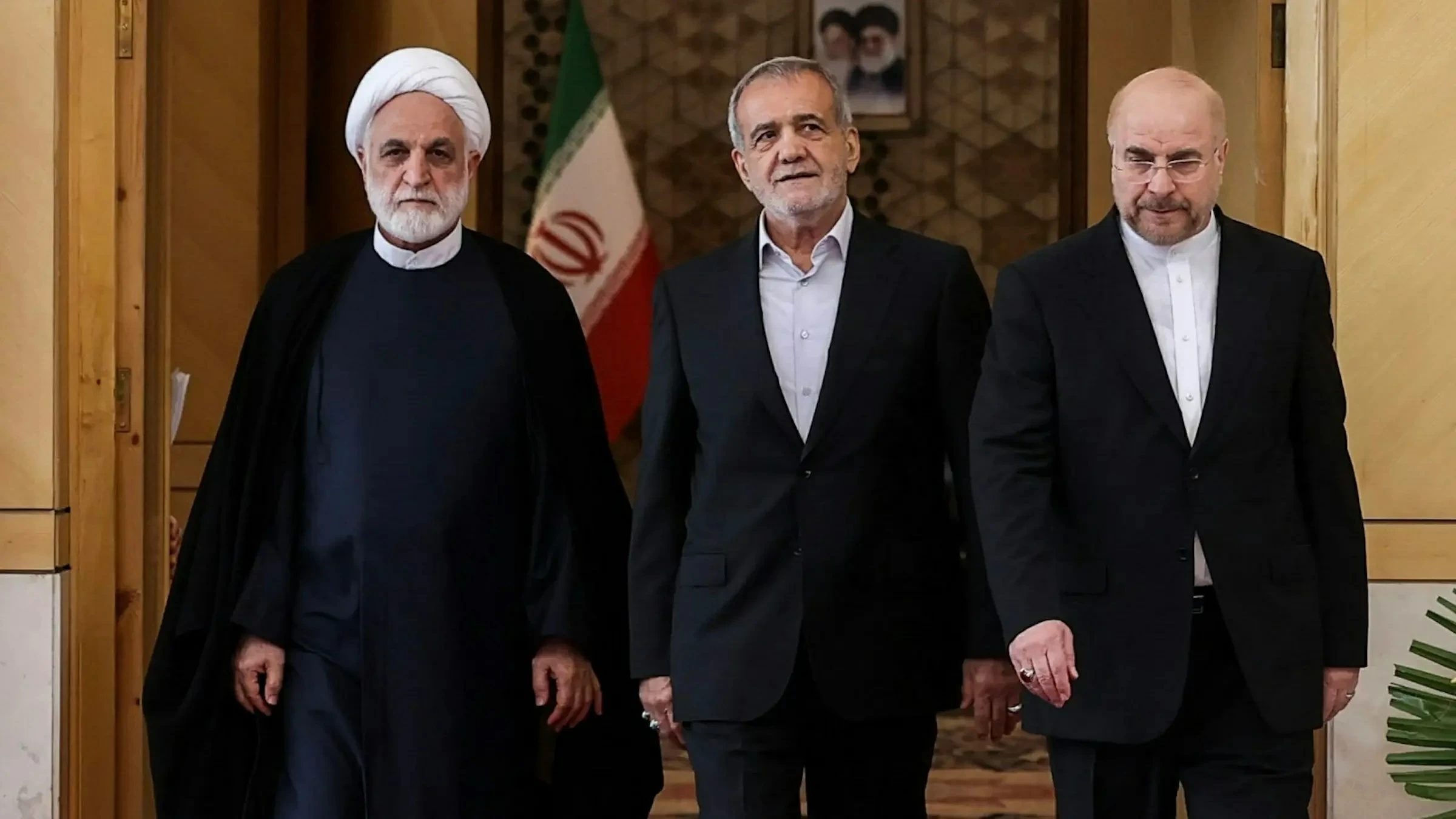
في خطوة تكشف حجم الانقسام والضغوط التي سبقت التوصل إلى مذكرة التفاهم مع واشنطن في يونيو الماضي، ذكر أربعة مسؤولين إيرانيين أن الرئيس مسعود بزشكيان أبلغ المرشد مجتبى خامنئي بأنه سيتنحى عن منصبه إذا رفضت القيادة المضي في الاتفاق مع الولايات المتحدة.
وقالت المصادر إن بزشكيان أبلغ خامنئي، خلال اجتماع حاسم سبق توقيع الاتفاق، بأن الحصار البحري الأمريكي أدى إلى شلل واسع في الاقتصاد الإيراني، وأن استمرار الوضع الحالي يهدد استقرار البلاد، مؤكداً أن الحكومة لم تعد قادرة على إدارة الأزمة بالآليات التقليدية، وفق ما نقلته صحيفة «نيويورك تايمز».
وبحسب الصحيفة، فإن رسالة عاجلة من محافظ البنك المركزي الإيراني عبد الناصر همتي، لعبت دوراً حاسماً في تغيير موقف القيادة الإيرانية، بعدما حذر فيها من أن إيران تواجه أزمة اقتصادية غير مسبوقة، وأن مخزونات الغذاء والدواء الأساسية قد تنفد بحلول نهاية أغسطس المقبل إذا استمر الحصار الأمريكي.
وأكدت الصحيفة أن التحذيرات الاقتصادية، إلى جانب الضغوط السياسية التي مارسها بزشكيان وفريقه، دفعت خامنئي إلى الموافقة على المضي في مذكرة التفاهم، رغم معارضته السابقة لفكرة التفاوض المباشر مع واشنطن.
وأفادت المصادر بأن بزشكيان، إلى جانب رئيس البرلمان محمد قاليباف ووزير الخارجية عباس عراقجي، نجحوا في بناء تحالف داخل مؤسسات الحكم يدعم خيار التفاوض باعتباره ضرورة استراتيجية لضمان استقرار النظام، وليس مجرد خيار سياسي مؤقت. كما بينت أن هذا المعسكر، رغم المعارضة الشرسة من التيار المتشدد، نجح في تمرير قرارات مصيرية، شملت قبول وقف إطلاق النار، وإجراء مفاوضات مباشرة مع مسؤولين أمريكيين، وصولاً إلى توقيع مذكرة التفاهم مع إدارة الرئيس الأمريكي دونالد ترمب.
وتشهد إيران انقساماً غير مسبوق داخل النظام، لا يدور هذه المرة بين الإصلاحيين والمحافظين، بل داخل المعسكر المحافظ نفسه، وفقاً لصحيفة «نيويورك تايمز».
ويرى المعسكر البراغماتي، الذي يضم بزشكيان وقاليباف وعراقجي وعدداً من قادة الحرس الثوري، أن بقاء النظام يتطلب تخفيف المواجهة مع الغرب وإنقاذ الاقتصاد، بينما يتمسك التيار المتشدد برفض أي تقارب مع الولايات المتحدة، معتبراً أن التفاوض يمثل تنازلاً استراتيجياً.
وتصاعدت حدة الصراع إلى درجة اتهام أنصار التيار المتشدد لفريق التفاوض بـ«الخيانة»، فيما تعرض عراقجي لحملات سياسية وإعلامية واسعة، في مؤشر على أن المعركة الحقيقية داخل إيران لم تعد تدور حول الاتفاق مع واشنطن فحسب، بل حول مستقبل النظام وتوازنات السلطة في مرحلة ما بعد الحرب.
In a move that reveals the extent of the divisions and pressures that preceded the agreement with Washington last June, four Iranian officials stated that President Masoud Bezhakian informed Supreme Leader Mojtaba Khamenei that he would resign from his position if the leadership refused to proceed with the agreement with the United States.
Sources indicated that Bezhakian told Khamenei during a crucial meeting before the signing of the agreement that the American maritime blockade had caused widespread paralysis in the Iranian economy, and that the continuation of the current situation threatens the stability of the country, emphasizing that the government was no longer able to manage the crisis through traditional mechanisms, according to the New York Times.
According to the newspaper, an urgent message from the Governor of the Central Bank of Iran, Abdolnaser Hemmati, played a decisive role in changing the Iranian leadership's stance, as he warned that Iran was facing an unprecedented economic crisis, and that essential food and medicine supplies could run out by the end of August if the American blockade continued.
The newspaper confirmed that the economic warnings, along with the political pressures exerted by Bezhakian and his team, pushed Khamenei to agree to proceed with the memorandum of understanding, despite his previous opposition to the idea of direct negotiations with Washington.
Sources reported that Bezhakian, along with Parliament Speaker Mohammad Bagher Ghalibaf and Foreign Minister Abbas Araghchi, succeeded in building a coalition within the ruling institutions that supports the negotiation option as a strategic necessity to ensure the stability of the regime, rather than just a temporary political choice. It also indicated that this camp, despite fierce opposition from the hardline faction, managed to pass crucial decisions, including accepting a ceasefire, conducting direct negotiations with American officials, and ultimately signing the memorandum of understanding with the administration of President Donald Trump.
Iran is witnessing an unprecedented division within the system, which this time does not revolve around reformists and conservatives, but rather within the conservative camp itself, according to the New York Times.
The pragmatic camp, which includes Bezhakian, Ghalibaf, Araghchi, and several leaders of the Revolutionary Guard, believes that the survival of the regime requires easing confrontation with the West and rescuing the economy, while the hardline faction insists on rejecting any rapprochement with the United States, considering that negotiation represents a strategic concession.
The intensity of the conflict has escalated to the point where supporters of the hardline faction have accused the negotiating team of "treason," while Araghchi has faced extensive political and media campaigns, indicating that the real battle within Iran is no longer just about the agreement with Washington, but about the future of the regime and the power balances in the post-war phase.