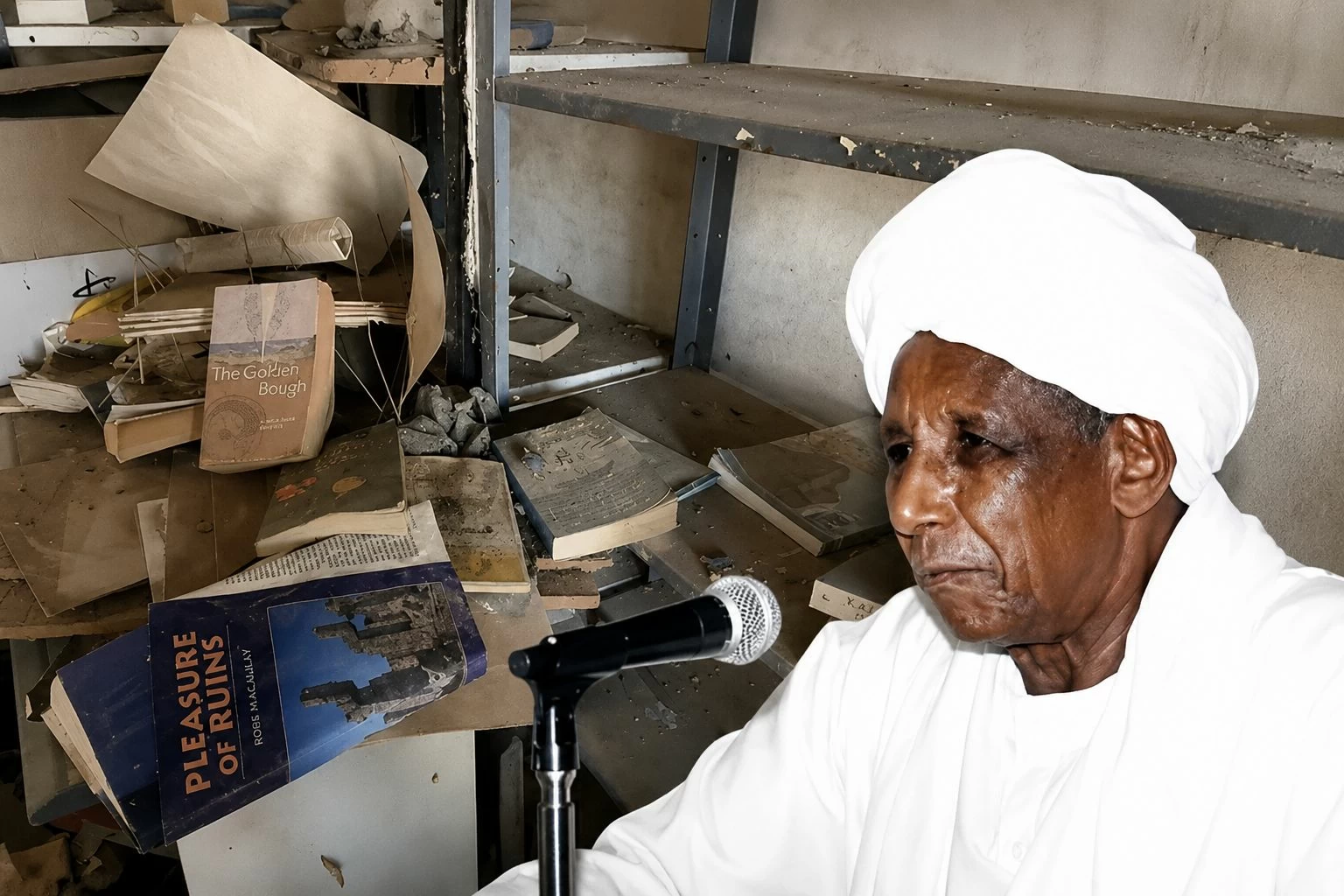
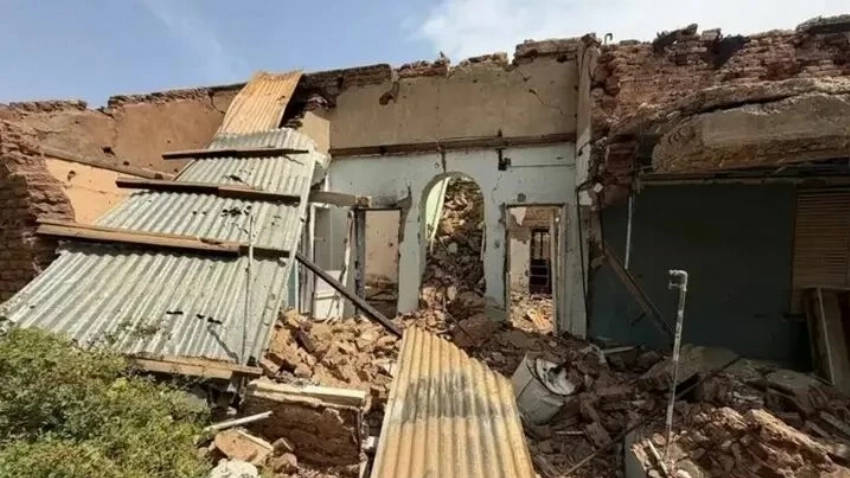
أعادت صور صادمة لمنزل الأديب العالم السوداني الراحل عبدالله الطيب في حي برّي العريق بالعاصمة الخرطوم إلى الواجهة حجم الخسائر الثقافية التي خلّفتها الحرب في السودان، بعدما أظهرت الدمار الكبير الذي طال المنزل التاريخي واختفاء مكتبته ومقتنياته النادرة، التي شكّلت لعقود جزءاً من الذاكرة الثقافية السودانية والعربية.
وتداول ناشطون ومثقفون، على نطاق واسع، صور منزل البروفيسور عبد الله الطيب، عالم اللغة الشاعر الشهير الحاصل على جائزة الملك فيصل العالمية للأدب العربي عام 2000.
منزل العلامة عبدالله الطيب يتحول إلى ركام كما وثقته عدسة الطيب صديق.
وأظهرت الصور منزل الطيب الذي كان يُعرف بين زواره بأنه «متحف حي للفكر والفن» مدمّراً بالكامل، في مشهد وصفه كثيرون بأنه ضياع لجزء من الإرث الثقافي السوداني.
شهادة موجعة من داخل المنزل
الصحفي المخرج السوداني الطيب صديق، الذي نشر الصور عبر حسابه في «فيسبوك»، روى تفاصيل زيارته المؤلمة للمنزل، قائلاً إنه ذهب على أمل العثور على كتب أو مقتنيات يمكن إنقاذها وحفظها في مكان آمن، لكنه فوجئ بأن المنزل تحوّل إلى ركام، دون أي أثر لمكتبة عبدالله الطيب وزوجته الفنانة قيرزلدا.
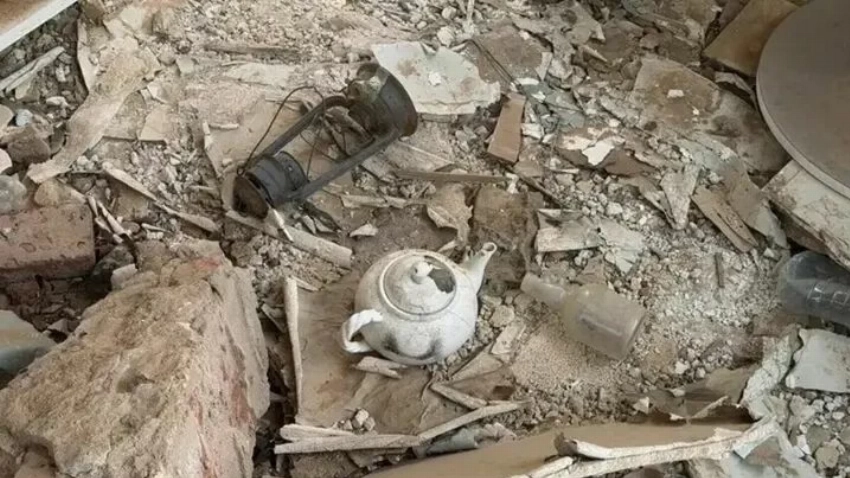
ووصف المنزل بأنه كان أشبه بتحفة فنية متكاملة، يضم مقتنيات ولوحات وكتباً جمعها الزوجان خلال رحلاتهما العلمية والثقافية حول العالم، مشيراً إلى أن كل زاوية فيه كانت تحمل قيمة تاريخية وثقافية، من الأثاث والأقمشة التقليدية إلى الفوانيس والصواني المغربية وأباريق الشاي.
منزل العلامة عبدالله الطيب يتحول إلى ركام كما وثقته عدسة الطيب صديق.
وأضاف أن المنزل كان يمثل بالنسبة لكثير من السودانيين مساحة مختلفة ومُلهمة، قبل أن تأتي الحرب وتمحو جزءاً كبيراً من هذا الإرث.
رمز ثقافي سوداني وعربي
ويُعد عبدالله الطيب أحد أبرز أعلام اللغة العربية والأدب في القرن العشرين، إذ وُلد عام 1921 في منطقة التميراب بولاية نهر النيل، وتلقى تعليمه في كلية غردون التذكارية بالخرطوم، قبل أن يواصل دراسته في جامعة لندن ويحصل على البكالوريوس والدكتوراه، وكان ثالث سوداني يحصل على شهادة الدكتوراه في السودان.
وخلال مسيرته الأكاديمية الطويلة تولّى عدداً من المناصب العلمية البارزة، من بينها عمادة كلية الآداب بجامعة الخرطوم، ورئاسة مجمع اللغة العربية في السودان، إلى جانب عضويته في مجمع اللغة العربية بالقاهرة.
وترك الطيب إرثاً علمياً ضخماً، أبرزه موسوعة «المرشد إلى فهم أشعار العرب وصناعتها»، التي استغرق إعدادها نحو 35 عاماً، وتُعد من أهم المراجع العربية في الدراسات اللغوية والأدبية الحديثة.
كما ارتبط اسمه ببرنامجه الإذاعي الشهير في تفسير القرآن الكريم، الذي استمر لأكثر من ثلاثة عقود، وأسهم في ترسيخ حضوره في الوجدان الثقافي السوداني والعربي.
دعوات لإنقاذ ما تبقى
وأعاد تداول صور المنزل المدمّر تصاعد الدعوات بين مثقفين وناشطين سودانيين إلى ضرورة توثيق وحماية الإرث الثقافي في السودان، في ظل المخاوف من ضياع المزيد من المعالم والمكتبات والمقتنيات التاريخية تحت وطأة الحرب المستمرة.
Shocking images of the late Sudanese literary figure Abdullah Al-Tayyib's home in the historic Burri neighborhood of Khartoum have brought to the forefront the extent of the cultural losses caused by the war in Sudan, as they revealed the significant destruction that has affected the historic house and the disappearance of its library and rare possessions, which for decades formed part of the Sudanese and Arab cultural memory.
Activists and intellectuals widely circulated images of Professor Abdullah Al-Tayyib, the renowned linguist and poet who won the King Faisal International Prize for Arabic Literature in 2000.
منزل العلامة عبدالله الطيب يتحول إلى ركام كما وثقته عدسة الطيب صديق.
The images showed Al-Tayyib's home, which was known among its visitors as a "living museum of thought and art," completely destroyed, in a scene described by many as the loss of a part of the Sudanese cultural heritage.
Painful Testimony from Inside the House
Sudanese journalist and filmmaker Al-Tayyib Sadiq, who published the images on his Facebook account, recounted the painful details of his visit to the house, saying he went in hopes of finding books or possessions that could be salvaged and preserved in a safe place, but was shocked to find that the house had turned into rubble, with no trace of Abdullah Al-Tayyib's library or his wife, the artist Qirzelda.
He described the house as resembling a complete artistic masterpiece, containing possessions, paintings, and books collected by the couple during their scientific and cultural journeys around the world, noting that every corner held historical and cultural value, from traditional furniture and fabrics to lanterns, Moroccan trays, and teapots.
منزل العلامة عبدالله الطيب يتحول إلى ركام كما وثقته عدسة الطيب صديق.
He added that the house represented a different and inspiring space for many Sudanese, before the war came and erased a large part of this heritage.
A Sudanese and Arab Cultural Symbol
Abdullah Al-Tayyib is considered one of the most prominent figures in the Arabic language and literature in the twentieth century, having been born in 1921 in the Tamirab area of the Nile River State. He received his education at Gordon Memorial College in Khartoum before continuing his studies at the University of London, where he earned his bachelor's degree and doctorate, becoming the third Sudanese to obtain a PhD in Sudan.
Throughout his long academic career, he held several prominent scientific positions, including the deanship of the Faculty of Arts at the University of Khartoum and the presidency of the Arabic Language Academy in Sudan, in addition to being a member of the Arabic Language Academy in Cairo.
Al-Tayyib left a vast scientific legacy, highlighted by the encyclopedia "The Guide to Understanding Arab Poetry and Its Craft," which took about 35 years to prepare and is considered one of the most important Arabic references in modern linguistic and literary studies.
His name is also associated with his famous radio program interpreting the Holy Quran, which lasted for more than three decades and contributed to cementing his presence in the Sudanese and Arab cultural consciousness.
Calls to Save What Remains
The circulation of images of the destroyed house has intensified calls among Sudanese intellectuals and activists for the necessity of documenting and protecting the cultural heritage in Sudan, amid fears of losing more historical landmarks, libraries, and possessions under the weight of the ongoing war.