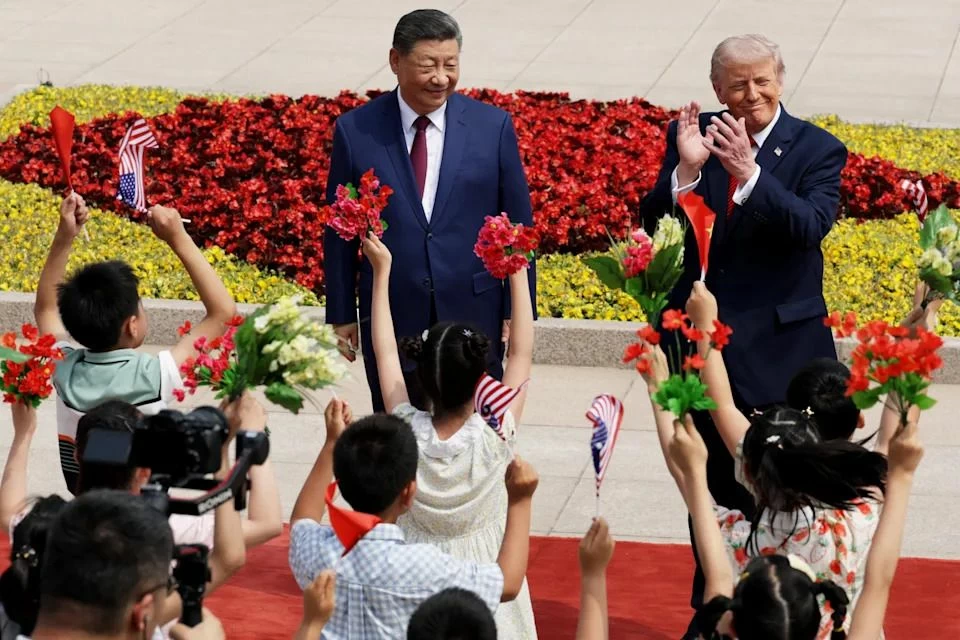
التقى الرئيس الأمريكي دونالد ترمب ونظيره الصيني شي جين بينغ في بكين، في قمة تهدف إلى إعادة الاستقرار للعلاقات التجارية بين أكبر اقتصادين في العالم، وسط تصاعد التوترات المرتبطة بالحرب الأمريكية الإيرانية ومستقبل مضيق هرمز.
وشهدت ساحة «قاعة الشعب الكبرى» في بكين مراسم استقبال رسمية ضخمة، تضمنت فرقة نحاسية ووحدات عسكرية وأطفالاً يلوحون بالأعلام الأمريكية والصينية، قبل أن يتصافح الزعيمان ويتبادلا الأحاديث الودية أمام وسائل الإعلام.
وقال شي جينبينغ إن «العلاقة المستقرة بين البلدين مفيدة للعالم»، مضيفاً: «يجب أن نكون شركاء لا خصوماً». فيما وصف ترمب الرئيس الصيني بأنه «صديق وقائد عظيم»، مؤكداً أن الخلافات بينهما كانت دائماً قابلة للحل، وأن واشنطن «تتطلع إلى مستقبل رائع مع الصين».
وتعد هذه أول قمة مباشرة بين الزعيمين منذ أكتوبر الماضي، وأول زيارة لرئيس أمريكي إلى الصين منذ زيارة ترمب لبكين عام 2017.
الرئيس الأمريكي دونالد ترمب يستعرض حرس الشرف برفقة الرئيس الصيني شي خلال مراسم الاستقبال في قاعة الشعب الكبرى بالعاصمة الصينية بكين.
من حرب الرسوم إلى البحث عن الاستقرار
قبل أكثر من عام، كانت العلاقات الأمريكية الصينية تمر بإحدى أكثر مراحلها توتراً، بعدما أشعلت الرسوم الجمركية الضخمة التي فرضها ترمب على الصين وشركاء تجاريين آخرين حرباً تجارية متبادلة رفعت الرسوم على بعض السلع إلى أكثر من 100%.
لكن حدة التوتر تراجعت تدريجياً بعد اتفاق الجانبين على خفض الرسوم الجمركية، إضافة إلى موافقة بكين على وقف القيود المفروضة على صادرات المعادن النادرة، وسط مساعٍ للوصول إلى اتفاق تجاري أكثر شمولاً يمنع تكرار سيناريو الحرب التجارية.
أعضاء الوفد الأمريكي، بمن فيهم الممثل التجاري الأمريكي جيميسون غرير، ووزير الدفاع بيت هيغسيث، ووزير الخزانة سكوت بيسنت، ووزير الخارجية الأمريكي ماركو روبيو، والسفير الأمريكي لدى الصين ديفيد بيردو، إلى جانب رؤساء تنفيذيين من قطاعات مختلفة، يقفون قبيل مراسم استقبال في بكين يوم 14 مايو.
ترمب: التجارة أولاً
وقال ترمب قبيل مغادرته إلى بكين: «سنتحدث مع الرئيس شي حول الكثير من القضايا، لكن التجارة ستكون الملف الأهم».
وتسعى الإدارة الأمريكية إلى ضمان استمرار وصولها إلى المعادن النادرة الصينية، والسماح للشركات الأمريكية بتوسيع صادراتها الغذائية والتجارية إلى السوق الصينية.
كما طرح الممثل التجاري الأمريكي جيميسون غرير فكرة إنشاء «مجلس تجارة أمريكي ـ صيني» لتنسيق الاتفاقات الاقتصادية بين البلدين.
ماسك وتيم كوك وهوانغ في بكين
وشهدت القمة حضور عدد من كبار التنفيذيين الأمريكيين، بينهم الرئيس التنفيذي لشركة إيلون ماسك، والرئيس التنفيذي لشركة إنفيديا جنسن هوانغ، إضافة إلى الرئيس التنفيذي المغادر لشركة أبل تيم كوك.
ويعكس الحضور أهمية السوق الصينية للشركات الأمريكية، خصوصاً مع سعي «إنفيديا» إلى بيع مزيد من الرقائق الإلكترونية المتطورة داخل الصين.
إيران وظلال هرمز
ورغم تركيز القمة على الاقتصاد، فإن الحرب الأمريكية الإيرانية ألقت بظلالها على المحادثات، خصوصاً مع استمرار التعثر في المفاوضات المتعلقة بمضيق هرمز.
وقال ترمب إن الهدنة التي أوقفت المواجهة المباشرة بين واشنطن وطهران منذ أبريل الماضي أصبحت «على أجهزة الإنعاش»، في إشارة إلى هشاشتها.
ويرى خبراء أن انشغال واشنطن بالشرق الأوسط واستخدامها المكثف للذخائر في المواجهة مع إيران قد يضعف استعدادها لأي مواجهة مستقبلية مع الصين.
في المقابل، تعتمد بكين بشكل كبير على نفط الشرق الأوسط، وتعد أكبر مشترٍ للنفط الإيراني عالمياً، ما يجعلها شديدة الحساسية تجاه أي اضطراب يهدد حركة النفط العالمية أو الاقتصاد الإيراني.
وقال وزير الخارجية الأمريكي ماركو روبيو إن واشنطن أوضحت لبكين أن «أي دعم لإيران سيضر بالعلاقات الثنائية»، معرباً عن أمله في أن تلعب الصين «دوراً أكثر نشاطاً» في احتواء الأزمة.
تايوان.. الملف الأكثر حساسية
وبرز ملف تايوان كأحد أكثر القضايا حساسية خلال القمة، إذ تؤكد الصين باستمرار أنها تسعى إلى «إعادة توحيد» الجزيرة، ولم تستبعد استخدام القوة لتحقيق ذلك.
في المقابل، قدمت الولايات المتحدة مليارات الدولارات دعماً عسكرياً لتايوان، مع تمسكها بسياسة الغموض بشأن التدخل العسكري المباشر في حال اندلاع حرب مع الصين.
ويخشى بعض التايوانيين من أن يتحول الدعم الأمريكي للجزيرة إلى ورقة تفاوض ضمن أي تفاهمات مستقبلية بين ترمب وبكين، خصوصاً أن تايوان تهيمن على إنتاج الرقائق الإلكترونية الأكثر تطوراً في العالم.
U.S. President Donald Trump met with Chinese President Xi Jinping in Beijing at a summit aimed at stabilizing trade relations between the world's two largest economies, amid rising tensions related to the U.S.-Iranian war and the future of the Strait of Hormuz.
The "Great Hall of the People" in Beijing witnessed a grand official reception ceremony, featuring a brass band, military units, and children waving American and Chinese flags, before the two leaders shook hands and exchanged friendly remarks in front of the media.
Xi Jinping stated that "a stable relationship between the two countries is beneficial for the world," adding, "We should be partners, not adversaries." Trump described the Chinese president as "a friend and a great leader," emphasizing that their differences have always been resolvable, and that Washington "looks forward to a wonderful future with China."
This is the first direct summit between the two leaders since last October, and the first visit by a U.S. president to China since Trump's trip to Beijing in 2017.
الرئيس الأمريكي دونالد ترمب يستعرض حرس الشرف برفقة الرئيس الصيني شي خلال مراسم الاستقبال في قاعة الشعب الكبرى بالعاصمة الصينية بكين.
From Trade Wars to Seeking Stability
More than a year ago, U.S.-China relations were experiencing one of their most tense phases, after the massive tariffs imposed by Trump on China and other trading partners ignited a reciprocal trade war that raised tariffs on some goods to over 100%.
Disputes extended to issues involving rare earth metals, semiconductors, student visas, fentanyl manufacturing materials, and imports of Chinese soybeans.
However, tensions gradually eased after both sides agreed to reduce tariffs, in addition to Beijing agreeing to lift restrictions on rare earth metal exports, amid efforts to reach a more comprehensive trade agreement that would prevent a repeat of the trade war scenario.
أعضاء الوفد الأمريكي، بمن فيهم الممثل التجاري الأمريكي جيميسون غرير، ووزير الدفاع بيت هيغسيث، ووزير الخزانة سكوت بيسنت، ووزير الخارجية الأمريكي ماركو روبيو، والسفير الأمريكي لدى الصين ديفيد بيردو، إلى جانب رؤساء تنفيذيين من قطاعات مختلفة، يقفون قبيل مراسم استقبال في بكين يوم 14 مايو.
Trump: Trade First
Before departing for Beijing, Trump stated, "We will talk with President Xi about many issues, but trade will be the most important topic."
The U.S. administration seeks to ensure continued access to Chinese rare earth metals and allow American companies to expand their food and trade exports to the Chinese market.
U.S. Trade Representative Jamison Greer also proposed the establishment of an "American-Chinese Trade Council" to coordinate economic agreements between the two countries.
Musk, Tim Cook, and Huang in Beijing
The summit saw the attendance of several top American executives, including Elon Musk, CEO of Tesla, Jensen Huang, CEO of Nvidia, and outgoing Apple CEO Tim Cook.
This attendance reflects the importance of the Chinese market for American companies, especially as Nvidia seeks to sell more advanced chips within China.
Iran and the Shadows of Hormuz
Despite the summit's focus on the economy, the U.S.-Iranian war cast a shadow over the discussions, particularly with the ongoing stalemate in negotiations regarding the Strait of Hormuz.
Trump stated that the truce that halted direct confrontation between Washington and Tehran since last April is now "on life support," referring to its fragility.
Experts believe that Washington's preoccupation with the Middle East and its extensive use of munitions in the confrontation with Iran may weaken its readiness for any future confrontation with China.
Conversely, Beijing relies heavily on Middle Eastern oil and is the world's largest buyer of Iranian oil, making it highly sensitive to any disruption that threatens global oil flows or the Iranian economy.
U.S. Secretary of State Marco Rubio stated that Washington has made it clear to Beijing that "any support for Iran will harm bilateral relations," expressing hope that China will play "a more active role" in containing the crisis.
Taiwan: The Most Sensitive Issue
The issue of Taiwan emerged as one of the most sensitive topics during the summit, as China continuously asserts its aim to "reunify" the island and has not ruled out the use of force to achieve this.
In contrast, the United States has provided billions of dollars in military support to Taiwan, while maintaining a policy of ambiguity regarding direct military intervention in the event of a war with China.
Some Taiwanese fear that U.S. support for the island could become a bargaining chip in any future agreements between Trump and Beijing, especially since Taiwan dominates the production of the most advanced electronic chips in the world.