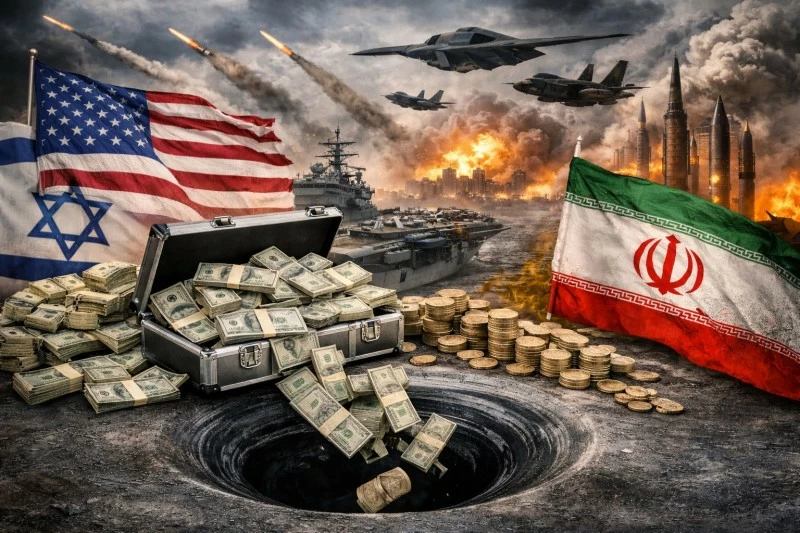
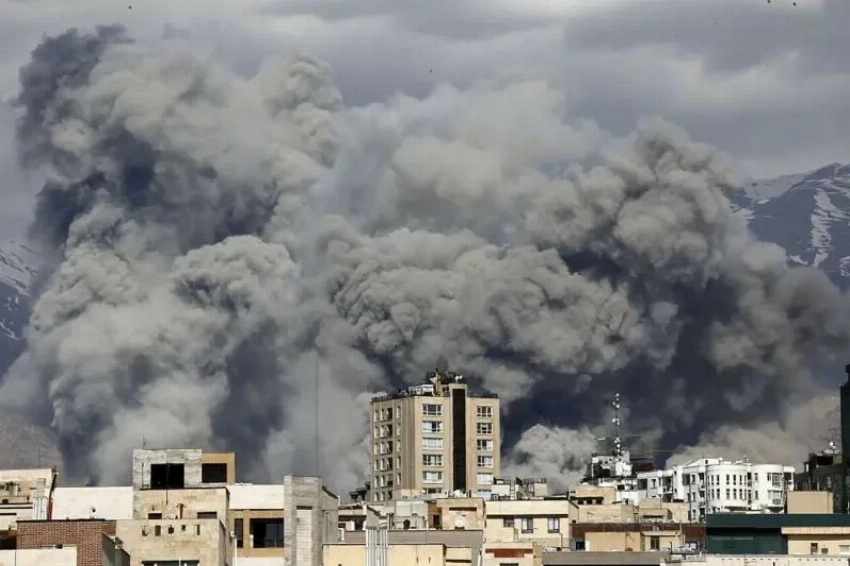
في وقت تتجه فيه الأنظار إلى مسار الحرب الأمريكية الإسرائيلية ضد إيران وأهدافها العسكرية المعلنة، تتكشف تدريجياً أبعاد الكلفة الاقتصادية الباهظة لهذا الصراع. فإلى جانب الانفجارات التي تضرب أهدافاً داخل إيران، تسجل الخزانة الأمريكية نزيفاً مالياً متسارعاً قد يغيّر معادلات الإنفاق الدفاعي في واشنطن. وتشير تقديرات أولية نقلتها تقارير إعلامية ومراكز أبحاث إلى أن تكلفة العمليات العسكرية قد تصل إلى نحو مليار دولار يومياً، مع تحذيرات من أن استمرار الحرب قد يحولها إلى «ثقب أسود» يبتلع الميزانية الدفاعية الأمريكية.
مليار دولار يومياً.. حرب باهظة الثمن
كشف مسؤول في الكونغرس الأمريكي أن التقديرات الأولية لوزارة الدفاع (البنتاغون) تشير إلى أن تكلفة الحرب الجارية ضد إيران تقترب من مليار دولار يومياً، وفق ما نقلته صحيفة «ذي أتلانتيك».
ولا تقتصر النفقات على ثمن القنابل والصواريخ فحسب، بل تشمل تكاليف تشغيل الأساطيل الجوية والبحرية والأنظمة الدفاعية المتطورة، إضافة إلى العمليات اللوجستية والانتشار العسكري واسع النطاق في المنطقة.
وبحسب القيادة المركزية الأمريكية، فقد استهدف الجيش الأمريكي أكثر من 1250 هدفاً داخل إيران خلال أول 48 ساعة من بدء الضربات، مستخدماً أكثر من 20 نوعاً من الأصول العسكرية والأنظمة القتالية المختلفة.
اليوم الأول.. 779 مليون دولار في 24 ساعة
بينما كانت الانفجارات تهز طهران، كانت الخزانة الأمريكية تنفق بوتيرة غير مسبوقة. إذ تشير تقديرات وكالة الأناضول إلى أن القوات الأمريكية أنفقت نحو 779 مليون دولار خلال أول 24 ساعة فقط من بدء الهجوم، أي ما يعادل نحو 0.1% من ميزانية الدفاع الأمريكية لعام 2026.
وشمل الانتشار العسكري: •قاذفات الشبح B-2 •مقاتلات F-22 وF-35 وF-16 •طائرات الهجوم A-10 •طائرات الحرب الإلكترونية EA-18G •طائرات مسيّرة MQ-9 Reaper •حاملات طائرات نووية ومدمرات صواريخ موجهة •أنظمة الدفاع الصاروخي باتريوت وثاد
كما نفذت أربع قاذفات شبح من طراز B-2 رحلة طويلة من قاعدة وايتمان في ولاية ميزوري، وضربت أهدافاً باستخدام قنابل موجهة من طراز JDAM تزن نحو 2000 رطل.
الطائرات المسيّرة.. السلاح الأرخص
تشير تقديرات «بلومبيرغ» إلى أن تكلفة تشغيل بعض الأصول العسكرية تتراوح بين 35 ألف دولار إلى ملايين الدولارات.
فعلى سبيل المثال: •تكلفة الطائرة المسيّرة الانتحارية نحو 35 ألف دولار. •استخدام نحو 1250 مسيّرة قد يكلف حوالي 43.8 مليون دولار.
ورغم أن المسيّرات تُعد الخيار الأقل تكلفة مقارنة بالصواريخ المتطورة، فإن كثافة استخدامها تضاعف حجم الإنفاق الإجمالي.
القاذفات الشبحية والصواريخ.. ملايين في كل ضربة
تُعد الضربات الكبرى الأكثر تكلفة في هذه الحرب، إذ تشير تقديرات إلى أن بعض العمليات قد تصل إلى عشرات الملايين من الدولارات.
ومن أبرز الأرقام المتداولة: •تشغيل قاذفة B-2 يكلف بين 130 ألف و150 ألف دولار لكل ساعة طيران. •صاروخ ثاد الاعتراضي يبلغ سعره نحو 12.8 مليون دولار للصاروخ الواحد.
كما أن العمليات الدقيقة التي تنفذها الطائرات المأهولة والمسيّرة المتطورة قد تضيف ملايين الدولارات إلى فاتورة الحرب.
حاملات الطائرات.. نزيف يومي مستمر
تشكل العمليات البحرية جزءاً كبيراً من فاتورة الحرب. فبحسب تقارير دولية، تبلغ تكلفة تشغيل حاملتي طائرات في المنطقة نحو 13 مليون دولار يومياً.
كما قدّرت «بلومبيرغ» سابقاً أن تشغيل حاملة الطائرات يو إس إس جيرالد فورد وحدها يكلف نحو 11.4 مليون دولار يومياً خلال انتشارها العسكري.
العمليات العسكرية.. أين تذهب المليارات؟
تحليل صادر عن مركز الدراسات الاستراتيجية والدولية قدّر تكلفة الحرب بنحو 891.4 مليون دولار يومياً، مع توقع انخفاض التكاليف لاحقاً إذا جرى الاعتماد على ذخائر أقل تكلفة.
وتتوزع النفقات اليومية تقريباً على النحو التالي:
العمليات الجوية: •الناقلات والشحن: 9 ملايين دولار •المقاتلات التقليدية: 5 ملايين •المقاتلات الشبحية: 5 ملايين
العمليات البحرية: •حاملات الطائرات: 6 ملايين •المدمرات: 5 ملايين
العمليات البرية: •لواء المدفعية: نحو مليون دولار •كتيبة الحرس الوطني: أقل من مليون دولار
مقارنة بضربات العام الماضي
تُظهر المقارنات أن الحرب الحالية أكثر تكلفة بكثير من العمليات السابقة.
فخلال الضربات الأمريكية على المنشآت النووية الإيرانية في يونيو 2025، المعروفة باسم عملية «مطرقة منتصف الليل»، بلغت الكلفة نحو 2 إلى 2.26 مليار دولار فقط، واستغرقت العملية ساعتين ونصف تقريباً.
أما في الحرب الحالية، فقد بلغت تكلفة أول 100 ساعة فقط نحو 3.7 مليار دولار، وفق تقديرات مراكز بحثية أمريكية.
إلى أين تتجه فاتورة الحرب؟
يحذر خبراء من أن الكلفة النهائية للحرب ستظل غير واضحة حتى انتهاء العمليات.
وتقول مديرة برنامج الأولويات الوطنية في معهد الدراسات السياسية ليندسي كوشغاريان إن مثل هذه الصراعات يصعب تقدير تكلفتها بدقة قبل نهايتها، مشيرة إلى أن حرب العراق بلغت نحو 3 تريليونات دولار.
بدوره، قدّر مدير برنامج نماذج الميزانية في جامعة بنسلفانيا كينت سميترز أن حرباً قد تستمر شهرين قد تكلف ما بين 40 و95 مليار دولار، بحسب حجم العمليات واحتمال نشر قوات برية.
لكن بعض الخبراء يرون أن واشنطن قد تعتبر هذه التكاليف أقل بكثير من كلفة السماح لإيران بامتلاك سلاح نووي، وهو سيناريو قد يسبب ـ بحسب تقديراتهم ـ خسائر بمستوى تريليونات الدولارات.
At a time when attention is focused on the trajectory of the American-Israeli war against Iran and its declared military objectives, the dimensions of the exorbitant economic cost of this conflict are gradually unfolding. Alongside the explosions hitting targets inside Iran, the U.S. Treasury is recording a rapid financial bleed that could alter defense spending equations in Washington. Preliminary estimates reported by media outlets and research centers indicate that the cost of military operations could reach about one billion dollars daily, with warnings that the continuation of the war could turn it into a "black hole" that consumes the U.S. defense budget.
One Billion Dollars a Day... An Expensive War
A U.S. congressional official revealed that initial estimates from the Department of Defense (Pentagon) indicate that the cost of the ongoing war against Iran is approaching one billion dollars daily, according to what was reported by The Atlantic.
The expenses are not limited to the price of bombs and missiles alone; they also include the costs of operating air and naval fleets and advanced defense systems, in addition to logistical operations and large-scale military deployment in the region.
According to U.S. Central Command, the U.S. military targeted more than 1,250 sites inside Iran during the first 48 hours of the strikes, using over 20 types of military assets and various combat systems.
The First Day... 779 Million Dollars in 24 Hours
While explosions shook Tehran, the U.S. Treasury was spending at an unprecedented rate. Estimates from Anadolu Agency indicate that U.S. forces spent about 779 million dollars during the first 24 hours of the attack alone, which is equivalent to about 0.1% of the U.S. defense budget for 2026.
The military deployment included: • B-2 stealth bombers • F-22, F-35, and F-16 fighters • A-10 attack aircraft • EA-18G electronic warfare aircraft • MQ-9 Reaper drones • Nuclear aircraft carriers and guided missile destroyers • Patriot and THAAD missile defense systems
Additionally, four B-2 stealth bombers conducted a long mission from Whiteman Air Force Base in Missouri, striking targets using JDAM guided bombs weighing about 2,000 pounds.
Drones... The Cheaper Weapon
Bloomberg estimates that the cost of operating some military assets ranges from 35,000 dollars to millions of dollars.
For example: • The cost of a suicide drone is about 35,000 dollars. • Using about 1,250 drones could cost around 43.8 million dollars.
Although drones are considered the less expensive option compared to advanced missiles, their intensive use doubles the total spending.
Stealth Bombers and Missiles... Millions with Every Strike
Major strikes are the most costly in this war, with estimates suggesting that some operations could reach tens of millions of dollars.
Among the notable figures circulating: • Operating a B-2 bomber costs between 130,000 and 150,000 dollars per flight hour. • A THAAD interceptor missile costs about 12.8 million dollars per missile.
Moreover, the precise operations carried out by manned and advanced unmanned aircraft could add millions of dollars to the war bill.
Aircraft Carriers... Continuous Daily Bleeding
Naval operations constitute a significant part of the war bill. According to international reports, the cost of operating two aircraft carriers in the region is about 13 million dollars daily.
Bloomberg previously estimated that operating the USS Gerald Ford aircraft carrier alone costs about 11.4 million dollars daily during its military deployment.
Military Operations... Where Do the Billions Go?
An analysis from the Center for Strategic and International Studies estimated the cost of the war at about 891.4 million dollars daily, with expectations of a decrease in costs later if reliance is placed on less expensive munitions.
The daily expenses are approximately distributed as follows:
Air Operations: • Carriers and shipping: 9 million dollars • Conventional fighters: 5 million • Stealth fighters: 5 million
Naval Operations: • Aircraft carriers: 6 million • Destroyers: 5 million
Ground Operations: • Artillery brigade: about one million dollars • National Guard battalion: less than one million dollars
Comparison to Last Year's Strikes
Comparisons show that the current war is significantly more expensive than previous operations.
During the U.S. strikes on Iranian nuclear facilities in June 2025, known as Operation "Midnight Hammer," the cost was about 2 to 2.26 billion dollars only, and the operation lasted approximately two and a half hours.
In the current war, the cost of the first 100 hours alone reached about 3.7 billion dollars, according to estimates from American research centers.
Where Is the War Bill Heading?
Experts warn that the final cost of the war will remain unclear until the operations conclude.
Lindsey Koshgarian, director of the National Priorities Project at the Institute for Policy Studies, states that such conflicts are difficult to estimate accurately before they end, noting that the Iraq War cost about 3 trillion dollars.
For his part, Kent Smetters, director of the Budget Models Program at the University of Pennsylvania, estimated that a war lasting two months could cost between 40 and 95 billion dollars, depending on the scale of operations and the likelihood of deploying ground forces.
However, some experts believe that Washington may consider these costs much lower than the cost of allowing Iran to acquire a nuclear weapon, a scenario that could result in losses amounting to trillions of dollars, according to their estimates.