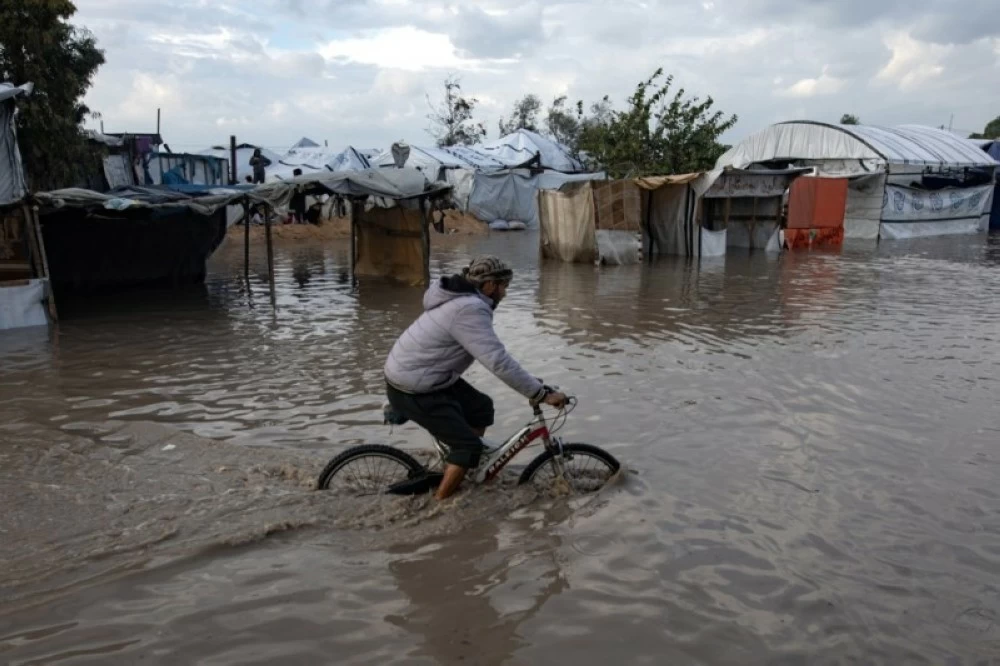
تضرر أكثر من ربع مليون نازح فلسطيني من المنخفض الجوي الذي ضرب قطاع غزة وتسبّب في عاصفة مطرية شديدة أودت بحياة 16 شخصاً، بينهم أطفال، فيما انهار 13 منزلاً، وغرقت 27 ألف خيمة تؤوي نازحين.
وفيات تحت الأنقاض
وأفاد الدفاع المدني بالعثور على وفيات تحت أنقاض منازل دمّرتها الأمطار الغزيرة والرياح العاتية، خصوصاً في مدينة غزة والمناطق الشمالية من القطاع.
ودخل المنخفض الجوي يومه الثالث في غزة، إذ يواجه السكان أوضاعاً إنسانية بالغة الخطورة في ظل منع دخول إمدادات الطوارئ، ما فاقم معاناة النازحين بعدما غمرت المياه آلاف الخيام وتسببت الرياح الشديدة بانهيار منازل، مخلفة قتلى ومصابين.
وكان المكتب الإعلامي لحكومة غزة أعلن وفاة 12 شخصاً أو اعتبارهم في عداد المفقودين جراء العاصفة، وانهيار 13 مبنى على الأقل، وغمر 27 ألف خيمة بالمياه.
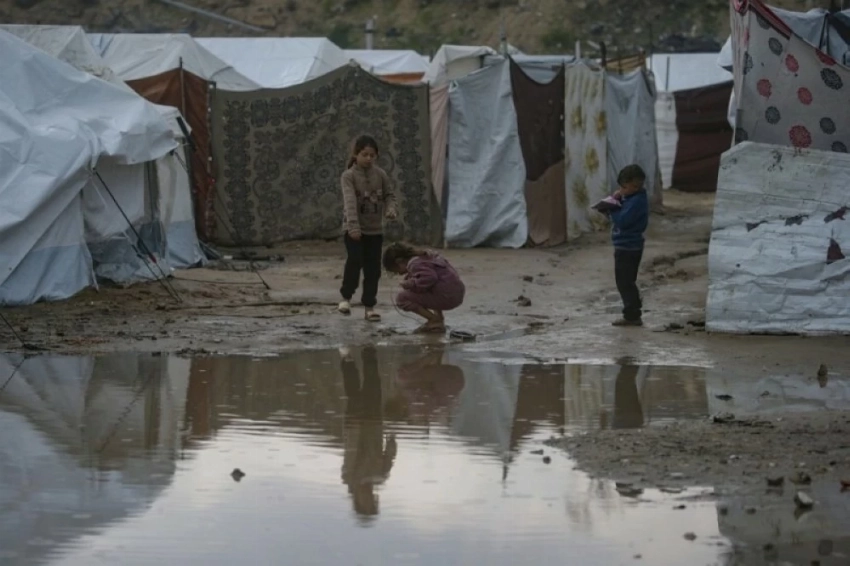
أطفال فلسطينيون نازحون يلعبون قرب خيام عائلاتهم في حي الزيتون شرق مدينة غزة. (إ ب أ)
غرق خيام نازحين
وكانت المنظمة الدولية للهجرة التابعة للأمم المتحدة ذكرت أن مئات الآلاف من النازحين في قطاع غزة يواجهون خطر غرق خيامهم وملاجئهم جراء الأمطار الغزيرة، بسبب منع دخول مواد بناء المأوى وأكياس الرمل.
وأفاد مسؤولون في وزارة الصحة بقطاع غزة بأن الأمطار الغزيرة التي اجتاحت القطاع، أمس (الخميس)، تسببت في غرق خيام تؤوي عائلات شردتها الحرب، وأدت إلى وفاة رضيعة إثر تعرضها للبرد.
ولفتت المنظمة الدولية للهجرة إلى أن نحو 795 ألف نازح يواجهون مخاطر محتملة جراء السيول في مناطق منخفضة مليئة بالأنقاض، حيث تقيم العائلات في ملاجئ غير آمنة. وأوضحت أن نقص خدمات الصرف الصحي وإدارة النفايات يرفع احتمالات تفشي الأمراض.
وأضافت المنظمة أن وصول المواد الضرورية لدعم المأوى، مثل الأخشاب والخشب الرقائقي، وأكياس الرمل، ومضخات رفع المياه، تأخر إلى غزة بسبب استمرار القيود المفروضة.
الإمدادات لا تكفي
وأكدت المنظمة الدولية للهجرة أن الإمدادات المرسلة إلى غزة، بما في ذلك الخيام المقاومة للماء والبطانيات الحرارية والأغطية البلاستيكية، لم تكن كافية لمواجهة السيول. وقالت مديرة المنظمة إيمي بوب: «منذ وصول العاصفة، تحاول العائلات حماية أطفالها بكل ما لديها».
ولفت مسؤولون من الأمم المتحدة ومسؤولون فلسطينيون إلى وجود حاجة ماسة إلى 300 ألف خيمة جديدة للتعامل مع 1.5 مليون نازح لا يزالون في القطاع.
وأعلنت منظمة الصحة العالمية أن أكثر من 4 آلاف شخص يعيشون في مناطق ساحلية عالية الخطورة، وأن ألف شخص منهم يتأثرون مباشرة بالأمواج العاتية القادمة من البحر.
بدورها، حذرت منظمة الصحة العالمية من المخاطر الصحية الناجمة عن التلوث. وقال ممثل المنظمة في الأراضي الفلسطينية المحتلة ريك بيبركورن: «آلاف العائلات تلجأ إلى هذه المناطق الساحلية المنخفضة المليئة بالحطام، التي تفتقر إلى أنظمة الصرف الصحي والحواجز الوقائية، وتنتشر فيها أكوام القمامة على طول الطرق».
More than a quarter of a million Palestinian displaced persons were affected by the low-pressure system that struck the Gaza Strip, causing a severe rainstorm that claimed the lives of 16 people, including children, while 13 houses collapsed and 27,000 tents housing displaced individuals were flooded.
Deaths Under the Rubble
The Civil Defense reported finding fatalities under the rubble of homes destroyed by heavy rains and strong winds, particularly in Gaza City and the northern areas of the Strip.
The low-pressure system entered its third day in Gaza, as residents faced extremely dangerous humanitarian conditions amid the blockade on emergency supplies, exacerbating the suffering of the displaced after water flooded thousands of tents and strong winds caused homes to collapse, leaving behind casualties and injuries.
The media office of the Gaza government announced the death of 12 people or their status as missing due to the storm, the collapse of at least 13 buildings, and the flooding of 27,000 tents.
أطفال فلسطينيون نازحون يلعبون قرب خيام عائلاتهم في حي الزيتون شرق مدينة غزة. (إ ب أ)
Flooding of Displaced Persons' Tents
The International Organization for Migration, part of the United Nations, stated that hundreds of thousands of displaced individuals in the Gaza Strip are at risk of their tents and shelters flooding due to heavy rains, as the entry of shelter construction materials and sandbags has been blocked.
Officials from the Ministry of Health in the Gaza Strip reported that the heavy rains that swept through the area yesterday (Thursday) caused tents housing families displaced by the war to flood, leading to the death of an infant due to exposure to the cold.
The International Organization for Migration pointed out that about 795,000 displaced persons face potential risks due to floods in low-lying areas filled with rubble, where families are living in unsafe shelters. It noted that the lack of sanitation services and waste management increases the likelihood of disease outbreaks.
The organization added that the arrival of essential materials to support shelters, such as wood, plywood, sandbags, and water pumps, has been delayed in Gaza due to the ongoing restrictions.
Supplies Are Insufficient
The International Organization for Migration confirmed that the supplies sent to Gaza, including waterproof tents, thermal blankets, and plastic coverings, were not sufficient to cope with the floods. The organization's director, Amy Pope, stated: “Since the storm hit, families have been trying to protect their children with whatever they have.”
UN officials and Palestinian officials indicated an urgent need for 300,000 new tents to accommodate the 1.5 million displaced individuals still in the Strip.
The World Health Organization announced that more than 4,000 people live in high-risk coastal areas, with 1,000 of them being directly affected by the strong waves coming from the sea.
For its part, the World Health Organization warned of health risks resulting from pollution. The organization's representative in the occupied Palestinian territories, Rick Piepke, stated: “Thousands of families are resorting to these low-lying coastal areas filled with debris, which lack sanitation systems and protective barriers, and where piles of garbage are scattered along the roads.”