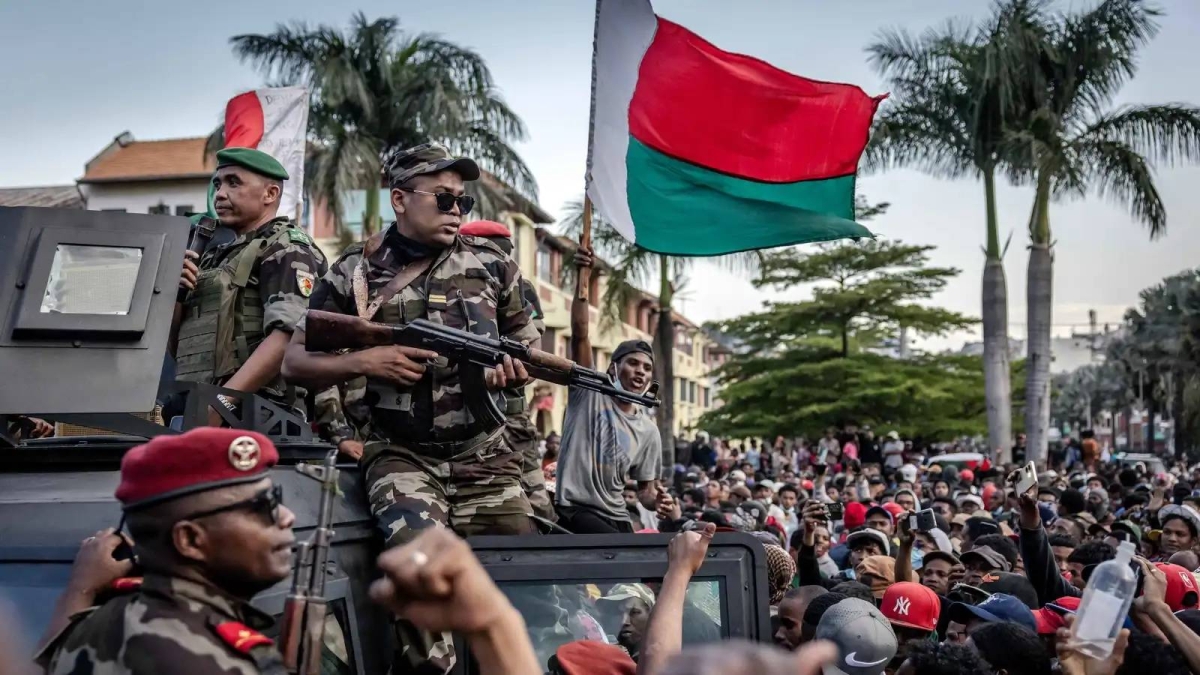
أعلنت رئاسة مدغشقر أن محاولة استيلاء غير قانوني على السلطة تجري حاليّاً بعد انضمام عسكريين إلى احتجاجات شبابية بدأت أواخر سبتمبر.
وقالت وحدة «كابسات» من قوات النخبة إنها تتولى العمليات الأمنية، وعيّنت الجنرال ديموستين بيكولاس قائداً للجيش، فيما أكدت قوات الدرك رفضها استخدام القوة ضد المتظاهرين.
وشهدت العاصمة إطلاق نار قرب ثكنات كابسات أسفر عن 3 إصابات.
ودعا الرئيس أندريه راجولينا إلى الحوار، مؤكداً استمرار الحكومة في أداء مهماتها.
وتحوّلت الاحتجاجات من مطالب خدمية إلى دعوات تطالب باستقالة الرئيس، بمشاركة واسعة من المواطنين وعدد من الشخصيات السياسية والدينية.
وكان رئيس مدغشقر أندري راجولينا أعلن اليوم (الأحد) «محاولة غير قانونية وقسرية للاستيلاء على السلطة» في الدولة الأفريقية دون تقديم أدلة ملموسة، بعد يوم من انضمام جنود إلى حركة احتجاجية بدأت في 25 سبتمبر الماضي، فيما أعلن فيلق قيادة أفراد جيش مدغشقر، الذي انحاز للمتظاهرين، أنه نصب نفسه القيادة العليا للقوات المسلحة في البلاد، بحسب صحيفة «ميدي مدغشقر».
وأكدت وكالة الصحافة الفرنسية أن «القوات المتمردة في البلاد أعلنت سيطرتها على جميع الوحدات المسلحة».
ووفقاً لبيان صادر عن فيلق قيادة أفراد جيش مدغشقر (كابسات) «ستصدر جميع التعليمات للقوات المسلحة، سواء البرية أو الجوية أو البحرية، من معسكرها. وبذلك، تعلن كابسات أنها المصدر الجديد للقيادة العسكرية».
وكانت «كابسات» قد عارضت سابقاً أوامر إطلاق النار على المتظاهرين، ودعت الأجهزة الأمنية الأخرى في البلاد إلى اتباعها.
وانضمت مجموعات من جنود جيش مدغشقر، إثر نداء «كابسات»، إلى آلاف المتظاهرين في العاصمة.
وأعلنت رئاسة مدغشقر رصد محاولة للاستيلاء على السلطة «بطريقة غير قانونية وبالقوة»، معربة عن إدانتها لهذه المحاولة وتقديم تعازيها في ضحاياها.
واندلعت الاحتجاجات في البداية يوم 22 سبتمبر الماضي، بمشاركة الآلاف من الشباب، احتجاجاً على الانقطاعات الحادة في الكهرباء والمياه، قبل أن تتحول إلى مطالب بإقالة الحكومة ورحيل الرئيس.
وفي 29 سبتمبر، أعلن الرئيس راجولينا حل الحكومة في محاولة لامتصاص الغضب، إلا أن المتظاهرين اعتبروا الخطوة غير كافية، وأعلنوا لاحقاً تشكيل «لجنة تنسيق النضال» (KMT)، التي تضم ممثلين عن «جيل زد» والمجتمع المدني ومستشارين بلديين بهدف تنظيم المرحلة الأخيرة من المظاهرات.
The presidency of Madagascar announced that an illegal attempt to seize power is currently underway after military personnel joined youth protests that began in late September.
The "Kabsat" unit of the elite forces stated that it is taking over security operations, appointing General Demosthenes Picoulas as the army commander, while the gendarmerie confirmed its refusal to use force against the demonstrators.
The capital witnessed gunfire near the Kabsat barracks, resulting in three injuries.
President Andry Rajoelina called for dialogue, affirming that the government will continue to carry out its duties.
The protests shifted from service demands to calls for the president's resignation, with widespread participation from citizens and several political and religious figures.
Madagascar's President Andry Rajoelina announced today (Sunday) an "illegal and coercive attempt to seize power" in the African nation without providing concrete evidence, a day after soldiers joined a protest movement that began on September 25. Meanwhile, the Madagascar Army Command Corps, which sided with the demonstrators, declared itself the supreme leadership of the armed forces in the country, according to the newspaper "Midi Madagascar."
Agence France-Presse confirmed that "the rebel forces in the country announced their control over all armed units."
According to a statement issued by the Madagascar Army Command Corps (Kabsat), "all instructions to the armed forces, whether land, air, or naval, will be issued from its camp. Thus, Kabsat declares itself the new source of military leadership."
Kabsat had previously opposed orders to fire on demonstrators and called on other security agencies in the country to follow suit.
Groups of Madagascar soldiers, responding to Kabsat's call, joined thousands of demonstrators in the capital.
The presidency of Madagascar reported an attempt to seize power "illegally and by force," expressing its condemnation of this attempt and offering condolences to its victims.
The protests initially erupted on September 22, with thousands of young people participating in protests against severe electricity and water outages, before transforming into demands for the government's dismissal and the president's departure.
On September 29, President Rajoelina announced the dissolution of the government in an attempt to quell the anger, but the demonstrators deemed the move insufficient and later announced the formation of a "Coordination Committee for Struggle" (KMT), which includes representatives from "Generation Z," civil society, and municipal advisors to organize the final phase of the demonstrations.