


دعا رئيس مجلس القيادة الرئاسي الدكتور رشاد العليمي اليوم (الثلاثاء) الأوروبيين إلى اتخاذ قرارات عاجلة لتصنيف جماعة الحوثي كمنظمة إرهابية، واتخاذ تدابير واقعية لعزلها ككيان مسلح خارج القانون، وقرارات الشرعية الدولية.
وقال الرئيس اليمني خلال استقباله بقصر المعاشيق في عدن رئيس بعثة الاتحاد الاوروبي لدى اليمن غابرييل مونيرا فيناليس، وسفيرتي فرنسا، ومملكة هولندا، والقائمة بأعمال السفارة الالمانية: «ما نواجهه ليس تمرداً داخلياً فحسب، بل تهديد عابر للحدود لجماعة مسلحة تحتجز موظفي الإغاثة الأممية، وتدير خلايا اغتيالات في المناطق المحررة، وشبكات لتهريب الأموال، وترويج المخدرات»، مستعرضاً نجاح الأجهزة الأمنية في كشفت احدى أخطر الخلايا الحوثية التي نفذت عملية اغتيال موظف برنامج الغذاء العالمي في محافظة تعز، وعديد القادة والناشطين والصحفيين، والمواطنين الأبرياء، والسعي لاغتيال المبعوث الأممي في محاولة لخلط الأوراق في المحافظات المحررة، والتأثير على تقديرات المجتمع الدولي بشأن قدرات الحكومة لتأمين مناطق نفوذها.
وأشار العليمي إلى الاعتداءات الحوثية وهجماتهم الارهابية المزعزعة للأمن الاقليمي والدولي وتهديد الملاحة العالمية التي كان آخرها إغراق سفن تجارية وقتل بحارة أبرياء من جنسيات مختلفة، مؤكداً أن الجماعة الحوثية واحدة من أخطر التهديدات للأمن الملاحي الدولي منذ الحرب العالمية الثانية.
ونوه رئيس مجلس القيادة الرئاسي بموقف الاتحاد الأوروبي والمجتمع الدولي إلى جانب الشعب اليمني، مشيراً إلى أن هذا الموقف اليوم قد لا يكون متناسباً مع التهديد القائم الذي من شأنه مفاقمة الخسائر، وإطالة أمد المعاناة.
وجدد الرئيس اليمني التزام الحكومة اليمنية بنهج السلام، القائم على المرجعيات المتفق عليها وطنياً وإقليمياً ودولياً، ودعم جهود مبعوث الأمم المتحدة، وتسهيل عمل المنظمات الإنسانية في إيصال مساعداتها الاغاثية إلى مستحقيها في مختلف أنحاء البلاد.
وأثنى رئيس مجلس القيادة الرئاسي على المواقف المشرفة لتحالف دعم الشرعية بقيادة السعودية، إلى جانب الشعب اليمني، وقيادته السياسية، بما في ذلك الحد من تداعيات الأزمة التمويلية، من خلال تدخلاتهم الاقتصادية، والخدمية والإنسانية المستمرة التي عززت من عوامل الصمود على مختلف المستويات.
واستعرض العليمي التدخلات الأوروبية المطلوبة لدعم الاقتصاد اليمني، وتخفيف المعاناة الإنسانية التي فاقمتها الهجمات الإرهابية الحوثية على المنشآت النفطية، وسفن الشحن البحري، موضحاً أن الدولة اليمنية منذ البداية لا تخوض حرباً عسكرية فحسب، بل أيضاً معركة اقتصادية من أجل المساهمة في إنقاذ ملايين اليمنيين الذين فقدوا فرص عيشهم الكريم.
ولفت العليمي إلى أنه ومنذ توقفت الصادرات النفطية بفعل هجمات المليشيا الحوثية على موانئ التصدير، خسرت الدولة نحو ٧٠% من مواردها العامة، التي تعمل الحكومة الآن على تعويضها من مصادر ذاتية قابلة للاستدامة، مبيناً أن جماعة الحوثي وداعميها يواصلون حربهم الاقتصادية الممنهجة ضد الشعب اليمني وتدمير ما تبقى من فرص لإنهاء الانقسام المالي، بالذهاب إلى إصدار عملات جديدة خارج إطار البنك المركزي، في تحدٍ صريح لكل الجهود الرامية لتحسين الظروف المعيشية في البلاد.
وأوضح الرئيس اليمني أن هذه الممارسات الحوثية لم تكن مجرد سلوك عابر، بل استهداف متعمد لما تبقى من فرص العيش، وتدمير ممنهج لاقتصاد البلد وأمنه الغذائي والقومي، موضحاً أن كل خطوة تنجزها الحكومة من الداخل، هي معركة ضد الفساد، وضد تسليم الدولة لقوى الشر وداعميها.
بدورهم أكد السفراء التزام دول الاتحاد الأوروبي القوي بمساندة الشعب اليمني، وتطلعاته في استعادة مؤسسات الدولة، وإسقاط الانقلاب.
أكد أنها واحدة من أخطر التهديدات للأمن الملاحي الدولي منذ الحرب العالمية الثانية
الرئيس اليمني يطالب أوروبا بتصنيف «الحوثي» كمنظمة إرهابية
15 يوليو 2025 - 21:52
|
آخر تحديث 15 يوليو 2025 - 21:52
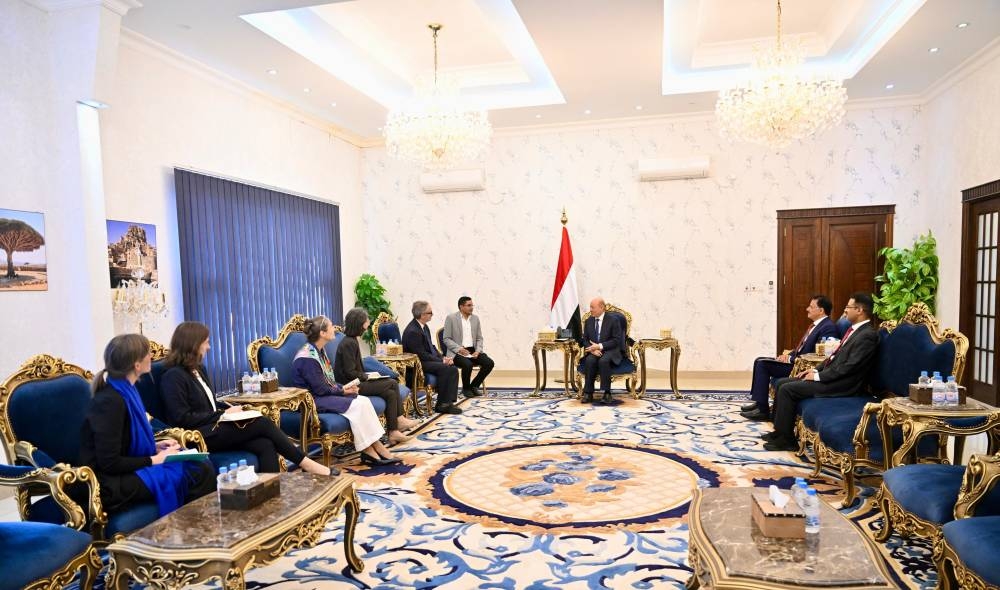
العليمي خلال لقائه سفراء الاتحاد الأوروبي.


تابع قناة عكاظ على الواتساب
أحمد الشميري (جدة) a_shmeri@
The President of the Presidential Leadership Council, Dr. Rashad Al-Alimi, today (Tuesday) called on Europeans to make urgent decisions to classify the Houthi group as a terrorist organization and to take practical measures to isolate it as an armed entity outside the law and international legitimacy.
During his reception at the Maashiq Palace in Aden for the Head of the European Union Mission to Yemen, Gabriel Monera Vinales, and the Ambassadors of France, the Kingdom of the Netherlands, and the Chargé d'Affaires of the German Embassy, the Yemeni president stated: "What we are facing is not just an internal rebellion, but a cross-border threat from an armed group that holds UN relief workers hostage, manages assassination cells in the liberated areas, operates money smuggling networks, and promotes drugs," highlighting the success of the security forces in uncovering one of the most dangerous Houthi cells that carried out the assassination of a World Food Program employee in Taiz Governorate, as well as numerous leaders, activists, journalists, and innocent citizens, and the attempt to assassinate the UN envoy in an effort to confuse the situation in the liberated governorates and influence international assessments regarding the government's ability to secure its areas of influence.
Al-Alimi pointed to the Houthi attacks and their terrorist operations that destabilize regional and international security and threaten global navigation, the latest of which involved sinking commercial ships and killing innocent sailors of various nationalities, affirming that the Houthi group is one of the most serious threats to international maritime security since World War II.
The President of the Presidential Leadership Council praised the position of the European Union and the international community alongside the Yemeni people, noting that this position today may not be commensurate with the existing threat that could exacerbate losses and prolong suffering.
The Yemeni president reiterated the Yemeni government's commitment to a peace approach based on the nationally, regionally, and internationally agreed-upon references, supporting the efforts of the UN envoy, and facilitating the work of humanitarian organizations in delivering their relief assistance to those in need across the country.
He commended the honorable positions of the Coalition to Support Legitimacy led by Saudi Arabia, alongside the Yemeni people and its political leadership, including mitigating the repercussions of the funding crisis through their ongoing economic, service, and humanitarian interventions that have strengthened the factors of resilience at various levels.
Al-Alimi reviewed the required European interventions to support the Yemeni economy and alleviate the humanitarian suffering exacerbated by Houthi terrorist attacks on oil facilities and shipping vessels, clarifying that the Yemeni state has not only been engaged in a military war from the beginning but also in an economic battle to contribute to saving millions of Yemenis who have lost their opportunities for a decent living.
He pointed out that since oil exports were halted due to Houthi militia attacks on export ports, the state has lost about 70% of its public resources, which the government is now working to compensate from sustainable self-sourced revenues, indicating that the Houthi group and its supporters continue their systematic economic war against the Yemeni people and destroy what remains of opportunities to end the financial division by issuing new currencies outside the framework of the Central Bank, in a blatant challenge to all efforts aimed at improving living conditions in the country.
The Yemeni president explained that these Houthi practices were not merely transient behaviors but a deliberate targeting of the remaining opportunities for living and a systematic destruction of the country's economy and its food and national security, clarifying that every step taken by the government from within is a battle against corruption and against handing over the state to the forces of evil and their supporters.
For their part, the ambassadors affirmed the strong commitment of European Union countries to support the Yemeni people and their aspirations to restore state institutions and overthrow the coup.
During his reception at the Maashiq Palace in Aden for the Head of the European Union Mission to Yemen, Gabriel Monera Vinales, and the Ambassadors of France, the Kingdom of the Netherlands, and the Chargé d'Affaires of the German Embassy, the Yemeni president stated: "What we are facing is not just an internal rebellion, but a cross-border threat from an armed group that holds UN relief workers hostage, manages assassination cells in the liberated areas, operates money smuggling networks, and promotes drugs," highlighting the success of the security forces in uncovering one of the most dangerous Houthi cells that carried out the assassination of a World Food Program employee in Taiz Governorate, as well as numerous leaders, activists, journalists, and innocent citizens, and the attempt to assassinate the UN envoy in an effort to confuse the situation in the liberated governorates and influence international assessments regarding the government's ability to secure its areas of influence.
Al-Alimi pointed to the Houthi attacks and their terrorist operations that destabilize regional and international security and threaten global navigation, the latest of which involved sinking commercial ships and killing innocent sailors of various nationalities, affirming that the Houthi group is one of the most serious threats to international maritime security since World War II.
The President of the Presidential Leadership Council praised the position of the European Union and the international community alongside the Yemeni people, noting that this position today may not be commensurate with the existing threat that could exacerbate losses and prolong suffering.
The Yemeni president reiterated the Yemeni government's commitment to a peace approach based on the nationally, regionally, and internationally agreed-upon references, supporting the efforts of the UN envoy, and facilitating the work of humanitarian organizations in delivering their relief assistance to those in need across the country.
He commended the honorable positions of the Coalition to Support Legitimacy led by Saudi Arabia, alongside the Yemeni people and its political leadership, including mitigating the repercussions of the funding crisis through their ongoing economic, service, and humanitarian interventions that have strengthened the factors of resilience at various levels.
Al-Alimi reviewed the required European interventions to support the Yemeni economy and alleviate the humanitarian suffering exacerbated by Houthi terrorist attacks on oil facilities and shipping vessels, clarifying that the Yemeni state has not only been engaged in a military war from the beginning but also in an economic battle to contribute to saving millions of Yemenis who have lost their opportunities for a decent living.
He pointed out that since oil exports were halted due to Houthi militia attacks on export ports, the state has lost about 70% of its public resources, which the government is now working to compensate from sustainable self-sourced revenues, indicating that the Houthi group and its supporters continue their systematic economic war against the Yemeni people and destroy what remains of opportunities to end the financial division by issuing new currencies outside the framework of the Central Bank, in a blatant challenge to all efforts aimed at improving living conditions in the country.
The Yemeni president explained that these Houthi practices were not merely transient behaviors but a deliberate targeting of the remaining opportunities for living and a systematic destruction of the country's economy and its food and national security, clarifying that every step taken by the government from within is a battle against corruption and against handing over the state to the forces of evil and their supporters.
For their part, the ambassadors affirmed the strong commitment of European Union countries to support the Yemeni people and their aspirations to restore state institutions and overthrow the coup.


