


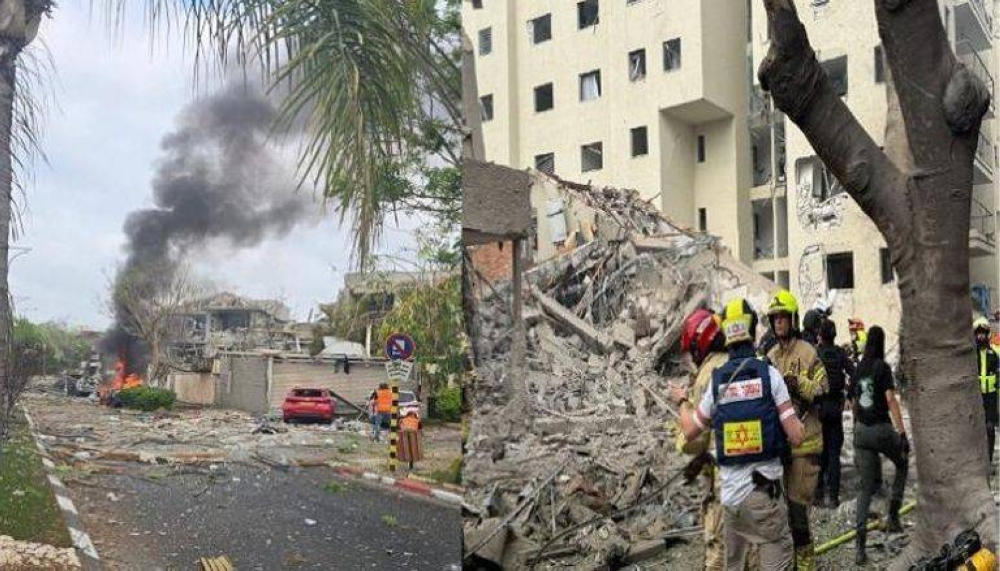

في أعقاب ضربات أمريكية استهدفت منشآت إيران النووية، أطلقت طهران عشرات الصواريخ في هجوم وُصف بأنه «الأقوى» على إسرائيل منذ بدء الحرب. وأعلنت استهداف مطار بن غوريون ومواقع أخرى في الضربات الصاروخية على إسرائيل.
ووفقاً لمحطات التلفزيون الإسرائيلية، تم تفعيل منظومات الإنذار في مناطق واسعة شملت مدينة القدس والمنطقة الوسطى والشمال، وسط سماع دوي انفجارات ناتجة عن عمليات اعتراض للصواريخ.
وأعلن الجيش الإسرائيلي رصد إطلاق صواريخ من الأراضي الإيرانية باتجاه إسرائيل، وأن منظومات الدفاع الجوي تعمل على اعتراض التهديد.
وأكدت وسائل إعلام إسرائيلية أن بعض الصواريخ الإيرانية نجحت في عبور طبقات الدفاع الجوي، ما أدى إلى انفجارات في مناطق متفرقة، خصوصاً في وسط البلاد.
وأعلنت القناة 12 الإسرائيلية سقوط 3 صواريخ حتى الآن، فيما أكدت مصادر عسكرية رصد إطلاق ما لا يقل عن 10 صواريخ، سقط منها 3 في مدينة حيفا وصاروخ آخر على مبنى في تل أبيب. وتسبب الهجوم الإيراني في سقوط نحو 15 مصابا بينهم 2 في حالة خطرة، وفق صحيفة «إسرائيل اليوم».
وأعلنت إسرائيل رفع حالة التأهب القصوى في كل الجبهات، خصوصا على الحدود الشمالية مع لبنان، تحسباً لأي تحرك من حزب الله.
ونقلت صحيفة يديعوت أحرونوت عن مصادر أمنية أن الجيش الإسرائيلي يعكف على تقييم شامل للوضع بالتنسيق مع المستويين السياسي والأمني، لمتابعة تداعيات الهجوم الإيراني وردود الفعل المحتملة في أكثر من ساحة.
ونقلت هيئة البث الإسرائيلية عن مسؤولين كبار في جهاز الأمن أن إسرائيل نفذت جميع الضربات التي كانت ممكنة ضد منشآت نووية إيرانية خلال الأيام القليلة الماضية.
واعتبر هؤلاء أن بنك الأهداف النووية الإيراني قد تم استنفاده تقريباً، وأنه لم يتبق الكثير من الأهداف ذات الأهمية الاستراتيجية العالية، باستثناء بعض المواقع المحصنة التي تتطلب تدخلاً عسكرياً أمريكياً مباشراً.
وأكد ضباط في الجيش الإسرائيلي أن سلاح الجو نفذ خلال اليومين الماضيين سلسلة من الهجمات المركزة ضد مواقع تابعة لوحدات الصواريخ أرض-أرض التابعة للحرس الثوري الإيراني، إضافة إلى استهداف أنظمة دفاع جوي متقدمة.
وأضاف أحد المصادر العسكرية أن إسرائيل كانت تتوقع انضمام الولايات المتحدة إلى الهجوم في مرحلة ما.
وذكرت مصادر أمنية أن سلاح الجو الإسرائيلي شن غارة ثانية على منشأة نووية في أصفهان نهاية الأسبوع الماضي، وهو ما وُصف بأنه مؤشر على قرب انتهاء بنك الأهداف النووية.
وحسب المصادر، فإن طبيعة الهجمات الإسرائيلية تحوّلت أخيراً إلى تصفية قيادات بارزة في الأجهزة الأمنية الإيرانية، بما في ذلك مسؤولون في برامج التسلح والصواريخ.
ولم تحسم إسرائيل بعد ما إذا كان التدخل الأمريكي في مهاجمة أهداف إيرانية سيؤدي إلى وقف غاراتها أم لا، إلا أن مسؤولاً إسرائيلياً رجح مواصلة الهجمات على أهداف داخل إيران، خصوصاً المرتبطة بالبنية التحتية العسكرية والصاروخية.
وأفاد المسؤول بأن التقديرات تشير إلى أن الرد الإيراني لم ينته بعد، وأن طهران قد تلجأ إلى خيارات غير تقليدية أو عبر وكلائها في المنطقة، مثل حزب الله أو المجموعات المسلحة في سورية والعراق واليمن.
واعتبر أن الوضع في المنطقة الشمالية يبقى مصدر قلق رئيسياً للجيش الإسرائيلي، إذ تم رفع حالة التأهب إلى الدرجة القصوى في المناطق المحاذية للحدود اللبنانية، في ظل مخاوف من تحرك حزب الله لتنفيذ عمليات عسكرية تشمل إطلاق صواريخ أو محاولات تسلل إلى داخل الأراضي الإسرائيلية.
وتحدث عن تقديرات أمنية باحتمال تنسيق ميداني بين إيران وحلفائها الإقليميين في إطار رد مشترك أو تصعيد متدرج ضد إسرائيل.
بعد الاستهداف الأمريكي
إسرائيل ترفع حالة التأهب.. إيران تستهدف «مطار بن غوريون»
22 يونيو 2025 - 12:10
|
آخر تحديث 22 يونيو 2025 - 12:10


تابع قناة عكاظ على الواتساب
«عكاظ»، وكالات (جدة، عواصم) okaz_online@
In the wake of American strikes targeting Iran's nuclear facilities, Tehran launched dozens of missiles in an attack described as the "strongest" on Israel since the war began. It announced targeting Ben Gurion Airport and other sites in the missile strikes on Israel.
According to Israeli television stations, alarm systems were activated in wide areas including the city of Jerusalem, the central region, and the north, amid the sound of explosions resulting from missile interception operations.
The Israeli army announced that it had detected missile launches from Iranian territory towards Israel, and that air defense systems were working to intercept the threat.
Israeli media confirmed that some Iranian missiles succeeded in crossing air defense layers, leading to explosions in scattered areas, particularly in the central part of the country.
Channel 12 reported that three missiles have fallen so far, while military sources confirmed the launch of at least ten missiles, three of which landed in the city of Haifa and another missile hit a building in Tel Aviv. The Iranian attack resulted in about 15 injuries, including two in critical condition, according to the newspaper "Israel Hayom".
Israel announced a state of maximum alert on all fronts, particularly on the northern border with Lebanon, in anticipation of any movement from Hezbollah.
The newspaper Yedioth Ahronoth reported from security sources that the Israeli army is conducting a comprehensive assessment of the situation in coordination with the political and security levels, to monitor the repercussions of the Iranian attack and potential reactions in multiple arenas.
The Israeli Broadcasting Authority reported that senior officials in the security apparatus stated that Israel has carried out all possible strikes against Iranian nuclear facilities in recent days.
They considered that the bank of Iranian nuclear targets has been nearly exhausted, and that there are not many high-strategic importance targets left, except for some fortified sites that require direct American military intervention.
Israeli army officers confirmed that the air force carried out a series of focused attacks over the past two days against sites belonging to the ground-to-ground missile units of the Iranian Revolutionary Guard, in addition to targeting advanced air defense systems.
One military source added that Israel expected the United States to join the attack at some stage.
Security sources reported that the Israeli air force launched a second raid on a nuclear facility in Isfahan last weekend, which was described as an indication of the nearing end of the nuclear target bank.
According to the sources, the nature of the Israeli attacks has recently shifted to eliminating prominent leaders in Iranian security agencies, including officials in arms and missile programs.
Israel has not yet determined whether American intervention in attacking Iranian targets will lead to a halt in its airstrikes or not, but an Israeli official suggested continuing attacks on targets inside Iran, particularly those related to military and missile infrastructure.
The official stated that estimates indicate that the Iranian response is not over yet, and that Tehran may resort to unconventional options or through its proxies in the region, such as Hezbollah or armed groups in Syria, Iraq, and Yemen.
He considered that the situation in the northern region remains a major concern for the Israeli army, as the state of alert has been raised to the maximum level in areas adjacent to the Lebanese border, amid fears of Hezbollah moving to carry out military operations that include launching missiles or attempts to infiltrate into Israeli territory.
He spoke of security estimates regarding the possibility of field coordination between Iran and its regional allies as part of a joint response or a gradual escalation against Israel.
According to Israeli television stations, alarm systems were activated in wide areas including the city of Jerusalem, the central region, and the north, amid the sound of explosions resulting from missile interception operations.
The Israeli army announced that it had detected missile launches from Iranian territory towards Israel, and that air defense systems were working to intercept the threat.
Israeli media confirmed that some Iranian missiles succeeded in crossing air defense layers, leading to explosions in scattered areas, particularly in the central part of the country.
Channel 12 reported that three missiles have fallen so far, while military sources confirmed the launch of at least ten missiles, three of which landed in the city of Haifa and another missile hit a building in Tel Aviv. The Iranian attack resulted in about 15 injuries, including two in critical condition, according to the newspaper "Israel Hayom".
Israel announced a state of maximum alert on all fronts, particularly on the northern border with Lebanon, in anticipation of any movement from Hezbollah.
The newspaper Yedioth Ahronoth reported from security sources that the Israeli army is conducting a comprehensive assessment of the situation in coordination with the political and security levels, to monitor the repercussions of the Iranian attack and potential reactions in multiple arenas.
The Israeli Broadcasting Authority reported that senior officials in the security apparatus stated that Israel has carried out all possible strikes against Iranian nuclear facilities in recent days.
They considered that the bank of Iranian nuclear targets has been nearly exhausted, and that there are not many high-strategic importance targets left, except for some fortified sites that require direct American military intervention.
Israeli army officers confirmed that the air force carried out a series of focused attacks over the past two days against sites belonging to the ground-to-ground missile units of the Iranian Revolutionary Guard, in addition to targeting advanced air defense systems.
One military source added that Israel expected the United States to join the attack at some stage.
Security sources reported that the Israeli air force launched a second raid on a nuclear facility in Isfahan last weekend, which was described as an indication of the nearing end of the nuclear target bank.
According to the sources, the nature of the Israeli attacks has recently shifted to eliminating prominent leaders in Iranian security agencies, including officials in arms and missile programs.
Israel has not yet determined whether American intervention in attacking Iranian targets will lead to a halt in its airstrikes or not, but an Israeli official suggested continuing attacks on targets inside Iran, particularly those related to military and missile infrastructure.
The official stated that estimates indicate that the Iranian response is not over yet, and that Tehran may resort to unconventional options or through its proxies in the region, such as Hezbollah or armed groups in Syria, Iraq, and Yemen.
He considered that the situation in the northern region remains a major concern for the Israeli army, as the state of alert has been raised to the maximum level in areas adjacent to the Lebanese border, amid fears of Hezbollah moving to carry out military operations that include launching missiles or attempts to infiltrate into Israeli territory.
He spoke of security estimates regarding the possibility of field coordination between Iran and its regional allies as part of a joint response or a gradual escalation against Israel.


