شهدت العاصمة الليبية طرابلس (الأحد)، لليوم الثالث على التوالي، مظاهرات غاضبة ضد رئيس حكومة الوحدة الوطنية عبد الحميد الدبيبة. وأكد شهود عيان أن محتجين أغلقوا عدداً من الطرق الرئيسية في العاصمة من خلال إشعال النيران في إطارات السيارات.
وحسب مصادر ميدانية، فإن عمليات الإغلاق طالت أماكن متفرقة من المدينة بينها جنزور غرب طرابلس وطريق الشط بالقرب من وسط العاصمة والطريق الساحلي.
واندلعت المظاهرات بعد عدة ساعات من كلمة رئيس حكومة الوحدة التي اعتبر فيها أن جزءاً كبيراً من الاحتجاجات التي شهدتها العاصمة «مدفوعة الثمن ومدسوسة»، بحسب قوله.
وقال مساء السبت: إن المليشيات سيطرت على المشهد السياسي والاقتصادي الليبي، ودعا الليبيين للانضمام إلى مشروع ليبيا خالية من المليشيات والفساد، وأكد أن هدف العملية الأمنية في طرابلس كان إنهاء وجود التشكيلات المسلحة. وأضاف أنه سيستمر في محاربة المليشيات.
وتجمع المتظاهرون على مدى اليومين الماضيين في ميدان الشهداء وسط المدينة التي شهدت هذا الأسبوع 3 أيام من أعمال العنف الدامية.
وبدأت الاشتباكات ليل الاثنين الماضي، في أعقاب مقتل عبد الغني الككلي، المعروف باسم غنيوة، قائد جهاز دعم الاستقرار ومقره في حي أبو سليم المكتظ بالسكان على يد فصائل متحالفة مع الدبيبة. بعدما أطلق «اللواء 444» التابع لوزارة الدفاع عملية عسكرية استهدفت «الجهاز» وأدت إلى مقتل الككلي، القيادي الأبرز للمجموعات المسلحة التي تتمتع بنفوذ كبير في طرابلس منذ عام 2011، وتحاول الحكومة تفكيكها.
ويخضع جهاز دعم الاستقرار للمجلس الرئاسي الذي جاء إلى السلطة عام 2021 مع حكومة الوحدة الوطنية التابعة للدبيبة من خلال عملية دعمتها الأمم المتحدة.
وجرى خلال الاشتباكات استخدام الأسلحة الثقيلة والقذائف المدفعية، ما أسفر عن مقتل 8 أشخاص.
ومنذ سقوط نظام معمر القذافي العام 2011، تشهد ليبيا انقساماً سياسياً حاداً، وتدير شؤونها حكومتان متنافستان: الأولى في طرابلس (غرباً) برئاسة عبد الحميد الدبيبة وتعترف بها الأمم المتحدة، والثانية في بنغازي (شرقاً) برئاسة أسامة حمّاد وتحظى بدعم البرلمان وقائد الجيش الليبي خليفة حفتر.
تجدد المظاهرات في طرابلس .. والدبيبة : مستمرون في محاربة المليشيات
18 مايو 2025 - 13:56
|
آخر تحديث 18 مايو 2025 - 14:10
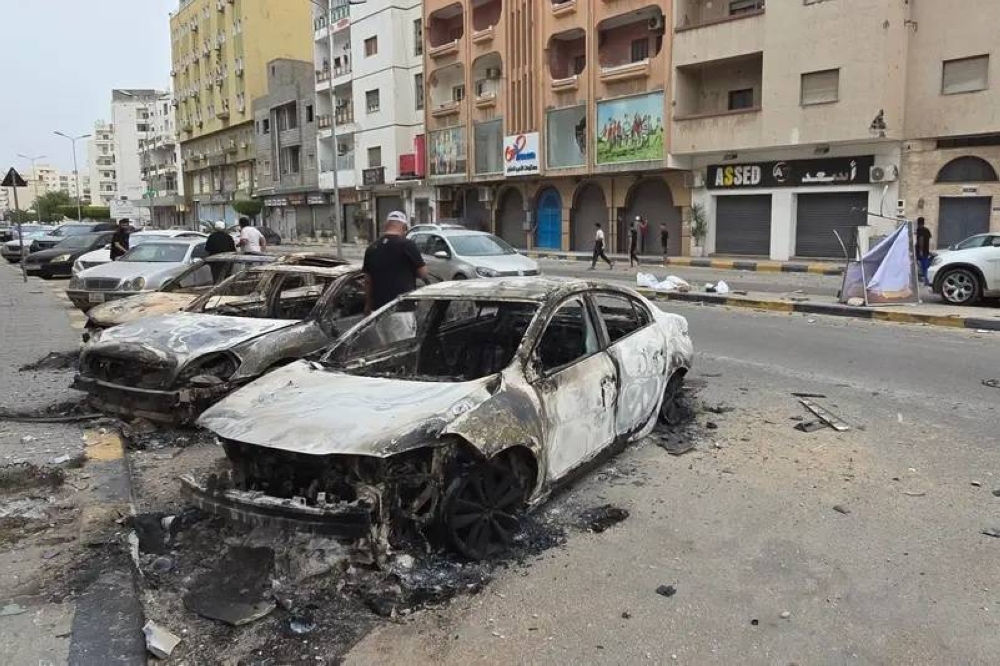
سيرات محترقة نتيجة المواجهات الدامية في العاصمة الليبية


تابع قناة عكاظ على الواتساب
«عكاظ» (جدة) okaz_online@
The Libyan capital, Tripoli, witnessed angry protests for the third consecutive day on Sunday against the Prime Minister of the National Unity Government, Abdul Hamid Dbeibah. Eyewitnesses confirmed that protesters closed several main roads in the capital by setting fire to car tires.
According to field sources, the closures affected various locations in the city, including Janzour in western Tripoli, the Shat Road near the city center, and the coastal road.
The protests erupted just hours after the Prime Minister's speech in which he claimed that a significant part of the protests in the capital was "paid for and infiltrated," according to his statement.
On Saturday evening, he stated that militias had taken control of the Libyan political and economic scene, calling on Libyans to join the project for a Libya free of militias and corruption. He emphasized that the goal of the security operation in Tripoli was to end the presence of armed groups and added that he would continue to fight against the militias.
Protesters gathered over the past two days in Martyrs' Square in the city, which has witnessed three days of bloody violence this week.
Clashes began last Monday night following the killing of Abdul Ghani al-Kikli, known as Gheniwa, the leader of the Stability Support Apparatus based in the densely populated Abu Salim neighborhood, at the hands of factions allied with Dbeibah. This occurred after the "444th Brigade" affiliated with the Ministry of Defense launched a military operation targeting the "Apparatus," resulting in the death of al-Kikli, the most prominent leader of the armed groups that have held significant influence in Tripoli since 2011, which the government is attempting to dismantle.
The Stability Support Apparatus is under the Presidential Council, which came to power in 2021 alongside Dbeibah's National Unity Government through a process supported by the United Nations.
During the clashes, heavy weapons and artillery shells were used, resulting in the deaths of eight people.
Since the fall of Muammar Gaddafi's regime in 2011, Libya has been experiencing a sharp political division, governed by two rival administrations: the first in Tripoli (to the west) led by Abdul Hamid Dbeibah and recognized by the United Nations, and the second in Benghazi (to the east) led by Osama Hamad, which enjoys the support of the parliament and Libyan National Army commander Khalifa Haftar.
According to field sources, the closures affected various locations in the city, including Janzour in western Tripoli, the Shat Road near the city center, and the coastal road.
The protests erupted just hours after the Prime Minister's speech in which he claimed that a significant part of the protests in the capital was "paid for and infiltrated," according to his statement.
On Saturday evening, he stated that militias had taken control of the Libyan political and economic scene, calling on Libyans to join the project for a Libya free of militias and corruption. He emphasized that the goal of the security operation in Tripoli was to end the presence of armed groups and added that he would continue to fight against the militias.
Protesters gathered over the past two days in Martyrs' Square in the city, which has witnessed three days of bloody violence this week.
Clashes began last Monday night following the killing of Abdul Ghani al-Kikli, known as Gheniwa, the leader of the Stability Support Apparatus based in the densely populated Abu Salim neighborhood, at the hands of factions allied with Dbeibah. This occurred after the "444th Brigade" affiliated with the Ministry of Defense launched a military operation targeting the "Apparatus," resulting in the death of al-Kikli, the most prominent leader of the armed groups that have held significant influence in Tripoli since 2011, which the government is attempting to dismantle.
The Stability Support Apparatus is under the Presidential Council, which came to power in 2021 alongside Dbeibah's National Unity Government through a process supported by the United Nations.
During the clashes, heavy weapons and artillery shells were used, resulting in the deaths of eight people.
Since the fall of Muammar Gaddafi's regime in 2011, Libya has been experiencing a sharp political division, governed by two rival administrations: the first in Tripoli (to the west) led by Abdul Hamid Dbeibah and recognized by the United Nations, and the second in Benghazi (to the east) led by Osama Hamad, which enjoys the support of the parliament and Libyan National Army commander Khalifa Haftar.