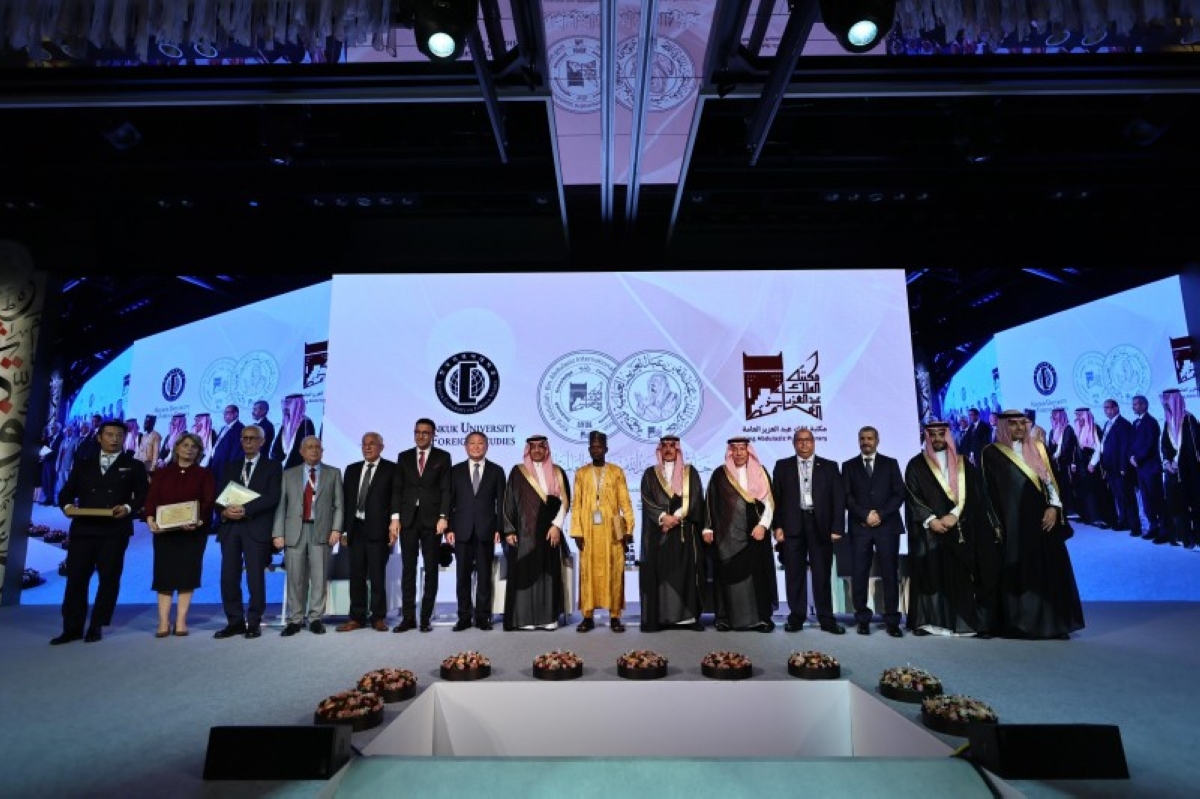
شهدت العاصمة الكورية سيئول اليوم، حفل تسليم جائزة الملك عبدالله بن عبدالعزيز العالمية للترجمة في دورتها الحادية عشرة، في رحاب جامعة هانكوك للدراسات الأجنبية، بحضور وزير التعليم يوسف بن عبدالله البنيان، ورئيس مجلس أمناء الجائزة المكلف والمشرف العام على مكتبة الملك عبدالعزيز العامة فيصل بن عبدالرحمن بن معمر، إلى جانب رئيس جامعة هانكوك جونغ وون بارك، ونخبة من الأكاديميين والمثقفين.
وفي مستهل الحفل، ألقى وزير التعليم كلمة أكد فيها أن هذا المحفل الثقافي والعلمي يعكس اهتمام المملكة بالعلم والمعرفة، بقيادة خادم الحرمين الشريفين الملك سلمان بن عبدالعزيز، وولي عهده مشيرا إلى أن هذا الاهتمام يتجلى في مختلف المبادرات المعرفية، ويعكس رؤية المملكة 2030 التي تسير بخطى واثقة نحو مستقبل واعد، يرتكز على الاستثمار في الإنسان والعلم، وتعزيز حضور المملكة في شتى المجالات.
وأوضح البنيان أن احتفاء الجائزة هذا العام بالفائزين في كوريا، يأتي ضمن أعمال الرؤية السعودية الكورية المشتركة، وبالتعاون مع جامعة هانكوك، ليجسد قيم التواصل الإنساني والتفاعل الثقافي البنّاء بين الأمم، مؤكدا أن الترجمة تُعد من أعظم جسور التفاهم بين الشعوب، وأداة لتعزيز الاحترام والانفتاح على الثقافات المختلفة.
ودعا الجامعات ومراكز الأبحاث والكراسي العلمية إلى إيلاء الترجمة اهتماما أكبر، من خلال ترجمة البحوث والدراسات الرصينة من مختلف لغات العالم، بما يسهم في تنمية المحتوى العلمي المحلي، ويدعم جهود المملكة نحو التحول إلى اقتصاد المعرفة.
من جانبه، عبّر فيصل بن معمر عن اعتزازه بامتداد حضور هذا المشروع المعرفي العالمي إلى الشرق الآسيوي، مؤكدا أن الترجمة تمثل وسيلة للتعارف الإنساني، وجسرا عابرا لحدود الجغرافيا واللغة والثقافة.
واستعرض بن معمر في كلمته مراحل تأسيس الجائزة وتطور رؤاها المعرفية والثقافية، بصفتها أحد المسارات التي تبنتها مكتبة الملك عبدالعزيز العامة للاحتفاء بالترجمة والمترجم، مؤكدا المكانة العالمية التي حققتها الجائزة.
وأشار إلى قرار مجلس أمناء الجائزة، استحداث فرع جديد بعنوان: (الترجمة في مجال الذكاء الاصطناعي والتقنيات الناشئة)، ابتداء من الدورة الثانية عشرة، في خطوة تستشرف آفاق المستقبل وتواكب التطورات التقنية.
بدوره، عبّر رئيس جامعة هانكوك جونغ وون بارك عن فخره باستضافة الحفل، مؤكدا أن الجائزة تعكس الدور الحيوي للترجمة في ربط الثقافات وتعزيز التفاهم المتبادل، مشيرا إلى أن جامعة هانكوك، التي تأسست عام 1954، تُعد المؤسسة الكورية الرائدة في تعليم اللغات، حيث تُدرّس (45) لغة، من بينها اللغة العربية التي بدأ تدريسها قبل ستين عاما، وأسهمت في تعزيز التفاعل بين كوريا والعالم العربي، لا سيما المملكة العربية السعودية.
وألقى الأمين العام للجائزة، الدكتور سعيد بن فايز السعيد، كلمة استعرض فيها مسيرة الجائزة منذ تأسيسها، مؤكدا القيمة الثقافية والمعرفية للترجمة، ودورها الحيوي في تعزيز التفاعل الحضاري والإنساني بين الشعوب، مشيرا إلى أن الجائزة تمثل منصة عالمية للاحتفاء بالجهود العلمية الرصينة، وتسهم في دعم الحوار المعرفي وتبادل الأفكار بين مختلف الثقافات، مشيدا بالدور الريادي للمملكة في دعم المبادرات المعرفية.
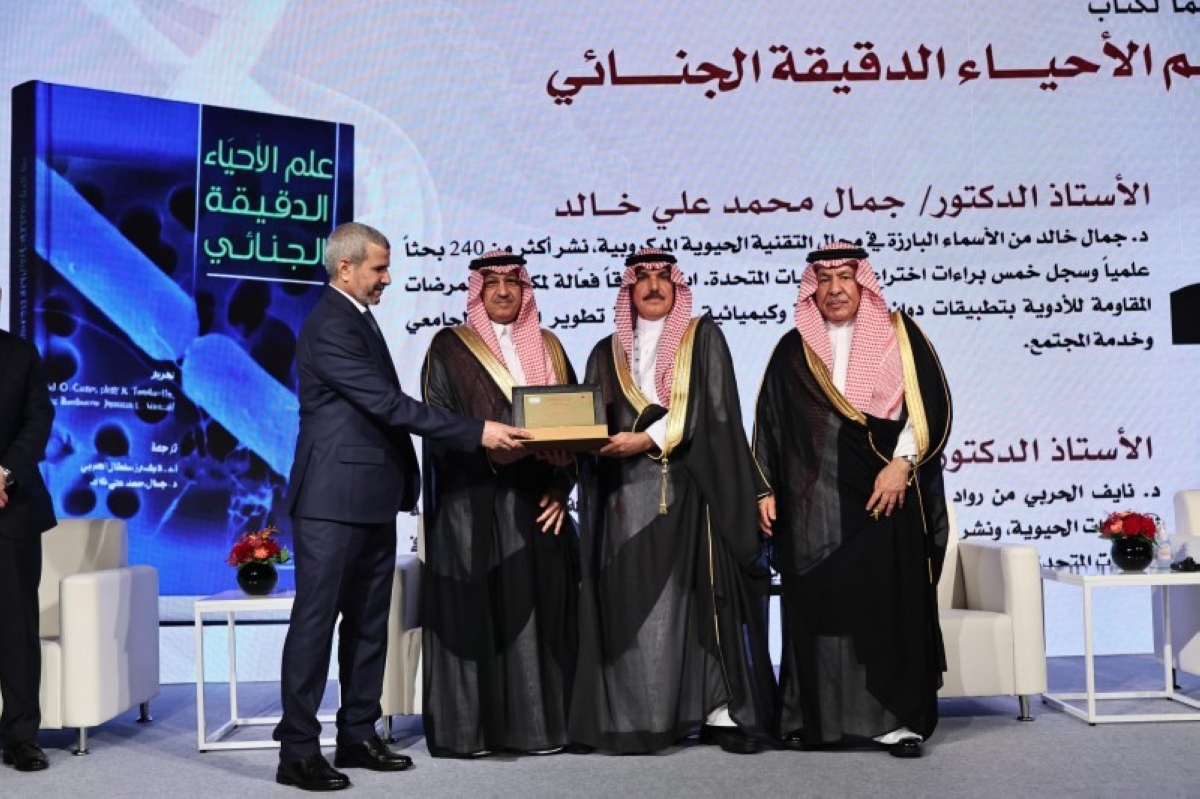
وفي ختام الحفل، كُرّم الفائزون بالجائزة في فروعها المختلفة، وهم الدكتور نايف بن سلطان الحربي، والدكتور جمال محمد علي خالد، عن ترجمة كتاب علم الأحياء الدقيقة الجنائي (فرع العلوم الطبيعية من اللغات الأخرى إلى العربية)، الدكتور منصور حسن الشهري، عن ترجمة كتاب نمذجة وميكانيكا المواد القائمة على الكربون ذات البنية النانومترية (فرع العلوم الطبيعية من اللغات الأخرى إلى العربية)، الدكتور زيدو جبريل محمد، عن ترجمة مقامات الحريري من العربية إلى الهوساوية (فرع العلوم الإنسانية من العربية إلى اللغات الأخرى)، الدكتور فؤاد الدواش والدكتور مصطفى الحديبي، عن ترجمة كتاب سيكولوجية الجائحات (فرع العلوم الإنسانية من اللغات الأخرى إلى العربية)، الدكتور بسام بركة والدكتور على نجيب إبراهيم، عن ترجمة قاموس علم الجمال (فرع العلوم الإنسانية من اللغات الأخرى إلى العربية).
وفي فرع جهود الأفراد الدكتور محمد الديداوي (نمساوي الجنسية)، والبروفيسور وانغ بي وين (صيني الجنسية)، والأستاذة بيرسا جورج كوموتسي (يونانية الجنسية).
وتقرر حجب الجائزة في فرعي العلوم الطبيعية من العربية إلى اللغات الأخرى، وجهود المؤسسات والهيئات، لعدم استيفاء الأعمال المرشحة المعايير المطلوبة.
The South Korean capital, Seoul, witnessed today the award ceremony for the King Abdullah bin Abdulaziz International Award for Translation in its eleventh session, held at Hankuk University of Foreign Studies, with the presence of the Minister of Education, Yusuf bin Abdullah Al-Bunyan, the appointed Chairman of the Board of Trustees of the award and General Supervisor of King Abdulaziz Public Library, Faisal bin Abdulrahman bin Muammar, along with the President of Hankuk University, Jung Won Park, and a select group of academics and intellectuals.
At the beginning of the ceremony, the Minister of Education delivered a speech in which he affirmed that this cultural and scientific gathering reflects the Kingdom's interest in knowledge and education, under the leadership of the Custodian of the Two Holy Mosques, King Salman bin Abdulaziz, and the Crown Prince. He pointed out that this interest is manifested in various knowledge initiatives and reflects the Kingdom's Vision 2030, which is confidently moving towards a promising future, based on investment in people and knowledge, and enhancing the Kingdom's presence in various fields.
Al-Bunyan explained that this year's celebration of the award winners in Korea comes as part of the Saudi-Korean joint vision, in collaboration with Hankuk University, embodying the values of human communication and constructive cultural interaction between nations. He emphasized that translation is one of the greatest bridges of understanding between peoples and a tool for enhancing respect and openness to different cultures.
He called on universities, research centers, and academic chairs to give greater attention to translation by translating solid research and studies from various languages of the world, contributing to the development of local scientific content and supporting the Kingdom's efforts towards transitioning to a knowledge-based economy.
For his part, Faisal bin Muammar expressed his pride in the extension of this global knowledge project to East Asia, affirming that translation represents a means of human acquaintance and a bridge crossing geographical, linguistic, and cultural boundaries.
In his speech, bin Muammar reviewed the stages of establishing the award and the evolution of its knowledge and cultural visions, as it is one of the paths adopted by King Abdulaziz Public Library to celebrate translation and translators, affirming the global status achieved by the award.
He pointed out the decision of the Board of Trustees of the award to establish a new branch titled: (Translation in the Field of Artificial Intelligence and Emerging Technologies), starting from the twelfth session, in a step that anticipates future horizons and keeps pace with technological developments.
For his part, the President of Hankuk University, Jung Won Park, expressed his pride in hosting the ceremony, affirming that the award reflects the vital role of translation in connecting cultures and enhancing mutual understanding. He noted that Hankuk University, established in 1954, is the leading Korean institution in language education, teaching (45) languages, including Arabic, which has been taught for sixty years, contributing to enhancing interaction between Korea and the Arab world, especially the Kingdom of Saudi Arabia.
The Secretary-General of the award, Dr. Saeed bin Faiz Al-Saeed, delivered a speech in which he reviewed the journey of the award since its establishment, affirming the cultural and knowledge value of translation and its vital role in enhancing civilizational and human interaction between peoples. He pointed out that the award represents a global platform for celebrating solid scientific efforts and contributes to supporting knowledge dialogue and the exchange of ideas between different cultures, praising the Kingdom's pioneering role in supporting knowledge initiatives.
At the end of the ceremony, the winners of the award in its various branches were honored, including Dr. Nayef bin Sultan Al-Harbi and Dr. Jamal Mohammed Ali Khalid for the translation of the book "Forensic Microbiology" (Natural Sciences branch from other languages to Arabic), Dr. Mansour Hassan Al-Shahri for the translation of the book "Modeling and Mechanics of Carbon-Based Nanomaterials" (Natural Sciences branch from other languages to Arabic), Dr. Zaidou Jibril Mohammed for the translation of "Al-Hariri's Maqamat" from Arabic to Hausa (Humanities branch from Arabic to other languages), Dr. Fouad Al-Dawash and Dr. Mustafa Al-Hadibi for the translation of the book "Psychology of Pandemics" (Humanities branch from other languages to Arabic), and Dr. Bassam Baraka and Dr. Ali Najib Ibrahim for the translation of "A Dictionary of Aesthetics" (Humanities branch from other languages to Arabic).
In the individual efforts branch, the award went to Dr. Mohammed Al-Didawi (Austrian nationality), Professor Wang Biwen (Chinese nationality), and Ms. Piersa George Komotsi (Greek nationality).
The award was withheld in the branches of Natural Sciences from Arabic to other languages and the efforts of institutions and bodies due to the nominated works not meeting the required standards.