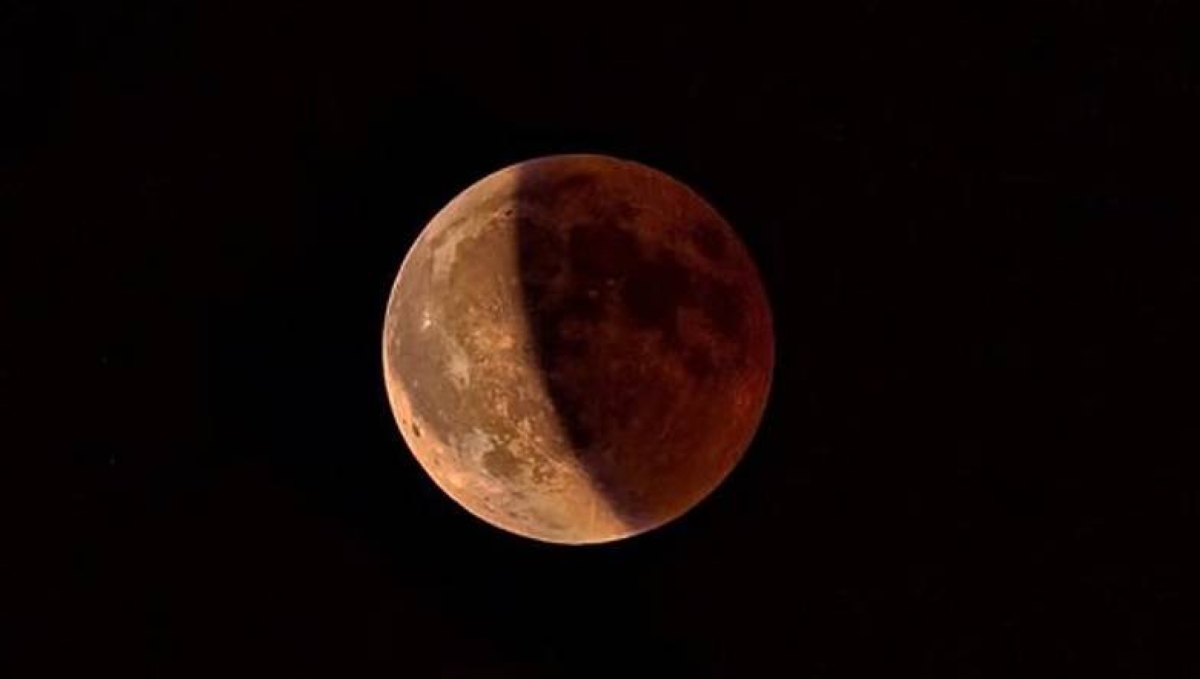
تشهد سماء المملكة العربية السعودية -بمشيئة الله- يوم الأحد 15 ربيع الأول 1447هـ الموافق 7 سبتمبر 2025 حدوث ظاهرة خسوف كلي للقمر، وسيكون مرئياً بالكامل في المملكة ومنطقتي آسيا وأفريقيا، وأجزاء من أستراليا وأوروبا، إذ سيستمر لمدة 83 دقيقة تقريباً، مما يجعله واحداً من أطول الخسوفات القمرية الكلية في السنوات الأخيرة.
ويمكن للمتابعين داخل المملكة مشاهدة الحدث عندما يبدأ القمر الدخول في منطقة شبه الظل عند الساعة 6:27 مساءً بتوقيت المملكة، إذ يبدأ الخسوف الجزئي عند الساعة 7:27 مساءً، والخسوف الكلي عند الساعة 8:30 مساءً، وينتهي عند الساعة 9:53 مساءً، وفي الساعة 11:57 مساءً ينتهي الخسوف بشكل كامل.
وأوضح الباحث بمعهد علوم الفضاء بمدينة الملك عبدالعزيز للعلوم والتقنية «كاكست» الدكتور زكي بن عبدالرحمن المصطفى أن الخسوف القمري يحدث عندما تكون الأرض بين الشمس والقمر، إذ يتحرك القمر إلى داخل ظل الأرض، مما يؤدي إلى تعتيم القمر، مبيناً أن الخسوف الكلي للقمر يحدث عندما يمر الجانب القريب من القمر بالكامل في منطقة الظل الكامل للأرض؛ ويمكن مشاهدته من أي مكان في الجانب الليلي من الأرض؛ وقد يستمر لمدة تصل إلى نحو ساعتين، على عكس الكسوف الشمسي الذي يمكن مشاهدته فقط من منطقة صغيرة نسبياً من العالم؛ وقد يستمر لبضع دقائق فقط.
وأضاف أنه في الغالب يتبع كل خسوف كسوف؛ وكل كسوف يتبعه خسوف، ومن النادر أن يحدث بشكل متتال، ومن المتوقع بإذن الله أن يحدث كسوف جزئي للشمس في نهاية شهر ربيع الأول 1447هـ الموافق 21 سبتمبر 2025م، ولن يكون مشاهداً في المملكة العربية السعودية.
وأشار الدكتور زكي إلى أن «كاكست» بصفتها مختبراً وطنياً؛ تهتم برصد الظواهر الفلكية، مثل الكسوف والخسوف وأهلة أوائل الأشهر القمرية، وزخات الشهب، وذلك باستخدام أحدث التجهيزات الفلكية سواء في مراصدها الثابتة أو المتنقلة، إذ تمتلك المدينة الكوادر العلمية المؤهلة لجميع الأحداث والفعاليات الفلكية؛ مما يعزز مكانتها مرجعاً وطنياً في هذا المجال، كما تهتم كذلك بتعزيز الوعي الفلكي من خلال تنظيم فعاليات تثقيفية وتفاعلية تستهدف الجمهور وتعزز الاهتمام بالفلك.
The sky of the Kingdom of Saudi Arabia -God willing- will witness a total lunar eclipse on Sunday, the 15th of Rabi' al-Awwal 1447 AH, corresponding to September 7, 2025. It will be fully visible in the Kingdom and in the regions of Asia and Africa, as well as parts of Australia and Europe, lasting approximately 83 minutes, making it one of the longest total lunar eclipses in recent years.
Observers within the Kingdom can watch the event when the moon begins to enter the penumbral shadow at 6:27 PM local time, with the partial eclipse starting at 7:27 PM, the total eclipse at 8:30 PM, and ending at 9:53 PM. The eclipse will completely end at 11:57 PM.
Dr. Zaki bin Abdulrahman Al-Mustafa, a researcher at the King Abdulaziz City for Science and Technology (KACST), explained that a lunar eclipse occurs when the Earth is positioned between the sun and the moon, causing the moon to move into the Earth's shadow, which results in the moon being darkened. He noted that a total lunar eclipse occurs when the near side of the moon passes entirely into the Earth's full shadow; it can be observed from anywhere on the night side of the Earth and can last for up to about two hours, unlike a solar eclipse, which can only be seen from a relatively small area of the world and may last only a few minutes.
He added that typically, every eclipse is followed by a solar eclipse, and every solar eclipse is followed by a lunar eclipse, and it is rare for them to occur consecutively. It is expected, God willing, that a partial solar eclipse will occur at the end of Rabi' al-Awwal 1447 AH, corresponding to September 21, 2025, which will not be visible in the Kingdom of Saudi Arabia.
Dr. Zaki pointed out that KACST, as a national laboratory, is keen on monitoring astronomical phenomena, such as eclipses, lunar phases at the beginning of lunar months, and meteor showers, using the latest astronomical equipment in both its fixed and mobile observatories. The city has qualified scientific staff for all astronomical events and activities, enhancing its position as a national reference in this field. It also aims to promote astronomical awareness by organizing educational and interactive events targeting the public and fostering interest in astronomy.