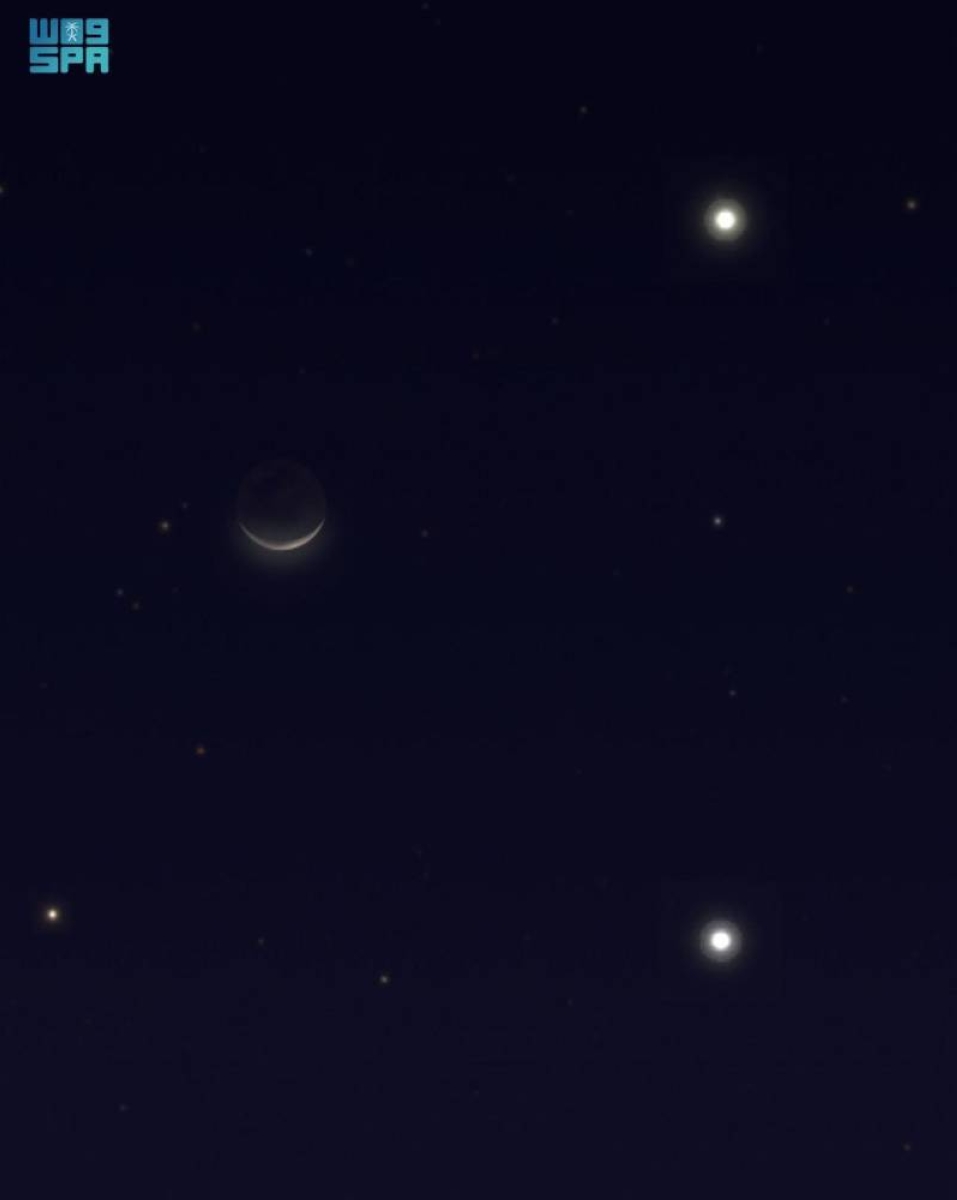
تشهد سماء الوطن العربي, فجر الأربعاء وقبيل شروق الشمس، تشكّل مثلث سماوي بديع بين هلال القمر وكوكبي الزهرة والمشتري، يمكن رصده بالعين المجرّدة في الأفق الشرقي.
وأوضح رئيس الجمعية الفلكية بجدة المهندس ماجد أبو زاهرة، أن هذا المشهد كما يُرى من سطح الأرض يمثّل تراكبًا بصريًا ناتجًا عن اختلاف مواقع الأجرام السماوية ومداراتها، ولا يعني تقاربها الفعلي في الفضاء.
وأشار إلى أن هلال القمر سيكون في طور التناقص بعمر (26.3) يومًا مضيئًا بنسبة (11%) فقط من سطحه، ليكوّن مع كوكبي الزهرة والمشتري مثلثًا متناغمًا في السماء، حيث يظهر كوكب الزهرة كألمع نقطة ضوء يليه كوكب المشتري، فيما يُكمل النجمان كاستور وبولوكس المشهد السماوي على يسار القمر.
وأفاد أن مشاهدة هذا الحدث ستكون ممكنة بوضوح من مواقع بعيدة عن التلوث الضوئي، لافتًا إلى أن استخدام المنظار أو التلسكوب يمكن أن يبرز مزيدًا من التفاصيل، رغم أن الظاهرة ستُرى بسهولة بالعين المجرّدة.
وبيّن أن التشكيل السماوي يحمل قيمة علمية بجانب جماله البصري، إذ يُعدُّ فرصة لدراسة حركة الأجرام السماوية على طول مسار البروج، والتفريق بين النجوم الثابتة والكواكب المتحركة والقمر، إضافة إلى فهم الفروق في شدة السطوع بين الكواكب، حيث يُعدُّ الزهرة عاكسًا قويًا لضوء الشمس بفضل غلافه الكثيف، بينما يظهر المشتري أقل لمعانًا رغم ضخامته لبعده الكبير عن الأرض.
The sky over the Arab world will witness, on the dawn of Wednesday just before sunrise, the formation of a beautiful celestial triangle between the crescent moon and the planets Venus and Jupiter, which can be observed with the naked eye on the eastern horizon.
The president of the Astronomical Society in Jeddah, Engineer Majid Abu Zahra, explained that this scene, as seen from the Earth's surface, represents a visual overlap resulting from the different positions and orbits of celestial bodies, and does not imply their actual proximity in space.
He pointed out that the crescent moon will be in a waning phase, 26.3 days old, illuminated by only 11% of its surface, forming a harmonious triangle in the sky with the planets Venus and Jupiter, where Venus appears as the brightest point of light followed by Jupiter, while the stars Castor and Pollux complete the celestial scene to the left of the moon.
He noted that viewing this event will be possible clearly from locations far from light pollution, emphasizing that the use of binoculars or a telescope can highlight more details, although the phenomenon will be easily visible to the naked eye.
He indicated that the celestial formation holds scientific value alongside its visual beauty, as it represents an opportunity to study the movement of celestial bodies along the zodiac path, differentiate between fixed stars and moving planets and the moon, in addition to understanding the differences in brightness between the planets, with Venus being a strong reflector of sunlight due to its dense atmosphere, while Jupiter appears less bright despite its size due to its great distance from Earth.