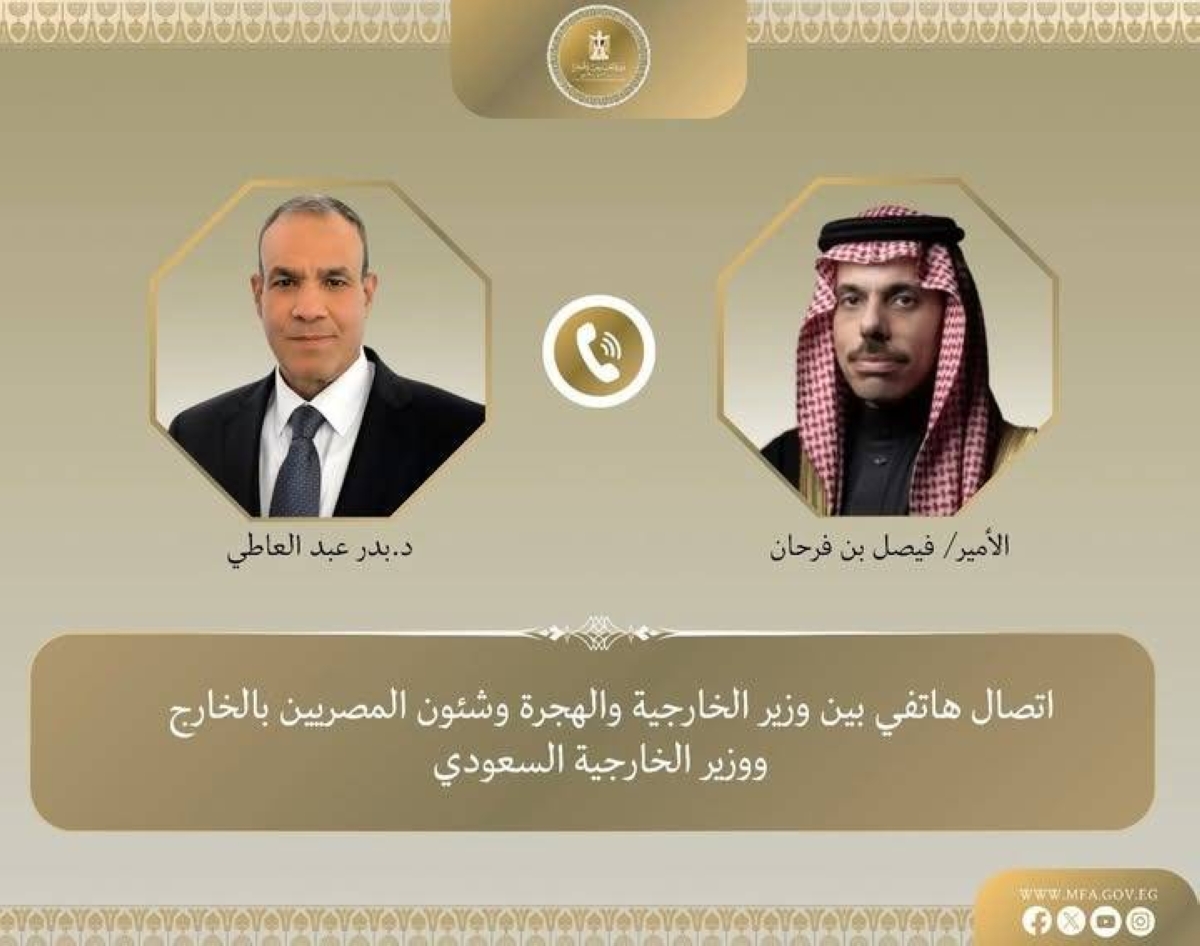
أكد وزيرا الخارجية فيصل بين فرحان ونظيره المصري بدر عبدالعاطي، حرصهما على مواصلة العمل لتعزيز التعاون المشترك، بما يلبي طموحات الشعبين الشقيقين نحو تحقيق التنمية الشاملة والمستدامة.
وتناول الوزيران، خلال اتصال هاتفي- بحسب بيان صادر عن وزارة الخارجية المصرية- التطورات السياسية والأمنية في المنطقة وعدداً من القضايا الإقليمية الملحة، وذلك في إطار التشاور والتنسيق الدوري بين البلدين الشقيقين ومتابعة الملفات الإقليمية، وفي مقدمتها الأوضاع في غزة.
كما تناول الاتصال أوجه العلاقات الثنائية الوثيقة بين البلدين، إذ ثمنا ما تشهده العلاقات من تطور متصاعد على كافة المستويات.
وبحث الوزيران تطورات الأوضاع الكارثية في قطاع غزة في ظل استمرار العدوان الإسرائيلي الغاشم، إذ أكدا موقفهما المشترك الرافض بشكل قاطع لقرار المجلس الوزاري الإسرائيلي بوضع خطة لاحتلال قطاع غزة وتوسيع العدوان، في محاولة لترسيخ الاحتلال غير الشرعي للأراضي الفلسطينية، ومواصلة حرب الإبادة ضد الشعب الفلسطيني الأعزل، وتقويض حقه في تقرير مصيره وإقامة دولته المستقلة، في انتهاك صارخ للقانون الدولي والقانون الدولي الإنساني.
وعرض الوزير المصري بدر عبدالعاطي الجهود المصرية المستمرة مع دولة قطر الشقيقة والولايات المتحدة للتوصل إلى صفقة تضمن إطلاق سراح الرهائن وعدد من الأسري الفلسطينيين وتوقف نزيف الدم الفلسطيني، وتضمن النفاذ الكامل وغير المشروط للمساعدات.
وتوافق الوزيران على التأكيد على ضرورة التوصل الفوري لاتفاق لوقف إطلاق النار، وضمان النفاذ العاجل والفوري للمساعدات الإنسانية والإغاثية والطبية دون عوائق، والوقف الفوري لسياسة التجويع والقتل الممنهج التي تؤجج الصراع وتعزز التطرف.
كما شددا على ضرورة حماية المدنيين، وتمكين الشعب الفلسطيني من ممارسة حقه الأصيل في تقرير مصيره وإقامة دولته المستقلة على خطوط الرابع من يونيو 1967 وعاصمتها القدس الشرقية.
كما تطرق الاتصال إلى مجمل الأوضاع الإقليمية، إذ تبادل وزيرا الخارجية الرؤى بشأن سبل التعامل مع التحديات الراهنة والأزمات القائمة في السودان وسورية ولبنان، واتفقا على مواصلة التنسيق الوثيق بين البلدين الشقيقين، وأهمية التنسيق العربي المشترك بشأن هذه القضايا لدعم ركائز الأمن والاستقرار الإقليمي.
Foreign Minister Faisal bin Farhan and his Egyptian counterpart Badr Abdel Atti confirmed their commitment to continue working to enhance joint cooperation, in a way that meets the aspirations of the two brotherly peoples towards achieving comprehensive and sustainable development.
During a phone call, according to a statement issued by the Egyptian Ministry of Foreign Affairs, the ministers discussed the political and security developments in the region and a number of pressing regional issues, as part of the regular consultation and coordination between the two brotherly countries and the follow-up on regional files, foremost among them the situation in Gaza.
The call also addressed the aspects of the close bilateral relations between the two countries, as they praised the ongoing development of relations at all levels.
The ministers examined the catastrophic situation in the Gaza Strip in light of the continued brutal Israeli aggression, reaffirming their joint position that categorically rejects the Israeli cabinet's decision to implement a plan for the occupation of the Gaza Strip and to expand the aggression, in an attempt to entrench the illegal occupation of Palestinian territories and continue the genocide against the defenseless Palestinian people, undermining their right to self-determination and the establishment of their independent state, in a blatant violation of international law and international humanitarian law.
Egyptian Minister Badr Abdel Atti presented the ongoing Egyptian efforts with the sisterly State of Qatar and the United States to reach an agreement that guarantees the release of hostages and a number of Palestinian prisoners, stops the bloodshed of Palestinians, and ensures the full and unconditional access to aid.
The two ministers agreed on the necessity of reaching an immediate ceasefire agreement, ensuring urgent and immediate access to humanitarian, relief, and medical assistance without obstacles, and the immediate cessation of the policy of starvation and systematic killing that fuels conflict and promotes extremism.
They also emphasized the need to protect civilians and empower the Palestinian people to exercise their legitimate right to self-determination and to establish their independent state along the lines of June 4, 1967, with East Jerusalem as its capital.
The call also touched on the overall regional situation, as the foreign ministers exchanged views on ways to address the current challenges and ongoing crises in Sudan, Syria, and Lebanon, agreeing to continue close coordination between the two brotherly countries, and the importance of joint Arab coordination on these issues to support the pillars of regional security and stability.