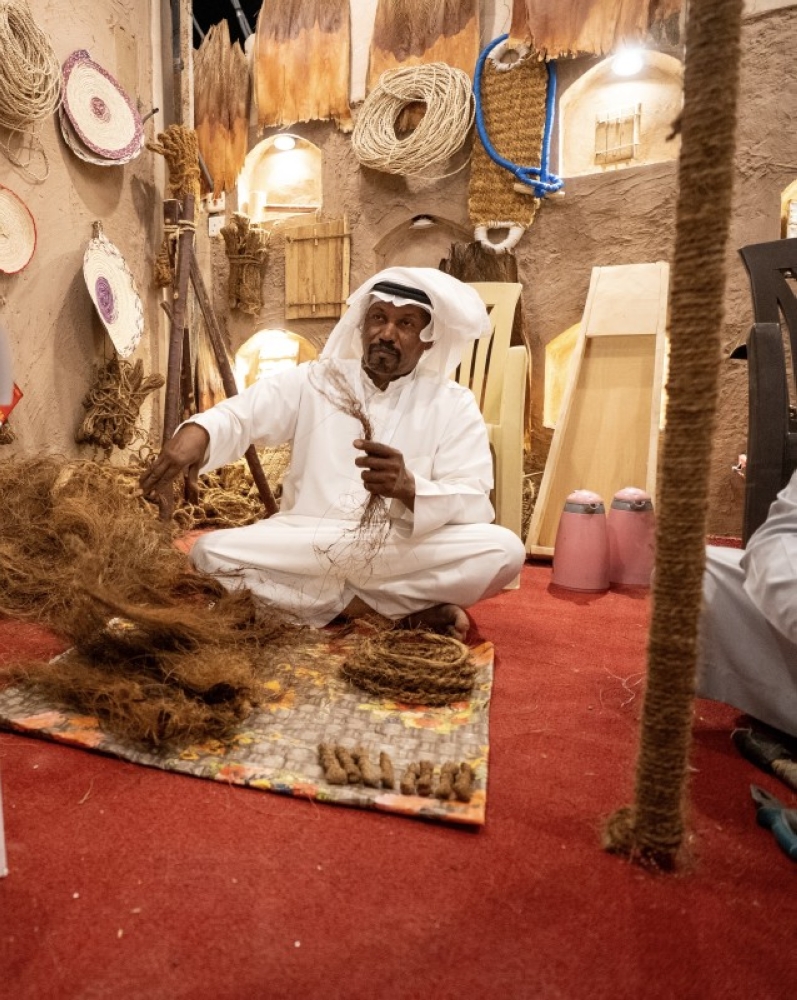
في قلب بيت حائل، حيث تتنفس الجدران عبق الطين، وتوشوش الزوايا بأصوات الآباء والأجداد، يجلس أحد الحرفيين الحائليين، يدوّي بصمته أكثر من كل العناوين، ممسكاً بليف النخيل، يصنع منه ما كان يُشكّل الحياة في زمنٍ اكتفى بالطبيعة وتواضع الوسيلة.
هذه المشهدية، العابرة في صورتها، العميقة في رمزيتها، ليست مجرد استعراضٍ لحرفة تقليدية، بل هي وثيقة حية من هوية منطقة حائل، التي عُرفت بتاريخها الزراعي والتجاري، وارتباطها الوثيق بالنخلة.. تلك الشجرة التي لم تكن مجرد مصدر غذاء، بل عماد سكن، وسقف ظل، وحبل نجاة، وأساس حرفة.
هذا الحرفي ليس اسماً في سجل، بل امتدادٌ لمدرسة متكاملة من الحِرف اليدوية التي ازدهرت في شمال الجزيرة العربية، وتحديداً في حائل. يجلس على الأرض كما كان يفعل الأولون، يفرز الليف، يفتله، يشده، يلوّنه، ويحوّله إلى حبال وسلال وأدوات كانت تُستخدم في المزارع والبيوت والأسواق.
أصابع يده تتحرك بدقة فطرية لا مخطط ولا آلة، بل تراتيل ذاكرة تعلمت من النخلة ومن الشمس ومن التراب.
اختار هذا الحرفي أن يكون شاهداً لا متفرجاً، ينقل للأجيال الجديدة كيف كانت حائل تنتج من بيئتها احتياجاتها. من الجدران المكسوّة بالسعف والحبال والمصنوعات اليدوية، إلى الألوان الطبيعية والنقوش التي تعكس جماليات العمارة الحائلية القديمة، يجد الزائر نفسه أمام لوحة لا تكتفي بإبهاره، بل تُربّيه على فكرة الاكتفاء والبساطة والانتماء.
بيت حائل مدرسة حيّة لتاريخ الإنسان السعودي، حين كان يصنع من الحاجة مهارة، ومن محدودية المورد غنى، ومن الليف حياة.
الحرفي في هذا المشهد يُمثّل ما تسعى له رؤية المملكة 2030: استعادة التراث الحي، وتوظيفه كأداة للتنمية الثقافية والسياحية. ليس بوصفه ترفاً، بل بوصفه ركيزة وطنية، تعكس عمق الجذور واتساع الثقافة السعودية في تنوّع مناطقها وأساليبها، من سعف النخل في الجنوب، إلى صناعة السدو في الشمال، ومن الليف في حائل إلى الزخارف الطينية في نجد.
In the heart of the Hail house, where the walls breathe the fragrance of clay, and the corners whisper with the voices of fathers and grandfathers, sits one of the Hail artisans, whose silence resonates louder than all the headlines. Holding palm fronds, he crafts what once shaped life in an era that relied on nature and modest means.
This scene, transient in its appearance yet profound in its symbolism, is not merely a display of a traditional craft; it is a living document of the identity of the Hail region, known for its agricultural and commercial history, and its close connection to the palm tree... that tree which was not just a source of food, but the backbone of habitation, a shade-giving roof, a lifeline, and the foundation of a craft.
This artisan is not just a name in a registry, but an extension of a comprehensive school of handicrafts that flourished in the northern Arabian Peninsula, specifically in Hail. He sits on the ground as the ancients did, sorting the fronds, twisting them, pulling them, dyeing them, and transforming them into ropes, baskets, and tools that were used in farms, homes, and markets.
The fingers of his hand move with an innate precision, without plans or machines, but rather with the chants of memory learned from the palm tree, the sun, and the soil.
This artisan has chosen to be a witness, not a spectator, conveying to new generations how Hail produced its needs from its environment. From the walls adorned with fronds, ropes, and handmade crafts, to the natural colors and patterns that reflect the aesthetics of ancient Hail architecture, the visitor finds themselves before a tableau that not only dazzles but also nurtures the idea of sufficiency, simplicity, and belonging.
The Hail house is a living school of the history of the Saudi human, when he turned need into skill, limited resources into wealth, and palm fronds into life.
The artisan in this scene represents what the Kingdom's Vision 2030 aims for: the revival of living heritage and its employment as a tool for cultural and tourism development. Not as a luxury, but as a national pillar that reflects the depth of roots and the breadth of Saudi culture in its diverse regions and methods, from palm fronds in the south, to the craft of Sadu in the north, and from fronds in Hail to clay decorations in Najd.