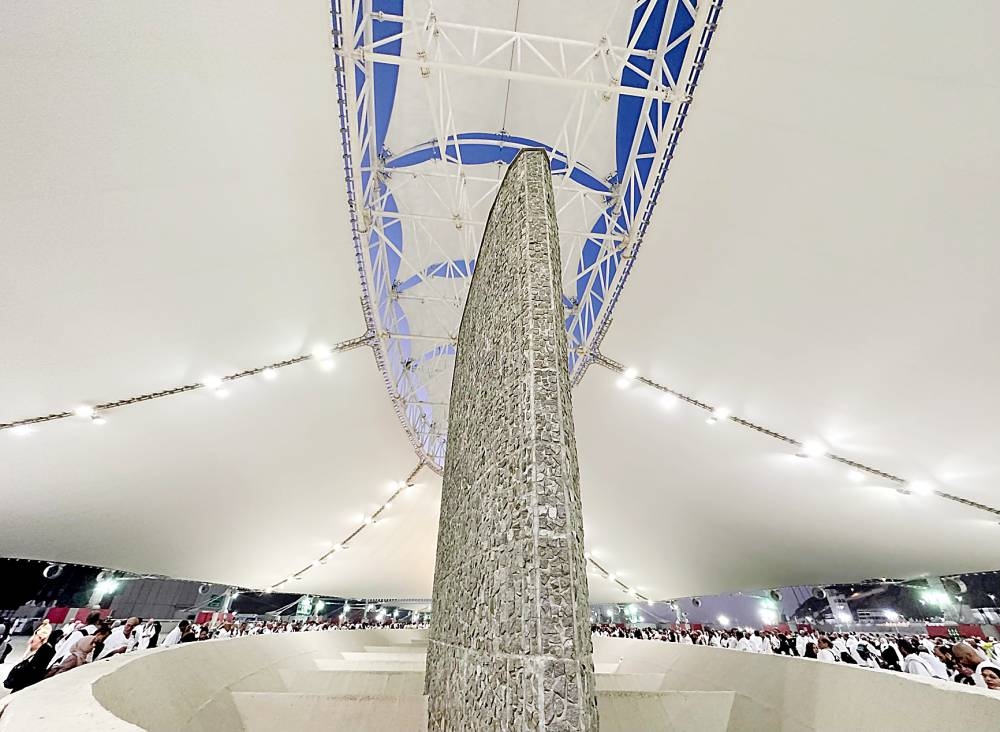
مرت منشأة الجمرات في المشاعر المقدسة برحلة طويلة من التطور والنجاح، ليشكل اليوم منظومة متكاملة من الخدمات بعد أن كانت هذه الشعيرة تمثل هاجساً للجهات المعنية بسبب التدافع والزحام، لتصبح المنشأة اليوم منجزاً حضارياً عملاقاً، تصعب مجاراته.
تقف منشأة الجمرات بمستوياتها الستة والقبو والطابق الأرضي والطوابق الأربعة العليا التي روعي في تصميمها وإدارتها كافة المعايير الخاصة بتدفق الحجاج، وفق دراسات وبحوث علمية مستمرة، شارك في تنفيذها نخبة من الخبراء المحليين والعالميين، بهدف تحسين كفاءة التفويج للمنشأة واستكمال مشاريع البنية التحتية لتحقيق هذا الهدف في ضوء التجارب العلمية والمحاكاة.
وتعود تسمية الجمرات نسبة للحصى الذي ترمى بها، فالجمرات تعنى الحصى الصغار، وموضع الجمارِ بِمِنًى سمي جَمْرَةً لأَنها تُرْمى بالجِمارِ «الحصى»، وقيل: لأَنها مَجْمَعُ الحصى التي ترمي بها من الجَمْرَة، وقيل: سميت به من قولهم أَجْمَرَ إِذا أَسرع؛ ومنه ما ورد في قصة آدم مع إبليس «إِن آدم رمى بمنى فأَجْمرَ إِبليسُ بين يديه»، وفي الأثر لما أتى إبراهيم خليل الله المناسك عرض له الشيطان عند جمرة العقبة، رماه بسبع حصيات حتى ساخ في الأرض، ثم عرض له عند الجمرة الثانية فرماه بسبع حصيات حتى ساخ في الأرض، ثم عرض له عند الجمرة الثالثة، فرماه بسبع حصيات حتى ساخ في الأرض، ولهذا يظهر حكمة الاكتفاء في اليوم الأول بالعقبة حملاً لفعله مع آدم في هذا المقام، وفي الأيام الثلاثة تبعاً لإبراهيم، حيث وسوس له إبليس في المواضع الثلاثة، وبهذا يتضح وجه تكرير الجمرات في الأيام الثلاثة.
وتعد الجمرات الثلاث عبارة عن أماكن في مشعر منى، يرمي الحاج في كل موضع سبع حصيات، والواحدة منها أكبر من حجم حبة الحمص وأصغر من حبة البندق، وكانت تلك الأماكن في صدر الإسلام أماكن لا يوجد لها معالم، ثم عمل عند كل موضع شاخص «عمود مربع» وحوض يحيط بالشاخص، ليدل على مكان الرمي.
--- في المستقبل 5 ملايين حاج المشروع العملاق وضعته الدولة السعودية على عاتقها ليتناسب مع الزيادة الكبيرة لعدد الحجاج وقد صمم ليتحمل 12 طابقاً، وأكثر من 5 ملايين حاج في المستقبل، وتبلغ الطاقة الاستيعابية له 300 ألف حاج في الساعة.
وتم بناء أول جسر للجمرات من دورين في عام 1975م لتسهيل رمي الجمرات؛ ومع زيادة أعداد الحجاج، أصبح الجسر لا يكفي لاستيعاب الأعداد المتزايدة كل عام، لذا قررت المملكة هدم الجسر بعد أداء مناسك الحج عام 2006م، واستبداله ببناء منشأة جديدة للجمرات متعددة الأدوار، لاستيعاب أعداد أكبر من الحجاج، وتسهيل عملية رمي الجمرات وانسيابيتها بأمن وسلامة.
وبلغ طول جسر الجمرات الجديد 950 متراً وعرضه 80 متراً، ويتألف من خمسة طوابق يبلغ ارتفاع كل طابق 12 متراً، وله 12 مدخلاً و12 مخرجاً من الاتجاهات الأربعة، إضافة إلى منافذ للطوارئ على أساس تفويج 300 ألف حاج في الساعة.
----- 3,485 متراً أنفاق يحتوي جسر الجمرات على 6 مباني خدمات، تتكون من 12 طابقاً ومبنيين مزودين بمهابط للطائرات، وفيها مصاعد مخصصة لخدمة نقل سيارات الإسعاف بين الأدوار، ويحتوي كل مبنى خدمات على ثلاث محطات كهربائية ومولد كهرباء احتياطي، ويضم الجسر 11 مبنى سلالم، منها أربعة مبانٍ لنقل الحجاج دخولاً للطوابق، وسبعة للخروج، ويحتوي كل مبنى سلالم على 28 سلماً كهربائيّاً مرتبطاً بنظام إدارة مبانٍ للتحكم به (BMS)، كما توجد سلالم كهربائية حول الجسر وعددها 20 سلماً كهربائيّاً ليكون إجمالي عدد السلالم 328 سلماً.
ويحتوي الجسر على 13 نظاماً منها أنظمة للمراقبة التليفزيونية فيها نحو 900 كاميرا، ونظام البث التلفزيوني لأربع قنوات تلفزيونية، ونظام الرسائل التوجيهية، ونظام العد الإلكتروني للحشود، ونظام إنذار الحريق، و226 عربة كهربائية صديقة للبيئة لنقل الحجاج داخل جسر الجمرات والمشاريع المتصلة به.
ويرتبط جسر الجمرات بأربعة أنفاق بأطوال إجمالية 3,485 متراً، ويحتوي على 46 ممشى كهربائيّاً لنقل الحجاج، وأنظمة الحماية والحريق والنداء العام والاتصال الداخلي ونظام إلكتروني لفصل الأنفاق أثناء الحريق.
The Jamrat facility in the holy sites has undergone a long journey of development and success, forming today a comprehensive system of services after this ritual had represented a concern for the relevant authorities due to the crowding and congestion. Today, the facility stands as a monumental civil achievement that is difficult to match.
The Jamrat facility, with its six levels, basement, ground floor, and four upper floors, has been designed and managed with all the standards related to the flow of pilgrims in mind, based on ongoing scientific studies and research, executed by a select group of local and international experts, aiming to improve the efficiency of crowd management for the facility and complete infrastructure projects to achieve this goal in light of scientific experiences and simulations.
The name "Jamrat" refers to the pebbles that are thrown at it; Jamrat means small pebbles. The location of the Jamrat in Mina is called "Jamrat" because it is where the pebbles are thrown. It is said that it is named so because it is a collection of the pebbles that are thrown from the Jamrat. It is also said to be named from the term "ajmara," which means to hurry; this is reflected in the story of Adam with Satan: "Indeed, Adam threw in Mina, and Satan hurried before him." In the tradition, when Ibrahim, the friend of God, came to perform the rituals, Satan confronted him at the Jamrat al-Aqaba, and he threw seven pebbles until he sank into the ground. Then, he confronted him at the second Jamrat, and he threw seven pebbles until he sank into the ground. Finally, he confronted him at the third Jamrat, and he threw seven pebbles until he sank into the ground. Thus, it appears wise to suffice on the first day with the Aqaba, reflecting Adam's action in this regard, and on the three days following Ibrahim, where Satan whispered to him at the three locations. This clarifies the reason for the repetition of the Jamrat on the three days.
The three Jamrat locations are places in the Mina area where the pilgrim throws seven pebbles at each site. Each pebble is larger than a chickpea and smaller than a hazelnut. In the early days of Islam, these places had no landmarks, so a visible marker "a square column" and a basin surrounding it were established at each site to indicate the throwing location.
--- In the future, with 5 million pilgrims, the giant project has been placed on the shoulders of the Saudi state to accommodate the significant increase in the number of pilgrims. It has been designed to support 12 floors and more than 5 million pilgrims in the future, with a capacity of 300,000 pilgrims per hour.
The first two-story Jamrat bridge was built in 1975 to facilitate the throwing of the Jamrat; with the increasing number of pilgrims, the bridge became insufficient to accommodate the growing numbers each year. Therefore, the Kingdom decided to demolish the bridge after the Hajj rituals in 2006 and replace it with a new multi-story Jamrat facility to accommodate larger numbers of pilgrims and facilitate the throwing process smoothly and safely.
The length of the new Jamrat bridge is 950 meters, and its width is 80 meters. It consists of five floors, each with a height of 12 meters, and has 12 entrances and 12 exits from all four directions, in addition to emergency exits based on a flow of 300,000 pilgrims per hour.
----- 3,485 meters of tunnels The Jamrat bridge contains 6 service buildings, consisting of 12 floors and two buildings equipped with helicopter landing pads, and it has elevators dedicated to transporting ambulances between the floors. Each service building contains three electrical stations and a backup generator. The bridge includes 11 stair buildings, four of which are for entering the floors and seven for exiting. Each stair building has 28 escalators connected to a Building Management System (BMS) for control, and there are 20 additional escalators around the bridge, making the total number of escalators 328.
The bridge has 13 systems, including CCTV systems with about 900 cameras, a television broadcasting system for four TV channels, a guidance message system, an electronic crowd counting system, a fire alarm system, and 226 eco-friendly electric carts for transporting pilgrims within the Jamrat bridge and the connected projects.
The Jamrat bridge is connected to four tunnels with a total length of 3,485 meters and contains 46 electric walkways for transporting pilgrims, as well as protection, fire, public address, internal communication systems, and an electronic system for isolating the tunnels during a fire.