


جاء إعلان المديرية العامة للدفاع المدني إطلاق طائرة الدرون المخصصة للإطفاء (صقر) المعزَّزة بالذكاء الاصطناعي، في حج هذا العام لأول مرّة، متمّماً للتكامل التقني، الذي يشهده موسم الحج لخدمة ضيوف الرحمن أرضاً وجوّاً، لتحقيق أعلى مستويات الراحة لأداء شعائرهم في منظومة التقنية الحديثة من الذكاء الاصطناعي إلى الطائرات بدون طيار، ومن الروبوتات متعددة اللغات إلى تطبيقات الهواتف الذكية.وكانت المديرية العامة للدفاع المدني أعلنت إطلاق طائرة الدرون المخصصة للإطفاء (صقر) المعزَّزة بالذكاء الاصطناعي، ضمن منظومات المديرية لحج هذا العام (1446هـ)، وذلك في حالات الإطفاء أو الإنقاذ في الأماكن المرتفعة أو صعبة الوصول، وتعمل الطائرة لمدة (12) ساعة بارتفاعات عالية وحمولة تصل إلى نحو (40) كيلوجراماً بنظام إطفاء متعدد الأغراض وأنظمة إنقاذ وتحكم وأمان وكاميرات حرارية، مع إمكانية بث مباشر للموقع وقابلية الربط بمركز القيادة والتحكم، وتتعدد استخدامات طائرة الدرون (صقر) في المباني الشاهقة والمواقع الصناعية أو المحتوية على مواد خطرة والمناطق المزدحمة وحرائق الغابات، وتمتاز بسرعة استجابة عالية، وتقليل المخاطر على الأفراد، ودعم اتخاذ القرار عبر التصوير اللحظي.ويشهد الحج منظومة الاتصالات والتقنية المتكاملة، وطبقاً لمتحدث المنظومة أنه يتوفر أكثر من 10 آلاف نقطة وصول لخدمة الواي فاي بالمشاعر المقدسة، ونسبة الجيلين الخامس والرابع في المشاعر المقدسة تجاوزت 99%، وبالتعاون مع شركة أرامكو الرقمية، تم تنفيذ تجربة رائدة في إدارة الحشود باستخدام الذكاء الاصطناعي، حيث يتم تحليل البيانات عبر آلاف الكاميرات المنتشرة ومراقبة الحشود لحظياً، بما يسهم في توجيهها بسلاسة ومنع التكدس وضمان سلامتهم.وتتوافر عدة تطبيقات ذكية صممت خصيصاً لخدمة الحجاج، من بينها (توكلنا الحج) لتسهيل التصاريح والتنقل، و(أبشر) للوصول إلى مختلف الخدمات الحكومية، إضافة للخرائط الذكية عبر الأساور الإلكترونية التي توفّر إرشادات وتفاصيل فورية بلغات متعددة، فيما تم نشر روبوتات تتحدث بعدة لغات في المشاعر، لتقديم الإرشاد والإجابة عن استفسارات الحجاج، إلى جانب روبوتات علاجية متنقلة، ومكانس كهربائية ذاتية الحركة تعمل على مدار الساعة للمحافظة على نظافة الساحات.
تكنولوجيا الحج.. في الأرض والجو
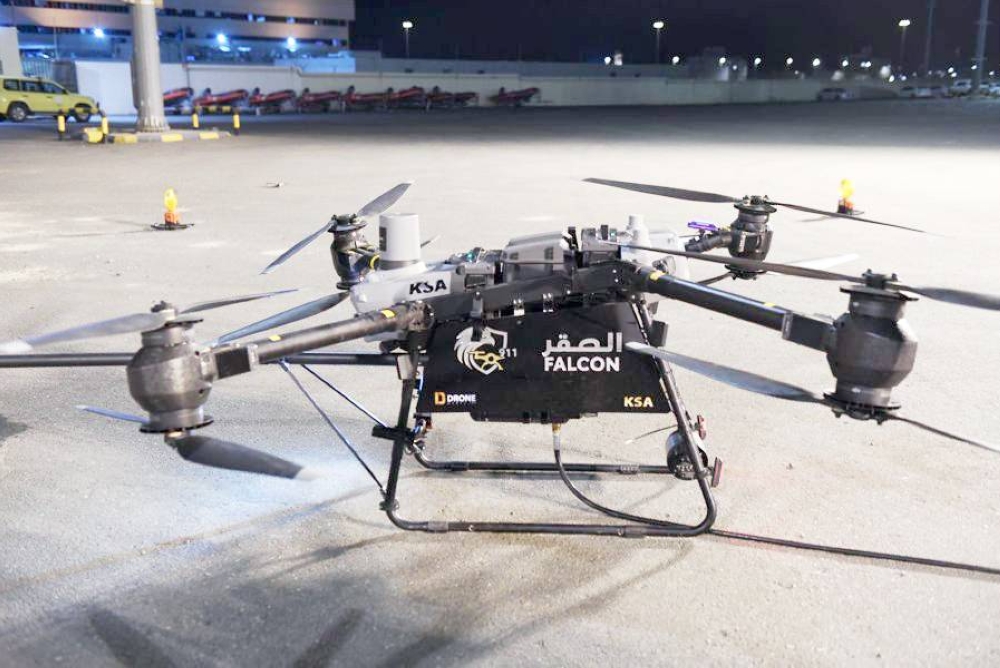


The announcement from the General Directorate of Civil Defense regarding the launch of the firefighting drone (Saqr) enhanced with artificial intelligence, during this year's Hajj for the first time, completes the technical integration witnessed in the Hajj season to serve the guests of Allah both on land and in the air, achieving the highest levels of comfort for performing their rituals within the modern technological system, from artificial intelligence to drones, from multilingual robots to smartphone applications. The General Directorate of Civil Defense announced the launch of the firefighting drone (Saqr) enhanced with artificial intelligence, as part of the directorate's systems for this year's Hajj (1446 AH), for firefighting or rescue operations in high or hard-to-reach places. The drone operates for (12) hours at high altitudes with a payload of up to (40) kilograms, featuring a multipurpose firefighting system, rescue systems, control and safety systems, and thermal cameras, with the capability for live broadcasting of the location and connectivity to the command and control center. The uses of the drone (Saqr) are numerous in high-rise buildings, industrial sites, or areas containing hazardous materials, crowded areas, and forest fires. It is characterized by a high response speed, reduced risks to individuals, and support for decision-making through real-time imaging. The Hajj witnesses an integrated communications and technology system, and according to the system's spokesperson, there are more than 10,000 Wi-Fi access points available in the holy sites, with the fifth and fourth generation coverage in the holy sites exceeding 99%. In collaboration with Aramco Digital, a pioneering experiment in crowd management using artificial intelligence has been implemented, where data is analyzed through thousands of distributed cameras, monitoring crowds in real-time, contributing to smooth guidance, preventing congestion, and ensuring their safety. Several smart applications have been specifically designed to serve pilgrims, including (Tawakkalna Hajj) to facilitate permits and mobility, and (Absher) to access various government services, in addition to smart maps via electronic wristbands that provide guidance and instant details in multiple languages. Furthermore, multilingual robots have been deployed in the holy sites to provide guidance and answer pilgrims' inquiries, along with mobile therapeutic robots and self-driving vacuum cleaners that operate around the clock to maintain the cleanliness of the areas.


