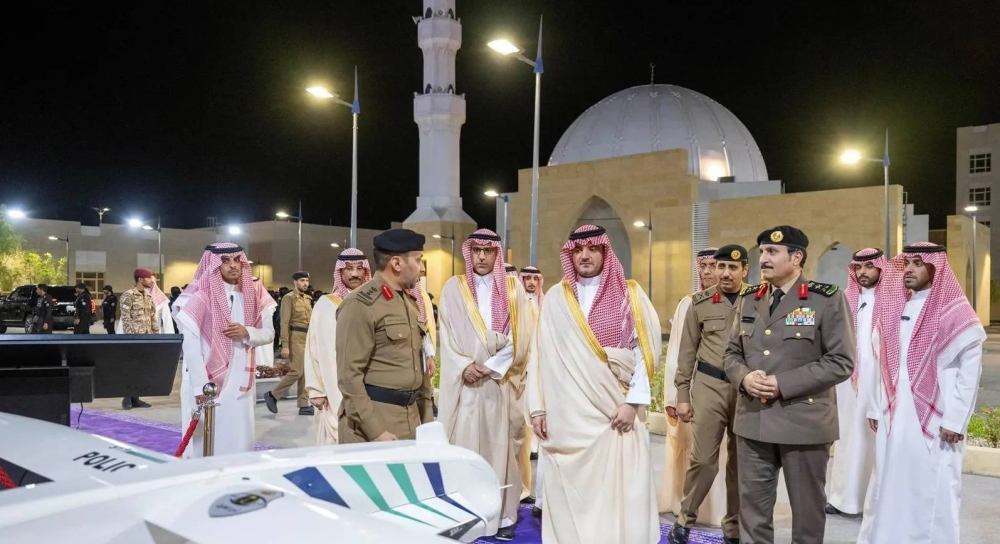
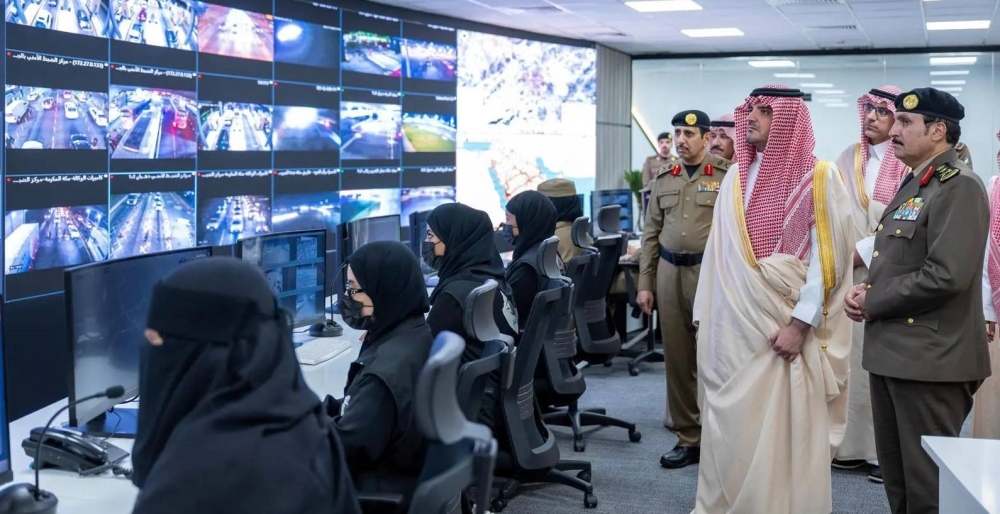
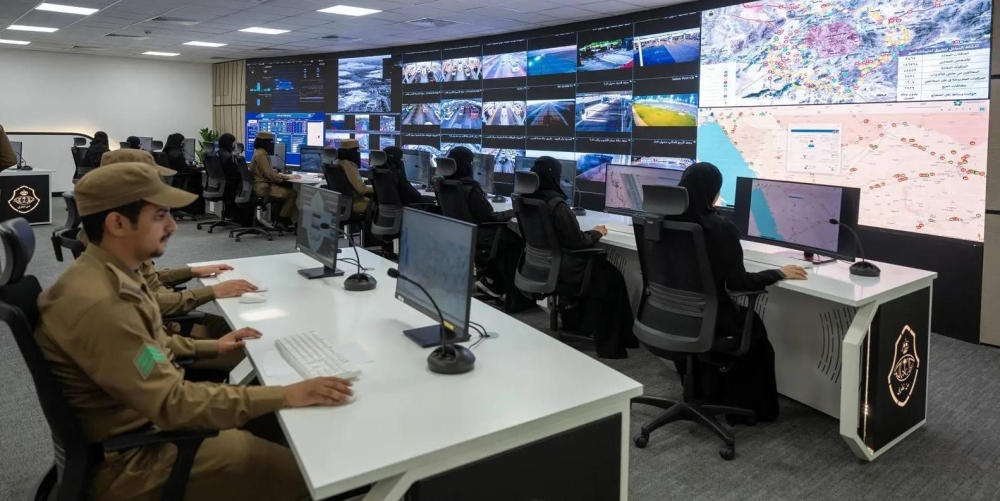
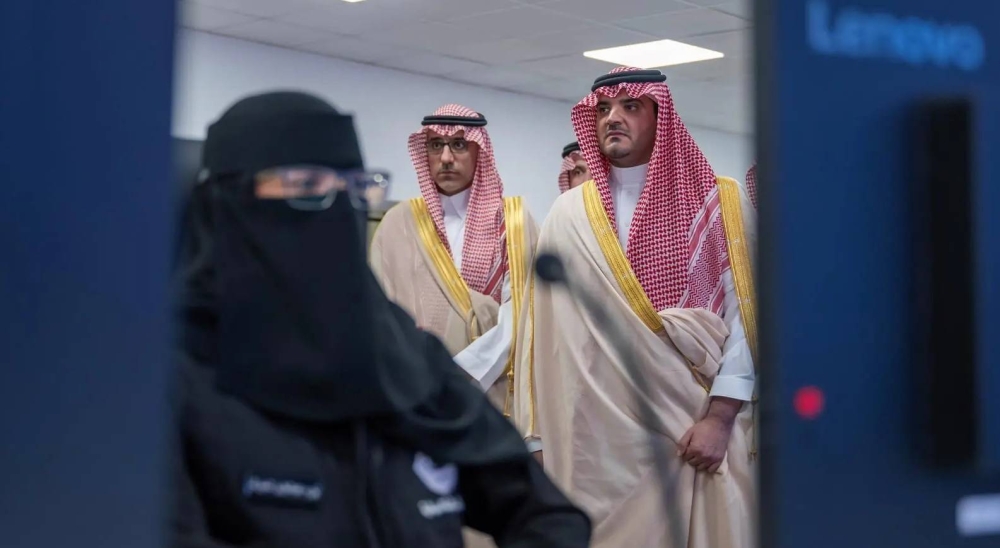
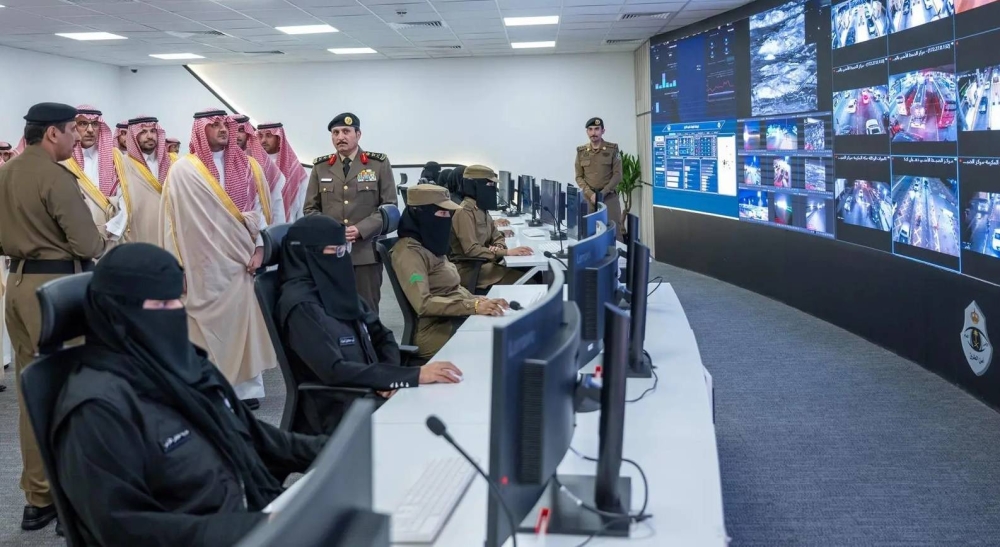
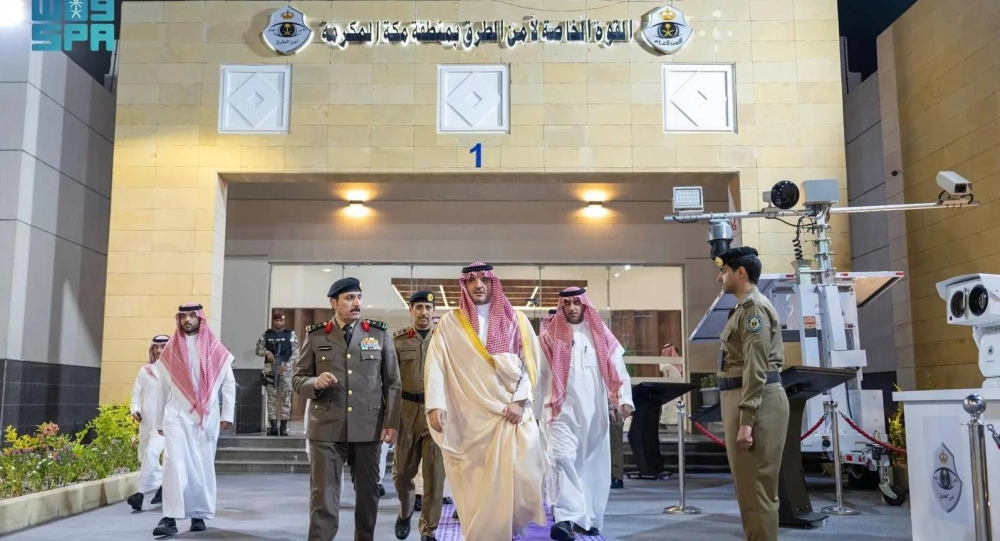
تفقّد وزير الداخلية رئيس لجنة الحج العليا الأمير عبدالعزيز بن سعود بن نايف بن عبدالعزيز، اليوم، نقطة الفرز بمركز الشميسي الواقعة على طريق مكة المكرمة - جدة السريع، ومركز المراقبة الميدانية التابع للقوات الخاصة لأمن الطرق.
واستمع إلى شرح من مدير الأمن العام الفريق محمد بن عبدالله البسامي، حول الإجراءات الأمنية المتبعة في نقطة الفرز وآليات التحقق من نظامية دخول الحجاج ومنع المخالفين، إضافة إلى تنسيق الجهود والتكامل مع مختلف الجهات لضمان سلاسة وانسيابية حركة ضيوف الرحمن.
واطّلع الأمير عبدالعزيز بن سعود خلال الزيارة على عدد من التقنيات الحديثة لمركز المراقبة الميدانية التي وظّفت في حج هذا العام، ومن بينها: مركبة «لوسيد» المطورة والمجهزة بأنظمة أمنية ذكية ومجموعة من التقنيات الحديثة الداعمة لأعمال المراقبة والاستجابة السريعة، إلى جانب الطائرة المجنحة التي تُستخدم في رصد الحشود وتحليل الكثافات البشرية جوًّا بدقة وسرعة عالية.
كما اطلع على الكاميرات الحرارية التي تتيح المراقبة المستمرة ورصد الحشود في مختلف الظروف البيئية، إلى جانب عربات النقل المباشر التي تنقل الصورة الميدانية لحظة بلحظة إلى غرف العمليات لدعم سرعة اتخاذ القرار.
The Minister of Interior and Chairman of the Supreme Hajj Committee, Prince Abdulaziz bin Saud bin Naif bin Abdulaziz, today inspected the sorting point at the Al-Shumaisi center located on the Makkah - Jeddah Expressway, as well as the field monitoring center affiliated with the Special Forces for Road Security.
He listened to an explanation from the Director of Public Security, Lieutenant General Muhammad bin Abdullah Al-Basami, regarding the security measures implemented at the sorting point and the mechanisms for verifying the legality of pilgrims' entry and preventing violators, in addition to coordinating efforts and integrating with various entities to ensure the smooth and seamless movement of the guests of Allah.
During the visit, Prince Abdulaziz bin Saud was briefed on a number of modern technologies at the field monitoring center that were employed for this year's Hajj, including the developed "Lucid" vehicle equipped with smart security systems and a range of modern technologies supporting monitoring and rapid response operations, along with the winged aircraft used for crowd monitoring and analyzing human densities in the air with high precision and speed.
He also reviewed thermal cameras that allow for continuous monitoring and crowd observation in various environmental conditions, in addition to direct transport vehicles that relay real-time field images to the operations rooms to support quick decision-making.