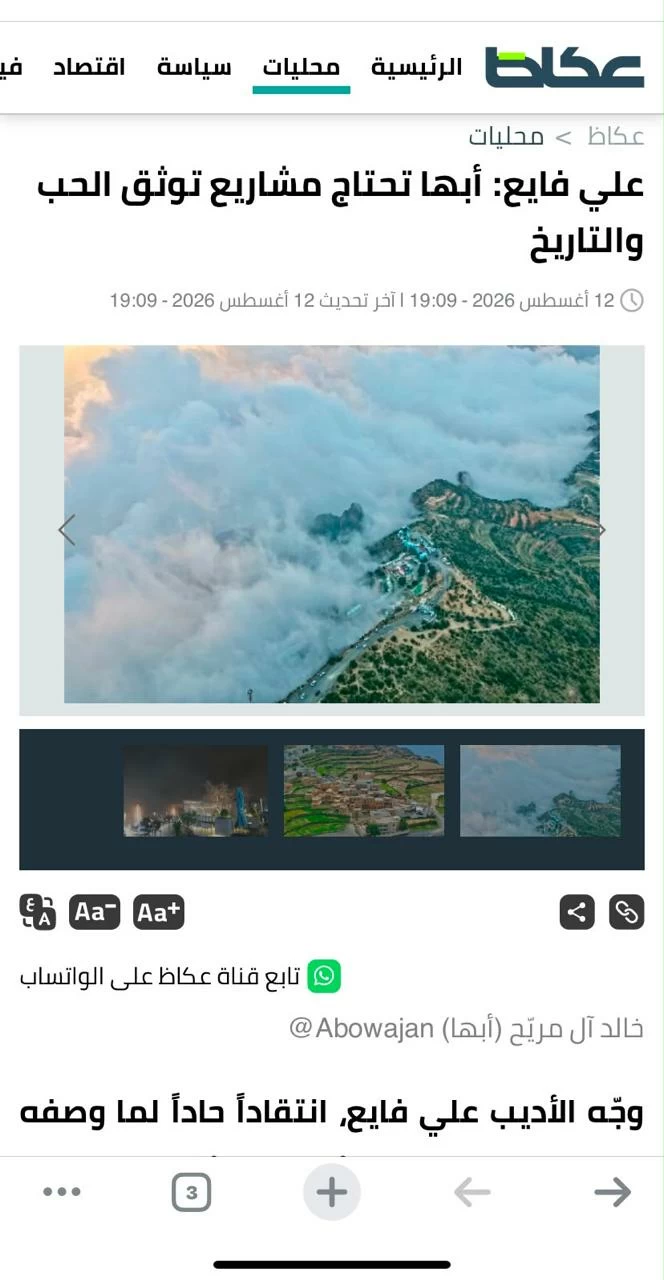
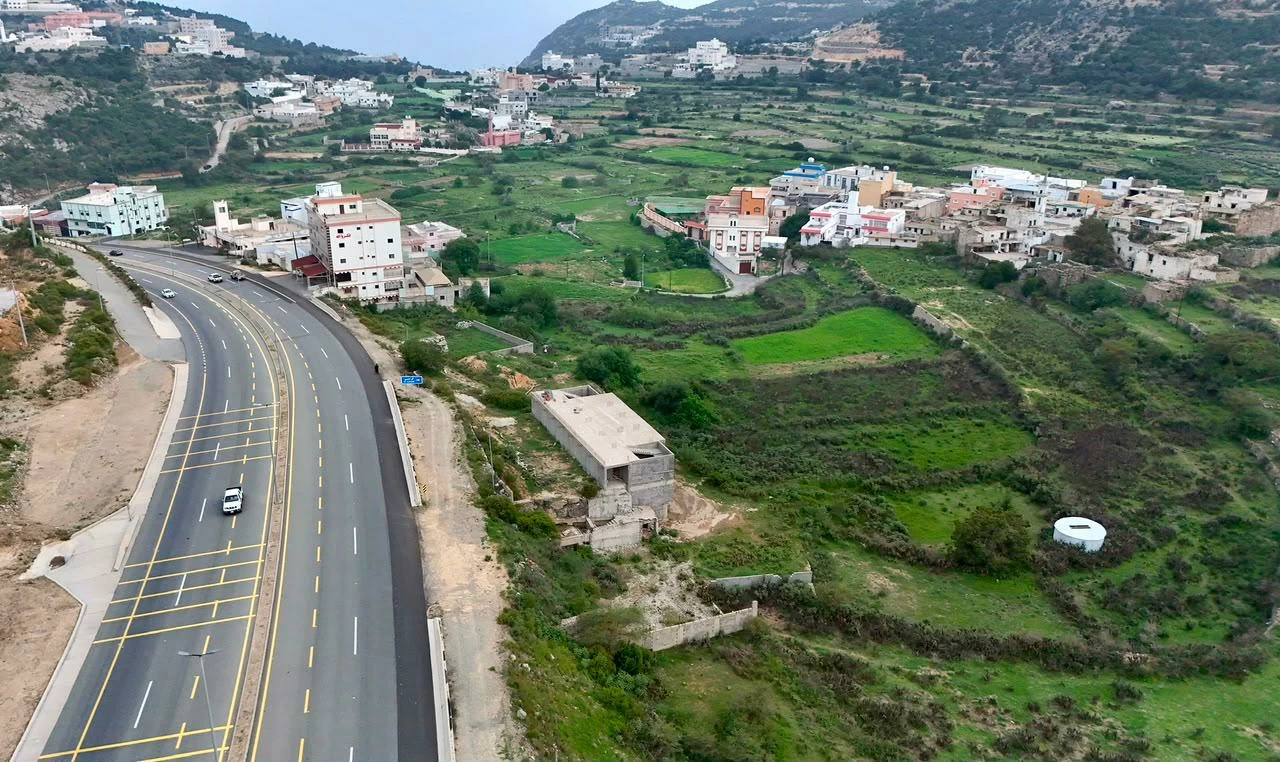
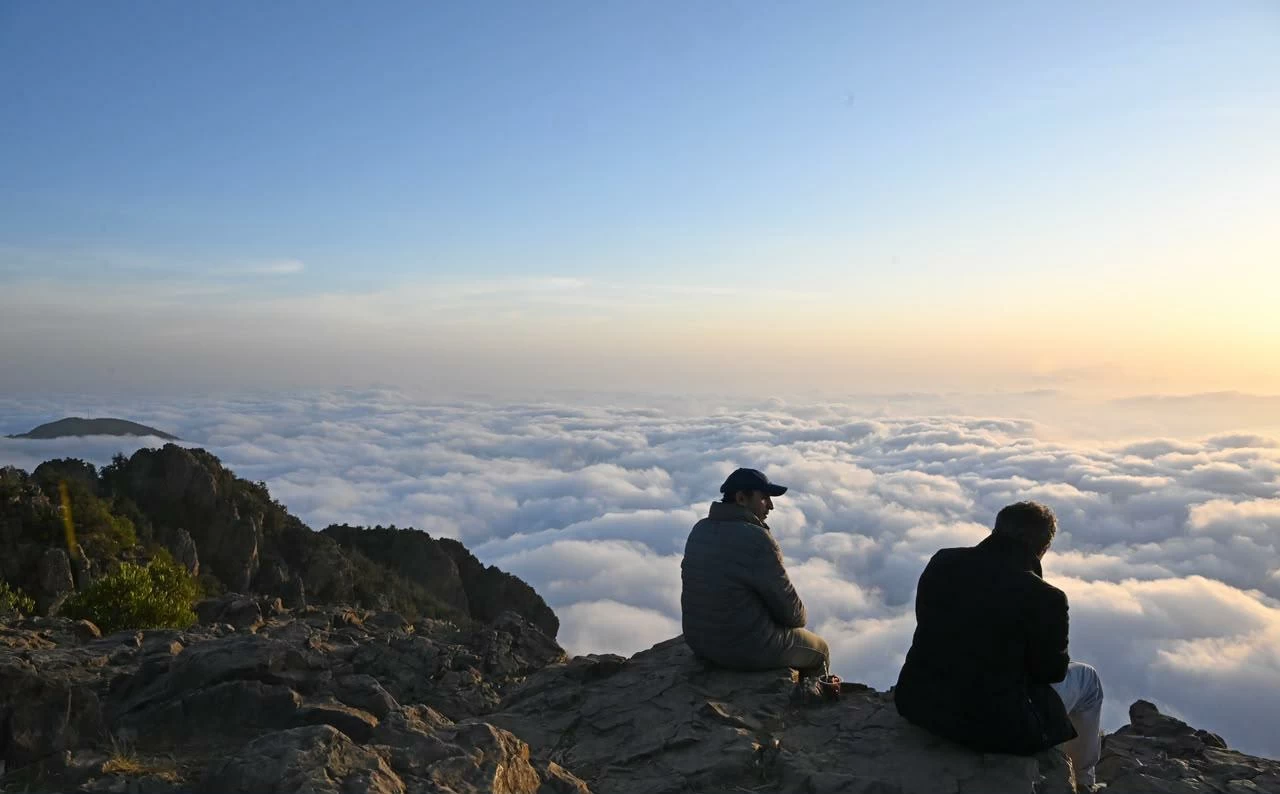
طالب كتّاب وإعلاميون في منطقة عسير بإنصاف الكتاب والمؤرخين الذين كتبوا عن أبها، فيما رأى آخرون أهمية توثيق تاريخ مدينة أبها الثقافي والاجتماعي والإنساني بعد نشر «عكاظ» انتقاد الأديب علي فايع لما وصفه بكثرة الحديث عن حب أبها دون وجود أعمال توازي هذا الحب من توثيق كافٍ لتاريخها وذاكرتها الثقافية.
العكاسي: لا ينبغي مصادرة آراء الناس وانطباعاتهم
رأى الكاتب الصحفي علي العكاسي أن أبها حاضرة في قلب الثقافة والأدب والذاكرة السردية الشعبية منذ وقت مبكر، مشيراً إلى أن المدينة كانت لها الريادة في تأسيس الصوالين الأدبية، إلى جانب تأسيس أول صحيفة سيارة في مطلع الثلاثينات الهجرية من القرن الماضي، لصاحبها سعيد الغماز. وأضاف أن رواد الثقافة من عشاق أبها داخل المملكة وخارجها أسهموا في إصدار العديد من الكتب التي تناولتها شعراً ونثراً وتاريخاً، إلى جانب المحاضرات والندوات والملاحق والمطبوعات الإعلامية. واستشهد العكاسي بعدد من الإصدارات، منها كتاب الأمير خالد الفيصل «شاهد عيان» الذي تناول جانباً من أبها، وكتاب «أبها في التاريخ والأدب» للأديب الراحل علي آل عمر عسيري، وكتاب «قصائد عن أبها» للأديب علي خضران القرني، إلى جانب أعمال أخرى. وأكد العكاسي أن ما يطرحه محبو أبها وعشاقها عبر وسائل التواصل الاجتماعي ينبغي أن لا يُحاكم باعتباره مجرد عواطف وانطباعات، إذ قد يستند بعض هذه الطروحات إلى بحوث ودراسات خاصة بأصحابها. ورأى العكاسي أن مثل هذه النقاشات يمكن أن «تحرك الراكد»، وتدفع باتجاه مشاريع ثقافية وتوثيقية أكثر شمولاً، مقترحاً إنشاء معرض ثقافي وتراثي يكون بمثابة مستودع لذاكرة أبها، يحتفظ بتاريخها ومخطوطاتها وصورها وحكاياتها، وأن تتولى هيئة تطوير منطقة عسير دوراً ريادياً في هذا الاتجاه. وختم العكاسي بالتأكيد على أهمية الابتعاد عن مصادرة آراء الناس وانطباعاتهم، وعدم تحويل الحديث عن الأماكن إلى مادة للإثارة أو الحسابات الخاصة.
النعمي: أبها ذاكرة وطنية وثقافية استحقت أن يُكتب عنها
من جانبه، لفت أحمد النعمي إلى أن محبي أبها وعشاقها كتبوا عنها كثيراً، مشدداً على أن المدينة ليست مجرد مكان جميل تتردد أسماء أحيائه ومعالمه في المجالس، ولا مجرد ذكريات عابرة يستعيدها الناس كلما حنّوا إلى الماضي. ورأى أن أبها تمثل ذاكرة وطنية واجتماعية وثقافية، وأن هذه الذاكرة استحقت أن تُكتب وتُوثق، وهو ما تحقق بالفعل عبر عدد من الكتب والأعمال التي تناولت تاريخها وحياتها الاجتماعية والثقافية، بهدف حفظها للأجيال القادمة.
السيد: طرح قد يحرك المياه الراكدة
أما الكاتب الصحفي محمد السيد فرأى أن ما طرحه علي فايع يمكن أن يكون مدخلاً لتحريك المياه الراكدة وإيقاظ الهمم، واستفزاز القادرين على البحث والتأليف والتوثيق. وقال إن من بين هؤلاء المؤرخين والباحثين والكتّاب والمثقفين، إلى جانب أبناء أبها الذين تختزن ذاكرتهم كنوزاً من الحكايات والشهادات والصور والوثائق. وحذّر السيد من أن تأخير جمع هذه المواد قد يؤدي إلى فقدانها مع رحيل أصحابها، مؤكداً أن الأمم لا تحفظ تاريخها بكثرة الحديث عنه، وإنما تحفظه عندما تكتبه وتوثقه وتضعه بين أيدي أبنائها.
آل فيصل: الكتب التاريخية مرجع ثابت
اتفق عبدالرحمن آل فيصل مع جانب من طرح فايع، مؤكداً أهمية الكتابة التاريخية الموثقة، ومشيراً إلى أن التاريخ لا ينبغي أن يبقى في إطار «سوالف المجالس» أو المنشورات المتداولة في منصات التواصل الاجتماعي. وأوضح أن الكتب التاريخية تمر عبر المراجع والثوابت والتواريخ، وبعد طباعتها تصبح مرجعاً يمكن الرجوع إليه، في حين يظل الحديث عن التاريخ عبر منصات التواصل أو المجالس، من وجهة نظره، محدود القيمة ما لم يستند إلى مرجعيات موثوقة.
بين كثرة الحديث وضرورة التوثيق هذه الآراء المتباينة كشفت أن الجدل حول أبها لا يدور حول محبة المدينة بقدر ما يدور حول كيفية حفظ ذاكرتها وتاريخها؛ فبينما رأى بعض المتداخلين أن ما كُتب عن أبها كثير ومتنوع، رأى آخرون أن الحاجة لا تزال قائمة إلى مشاريع أكثر منهجية تجمع الكتب والصور والمخطوطات والشهادات الشفهية والوثائق، وتحول الذاكرة الفردية إلى ذاكرة ثقافية متاحة للأجيال. وبعيداً عن اختلاف وجهات النظر، يبدو أن السؤال الذي أثاره علي فايع فتح باباً أوسع للنقاش: هل تحتاج أبها إلى المزيد من الحديث عنها، أم إلى مشروع مؤسسي يجمع ما قيل وكُتب عنها ويحفظه للأجيال؟
Writers and journalists in the Asir region have called for justice for the writers and historians who have written about Abha, while others have emphasized the importance of documenting the cultural, social, and human history of the city of Abha after "Okaz" published the criticism of the writer Ali Fayeh regarding what he described as the excessive talk about the love for Abha without the existence of works that parallel this love in sufficient documentation of its history and cultural memory.
Al-Akasi: People's Opinions and Impressions Should Not Be Suppressed
Journalist Ali Al-Akasi believes that Abha has been present at the heart of culture, literature, and popular narrative memory since early times, pointing out that the city was a pioneer in establishing literary salons, in addition to founding the first daily newspaper in the early 1930s Hijri, owned by Said Al-Ghamaz. He added that cultural pioneers who love Abha, both inside and outside the Kingdom, have contributed to publishing many books that addressed it in poetry, prose, and history, along with lectures, seminars, supplements, and media publications. Al-Akasi cited several publications, including Prince Khalid Al-Faisal's book "Eyewitness," which discussed an aspect of Abha, the book "Abha in History and Literature" by the late writer Ali Al-Omar Asiri, and the book "Poems about Abha" by writer Ali Khudran Al-Qarni, among other works. Al-Akasi affirmed that what is presented by Abha's lovers and enthusiasts through social media should not be judged merely as emotions and impressions, as some of these proposals may be based on research and studies by their authors. He believes that such discussions can "stir the stagnant waters" and push towards more comprehensive cultural and documentary projects, proposing the establishment of a cultural and heritage exhibition that serves as a repository for Abha's memory, preserving its history, manuscripts, images, and stories, and that the Asir Development Authority should take a leading role in this direction. Al-Akasi concluded by emphasizing the importance of avoiding the suppression of people's opinions and impressions, and not turning discussions about places into material for sensationalism or personal agendas.
Al-Nami: Abha is a National and Cultural Memory Worth Writing About
For his part, Ahmed Al-Nami pointed out that the lovers of Abha and its enthusiasts have written extensively about it, stressing that the city is not just a beautiful place whose neighborhoods and landmarks are mentioned in gatherings, nor merely fleeting memories that people recall whenever they long for the past. He viewed Abha as representing a national, social, and cultural memory, and that this memory deserves to be written and documented, which has indeed been achieved through several books and works that have addressed its history and social and cultural life, with the aim of preserving it for future generations.
Al-Sayed: A Proposal That Could Stir the Stagnant Waters
As for journalist Mohammed Al-Sayed, he believes that what Ali Fayeh proposed could serve as an entry point to stir the stagnant waters, awaken ambitions, and provoke those capable of research, writing, and documentation. He mentioned that among these are historians, researchers, writers, and intellectuals, in addition to the people of Abha who hold treasures of stories, testimonies, images, and documents in their memories. Al-Sayed warned that delaying the collection of these materials could lead to their loss with the departure of their owners, affirming that nations do not preserve their history by merely talking about it, but rather when they write, document, and place it in the hands of their children.
Al-Faisal: Historical Books are a Fixed Reference
Abdulrahman Al-Faisal agreed with part of Fayeh's proposal, affirming the importance of documented historical writing, and pointing out that history should not remain within the framework of "gathering tales" or circulating publications on social media platforms. He clarified that historical books pass through references, constants, and dates, and once printed, they become a reference that can be referred to, while discussions about history through social media or gatherings, in his view, hold limited value unless they are based on reliable references.
Amidst the extensive discussion and the need for documentation, these differing opinions revealed that the debate about Abha is not so much about the love for the city as it is about how to preserve its memory and history; while some participants felt that what has been written about Abha is abundant and diverse, others saw that the need still exists for more systematic projects that gather books, images, manuscripts, oral testimonies, and documents, transforming individual memory into a cultural memory accessible to future generations. Regardless of differing viewpoints, it seems that the question raised by Ali Fayeh has opened a broader door for discussion: Does Abha need more talk about it, or does it require an institutional project that gathers what has been said and written about it and preserves it for future generations?