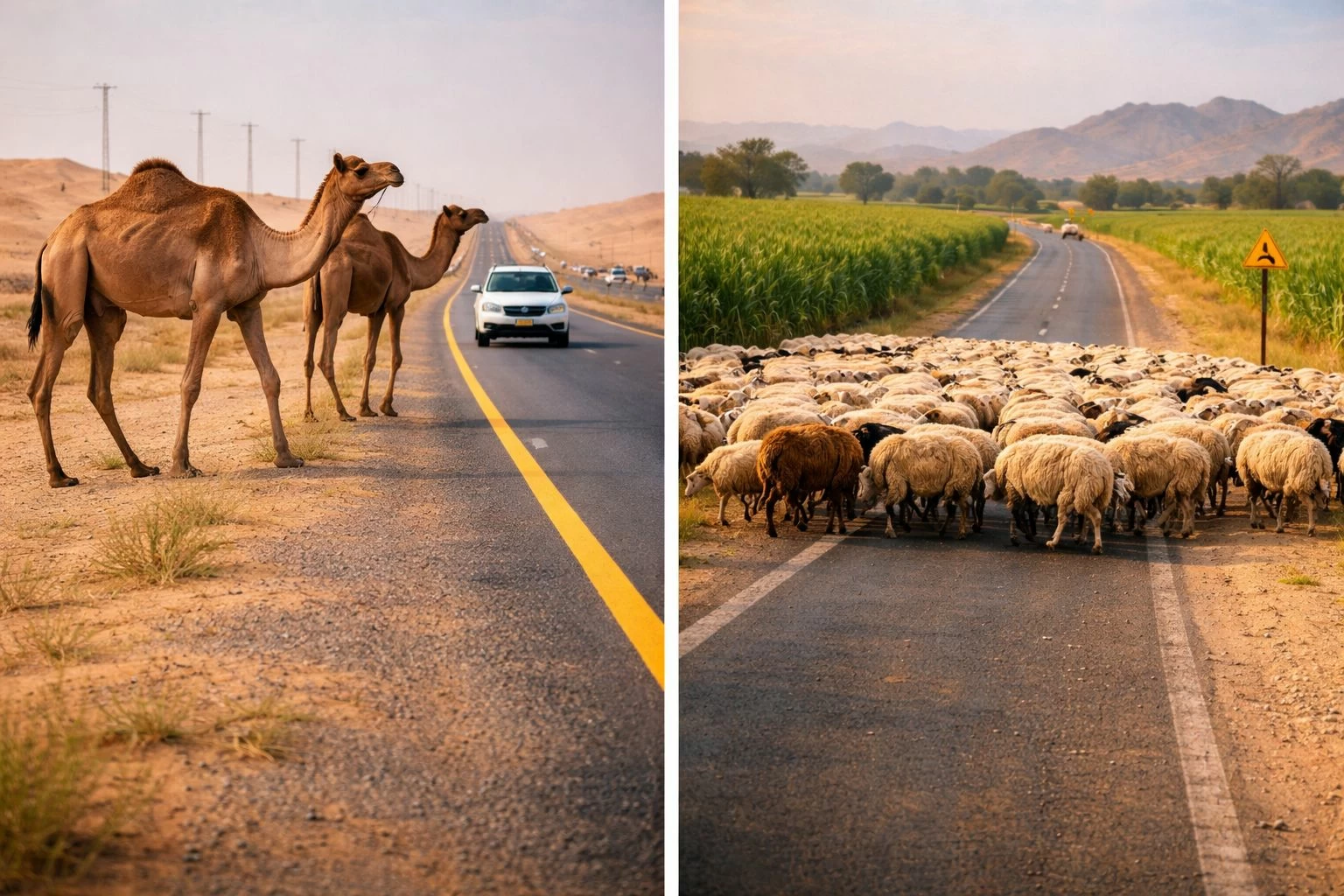
وجّه أمير منطقة حائل الأمير عبدالعزيز بن سعد آل سعود تعميماً إلى المحافظات والمراكز والجهات ذات العلاقة، يقضي بمنع إقامة حظائر المواشي بمحاذاة الطرق العامة والزراعية والصحراوية، مع إلزامية إبعادها مسافة لا تقل عن 3 كيلومترات عن حرم الطريق، في خطوة تستهدف تقليص أحد أبرز مصادر الخطر المروري في المنطقة.
ويأتي التوجيه في سياق معالجة مباشرة لحوادث متكررة تشهدها الطرق المفتوحة، حيث تتحول الإبل إلى عنصر مفاجئ يعبر مسارات المركبات دون إنذار، ما يرفع احتمالية الحوادث الجسيمة ويضاعف حجم الخسائر البشرية والمادية، خصوصاً على الطرق الصحراوية والزراعية التي تسجل النسبة الأعلى من هذه الحوادث.
وتعزز بيانات صادرة عن مدينة الملك عبدالعزيز للعلوم والتقنية هذا التوجه، إذ تشير إلى أن الإبل تمثل نحو 97% من الحوادث المرورية المرتبطة بالحيوانات في المملكة، في ظل وجود أكثر من 500 ألف رأس تتحرك في بيئات مفتوحة تتداخل مع شبكة الطرق. كما تُظهر البيانات أن أكثر من 90% من هذه الحوادث تقع خلال ساعات الليل، نتيجة ضعف الرؤية وغياب الحواجز الفاعلة في عدد من المواقع.
وتؤكد المؤشرات أن المشكلة تتركز في الإبل تحديداً، نظراً لحجمها وطبيعة حركتها، ما يجعل الاصطدام بها أكثر خطورة مقارنة بغيرها، ويؤدي إلى إصابات جسيمة وخسائر كبيرة، في نمط متكرر يرتبط بوجودها قرب الطرق دون تنظيم كافٍ.
ويعيد القرار ضبط العلاقة بين النشاط الرعوي وشبكة الطرق، عبر إبعاد بؤر الخطر من نطاق الحركة المرورية، وتقليص نقاط التقاطع بين المركبات والمواشي، ضمن توجه يرفع كفاءة السلامة ويضع ملف حوادث الإبل ضمن أولويات المعالجة الميدانية على طرق المنطقة.
The Prince of Hail, Prince Abdulaziz bin Saad Al Saud, issued a circular to the provinces, centers, and relevant authorities, prohibiting the establishment of livestock pens adjacent to public, agricultural, and desert roads, with a mandatory requirement to keep them at least 3 kilometers away from the road's boundaries. This step aims to reduce one of the most significant sources of traffic danger in the region.
This directive comes as a direct response to recurring accidents on open roads, where camels become a surprising element crossing vehicle paths without warning, increasing the likelihood of severe accidents and multiplying the scale of human and material losses, especially on desert and agricultural roads, which record the highest rates of these incidents.
Data from King Abdulaziz City for Science and Technology supports this approach, indicating that camels account for about 97% of traffic accidents related to animals in the Kingdom, with over 500,000 heads moving in open environments that intersect with the road network. The data also shows that more than 90% of these accidents occur during nighttime hours due to poor visibility and the absence of effective barriers in several locations.
Indicators confirm that the problem is specifically concentrated on camels, due to their size and movement patterns, making collisions with them more dangerous compared to other animals, leading to serious injuries and significant losses, in a recurring pattern associated with their proximity to roads without adequate regulation.
The decision re-establishes the relationship between pastoral activities and the road network by removing danger zones from traffic areas and reducing points of intersection between vehicles and livestock, as part of an approach that enhances safety efficiency and prioritizes the issue of camel-related accidents for field treatment on the region's roads.